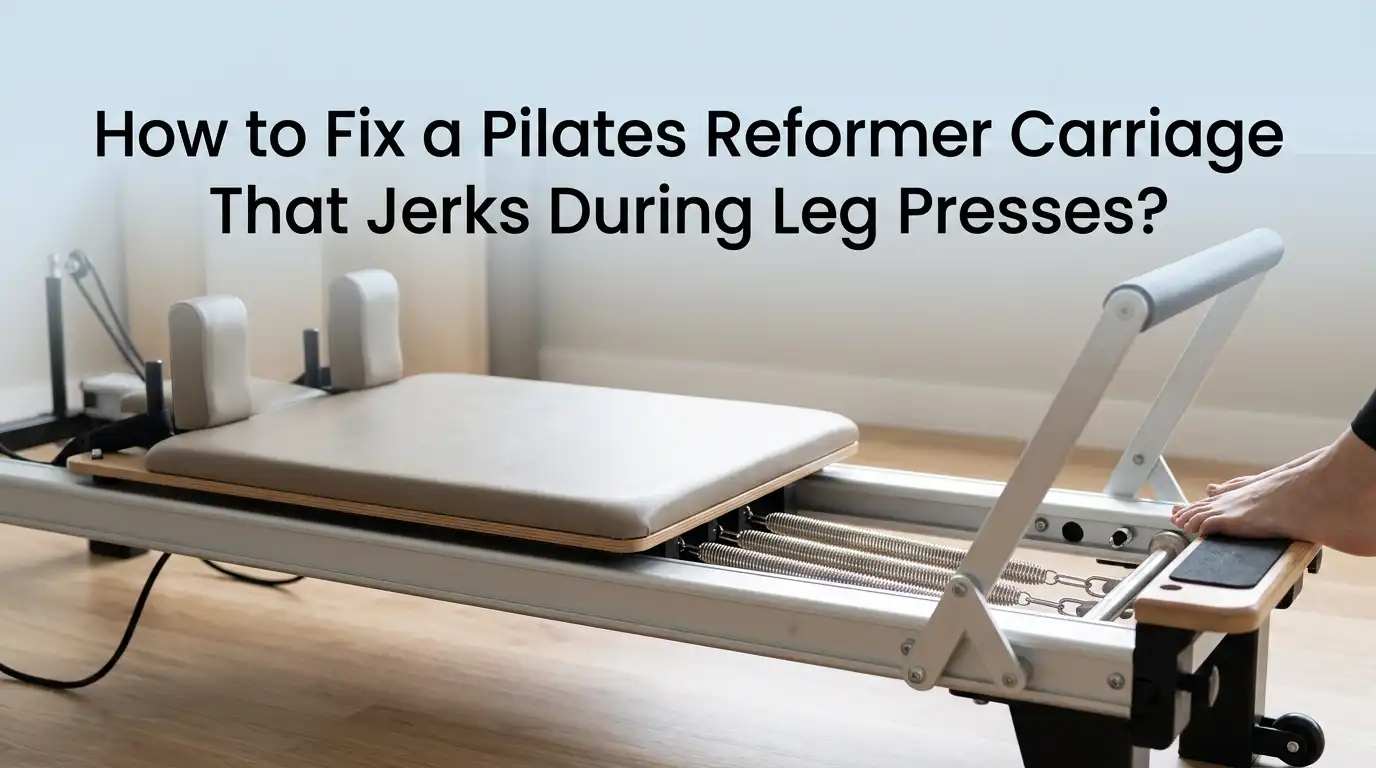
How to Fix a Pilates Reformer Carriage That Jerks During Leg Presses?
A Pilates reformer should move in a quiet, smooth way during leg presses. If the carriage jerks, sticks, or feels rough, the exercise stops feeling controlled.
It can also make you doubt your setup, your springs, or your own form. The good news is that this problem often has a clear cause. In many cases, the fix is simple and safe to do at home or in a studio.
A jerky carriage usually points to dirt on the rails, dirty wheels, loose side wheels, worn rollers, uneven feet, or hardware that has worked loose over time.
In a Nutshell
- Start with the easy fix first. A reformer carriage often jerks because dust, hair, or grime builds up on the rails and wheel surfaces. A careful cleaning can solve the problem fast and may save you from taking the machine apart.
- Do not add oil to rails unless your manual clearly says to do that. Many modern reformers use sealed wheel bearings and dry rails. Oil can attract more dirt and make the ride worse after a short time.
- Check if the reformer sits level on the floor. If one foot is high or the floor is uneven, the carriage can pull to one side. That small tilt can feel very obvious during leg presses, especially when you press with both feet.
- Look for side to side play in the carriage. If the carriage feels loose or drifts, the side wheels may need adjustment. Too loose creates wobble. Too tight creates drag. Both problems can feel like jerking.
- Inspect wheels, springs, ropes, and bolts. Flat spots on wheels, loose pulley bolts, tired springs, and frayed ropes can all affect movement. A smooth ride depends on all moving parts working together, not just the rails.
- Test after each fix instead of changing everything at once. That method helps you find the true cause. It also lowers the risk of making a small problem bigger. If the carriage still jerks after cleaning, leveling, and inspection, it may be time for new wheels or a trained service visit.
Why the carriage jerks during leg presses
A reformer carriage jerks when something interrupts smooth rolling. The most common causes are dirt, wheel wear, poor alignment, and loose parts. Leg presses make these faults easy to feel because the carriage moves in a long, straight path under steady pressure.
Dust and hair can collect on the rails and wheel surfaces. That buildup creates drag. Worn wheels can develop flat areas, cracks, or uneven contact with the track. A machine that is not level may pull to one side. Loose guide wheels can let the carriage wobble. Springs, ropes, and pulleys can also add uneven tension.
The main goal is simple. You want to find out if the problem is dirt, setup, adjustment, or damage. Pros: this issue is often fixable without major repair. Cons: if you guess and skip steps, you may miss the real cause and waste time.
Start with safety and a quick reset
Before you inspect anything, make the reformer safe. Unhook the springs so the carriage can move freely and you can feel the wheels without spring tension changing the test. That one step makes the problem easier to read.
Move the carriage slowly by hand from one end to the other. Listen for scraping, clicking, or rough rolling. Feel for spots where the carriage sticks or bumps. Then check if the issue happens in one area of the track or across the full travel. That detail matters.
Next, remove obvious debris around the rails, shoulder rests, and pulley area. Make sure nothing soft, like a towel or loop, is brushing the frame. Pros: this reset is fast, safe, and helps you notice the real symptom. Cons: it does not fix worn parts, so the carriage may still jerk until you move to the next checks.
Clean the rails first
Dirty rails are one of the most common reasons a carriage feels rough. A clean rail gives the wheels a better surface to roll on. Even a small film of dust can change the feel of a leg press.
Use a soft cloth that is lightly damp, not dripping wet. Wipe the top rail surfaces and the track area carefully. If your brand allows it, use a mild soap and water mix or a simple cleaner on the cloth. Do not spray cleaner straight onto the rail. Wipe again with a dry cloth so no moisture stays behind.
Run your fingers along the rail to check for grit. If you feel rough spots, clean again until the surface feels smooth. Pros: this method is quick, low cost, and often solves minor jerking. Cons: if the wheels are dirty or damaged, rail cleaning alone will not fully restore a smooth ride.
Clean the carriage wheels
Rails are only half the story. The wheel surface also collects dust, hair, and fine debris. If the wheels are dirty, the carriage can bump even on a clean rail. This is a very common cause of a rough glide.
With the springs off, hold a damp cloth against one wheel and move the carriage back and forth so the wheel spins against the cloth. Repeat for all carriage wheels. Use only light moisture. Keep liquid away from the bearing area. After that, dry the wheels well.
Look closely for trapped hair around the axle area. Remove anything wrapped around the wheel. Test the carriage again by hand. Pros: wheel cleaning is simple and often gives a fast improvement. Cons: it can hide a deeper issue for a short time if the wheel is worn, cracked, or no longer sitting flat on the track.
Check the frame level and feet
A reformer needs to sit flat on the floor. If one foot does not touch well, the frame can twist slightly and the carriage may track badly. That twist often shows up during leg presses because both legs push straight into the carriage.
Stand behind the reformer and look for rocking. Press gently on each corner. If the frame moves, check the adjustable feet. Turn them until every foot makes firm contact with the floor. If you have a small level, place it on the frame and check side to side and front to back.
After leveling, push the carriage slowly again. Many users feel a clear improvement at once. Pros: leveling is easy and often missed, so it offers a quick win. Cons: if the floor is very uneven or the frame is bent, foot adjustment may help only part of the problem.
Test for side play and wheel alignment
Now check if the carriage moves side to side. A loose carriage can torque to one side, wobble, or bump during travel. That loose feel often becomes obvious at the start or end of a leg press.
Place your hands near one end of the carriage and gently try to move it sideways. Then repeat at the other end. There should be very little side movement. If it feels loose, the side wheels or guide wheels may need adjustment. If the carriage feels very tight and drags, the adjustment may be too tight.
Adjustment methods vary by brand, so use your manual before turning bolts. Pros: proper alignment gives a smooth, centered ride and reduces wear. Cons: wrong adjustment can create more drag or uneven wheel contact, so this step needs patience and care.
Inspect wheels for flat spots, cracks, or uneven wear
If cleaning and alignment do not solve the problem, inspect the wheels closely. A worn wheel can make the carriage jerk in the same place every time. Flat spots, chips, and cracks are strong warning signs.
Use a flashlight and rotate each wheel slowly. Look for flat areas, splits, chips, or shiny worn bands. Check whether each wheel sits flat on the track. If one wheel lifts, tilts, or touches unevenly, the carriage will not glide well. Some makers also suggest replacing wheels as a set or in pairs so the ride stays balanced.
This is one of the clearest points where cleaning stops helping. Pros: replacing bad wheels can restore smooth motion quickly. Cons: parts cost more than cleaning, and installation may be harder if you do not have the correct tools or brand guide.
Tighten bolts, hooks, and pulley hardware
Loose hardware can create small shifts that feel like jerking. A carriage may roll well on clean wheels but still feel rough if a bolt, eyelet, or pulley mount has loosened. These small faults are easy to miss if you only look at the rails.
Check visible nuts and bolts around the carriage, shoulder rests, pulleys, and spring bar area. Gently test eye hooks and pulley bolts. Nothing should turn easily by hand unless your brand says that part is adjustable. Also look for loose shoulder rest hardware because frame movement near the carriage can change how the machine feels.
Tighten only as your manual allows. Do not force small fittings. Pros: this check can solve clicking, wobble, and uneven feel with little cost. Cons: over tightening can damage threads or compress parts that should move freely.
Check springs, ropes, and pulleys
A jerky leg press does not always start at the carriage. Sometimes uneven tension from springs, ropes, or pulleys creates a stop and pull feeling. That can make the carriage seem like the problem even when the rails are fine.
Inspect springs for rust, kinks, gaps, or stretched shape. Look at ropes for fraying or uneven length. Check pulleys for smooth spinning and confirm the rope path is clean and straight. If one side pulls harder than the other, the carriage can drift or feel rough.
If the problem appears only under load and not during a hand push test, this section matters even more. Pros: checking these parts helps you find hidden causes outside the carriage. Cons: spring and rope issues may need replacement parts, and mixing old and new parts can create a new imbalance if done carelessly.
Avoid the wrong fixes
It is easy to make the problem worse with a quick guess. The biggest mistake is adding the wrong lubricant to rails or bearings. Many reformers are meant to run clean and dry, and oil can attract dirt fast.
Do not spray cleaner straight into wheel bearings. Do not soak the rails. Do not sand the track. Do not force wheel adjustment without checking the manual. Also avoid using harsh cleaners that can damage surfaces or leave sticky residue.
Some people try to ignore the issue and keep training through it. That choice often wears the wheels and rails faster. Pros of a cautious approach: you protect the machine and find the real cause. Cons: it takes a little more time than guessing, but it usually saves money and prevents repeat problems.
Test the carriage the right way after each change
After each fix, test the reformer before you move on. That simple habit tells you which change actually helped. It also stops you from turning a small maintenance task into a long repair session.
First, push the carriage by hand with no springs attached. It should feel smooth, quiet, and even from end to end. Next, attach a light spring and repeat. Then try your leg press at a slow pace. Use even foot pressure and notice whether the jerk has gone, improved, or stayed the same.
Keep notes if needed. Write down what you cleaned, adjusted, or tightened. Pros: step by step testing gives clear answers and lowers guesswork. Cons: it takes patience, and some users want a fast fix, but this method is the safest way to isolate the cause.
Build a simple maintenance routine to stop the problem from coming back
The best fix is one you do not need twice. Regular reformer care lowers the chance of jerking, uneven glide, and early wheel wear. A short routine works better than waiting for a big problem.
Wipe rails and wheel surfaces every week if you use the reformer often. Check level feet every month. Inspect wheels, springs, ropes, and bolts on a schedule. If your studio has high use, inspect more often and replace worn parts sooner. Listen to the machine during normal use. A quiet ride usually means the carriage is happy.
Pros of weekly cleaning: low effort and low cost. Cons: easy to forget. Pros of scheduled part checks: you catch damage early. Cons: you need a calendar reminder and a few minutes of focus. In most cases, that small habit is enough to prevent future jerking.
FAQs
Can I keep using my reformer if the carriage jerks?
It is better to pause strong leg presses until you find the cause. A rough carriage can wear rails and wheels faster. It can also change your movement quality.
Should I lubricate the rails?
Usually no, unless your brand guide clearly says yes. Many reformers are meant to run on clean, dry rails with sealed wheel bearings.
How do I know if the wheels need replacement?
Look for flat spots, cracks, chips, or repeated bumping in the same part of the travel. Uneven wheel contact is another strong clue.
When should I call a technician?
Call for help if the frame seems bent, the carriage will not align, the wheels need replacement and you are unsure how, or the jerk remains after cleaning, leveling, and hardware checks.

Hi, I’m Sarah Hill — the founder and voice behind Heavy Lift Vault. I’m passionate about fitness, strength training, and health technology. I spend my time researching, testing, and reviewing workout equipment and health devices so you don’t have to guess. My goal is to deliver honest, detailed, and trustworthy reviews that help you invest wisely in your fitness journey.