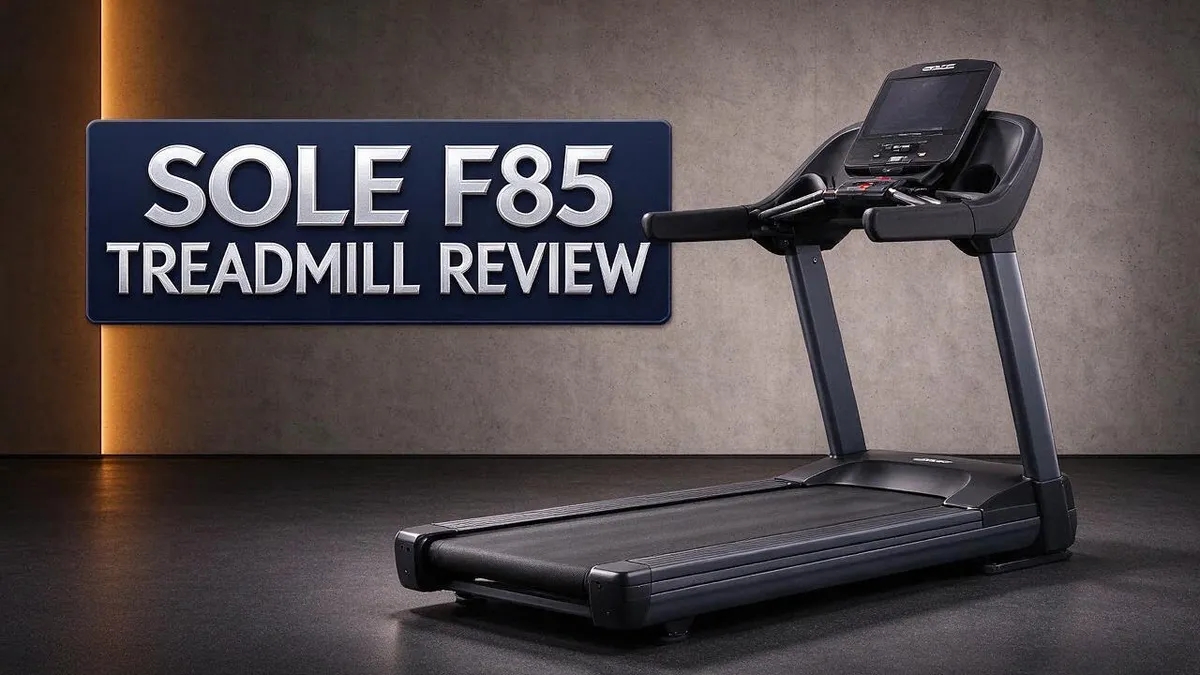
Sole F85 Treadmill Review: Stability, Specs, and Who It Suits
Looking for a treadmill that feels solid and runs quietly? The Sole F85 could be the one you need. It is a folding model built for home workouts.
It supports up to 375 lbs. That gives plenty of room for many different users. The belt measures 22 inches wide, so your stride stays comfortable.
Many owners say the deck runs very quietly. Sole calls this the whisper deck design. Your neighbors may thank you for that.
Stability is another strong point. A certified trainer rated the workout experience 4.5 out of 5, citing how steady the machine feels. Its sturdy build also matches the Sole S77.
Newer versions add a 15.6 inch touchscreen for easy workout tracking. Older models skip the screen, so check the version first. In this review, we cover the key features, pros, cons, and top competitors. Let us see if the Sole F85 fits your goals.
In a Nutshell
-
Folds for easy storage. The Sole F85 is a folding treadmill. You can fold it up after each workout and tuck it away. This helps people with limited floor space.
-
A wider running surface. The belt measures 22 inches wide. Its rollers and running surface are larger than those on the Sole F80. Your stride feels more natural and relaxed.
-
Build quality like the S77. Many shoppers compare its frame to the Sole S77. It feels sturdy during hard sessions and long runs. You can rely on it for daily use.
-
Trainer approved. A certified trainer gave the workout experience a 4.5 out of 5 rating. The trainer praised how steady the machine feels during intense intervals.
-
Older models lack a screen. Earlier versions have no touchscreen. If you want to track workouts on a display, choose a newer model with a built in screen.
-
Strong rivals to compare. Shoppers often compare the F85 with the Sole F80, F83, TT8, and Horizon 7.4 AT. The F80 is smaller, so it suits tight spaces.
Build and Frame Strength

Last update on 2026-11-09 / Affiliate links / Images from Amazon Product Advertising API
A treadmill lives or dies by its frame. The Sole F85 gives you a base that feels grounded from the very first step.
Good frames handle daily use without complaint. Your feet strike the belt hundreds of times in every session, so the structure must absorb that force.
Larger rollers matter more than many buyers expect. They spread wear across the belt and help the motor turn smoothly. Smooth rotation also reduces vibration in the frame.
Frame strength also shapes your stride. When the deck flexes under load, each step feels uneven and your knees absorb extra stress.
Less flex means more control. You can hold a steady pace without the side to side wobble that appears on flimsy machines.
Stability matters most during intervals. Sprints and quick slowdowns push the frame hard, so a firm base keeps your footing predictable.
The folding design adds one extra stress point. The hinge and latch carry heavy loads each time you fold the deck. Check these parts often for loose bolts or hairline cracks.
Take a few minutes after setup to inspect the frame. Tighten every bolt with the tools included in the box. Look closely where the deck meets the base for any gaps.
Regular care keeps the machine steady for years. Wipe dust from the base and keep the area level. A level floor stops the frame from twisting under heavy use.
Used units need extra attention. Ask the seller about past use and listen for rattling when you run. Worn rails or loose side panels signal a frame that has seen too much stress.
Buyers who check these details often feel more confident. A careful inspection shows whether the frame still holds its original strength.
Overall, the F85 frame feels built for serious walkers and runners. Its firm structure supports steady, confident workouts at many fitness levels.
Running Surface and Stability
A good running surface does more than carry your feet. It shapes how your body feels after every session.
Think about your foot strike. A steady belt helps you land softly, so your knees and hips stay comfortable over time.
Walkers and runners notice different things. Walkers want a calm, even path. Runners want a firm base that rebounds with each stride.
Belt tracking matters too. If the belt drifts to one side, your stride can shift and feel unsteady. Check it after a few weeks of use.
Tension plays a role here. A belt that is too loose may slip under load. A belt that is too tight can strain the bearings.
Try a simple test. Walk at a moderate pace for five minutes. Then increase speed slightly. Watch for bouncing, drifting, or sudden jerks.
Stability also depends on where you stand. Keep your feet centered on the belt. Hold the handrails only for balance, not for support.
Your home floor matters as well. A level floor keeps the machine from rocking. Place a mat underneath to protect flooring and reduce noise.
Noise deserves attention too. A worn belt or loose part can create a rhythmic thump. Listen closely during your first few runs.
Many people overlook the deck edges. Clean the area around the belt so dust and debris do not build up underneath.
Lubrication also helps. Check your manual for the right silicone product and schedule. Apply only what the maker recommends.
Finally, think about your goals. Steady walkers may not need the same firmness as interval runners. Match the surface to your routine.
Good stability builds confidence. When the deck feels calm, you can focus on form, breathing, and pace instead of balance.
Small habits make a big difference. Wipe the belt, check the frame, and test the surface each month.
Display and Console Options
The console shapes how you train every day. Good information helps you stay on track.
The Sole F85 uses a clear display area for key workout numbers. You can read your time, distance, speed, and incline without stopping.
Touchscreen models feel more like a tablet. You tap icons, pick programs, and scroll through options with ease.
Simple button consoles work well for people who like fast, direct controls. Big keys let you adjust speed without looking down.
Screen size also matters. A larger display makes numbers easier to read during fast intervals or when you walk at a steady pace.
Think about lighting in your room. A glossy screen can glare near a window, so place the machine with care.
Heart rate tracking helps some people keep effort in the right zone. Check whether your console supports a chest strap or grip sensors before you buy.
Program options add variety. Preset workouts can take the guesswork out of hill climbs or sprints.
Try a quick check. Start at a slow walk, then press each control once. Make sure every button responds and every number updates.
Clear feedback builds trust. When the console reacts fast, you can focus on your stride instead of the screen.
Your favorite display style depends on your habits. Tech fans may enjoy a touchscreen, while simple users often prefer clear buttons and large numbers.
Keep the display clean. Wipe dust from the screen with a soft cloth, and avoid spraying liquid directly onto the panel.
Pair the console with your goals. Interval runners want quick speed changes, while walkers may prefer steady, clear data. A simple layout keeps your focus where it belongs.
Test the console before each long session. A quick warm up confirms that the readouts match your effort.
Bottom line: choose a console that shows the numbers you use most. Good information keeps your workouts focused and fun.
Top 3 Alternatives
Horizon T101


Last update on 2026-11-08 / Affiliate links / Images from Amazon Product Advertising API
The Horizon T101 suits people who want a simple walking machine at home. It folds upright, so it saves valuable floor space. Beginners often pick it because the controls feel easy to learn.
It also offers a smooth belt and a steady frame. Daily walks feel comfortable on this model. Many users enjoy quiet, reliable sessions without any complicated setup. Setup takes only a few minutes, so you can start right away.
ProForm Carbon TLS

Last update on 2026-11-09 / Affiliate links / Images from Amazon Product Advertising API
The ProForm Carbon TLS brings more variety to your workouts. Its incline feature lets you climb hills without leaving home. Runners often use this model to build strength and endurance.
You can follow guided training on its built in display. Each session can match your goals and fitness level. This makes it a good choice for anyone who wants structure. Many people find it motivating to track progress over time.
NordicTrack Commercial 1750

Last update on 2026-11-08 / Affiliate links / Images from Amazon Product Advertising API
The NordicTrack Commercial 1750 suits serious users who want a larger, more powerful machine. Its wide deck gives you extra room to stride comfortably. Athletes and busy households both value its range of training options.
A large touchscreen shows interactive classes and live coaching. Strong incline settings help you train like you are outdoors. It is a strong pick if you want space and performance in one machine. Its sturdy build also supports heavier runners with confidence.
Noise Levels and Home Use
The Sole F85 runs very quietly during most sessions. Its whisper deck design keeps motor sound low. That matters if you train early or late at night.
Quiet operation helps in shared homes. Partners can rest nearby. Kids can study down the hall. You can walk without waking the house.
Pets may react to the sound too. Cats and dogs may watch from across the room. Give them a calm place to rest nearby.
Pick the room with care. A spare bedroom or a basement often works well. Choose a spot far from baby rooms and home offices. Sound travels through walls more than many people expect.
Noise rises with speed. A slow walk sounds calm and gentle. A fast run creates more footfall sound. Runners will hear more impact.
Neighbors may hear that impact through shared walls. Apartment living needs extra care. Plan runs for daytime hours. Keep sessions short when others rest.
Night sessions need extra thought. Keep speed low after bedtime. Short warm ups go well at night.
Set a routine that fits your family. Early mornings may suit some people. Evenings may suit others. Write your schedule down so everyone knows when you train.
Headphones help too. Music or a favorite show keeps your mind busy. Others in the house will notice less of your session.
Test the sound before you commit. Ask a friend who owns one to run it at several speeds. Stand in the next room and listen closely. Your ears will know if it fits.
Folding storage also affects daily life. Fold the deck after each session. Slide the unit into a corner or closet. This frees space for guests and kids.
A quiet machine fits real life. Pick a space that suits your home, and you will train more often. Good habits grow when the setup feels easy.
Pros and Cons
Pros
– A wide 22 inch belt gives walkers and runners plenty of room.
– The larger rollers and running surface beat the smaller F80.
– It supports users up to 375 lbs.
– Build quality feels solid, much like the Sole S77.
– The newer model adds a 15.6 inch touchscreen for easy navigation.
Cons
– The older version lacks a touchscreen display.
– Some riders prefer the classic look of the earlier F85.
– Reviews offer limited detail on the older F85 style.
Who Should Buy It
This treadmill suits several types of home exercisers. Some people want a simple way to move more each day. Others want a machine that can handle longer, harder sessions.
New walkers who want a calm daily habit can get a lot from this model. It helps people fit a short walk into a busy schedule. Many walkers stick with the routine when starting feels easy.
Steady runners who plan to build endurance also benefit here. The deck gives them room to grow each session over several weeks. Gradual progress keeps motivation high.
Households with several users should give this model a close look. Parents, roommates, and partners can take turns at times that suit them. One machine can serve the whole family.
Busy adults who train in short bursts often prefer this kind of setup. A few minutes at a time can add up quickly. Consistency matters more than long sessions. Short walks during lunch breaks can count too.
Older adults who want low pressure workouts may find this machine a comfortable match. Gentle walking supports heart health and mood. Always check with a doctor before starting any new exercise plan.
People who dislike crowded gyms often prefer a home machine. Privacy lets them focus without feeling watched. Home workouts also save travel time and fit around work or school.
Readers who want a smaller model can compare the Sole F80 instead. It offers a shorter footprint for tight rooms. Still, the F85 suits people who want more running space.
Anyone who values a calm training space will likely enjoy this choice. Think about your daily habits before you decide. A good match feels natural, and it keeps you moving for months.
Buying Used: Value and Model Differences
Buying a used Sole F85 can suit many home exercisers. Careful checks help you avoid surprises after delivery.
Start by confirming the model year. Ask the seller for the serial number. Sellers often know the production date.
Look closely at the console. Power it on and test each button. Note any error codes that appear during the first minute.
Ask for a short test run. Walk for five minutes, then raise the speed slowly. Listen for grinding, clicking, or loud wobbling.
Inspect the running belt carefully. Look for thin spots, fraying edges, or uneven wear. A worn belt often means the deck needs attention soon.
Check the deck surface under the belt. Look for soft spots or cracks. A healthy deck supports steady running.
Check the folding mechanism next. Lift the deck and lower it a few times. It should lock firmly and release without a struggle.
Ask about the machine’s history. Find out whether it lived in a garage, a basement, or a damp room. Moisture can harm electrical parts.
Confirm the safety key works. Clip it on and off while the belt runs. The belt should stop right away.
Compare the older model with the rest of the lineup. The Sole F80 is a smaller sibling worth considering.
The Sole F83 and Sole TT8 offer different features. The Horizon 7.4 AT is another option to weigh.
Plan for delivery and setup. Heavy frames need two people to move safely. Ask whether the seller can help load the machine.
Ask about the return policy. Many private sales offer no returns. Local pickup lets you test the machine before you finish the deal.
Look for the owner manual too. A manual shows the correct belt tension and cleaning steps. Keep it with the machine for later use.
Use these checks to shop with confidence. A careful inspection helps you find a solid machine that fits your routine.
Final Verdict
Here is our overall take on the Sole F85. This treadmill earns a strong place for home users who want a stable and quiet machine. It handles daily walks and steady runs with ease.
The main strength is consistency. The deck stays calm, so you can focus on your pace instead of the sound. Each session feels smooth from start to finish.
Think about your space before you commit. A folding design helps when room runs short. Ready to store it after every session? It tucks away without much fuss.
The right choice depends on the version you find. A newer unit with the bigger screen makes tracking simple. An older unit still delivers a solid ride, but you rely more on your own pace.
Your fitness goals shape the decision too. Walkers often want a calm, steady machine for daily movement. Runners need a stable base that supports longer sessions.
Your household matters as well. Shared homes often need a machine that stays quiet during early mornings or late evenings. This model suits that routine well.
Our final verdict is simple. Choose the Sole F85 if you want a dependable home treadmill that feels steady and calm. Skip it if a large touchscreen matters most to you.
Think long term. A treadmill should serve you for years. Pick the model that matches your goals, your space, and your habits. Then give yourself a clear plan for the first month.
Finally, keep your expectations realistic. Consistency matters more than speed or distance in the first weeks. Small wins build the habit that keeps you going.
In short, the Sole F85 offers a calm and steady path to regular exercise at home. Choose the version that fits your space and your routine, and you will likely stick with it.
Frequently Asked Questions
Is the Sole F85 safe for heavier users?
The Sole F85 supports a maximum user weight of 375 lbs. Check your weight against this limit before you buy. Staying within the limit helps the frame and motor last longer.
Does the wider belt make a difference?
Yes, the 22 inch belt gives you extra room. Your feet can move naturally without feeling cramped. The larger rollers and running surface also feel more comfortable than the smaller Sole F80.
Is the Sole F85 a good first treadmill?
It can be a strong starting point. A certified trainer rated the workout experience 4.5 out of 5, and stability stood out. New users often feel more confident on a steady deck.
How does the Sole F85 compare with the Horizon 7.4 AT?
The Horizon 7.4 AT is another popular option. Compare the belt size, weight limit, and screen side by side. The Sole F85 focuses on calm, stable running, so it suits people who want a simple, steady machine.

Hi, I’m Sarah Hill — the founder and voice behind Heavy Lift Vault. I’m passionate about fitness, strength training, and health technology. I spend my time researching, testing, and reviewing workout equipment and health devices so you don’t have to guess. My goal is to deliver honest, detailed, and trustworthy reviews that help you invest wisely in your fitness journey.