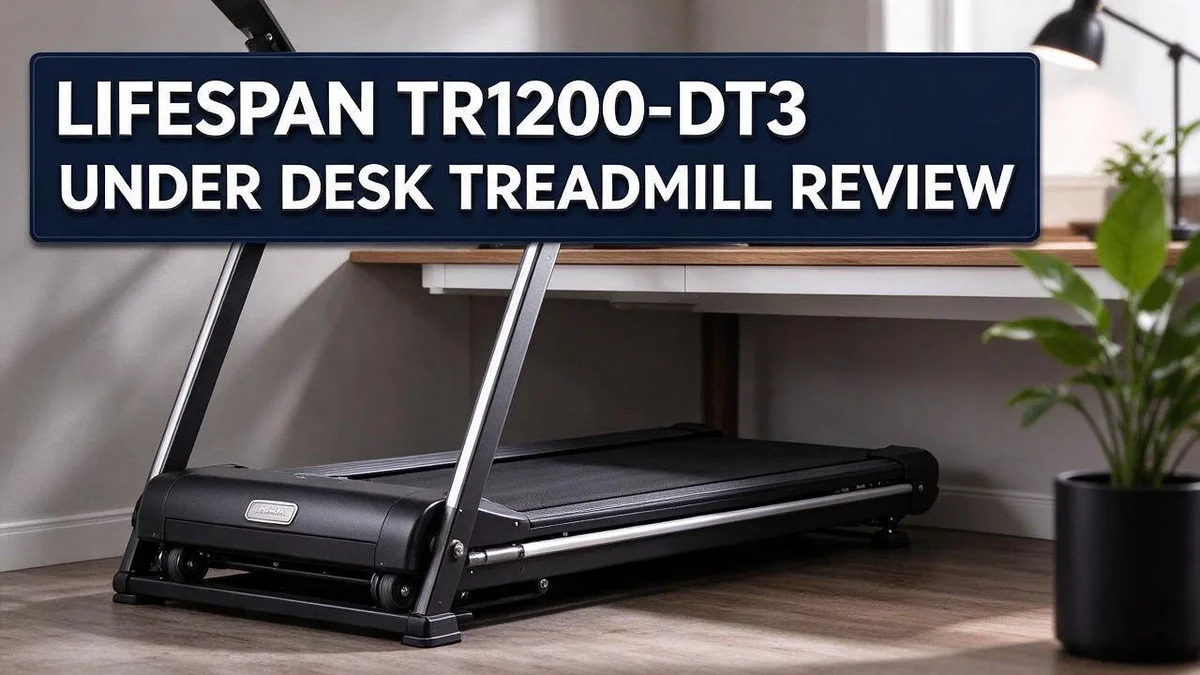
LifeSpan TR1200-DT3 Under Desk Treadmill Review: Worth Trying?
Do you want to move more during your workday? An under desk treadmill lets you walk while you type, call, or read emails.
Walking at your desk helps you stay active. Many people sit for hours each day, so small steps really add up.
The LifeSpan TR1200 model runs quietly at about 40 dB. It folds away when you need floor space. It also includes a built-in speaker, a heart rate monitor, and a remote control.
In a Nutshell
- Useful extras: The unit includes a built in speaker, a heart rate monitor, and a remote control. You can play music and track your effort without stopping your stride.
- Folding design: The frame folds up after your walk. This makes storage easy in a small home office or a shared room.
- Shock absorbent deck: The deck softens each step. Many walkers may find this easier on their joints during longer sessions.
- Large footprint: This model takes up more floor space than a compact walking pad. Measure your desk area before you order.
- Other models: The TR800 DT3, TR1000, and TR5000 offer other choices in the same lineup. Each option may suit different needs, so compare their features before you decide.
- Mixed reviews: Six expert reviews gave this model a 73% average. Owner feedback varies, so check recent reviews and support experiences before you commit.
Build and Footprint

Last update on 2026-11-10 / Affiliate links / Images from Amazon Product Advertising API
Build quality matters when you plan to walk at your desk every day. This model uses a sturdy frame that keeps the deck steady under your feet.
The footprint is the biggest trade off. The unit takes up more floor space than a compact walking pad. Measure your room before you commit.
Start by looking at the space around your desk. You need room for the deck, the frame, and a clear path to step on and off. A wide desk and open floor make setup easier.
Plan for storage too. When the session ends, the unit can move to a corner or closet. This helps if you share your office with others or use a guest room.
Stability is another key point. One owner of a 2011 unit reported no unusual noise or slippage, which hints at lasting build quality. That kind of feedback suggests the frame holds up over time.
Check your desk height too. The treadmill must slide under the desk with enough clearance for your legs. Measure that gap before you choose a model.
Dimensions can vary across the lineup, so compare each model side by side. Pick the one that fits your room with some space to spare.
Your flooring matters too. Carpet or a thick rug can keep the frame steady. Hard floors may need a mat to protect the surface and reduce noise.
Think about who shares the space. Family members, pets, and visitors can walk past the unit. So keep the belt area clear.
Plan for cable placement too. Keep the power cord and remote out of the walking path to avoid trips.
In short, the build and footprint suit people with a dedicated corner. If you have open space and a steady floor, this model can fit well.
Measure twice, then decide. A little planning makes your walking routine smoother from day one.
Motor and Walking Performance
Smooth motion matters most during long workdays. You want a belt that starts gently and stops without a jolt. Owners often judge a treadmill by how steady the walk feels.
One owner of a 2011 unit reported no unusual noise or slippage. That feedback suggests the drive system can hold up over years of use. Every unit can vary, so test it in person when possible.
Walking at a light pace suits this treadmill best. Your steps stay gentle, so typing and reading feel natural. Faster striding may feel less comfortable at a desk.
Pace control makes a difference. Start at a slow speed for the first few minutes. Then raise the pace only when your posture feels relaxed.
Need more power? Compare this model with the TR5000. The TR5000 uses a 3.0 HP motor, which suits heavier daily use. Choose the model that matches your walking habits.
Regular care keeps performance consistent. Wipe dust from the deck and check the belt alignment often. A simple monthly check helps the walk feel smooth for years.
Build up your daily total slowly. Start with short sessions and add time each week. Your legs and back will adjust with gentle progress.
Watch how the motor responds during each session. Notice any hesitation when you change pace. Report issues early so the unit stays in good shape.
Steady rhythm helps your focus. A consistent belt speed lets your mind settle on work. Many people find this rhythm easier than stop and go walking.
Think about your typing style too. Light steps keep your hands steady on the keyboard. Small bounces can blur your screen when you read closely.
In short, the motor suits steady and light walking during work hours. Test your pace for a week before you decide. Your daily habits will show whether this model fits your routine.
Noise and Shock Absorption
Noise matters more than many people expect. A loud treadmill can disturb phone calls, coworkers, and family members nearby.
The LifeSpan TR1200-DT3 runs at about 40 dB, which sits close to a soft background hum. That level suits most home offices and shared living spaces.
Real sound depends on your setup, though. Your floor, your desk, and your walking speed all change what people hear.
Test the sound before you commit. Ask someone to stand in the room while you walk at a light pace. Listen for belt slap, motor whine, or rattling parts.
Shock absorption works on two levels. The deck cushions your feet, and it also limits how much vibration reaches the floor beneath you.
Vibration can travel through hard floors and reach the room below. A thin carpet or a rubber mat under the frame helps cut that transfer.
Your joints benefit from a gentler surface too. Hours of walking on a hard surface can feel tiring, so a cushioned deck helps many users stay comfortable.
Quiet performance also depends on upkeep. Tighten loose bolts and check the frame after each few weeks of use. Fix small rattles early so they do not grow into louder problems.
Expert reviews show mixed opinions about the overall experience. Some buyers may notice more sound than others, especially in small rooms with thin walls.
Good habits keep noise low. Place the unit on a mat, walk during calmer hours, and play music or run a fan to mask light sounds. These steps help the treadmill fit smoothly into a busy home.
Top 3 Alternatives
WalkingPad C2

Last update on 2026-11-09 / Affiliate links / Images from Amazon Product Advertising API
The WalkingPad C2 fits well in small spaces. It folds up quickly, so you can store it after each walk. Its slim frame and simple controls help you start right away.
This model suits people who want a light and portable option. Many users also like how quietly the motor runs during calls.
UREVO SpaceWalk


Last update on 2026-11-11 / Affiliate links / Images from Amazon Product Advertising API
The UREVO SpaceWalk has a clean and modern look. Its low profile lets it slide under many standing desks. A remote control lets you change speed without reaching down.
Office workers often choose this model because it blends into the room. Its smooth belt makes steady walking feel natural during long workdays.
WalkingPad A1 Pro

Last update on 2026-11-10 / Affiliate links / Images from Amazon Product Advertising API
The WalkingPad A1 Pro adds extra features to the basic walking setup. It pairs with a smartphone app, so you can track steps and time. This helps you see your progress each day.
People who enjoy tracking their numbers will like this model. Its foldable design keeps it out of the way when you finish walking.
Desk Setup and Fit
Clearance under the desk comes first. Check the gap between the desk frame and the floor. Your feet need room to step onto the belt without hitting a crossbar.
Your desk also carries extra weight. Monitors, keyboards, and laptops already load the frame. Adding a treadmill and a walking user can strain weak supports. Read the desk weight rating before you set up.
Reach matters more than many people think. The remote and desk controls should sit within easy reach while you walk. Keep the controls on the desk surface, not on the floor.
Screen height needs attention too. Your monitor should sit at eye level so your neck stays relaxed. If the screen sits too low, you may lean forward and lose good posture.
Keyboard and mouse placement changes how you feel over time. Your elbows should bend at about a right angle. Keep the keyboard close so your shoulders stay loose.
Documents and small items need a home as well. A tray or document holder keeps papers from sliding off the desk. Place frequently used items within arm’s length. This keeps your hands free and your posture steady.
Your chair needs a plan too. Roll it away from the desk before each session. Then you can step on without bumping the seat or the wheels.
Think about light from your window or lamp. Bright light directly in front of you can cause glare on the screen. Position the desk so light falls from the side. Less glare means less eye strain during longer sessions.
Finally, try a real work session before you commit. Work at your desk for one full hour while walking slowly. Notice whether you need to reach across or twist your body. Small changes now prevent frustration later.
Features and Controls
The LifeSpan TR1200-DT3 keeps its controls simple. You can start, stop, and change speed from a remote. Most controls sit on the remote, so you rarely need to touch the frame.
A remote keeps your focus on work. You do not need to bend down or reach for the frame. Place it on your desk so it stays close.
The heart rate monitor offers a quick check. You can glance at your pulse while you type or take calls. Treat the reading as a general guide, not a medical result.
The built in speaker plays audio at a low level. Many people like music or videos while they walk. Keep the volume low so you can still hear the room.
Manual incline changes the effort level. You set the incline by hand before you start. Keep it steady during each session so your pace stays predictable.
The frame folds up for storage. You can fold it away when you need the floor space back. This helps in small offices or shared homes.
Weight capacity matters for every user. The unit supports up to 350 pounds. Check this limit with everyone who will use the treadmill.
The top speed of 3.8 MPH works as a ceiling. Think of it as a limit, not a goal. Most people will use only a fraction of it during desk sessions.
Learn each button before your first walk. Press every control while you stand beside the unit. Confirm that the stop function responds right away.
Check the readouts before you change anything. The display shows speed and time at a glance. Read these numbers while you stand still so you avoid missed steps.
Small features add up over time. The speaker, the monitor, and the remote can make each session feel easier. Use what helps you, and skip what does not.
Pros and Cons
Pros
- Earned praise from a reviewer who ranked it among the best under desk treadmills tested
- One owner of a 2011 model reported no odd noise or belt slipping
- Helps you build a steady walking habit while you work
- Suits people who want a simple setup with few parts to manage
- Works well for light walking during calls or long reading sessions
Cons
- Its large footprint may not fit small home offices
- The top speed stays low for people who want a faster pace
- Expert reviews average 73 percent, so opinions vary
- One user reported a poor support experience with the TR1200i model
Who Should Buy It
This treadmill suits people who sit for most of the day. Office workers, writers, and coders can add steps to their routine without leaving their desks.
Parents who work from home often struggle to find time for exercise. A slow walk during the school run is not always possible. This unit lets them move while they answer emails.
People who take many video calls benefit most. Calls can last an hour or more. Walking keeps the body loose and the mind fresh.
Students who study at a desk can use it too. Reading and note taking pair well with a light walk. The quiet motor, rated near 40 dB, will not disturb roommates or family members.
Writers often feel restless during long drafts. A gentle walk can clear the mind and spark new ideas. Many people find their best thoughts come during movement.
Runners and athletes will want a different machine. This model suits relaxed strolls, not training sessions. Serious fitness goals need a faster setup.
Freelancers with irregular hours can also gain from it. Ten minutes of walking between tasks adds up over a week. Short sessions fit into busy schedules easily.
Shift workers who keep odd hours may find it useful. Walking at a set time helps keep energy steady. Pairing each session with a playlist can make the time pass faster.
Older adults who want light movement can also try it. Start with short sessions and build up slowly. Stop right away if you feel dizzy or sore.
Anyone with a health condition should speak with a doctor first. A medical professional can recommend a safe pace and session length. Then the walking plan can begin.
Shared workspaces need a quick chat with housemates first. Everyone should agree on walking times during calls and meetings.
The best buyer is someone who will use it daily. A machine sits unused in a corner when motivation fades. Honest habits matter more than any feature list.
Final Verdict
The LifeSpan TR1200-DT3 earns a strong spot on many home office lists. It suits people who want gentle movement during a busy workday.
Before you buy, measure the space under your desk. Check the height, depth, and width so the frame and your legs fit comfortably.
Floor type matters too. Carpet and hard floors can change how the belt feels, so think about where it will sit.
Map out your workday before you start. Pick two or three blocks where a short walk fits, such as after lunch or during a slow hour.
Start slowly for the best results. Try ten to fifteen minute sessions at a gentle pace during your first week.
Your habits will shape the value you get. Consistency matters more than speed with this machine, so aim for regular use rather than long sessions.
Keep a simple log for the first month. Note the minutes you walk and how you feel by late afternoon. Small notes show whether the routine works for you.
Good posture helps too. Stand tall, relax your shoulders, and keep your eyes level with the screen. This habit helps your body adjust to walking while you work.
Noise is another factor. At about 40 dB, the motor stays quiet, which helps in shared homes. Still, people who share a home may notice footsteps on the belt.
Routine care also matters. Wipe the belt, check the frame bolts, and store the unit in a dry spot.
If you need more speed or power, look at the LifeSpan TR5000. Its 3.0 HP motor suits heavier use and may fit better for some buyers.
Read several reviews before deciding. Look for patterns that match your space, schedule, and goals.
Overall, this treadmill makes sense for desk workers who value quiet, simple movement. It may not fit every goal, but it can help you move more during the day.
Frequently Asked Questions
Does the TR1200-DT3 track your heart rate?
Yes, it includes a heart rate monitor. You can check your effort level while you walk. This helps you keep a pace that feels comfortable and safe.
Can you fold the treadmill for storage?
Yes, the frame folds up. You can move it out of the way when guests visit or when you need more floor space. Clear the area before you fold it.
How much weight can the treadmill support?
The treadmill supports up to 350 pounds. Check this limit before you set it up, especially if others will use it too.
Can you control it without leaning forward?
Yes, a remote control comes with the unit. You can start, stop, and adjust settings from your chair. This keeps your focus on your screen during calls.
Does it play sound while you walk?
A speaker is included, so you can play music or podcasts. Keep the volume low in shared workspaces. Headphones work well if you want complete quiet.

Hi, I’m Sarah Hill — the founder and voice behind Heavy Lift Vault. I’m passionate about fitness, strength training, and health technology. I spend my time researching, testing, and reviewing workout equipment and health devices so you don’t have to guess. My goal is to deliver honest, detailed, and trustworthy reviews that help you invest wisely in your fitness journey.