AEKE S1 Pro Smart Home Gym Review 2026: Worth Buying?
Home gyms used to mean stacks of iron, a squeaky bench, and a corner of the garage you stopped visiting by February. The AEKE S1 Pro tries to replace all of that with one folding machine, a camera, and a motor that pulls back when you pull.
I spent time with it, read through what long term owners report, and compared it against the big names in the category. This review covers the unboxing, the resistance feel, the AI coaching, the real weaknesses nobody advertises, and whether the price makes sense in 2026.
If you are weighing a smart gym against a gym membership, read the next few minutes carefully. The answer is not the same for everyone.
In a Nutshell:
- 220 pounds of digital resistance split as 110 pounds per side, adjustable in single pound steps. That is enough load that most lifters will fail before the machine does, especially on presses, rows, and flies.
- Five resistance modes change how force feels. Constant, eccentric, concentric, elastic, and rowing each create a different stimulus from the same number on the screen. Eccentric mode is the standout feature and the main reason to pick this machine over a rack of dumbbells.
- No subscription, ever. AI coaching, form tracking, progress history, and the full class library come with the purchase. Over three years that difference is worth more than most people calculate.
- It folds to roughly 3.2 square feet and needs no wall mounting or installation. You plug it in and train. The catch is weight: the unit sits near 242 pounds, so positioning it takes two people.
- The price is high. Expect around $3,999 for the complete set and a little more with a bench, with discounts appearing often. This is a real financial commitment, not an impulse buy.
- It does not replace a barbell. Heavy squats and deadlifts under a loaded bar still need a rack. The S1 Pro covers almost everything else.
What Is the AEKE S1 Pro Smart Home Gym?

Last update on 2026-10-29 / Affiliate links / Images from Amazon Product Advertising API
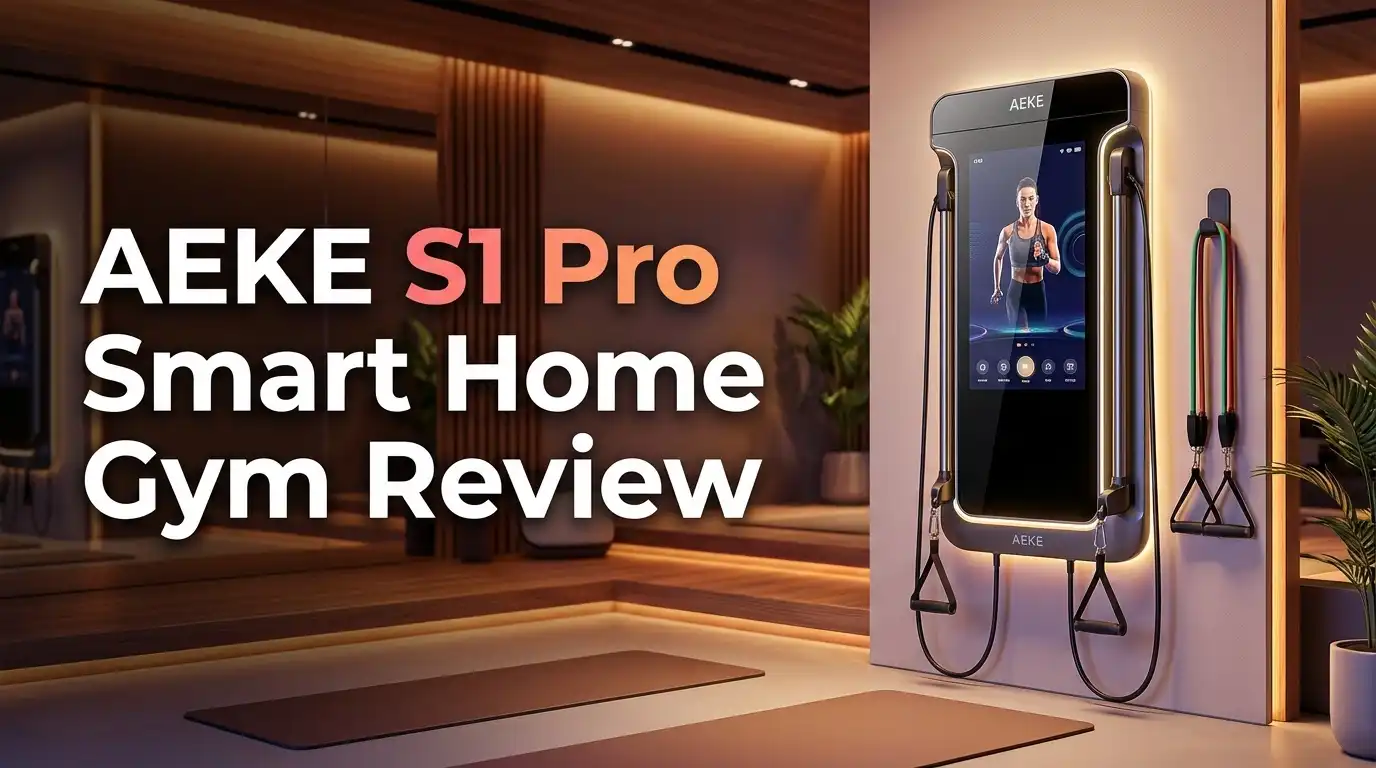
The AEKE S1 Pro is an all in one strength machine built around a motorized cable system. Instead of weight plates, a 1300W motor creates resistance electronically and feeds it through two cables.
You set the load on a touchscreen, grab the handles, and the motor fights you. AEKE positions the S1 Pro as a replacement for more than 23 traditional gym machines across roughly 320 movements.
The unit stands upright, rolls on wheels, and folds flat against a wall. A 27 inch touchscreen tilts from slightly below level up to 90 degrees, so you can see it while standing, sitting, or lying on a bench.
A wide angle camera above the screen watches your form in real time. The whole thing runs without a monthly fee, which is the detail that separates it from most rivals.
Unboxing and First Impressions
The box is big, heavy, and arrives on a pallet in most cases. Opening it is a two person job. Inside, the main tower sits wrapped in foam with the accessories packed in a separate tray: two smart grip handles, a cross bar, a triceps rope, two ankle straps, a heart rate armband, a resistance controller, a spare cable, a magnetic camera cover, and an eight electrode smart scale.
Setup is refreshingly simple. There is no assembly, no drilling, and no installer appointment. You unwrap it, stand it up, plug it into a standard outlet, and the screen boots. Most people are training inside twenty minutes.
First impressions on quality are strong. The frame feels dense, the pedal platform is solid underfoot, and the handles have a grippy, premium texture. Nothing on it creaks.
Build Quality, Size, and How It Feels Under Load
Smart gyms live or die on stability. Load a cable machine heavy and a cheap frame will rock, shift, or walk across the floor. The S1 Pro does none of that. Under a maxed lat pulldown it stays planted, with no shake through the tower and no flex in the arms.
Folded, the footprint lands around 3.2 square feet. Opened for training, you need roughly 9.7 square feet plus room to move. That fits a spare bedroom, a basement corner, or one bay of a garage.
The honest trade is weight. At about 242 pounds, you are tipping it onto its wheels, not carrying it. Moving it between rooms is possible but not something you will want to do weekly. The pedal platform is rated to well over a thousand pounds, so deadlift setups feel secure.
Top 3 Alternative for AEKE S1 Pro

Last update on 2026-10-29 / Affiliate links / Images from Amazon Product Advertising API
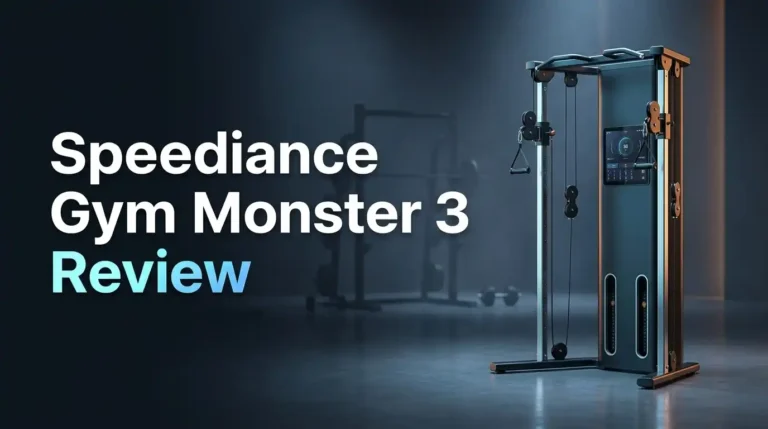
Speediance Gym Monster Smart Home Gym

Last update on 2026-10-29 / Affiliate links / Images from Amazon Product Advertising API
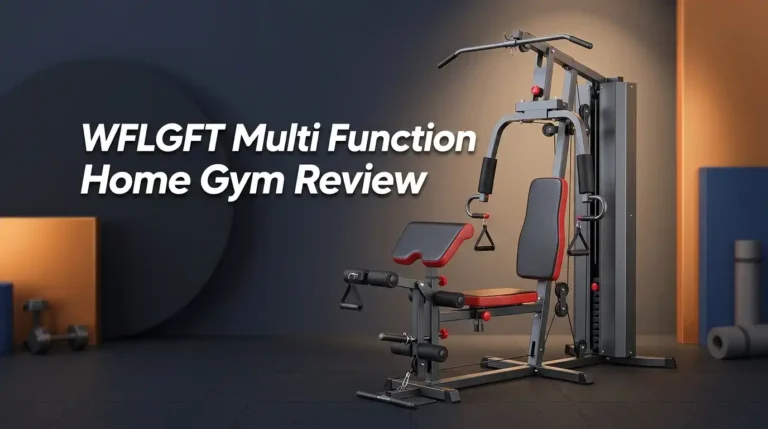
AEKE Smart Home Gym Fitness Mirror K1

Last update on 2026-10-29 / Affiliate links / Images from Amazon Product Advertising API
Tonal 2 Smart Home Gym System
Digital Resistance and the Five Training Modes
This is where the S1 Pro earns its price. The motor delivers up to 220 pounds total, 110 per side, in one pound increments. That granularity matters more than the ceiling. Adding one pound to a lateral raise is impossible with dumbbells and easy here.
The five modes change the shape of the force curve. Constant holds steady tension through the full range. Eccentric loads the lowering phase heavier than the lifting phase, which is the classic hypertrophy trick that normally requires a training partner. Concentric does the reverse. Elastic ramps tension as you extend, like a heavy band. Rowing tunes the pull for rowing patterns.
The same 80 pounds feels like three different exercises depending on the mode you pick. Cable travel is smooth with no dead spots or catching.
Eccentric Mode and Spotter Assist Explained
Eccentric overload is the single best argument for this machine. Say you press 60 pounds comfortably. You set 80 on the way down and 60 on the way up. Your muscles get the heavier stretch under load where they are strongest, without the risk of getting pinned. Coaches have used this method for decades, but it has always required a partner and a barbell.
Safety features back it up. Smart Assist senses when your force output collapses and drops the resistance so the handle does not snap back. Auto Stop releases tension if you lose grip entirely. Resistance also ramps gradually over about two seconds rather than hitting you instantly.
Combined, these let you train genuinely close to failure alone. That is something a dumbbell rack simply cannot offer.
The Adjustable Arms and 185 Angles
The arm system uses nine height levels, seven tilt levels, and three width positions, which works out to 185 combinations. You adjust them without tools, and on the S1 Pro the movement is fast and light rather than a wrestling match.
Why does this matter? Shoulder angle changes everything on presses and flies. If your shoulders carry old damage, being able to shift the cable path a few degrees is the difference between training comfortably and skipping chest day. Raising the arms fully overhead also gives you a legitimate lat pulldown with real extension, which many compact smart gyms fail to deliver.
The system is built to suit users roughly between five feet and six feet five inches. Taller or shorter lifters should check the range before buying.
AI Form Tracking: How Good Is the Camera?
A 130 degree wide angle camera records at 1080p and 60 frames per second. A dedicated on device chip runs 42 point skeletal tracking locally, with no video leaving the machine. The system flags rounded lower back, knee cave, shoulder shrug, forward head position, and spinal collapse as they happen, not in a summary afterward.
AEKE claims around 95 percent local accuracy and coverage of roughly 80 percent of the body across standing, seated, and lying positions. In practice the feedback is useful for squats, rows, presses, and hinges.
Be realistic about the limits. Unusual angles, floor work close to the base, and movements where your body leaves the camera frame get patchy results. The AI coach catches obvious errors well and subtle ones inconsistently. A magnetic cover blocks the lens when you finish.
The Fitness Assessment and Adaptive Programming
First boot runs a six dimensional assessment based on established sports science testing models. It checks body composition through the included smart scale, posture through the camera, cardio endurance through the heart rate armband, plus flexibility, movement patterns, and strength.
From that data the system sets a starting weight for every major lift and builds a plan around your weak points. It then tracks rep velocity across sessions. Move a set smoothly and it raises the load next time. Miss a week and it reshuffles the schedule instead of leaving you behind.
The machine supports nine separate user accounts, each with its own assessment and history. That makes it genuinely practical for a household rather than one person. Experienced lifters who write their own programs will mostly ignore this layer, and that is fine.
Workout Library, Classes, and Daily Use
The library holds roughly 165 expert led classes across ten categories: strength, hypertrophy, HIIT, boxing, yoga, dance, mobility, meditation, and more. Production quality is solid and the coaching cues are clear. Boxing and kickboxing sessions get good feedback from users who expected filler content.
There are also movement games under the lifestyle menu, which sounds like a gimmick until your kids start doing squat challenges while you rest between sets.
Daily operation is smooth. Handles have a button that activates resistance, so you never walk back to the screen between sets. Control also works through the touchscreen or a small Bluetooth remote. The motor runs around 40 to 60 decibels, quiet enough for a 5am session without waking the house.
No Subscription: The Real Money Math
Almost every major smart gym sells you hardware and then charges monthly to unlock the software. Those fees commonly land between $20 and $60 each month, and they continue whether you train or not.
AEKE includes everything in the purchase price. AI coaching, form correction, the class library, progress history, and multiple user profiles carry no recurring charge.
Run the numbers over three years. A $40 monthly plan adds $1,440 to a competitor’s sticker price. Over five years it is $2,400. That gap closes most of the price difference between the S1 Pro and cheaper subscription based machines.
There is a second benefit people overlook. When motivation dips, an unused machine with no subscription costs you nothing extra. An unused machine with a monthly bill becomes a guilt payment.
What the AEKE S1 Pro Does Not Do Well
No honest review stops at the good parts. Here is where the S1 Pro falls short.
It does not replace a barbell and rack. If back squats, bench press under a bar, and heavy conventional deadlifts are the core of your training, 110 pounds per cable will not satisfy you.
The AI form coach is helpful, not infallible. It misses errors outside the camera zone and occasionally flags clean reps.
AEKE is a young company founded in 2022 with a short hardware track record. Long term parts availability is an unknown.
The bench is a separate purchase, which stings at this price. Moving the machine needs two people. Advanced lifters will also find the guided programs too conservative to follow strictly.
Pros and Cons of the AEKE S1 Pro
Pros
- Zero subscription fees for AI coaching, classes, form tracking, and progress history
- 220 pounds of smooth digital resistance in precise one pound increments
- Eccentric, concentric, and spotter style modes that normally require a training partner
- Arms adjust fast across 185 positions, including a true overhead lat pulldown
- Folds to about 3.2 square feet with no installation or wall mounting required
- Quiet motor suitable for apartments and early morning sessions
- Nine user profiles with separate plans, plus an included smart scale and heart rate armband
- Rock solid under heavy load with no shake or frame flex
Cons
- Premium price that sits near $4,000 before accessories
- Heavy at 242 pounds, so repositioning needs two people
- Bench costs extra and is close to essential for pressing work
- No substitute for a barbell and squat rack on heavy lower body lifts
- Form tracking accuracy drops outside the camera coverage zone
- Short company history compared with established equipment brands
- Self programming lifters will not use most of the software they paid for
Who Should Buy the AEKE S1 Pro?
Buy it if you train at home, want full body coverage from one machine, and value your floor space. It suits parents working out in a spare room, apartment dwellers who cannot bolt anything to a wall, and anyone tired of paying both a gym membership and an app subscription. It is also excellent for lifters training alone who want to push close to failure safely.
Skip it if your garage already has a rack, a bar, and plates you love. Skip it if competitive powerlifting is the goal. Skip it if $4,000 would strain your finances, because motivation does not come bundled in the box.
The sweet spot buyer is the intermediate lifter who wants structure, safety, and silence without a monthly bill.
Final Verdict: Is It Worth It in 2026?
The AEKE S1 Pro is one of the strongest arguments yet that a single machine can run a complete strength program at home. The resistance is real, the cables are smooth, the arms adjust better than most rivals, and the eccentric and assist modes deliver training methods that normally need a partner. Removing the subscription changes the long term math in its favor.
It is not perfect. The price is steep, the bench costs extra, the AI coach is good rather than brilliant, and the company is still young.
Rating: 4.5 out of 5. If you want a serious, quiet, space efficient strength system with no recurring fees, this is the machine to beat in 2026.
Frequently Asked Questions
How much weight does the AEKE S1 Pro provide?
It delivers up to 220 pounds total, split as 110 pounds per side, adjustable in one pound steps. Most users cannot max out the lat pulldown.
Does the AEKE S1 Pro require a subscription?
No. AI coaching, form tracking, the full class library, and progress tracking are included in the purchase price with no monthly fee.
How much space does it need?
It folds to roughly 3.2 square feet and opens to about 9.7 square feet of training area. No wall mounting is required.
Is the AEKE S1 Pro hard to set up?
No. There is no assembly. You unbox it, stand it upright, plug it in, and start. Two people should handle the lifting.
Can beginners use it safely?
Yes. The assessment sets conservative starting loads, the camera corrects form, and automatic safety features release tension if you fail a rep.
Does it come with a bench?
No. The B3 flat bench and B3S foldable bench are optional add ons, and one of them is worth buying for pressing movements.
Can it replace a full gym?
For cable work, accessory lifts, conditioning, and most hypertrophy training, yes. For heavy barbell squats and deadlifts, you still want a rack.

Hi, I’m Sarah Hill — the founder and voice behind Heavy Lift Vault. I’m passionate about fitness, strength training, and health technology. I spend my time researching, testing, and reviewing workout equipment and health devices so you don’t have to guess. My goal is to deliver honest, detailed, and trustworthy reviews that help you invest wisely in your fitness journey.