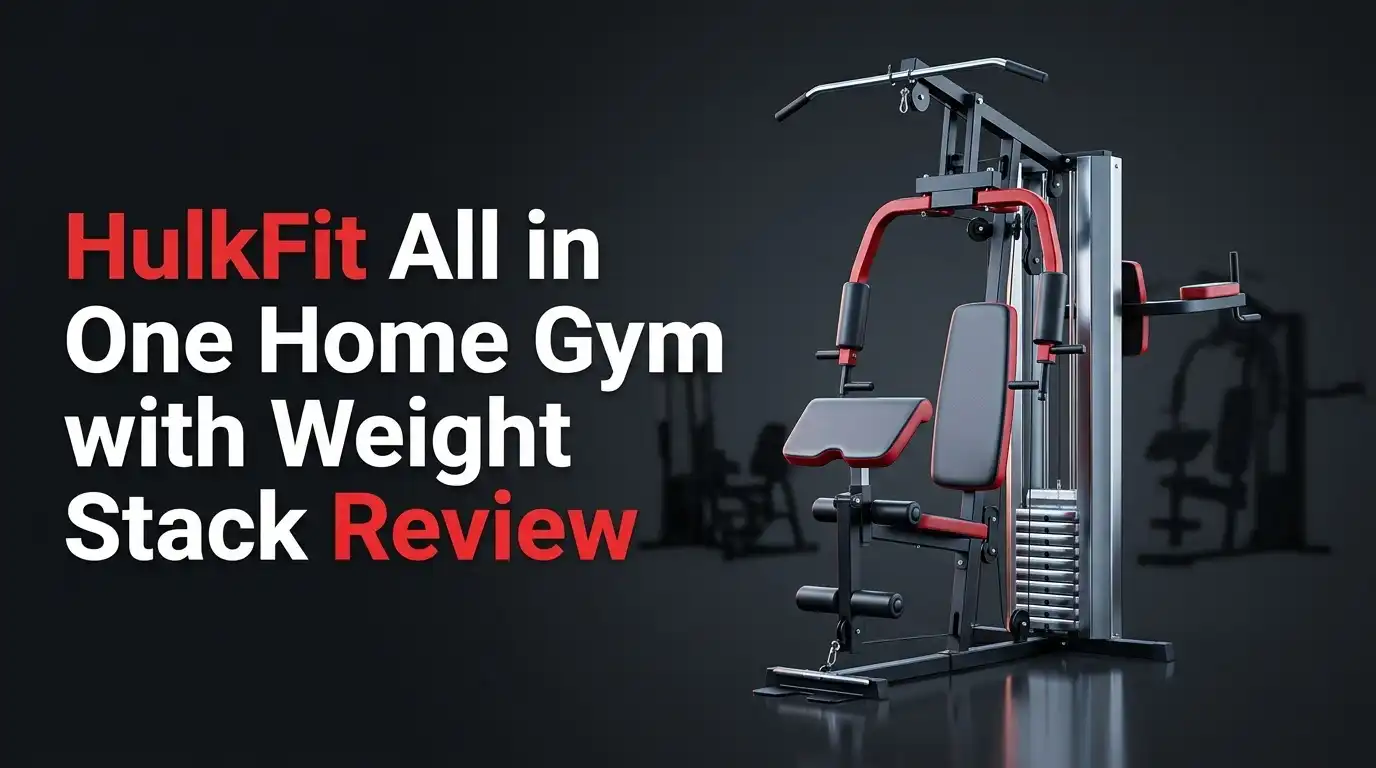
HulkFit All in One Home Gym with Weight Stack Review 2026
Home gyms used to mean a garage full of plates, bars, and clutter. That has changed. Machines like the HulkFit All in One Home Gym pack a full strength circuit into one steel tower. You get a weight stack, a leg press, a lat pulldown, and a pulley system in a footprint smaller than a sofa.
But marketing photos never tell the whole story. A 160 pound stack sounds great until you try a heavy row. A “simple assembly” claim sounds great until you open four heavy boxes on a Saturday morning.
This review covers the real experience, including the parts HulkFit would rather you skip. Keep reading, because by the end you will know whether this machine fits your body, your budget, and your room.
In a Nutshell:
- The weight stack is the main selling point. You get a 160 pound selectorized stack with a pin. No plates to load, no clanging, no storage problem. That alone separates this machine from cheap band based towers.
- Build quality beats the price tag. The steel frame feels solid under normal loads, and the pre assembled nylon pulleys roll quietly. Neighbors downstairs will thank you.
- Assembly is the weak point. Expect three to five hours, two people, and a few confusing diagram steps. Patience matters more than skill here.
- Strong lifters will outgrow the stack. 160 pounds works well for pressing, flyes, and curls. For heavy rows and leg presses, serious lifters will hit the top plate within months.
- Space planning is not optional. The machine needs roughly a six foot by four foot footprint plus clearance for your arms and legs.
- Best fit: beginners, returning lifters, apartment dwellers, and busy people who want a complete session in thirty minutes. Poor fit: advanced powerlifters chasing heavy numbers.
What Is the HulkFit All in One Home Gym with Weight Stack?

Last update on 2026-10-28 / Affiliate links / Images from Amazon Product Advertising API
The HulkFit All in One Home Gym is a single station strength machine built around a selectorized weight stack. You pick a weight with a pin, sit down, and train.
The frame holds several stations in one tower. These include a chest press, a pec fly, a lat pulldown, a low row, a leg press, and a cable pulley for curls and pressdowns.
HulkFit built its name on power cages and squat racks, and that background shows in the steel. The company targets home users who want gym results without a gym membership.
The machine lists a 160 pound stack and a compact footprint near 68 inches deep by 43 inches wide by 87 inches tall. It stands upright, so ceiling height matters more than floor space.
Unboxing the HulkFit Home Gym
The delivery is the first reality check. This machine arrives in multiple heavy cartons on a pallet in many cases. Total shipping weight sits in the 250 to 300 pound range. Do not plan to carry the boxes alone. The stack plates come in their own box, and that box is brutal to lift.
Opening the cartons feels oddly satisfying. Each steel tube sits in molded foam. Hardware arrives in labeled bags, which saves real time later. The nylon pulleys come pre assembled on their brackets, so you skip the fiddly bearing work that ruins budget machines.
My first impression was the powder coat finish. It looks clean and even, with no chips on arrival. The vinyl pads smell strongly of new foam for about two days. Open a window.
Assembly Experience and Time Needed
Here is where honesty matters. Assembly takes most people three to five hours. Some builders report a full day. The manual uses exploded diagrams with minimal text. A few steps show bolt orientation poorly, and you will likely back up at least once.
Bring a second person. The upright frame is heavy and awkward to balance while you thread bolts. Cable routing is the trickiest part. The cables must follow an exact path through every pulley, and one missed wheel means the stack binds.
My advice: leave every bolt slightly loose until the frame stands square, then tighten everything in order. This single trick saves an hour of frustration. Keep a socket wrench nearby, because the included tools work but slow you down badly.
Build Quality and Frame Strength
Once built, the machine feels reassuring. The steel tubing resists wobble during presses and pulldowns. Most buyers describe it as sturdy for home use, not commercial grade. That distinction is fair and worth repeating.
The guide rods run straight, so the stack travels smoothly without rattling. The nylon pulleys stay quiet even during fast reps. Cable quality looks good, with coated steel cable rather than thin braided line.
Weak points exist. The seat and back pads use firm foam that compresses over time. Some users add a towel for comfort during long sessions. Bolts also loosen during the first few weeks as the frame settles. Check every bolt after two weeks of use, then monthly. Five minutes of maintenance prevents squeaks and keeps the machine stable for years.
Top 3 Alternative for HulkFit All in One Home Gym


Last update on 2026-10-28 / Affiliate links / Images from Amazon Product Advertising API
Marcy MWM 988 Multifunction Steel Home Gym 150lb Weight Stack Machine

Last update on 2026-10-28 / Affiliate links / Images from Amazon Product Advertising API
Mikolo Home Gym Workout Station with 150LBS Weight Stack

Last update on 2026-10-28 / Affiliate links / Images from Amazon Product Advertising API
Marcy 150 lb Multifunctional Home Gym Station MWM 990
The 160 Pound Weight Stack Explained
The stack is the heart of this machine. You slide a pin into a plate and the machine lifts that weight. Each plate adds a set increment, which makes progression simple and fast.
Pulley ratio changes the feel. Many home gyms use a 1 to 1 ratio on the press arms and a different ratio on the high pulley. That means 100 pounds on the pin may not feel like 100 pounds in your hands. This is normal for cable machines, not a defect. Judge your progress by reps and plate numbers, not by comparing to barbell loads.
For most beginners and intermediates, 160 pounds covers chest press, flyes, curls, pressdowns, and shoulder work easily. The limit shows on rows, pulldowns, and leg press, where trained lifters pull far more.
Lat Pulldown and High Pulley Station
The lat pulldown performs well. The bar travels smoothly, and the cable path keeps tension through the full range. Thigh pads hold you down so you can pull near the top of the stack without lifting off the seat.
The same high pulley handles triceps pressdowns, straight arm pulldowns, face pulls, and cable crunches. This station alone justifies a big share of the price.
The honest limit is pull height. Taller users above six foot two may find the seat to bar distance tight. Shorter arms on the thigh pad adjustment also leave some users wishing for one more notch. Test your setup before you commit to heavy sets. If the pads pinch, lower the weight and focus on controlled reps instead.
Leg Press Station Performance
The leg press is the feature buyers ask about most. It works, and it adds real value to a machine this size. You sit, place your feet on the platform, and push against the stack through a cable linkage.
Expect a different feel from a commercial leg press. The resistance curve is lighter at the bottom and the path is shorter. Serious leg day lifters will max the stack quickly. That is the biggest honest drawback of the entire machine.
The fix is simple and effective. Use slow tempo, pause reps, and single leg work. A 160 pound stack with a four second lowering phase burns far more than a fast heavy set. Treat this station as accessory work rather than your primary squat replacement.
Chest Press and Pec Fly Movement
The press arms deliver the most natural feel on the machine. The arc matches a dumbbell press closely, and the handles sit at a comfortable width. The stack provides steady tension, so your chest stays loaded at the top.
The pec fly uses the same arms in a different position. It isolates the chest well and feels safe for shoulders at moderate weight.
Setup between movements takes seconds. You move a pin, adjust the seat, and continue. This speed makes supersets easy and keeps your heart rate up.
One small complaint: the handles use firm grips without much padding. People with hand issues may want lifting gloves. The press arms also sit at a fixed height, so very tall or very short users may notice a slight angle mismatch.
Low Row and Cable Options
The low pulley adds rows, upright rows, shrugs, biceps curls, and leg abduction work. A foot plate gives you a brace point for seated rows, which keeps your lower back safe.
Row strength grows fast, so this is the second station where the 160 pound stack becomes limiting. Most dedicated lifters will reach the full stack on rows within four to six months.
The workaround is volume. Higher reps, pauses at the chest, and single arm rows all extend the machine’s useful life. You can also add a resistance band over the handle for extra tension at the top.
The cable system accepts standard attachments, so a rope, a V bar, and ankle straps expand your options cheaply. That small upgrade transforms the machine’s variety.
Space Needs and Footprint
Measure before you buy. The machine stands close to 87 inches tall, which means a standard eight foot ceiling works, but a basement with ducting may not.
The base occupies roughly six feet by three and a half feet. Add two feet behind for the stack and three feet in front for the leg press and your knees. A realistic planning space is eight feet by six feet.
The machine is not portable once built. It has no wheels and weighs well over 250 pounds with plates. Place it in its final home before you tighten the last bolt. Furniture sliders under the base help with small adjustments. Protect your floor with rubber mats, because the frame concentrates weight on four small contact points.
HulkFit All in One Home Gym Price and Value in 2026
Last update on 2026-10-28 / Affiliate links / Images from Amazon Product Advertising API
Value is where this machine makes its strongest case. A gym membership for two people often runs past 900 dollars a year. This machine costs once and keeps working.
Compared to rivals, HulkFit sits in the middle of the market. It usually costs more than entry level Marcy stations and far less than a Force USA or Body Solid tower. You pay for the stack size, the quiet pulleys, and the leg press.
The honest value question is simple. If you train three times a week for a year, the cost per session drops below a cup of coffee. If the machine becomes a coat rack in March, no price is cheap. Buy it because you have a plan, not because it looks motivating.
What the HulkFit Home Gym Does Not Do Well
Every honest review needs this section. Here is where the machine falls short.
It does not replace a barbell. There is no squat, no deadlift, and no overhead barbell press. Those lifts build strength that cables cannot match.
It does not scale for advanced lifters. A 160 pound stack caps your rows and leg press long before you stop progressing.
Assembly is genuinely frustrating. The manual needs clearer text, and cable routing confuses many first time builders.
Pad comfort is average. Firm foam and fixed seat angles suit average sized users best.
Finally, customer service response times vary. Missing hardware happens occasionally, and replacement parts can take a week or more to arrive. Order early if you have a deadline.
Pros and Cons of the HulkFit All in One Home Gym
Pros
- 160 pound selectorized stack means fast weight changes with no loose plates to store.
- Quiet nylon pulleys keep workouts apartment friendly and smooth through the full range.
- Multiple stations cover chest, back, shoulders, arms, and legs in one compact tower.
- Solid steel frame resists wobble and feels stable during heavy pressing sets.
- Compact footprint fits a garage corner, spare room, or finished basement.
- Strong value compared to gym memberships and premium functional trainers.
Cons
- Assembly takes three to five hours and needs two people plus patience.
- The stack limits advanced lifters on rows, pulldowns, and leg press.
- No barbell movements, so squats and deadlifts need separate equipment.
- Pads use firm foam that feels hard during long sessions.
- Taller users above six foot two may find some stations cramped.
- Bolts loosen during the first weeks and need regular checks.
Who Should Buy the HulkFit Home Gym
This machine fits specific people very well. Beginners benefit most, because guided paths teach movement patterns safely without a spotter.
Returning lifters also do well here. After a long break, 160 pounds feels plenty, and the convenience keeps the habit alive.
Busy parents and shift workers gain the most practical value. A complete full body session takes thirty minutes with no commute and no waiting for equipment.
Apartment and condo owners should note the quiet pulleys and the lack of dropped plates. Neighbors barely notice.
Skip this machine if you compete in powerlifting, if you already own a rack and plates, or if your ceiling sits under seven and a half feet. In those cases, a functional trainer or a simple rack and barbell setup serves you better for similar money.
Final Verdict on the HulkFit All in One Home Gym
The HulkFit All in One Home Gym earns a confident recommendation with clear limits. It delivers a quiet, stable, complete strength station for a fair price. The stack system removes the biggest friction point in home training, which is loading and storing plates.
The machine is excellent for beginners and intermediates. It is adequate for strong lifters who treat it as accessory equipment. It is wrong for anyone chasing heavy barbell numbers.
Rate it around four stars out of five. Points come off for the painful assembly and the stack ceiling on pulling movements.
If you want consistency more than you want personal records, this machine will serve you well for years. Build it carefully, check the bolts, and use it three times a week.
Frequently Asked Questions
How long does assembly really take?
Plan for three to five hours with two people. Solo builders often need a full day. Cable routing causes most delays, so follow the diagram slowly and keep bolts loose until the frame stands square.
Is 160 pounds enough weight for building muscle?
Yes for most people, especially beginners and intermediates. Muscle grows from effort near failure, not from a specific number. Use slower tempos, pauses, and single limb work once the stack feels light.
Can tall people use this machine comfortably?
Users up to about six foot two report a good fit. Taller lifters may feel cramped on the lat pulldown and leg press. Test the seat positions early and adjust pad settings before heavy training.
Does the machine need a special floor or mat?
A rubber mat is strongly recommended. The frame concentrates weight on four small feet, which can dent wood or vinyl flooring. Mats also reduce noise and vibration in apartments.
Can I add more weight later?
The stack is a fixed system, so adding plates is usually not supported. Resistance bands looped over handles add tension cheaply and effectively. Check the manual before modifying anything, because changes may void the warranty.
How does it compare to a Bowflex style gym?
A weight stack gives consistent resistance through the full range. Rod and band systems feel lighter at the start and harder at the end. Most lifters prefer the stack feel for strength training.
What maintenance does it need?
Check and tighten bolts after two weeks, then monthly. Wipe the guide rods and apply a light silicone spray twice a year. Inspect cables for fraying every few months and replace them if you see wear.

Hi, I’m Sarah Hill — the founder and voice behind Heavy Lift Vault. I’m passionate about fitness, strength training, and health technology. I spend my time researching, testing, and reviewing workout equipment and health devices so you don’t have to guess. My goal is to deliver honest, detailed, and trustworthy reviews that help you invest wisely in your fitness journey.