Bells of Steel Adjustable Kettlebell Review 2026: Worth It?
Buying kettlebells one at a time gets expensive fast. A 16 kg bell today, a 20 kg bell in three months, a 24 kg bell after that, and suddenly your floor looks like a scrap yard and your wallet feels thinner.
The Bells of Steel Adjustable Competition Kettlebell promises a fix. One steel shell, a stack of iron plates, and up to 41 weight settings inside a footprint the size of a shoe box. That sounds great on paper.
Real training is a different test. I looked at the build, the adjustment process, the handle feel, the noise, the price, and the honest weak spots that marketing pages skip. Here is everything you need before you spend your money in 2026.
In a Nutshell:
- Weight range matters most here. The base model covers 12 kg to 20.5 kg with 18 settings. Add the expansion pack and you reach 12 kg to 32 kg with 41 total settings. A plastic bottom accessory drops the floor to 9.5 kg for curls and rehab work.
- Micro loading is the standout feature. Plates move in 0.5 kg and 1 kg steps. Most rivals jump 2 kg or more. Small jumps protect your press technique and keep progress steady.
- Build quality feels premium. A steel shell, machined iron plates, and a steel on steel locking system replace the plastic dials used by cheaper adjustables. The 35 mm competition handle stays identical at every load.
- Adjustment is slow on purpose. Expect 60 to 90 seconds with an Allen key and wrench. This bell suits single person sessions, not fast circuits or group classes.
- Price sits in premium territory. Roughly $220 for the base bell and about $333 for the full 12 to 32 kg bundle. That still undercuts buying five separate competition bells.
- It is not perfect. Plates can loosen and rattle over time, the tool based system annoys impatient lifters, and 12 kg is heavy for a true beginner.
What Is the Bells of Steel Adjustable Kettlebell?

Last update on 2026-10-18 / Affiliate links / Images from Amazon Product Advertising API
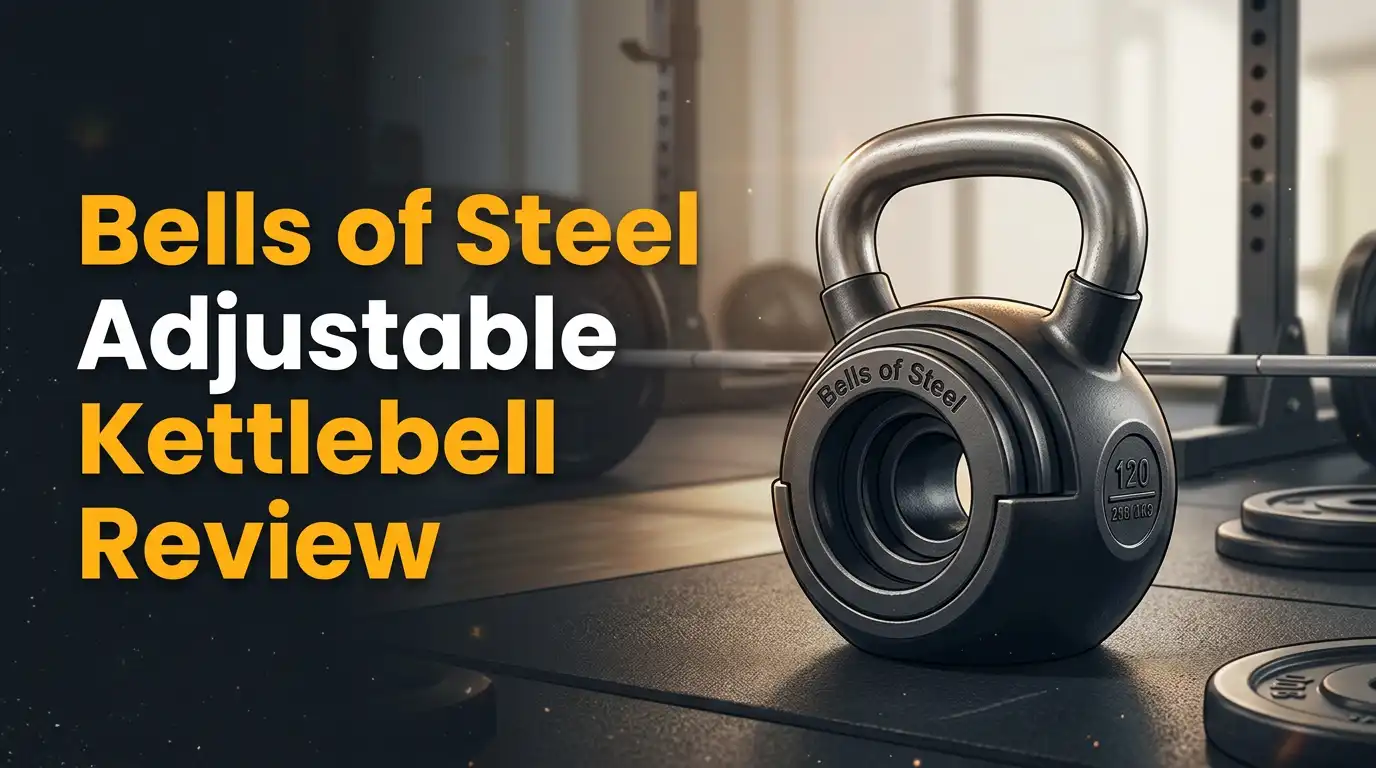
The Bells of Steel Adjustable Competition Kettlebell is a hollow steel bell that holds removable iron plates inside the base. You load the plates you want, tighten the internal locking rod, and train.
The shell keeps competition dimensions at every single weight, so a 13 kg setting feels the same in your hand as a 29 kg setting. That consistency separates it from dial style adjustables that change shape as the load changes.
The base package ships at 12 kg to 20.5 kg. It includes the 12 kg shell, one 3 kg plate, two 2 kg plates, one 1 kg plate, one 0.5 kg plate, plus the Allen key and wrench. You are buying a system, not a single bell. Bells of Steel backs the shell with a limited lifetime warranty, which signals real confidence in the metal.
Unboxing Experience
The box arrives heavier than you expect and smaller than you expect at the same time. Mine landed in a plain brown carton with the shell nested in moulded foam and the plates stacked in a separate cardboard tray. Lifting it out with one hand is a workout on its own.
First impression: the paint is thick and even, with no casting bubbles on the handle. The handle finish is smooth bare metal, not powder coated, so chalk grips well straight away. The plates are machined cleanly and carry stamped weight markings, which saves guesswork later.
Setup takes about ten minutes the first time. You read the small instruction card, drop the plates in order, slide the rod, and tighten. Nothing feels fiddly, just unfamiliar. By the third change it becomes muscle memory.
Build Quality and Materials
This is where your money goes. The shell is steel. The plates are iron. The locking system is metal on metal. There are no plastic clips and no spring loaded dials that crack after a year of hard swings. Cheap adjustables fail at exactly those plastic points, so the all metal approach is a genuine durability advantage.
The internal cavity is shaped to hold plates tightly against each other. That design keeps the centre of mass low and predictable, which matters during a snatch when the bell flips over your wrist. A loose plate stack would feel awful at speed, and this one mostly avoids that.
Honest note: owners of older units report the locking hardware loosening slightly over months of heavy use. A quick retighten fixes it. Some lifters add a washer. It is a maintenance item, not a defect.
Top 3 Alternatives for Bells of Steel Adjustable Kettlebell


Last update on 2026-10-18 / Affiliate links / Images from Amazon Product Advertising API
BowFlex SelectTech 840 Adjustable Kettlebell

Last update on 2026-10-18 / Affiliate links / Images from Amazon Product Advertising API
Titan Fitness Adjustable Competition Kettlebell 12 to 32 KG

Last update on 2026-10-18 / Affiliate links / Images from Amazon Product Advertising API
Yes4All Adjustable Kettlebell Set 20 to 40 LB
Weight Range and Micro Loading Explained
Traditional kettlebells climb in 4 kg steps. That gap wrecks overhead pressing progress, because jumping from a solid 16 kg press to a 20 kg press is a 25 percent increase. This bell solves that with 0.5 kg and 1 kg plates.
The base configuration gives 18 settings between 12 kg and 20.5 kg. The expansion pack adds 23 more settings and pushes the ceiling to 32 kg. Total: 41 options in one shell. You will genuinely never need another kettlebell for standard training.
Micro loading helps two groups most. Beginners get safe, confidence building jumps. Advanced lifters break plateaus with precise overload instead of guesswork. It also lets you match loads exactly for single arm work, so your weak side catches up properly rather than skipping a full 4 kg tier.
How the Adjustment System Works
You unscrew the bolt at the base, lift the bottom plate assembly out, swap plates, reinsert, and tighten with the supplied tools. Bells of Steel quotes 60 to 90 seconds. That matches reality once you practise. First attempts run closer to three minutes.
This is the single biggest trade off of the product. Speed was sacrificed for durability. A BowFlex dial changes weight in two seconds. This one does not. If your program alternates 16 kg swings with 12 kg presses every round, you will get frustrated fast.
The workaround is simple programming. Pick one load, finish all work at that load, then change. Many owners buy two bells and keep them at different weights. Bells of Steel even discounts pairs, which quietly admits the limitation.
Handle Feel and Competition Shape
The handle measures 35 mm, the official competition standard. It stays 35 mm at 12 kg and at 32 kg, which is the whole point. Your grip never has to relearn anything as you get stronger.
Window size and bell diameter also stay fixed. That means the rack position sits identically every session. Cleans land in the same spot on your forearm. Snatches follow the same path over your hand. Anyone training kettlebell sport or chasing clean technique will feel the difference immediately.
Cast iron adjustables with sliding handles cannot match this. Neither can dial bells, which grow bulky at heavier settings. The handle is slightly less aggressive in texture than a bare cast iron bell, so sweaty hands need chalk during high rep sets. Minor issue, easy fix.
Expansion Pack for Heavier Training

Last update on 2026-10-18 / Affiliate links / Images from Amazon Product Advertising API
The 13 kg expansion pack is the upgrade most serious lifters eventually want. It adds four extra plates and opens the 21 kg to 32 kg range with 23 additional settings. Price sits around $121.99 bought separately, or you can buy the 12 to 32 kg bundle from the start for roughly $332.99.
Buying the bundle up front saves money. Buying the base first saves cash today. Think about where your pressing and swinging strength will be in a year, not where it is this week. Most men outgrow 20.5 kg for swings within a few months.
The plates match the base set in finish and tolerance. They stack cleanly, they are stamped clearly, and they store flat under a bench when unused.
Workout Performance in Real Sessions
Two hand swings feel excellent. The mass sits low, the arc stays predictable, and the bell does not twist. Single arm swings and cleans also behave well, with the plate stack staying quiet when the locking bolt is properly tight.
Overhead work is where micro loading shines. Moving from 16 kg to 16.5 kg on a press is a tiny jump that your shoulders barely notice, yet it compounds over months. Turkish get ups feel stable, with no shifting mass above your wrist.
Goblet squats, rows, lunges, and windmills all work normally. The one movement I would avoid is anything involving dropping the bell from height. It is steel with internal hardware, not a dedicated drop bell. Use rubber flooring and set it down with control.
Pros and Cons
Pros
- 41 weight settings replace an entire rack of competition bells in one unit.
- 0.5 kg micro loading allows progress that fixed bells simply cannot offer.
- All metal construction with a steel on steel lock, so no plastic parts to snap.
- True competition geometry with a consistent 35 mm handle at every load.
- Compact footprint around 8.25 inches wide and 11 inches tall, ideal for apartments.
- Limited lifetime warranty on the shell plus strong customer service reputation.
- Cheaper overall than buying five or six separate competition kettlebells.
Cons
- Adjustment takes 60 to 90 seconds with tools, which kills fast circuits.
- Starting weight of 12 kg is too heavy for many true beginners.
- Hardware can loosen over months and may develop a slight rattle.
- Premium price, especially once you add the expansion pack.
- Not suitable for group classes or coaching multiple clients at once.
- Should not be dropped from overhead onto hard surfaces.
What It Does Not Do Well
Authentic reviews name the weak spots, so here they are plainly. This bell is slow to change. If your workout style is EMOM circuits with three different loads, you will hate it. Two seconds versus ninety seconds matters when your heart rate is high.
It does not serve absolute beginners well. A 12 kg floor is fine for most men and stronger women. A deconditioned lifter or anyone rehabbing a shoulder needs lighter. The plastic bottom accessory helps, but it is another purchase.
It also makes some noise over time. Precision tolerances are good, not perfect, and metal on metal loosens with repeated impact. Expect occasional retightening. Finally, it is not a drop bell, so high rep snatch sets ending in a hard release are off the menu.
Price and Value in 2026
The base 12 to 20.5 kg bell sits around $220.99 direct, with Amazon listings sometimes closer to $199.99. The full 12 to 32 kg package runs about $332.99, and the standalone expansion pack costs roughly $121.99. Prices shift during sales, so check current listings.
Compare that to fixed competition bells. Buying 12, 16, 20, 24, 28, and 32 kg individually easily passes $600 plus freight, and those six bells occupy real floor space. One adjustable bell at $333 starts to look sensible.
Value depends on your patience. If you train alone, follow a structured program, and want long term progression, the maths works strongly in your favour. If you need instant weight changes, the savings will not compensate for the daily friction.
Who Should Buy It
This kettlebell fits lifters with limited space and long term goals. Apartment and condo owners benefit the most, since one bell replaces a full rack. Garage gym owners who already have barbells and want kettlebell work without clutter also win.
It suits intermediate lifters chasing progressive overload. The 0.5 kg jumps give you a real progression ladder for presses, which fixed bells cannot match. Kettlebell sport athletes will appreciate the competition dimensions and the consistent rack position across all loads.
Travellers like it too. Remove the plates, pack them flat, and the system fits in a car boot or a sturdy bag. Coaches training one client at a time can also use it effectively, provided the session plan keeps weight changes to a minimum.
Who Should Skip It
Skip this bell if you run high intensity circuits that cycle through multiple loads. The adjustment time will drive you mad. A BowFlex SelectTech 840 changes weight in seconds and serves that style far better, even though it feels bulkier.
Skip it if you are brand new to strength training and 12 kg feels intimidating. Start with a light fixed bell, learn the hinge, then upgrade.
Skip it if your budget is tight. A pair of cheap cast iron bells at 12 kg and 16 kg costs far less and will carry a beginner through a full year. Finally, skip it for group classes, since one bell cannot serve several people in a single session without constant stoppages.
Final Verdict
The Bells of Steel Adjustable Competition Kettlebell earns its reputation. The steel shell, iron plates, and metal locking system feel built to last. The competition geometry is genuinely excellent, and 0.5 kg micro loading is the best progression tool on the adjustable market right now.
The compromise is speed. You trade quick changes for durability and feel. That is a fair trade for solo lifters following a program, and a poor trade for circuit fans.
Buy the 12 to 32 kg bundle if you can stretch to it. You will outgrow 20.5 kg sooner than you think, and the bundle costs less than buying the parts separately. For a home gym with limited space and serious intent, this remains one of the smartest single purchases available in 2026.
FAQs
How many weight settings does it really have?
The base 12 to 20.5 kg version offers 18 settings. Adding the expansion pack brings the total to 41 settings between 12 kg and 32 kg. The plastic bottom accessory unlocks seven more settings between 9.5 kg and 11.5 kg.
How long does a weight change take?
Expect 60 to 90 seconds once you know the process. Your first few attempts may take two or three minutes. You need the supplied Allen key and wrench every time.
Does it rattle during swings?
When the locking bolt is fully tightened, it feels solid. Some owners report slight rattle developing after months of heavy use. Retightening the hardware usually resolves it, and a washer works as a longer term fix.
Is the handle the same as a competition kettlebell?
Yes. The handle measures 35 mm, matching official competition standards, and the diameter stays identical at every weight setting.
Can beginners use this kettlebell?
Stronger beginners can. The 12 kg starting weight suits most men and conditioned women. True beginners should consider the lighter 6 to 12 kg model or add the plastic bottom accessory.
Is it safe to drop?
No. It is built for swings, cleans, presses, and squats, not for dropping from overhead onto hard floors. Rubber flooring and controlled set downs will extend its life.
What warranty does it carry?
Bells of Steel offers a limited lifetime warranty on the shell, covering manufacturer defects in materials and workmanship. Normal wear and cosmetic scratches are excluded.

Hi, I’m Sarah Hill — the founder and voice behind Heavy Lift Vault. I’m passionate about fitness, strength training, and health technology. I spend my time researching, testing, and reviewing workout equipment and health devices so you don’t have to guess. My goal is to deliver honest, detailed, and trustworthy reviews that help you invest wisely in your fitness journey.