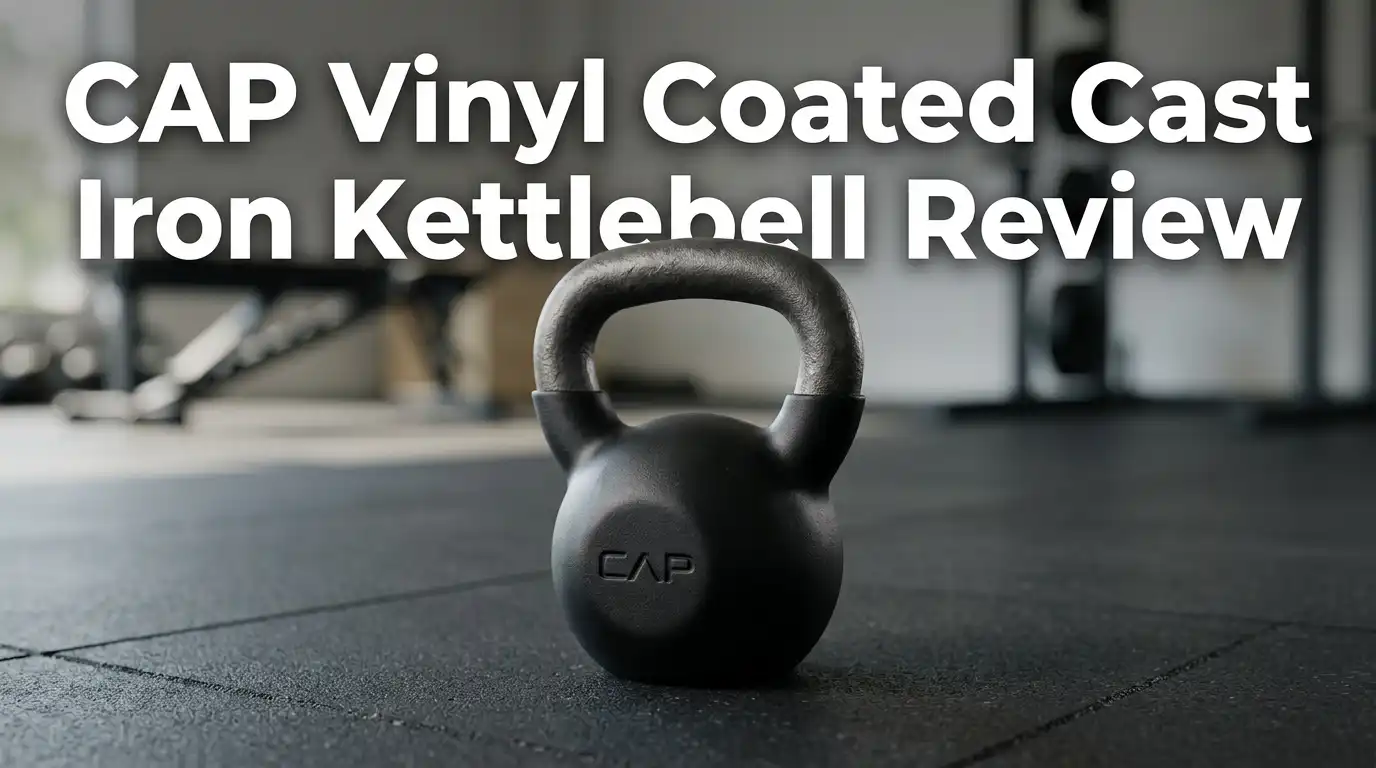
CAP Vinyl Coated Cast Iron Kettlebell Review 2026: Worth Buying?
Kettlebells look simple. One lump of iron, one handle, zero moving parts. Yet picking the right one still trips up most home gym buyers. You want something heavy enough to challenge you, kind enough to your floors, and cheap enough that you do not feel guilty about it.
The CAP Vinyl Coated Cast Iron Kettlebell sits right in that sweet spot. It has been a quiet bestseller for years. It shows up in apartment living rooms, garage setups, physical therapy clinics, and school gyms. The formula is plain: a solid cast iron core wrapped in a thick vinyl shell.
I spent weeks testing this kettlebell across swings, goblet squats, presses, rows, and carries. This review covers the unboxing, the grip, the flaws nobody mentions, and the honest answer on whether you should spend your money here in 2026.
Key Takeaways:
- The vinyl coating is the main selling point. It protects hardwood, tile, and laminate floors from dents. It also cuts noise a lot, which matters if you train in an apartment or above a sleeping toddler.
- The cast iron core feels solid and balanced. There are no welds, no seams, and no rattling. The weight sits exactly where you expect it during a swing arc.
- The handle is the weak point. It is wide and textured, but the vinyl finish turns slick once sweat shows up. Chalk fixes this. Bare hands during a hot summer session do not.
- Price is the strongest argument. Light bells start under twenty dollars. You can build a three bell starter set for less than the cost of one premium competition kettlebell.
- Heavier sizes get bulky fast. A 35 lb or 50 lb vinyl bell is physically larger than a 35 lb powder coated bell. That extra width can bump your forearm during cleans and snatches.
- Best for beginners and general fitness users. Serious kettlebell sport athletes will outgrow it. Casual lifters, seniors, rehab users, and apartment dwellers will be very happy.
What Is the CAP Vinyl Coated Cast Iron Kettlebell?

Last update on 2026-10-15 / Affiliate links / Images from Amazon Product Advertising API
The CAP Vinyl Coated Cast Iron Kettlebell is a fixed weight training bell built from solid cast iron and dipped in a protective vinyl layer. CAP Barbell has made budget strength gear since the 1980s. This product line is one of their longest running items.
The construction is one piece. The iron is poured as a single casting, so the handle and the bell body are one continuous unit. There is nothing to loosen or snap.
The vinyl shell does three jobs at once. It shields your floor, it softens contact with your body, and it stops the iron from rusting when humidity climbs in a garage.
The weight marking is molded into the bell itself, not just printed on. That means the number stays readable years later, even after the paint scuffs. Small detail, but it matters when you own five bells of different sizes.
Unboxing Experience: What Shows Up at Your Door
The box arrives heavy and plain. Mine came in a brown corrugated carton with the weight printed on the side and a surprising amount of tape. No retail window, no glossy photos, no instruction booklet. CAP ships this thing like freight, which is honestly the correct choice.
Inside, the kettlebell sits in a thin plastic sleeve with a few foam corner blocks. That is the whole presentation. There is no assembly, no manual, and no workout poster.
The first thing you notice is the smell. Fresh vinyl has a strong rubbery odor that lingers for about three days. Leave it in a ventilated room and it fades.
The second thing you notice is the finish quality. My bell had a small ripple in the vinyl near the base where the dip line ended. Cosmetic only. The color was even everywhere else, and the molded number looked crisp.
Build Quality and Materials Explained
Pick it up and the balance reads correctly right away. The mass sits low in the bell, which is exactly what you want for swing mechanics. There is no wobble and no hollow sound when you tap it.
The cast iron core is dense and uniform. CAP does not publish a casting tolerance, but my 25 lb bell weighed in at 25.3 lb on a digital scale. That variance is normal and harmless for general training.
The vinyl layer measures roughly two to three millimeters thick across the body. It is thicker than the thin paint dips you find on no name bells.
Where the build shows its budget roots is the seam line. Run your finger along the inside of the handle and you can feel a faint casting ridge. It never cut me, but it is not glass smooth either. A few minutes with fine sandpaper removes it completely.
Handle Design and Grip Feel
The handle is wide and open. Two hands fit comfortably on every size from 15 lb upward, which makes two handed swings and goblet work easy. Hand space is around four and a half inches of usable width on the mid weight bells.
CAP leaves the handle textured rather than glossy. The texture helps, but it is not the same as a powder coated finish. Powder coating grabs chalk. Vinyl does not grab chalk nearly as well.
Here is the honest part. During the first ten minutes of a session, grip feels secure and pleasant. Once your palms get damp, the handle turns noticeably slick.
My fix was simple: a light dusting of liquid chalk before high rep swings. That solved the slipping entirely. If you train bare handed in a warm room, plan on chalk or thin gloves.
Top 3 Alternative for CAP Vinyl Coated Cast Iron Kettlebell


Last update on 2026-10-15 / Affiliate links / Images from Amazon Product Advertising API
Yes4All Vinyl Coated Kettlebell

Last update on 2026-10-15 / Affiliate links / Images from Amazon Product Advertising API
Amazon Basics Cast Iron Kettlebell

Last update on 2026-10-15 / Affiliate links / Images from Amazon Product Advertising API
Sunny Health and Fitness Vinyl Coated Cast Iron Kettlebell
Weight Options and Color Coding
CAP offers this kettlebell in a wide ladder of weights. Common sizes run from 5 lb up through 50 lb, with the most popular picks sitting at 10, 15, 20, 25, and 35 lb.
Each weight gets its own color. Yellow, pink, blue, green, purple, red, and black all appear across the range depending on the size. Color coding sounds like a gimmick until you own four bells. Then you stop reading numbers and start grabbing by color.
For a first purchase, most women do well starting at 10 to 15 lb for presses and 20 lb for swings. Most men start around 25 lb for presses and 35 lb for swings.
A smart starter set is three bells: one light, one medium, one heavy. That combination covers almost every movement without a rack.
Floor Protection and Noise Control
This is where the CAP vinyl bell earns its keep. I set it down hard on engineered hardwood dozens of times. No dents, no scratches, no scuffs.
The base is flat and soft enough to sit flush without rocking. Push ups with hands on the bells felt stable, and renegade rows did not tip.
Noise reduction is the underrated win here. A bare cast iron bell landing on tile produces a sharp crack that travels through a building. The vinyl version produces a dull thud instead.
If you live in an apartment, this single feature justifies the purchase. I tested a 25 lb drop from hip height onto tile and the sound was closer to a dropped backpack than a dropped weight. Neighbors noticed nothing.
Real World Performance During Workouts
I ran this bell through a six week block of swings, goblet squats, Turkish get ups, strict presses, suitcase carries, and single arm rows.
Swings felt the best. The bell tracks cleanly through the arc and the wide handle lets both hands settle without crowding. Goblet squats were equally good because the soft vinyl body does not dig into your chest the way bare iron does.
Presses were fine with lighter weights. Carries were comfortable and the handle never rolled in my hand.
Cleans and snatches were the weak spot. The vinyl bell is physically wider than an equivalent cast iron bell, so the body smacks the forearm harder on the catch. At 35 lb this stung. Experienced lifters doing high volume cleans will feel this.
What This Kettlebell Does Not Do Well
Every honest review needs this section, so here it is.
The grip fails under sweat. Without chalk, high rep sets become a real slip risk. This is the most common complaint from long term owners and my testing matched it.
The vinyl can split over time. Repeated hard drops onto concrete will eventually crack the coating near the base. Once it cracks, moisture reaches the iron and surface rust starts.
Size scaling is poor at heavy weights. A 50 lb vinyl bell is noticeably bulkier than a 50 lb powder coated bell, which makes rack position awkward.
Quality control varies. Some buyers report uneven vinyl, small bubbles, or minor casting ridges. Nothing dangerous, but the finish is not premium.
Finally, this bell is not built for competition technique. Dimensions change with every weight, so your form adjusts each time you go up.
Pros and Cons of the CAP Vinyl Coated Kettlebell
Pros
- Protects hardwood, tile, and laminate floors from dents and scratches during every set.
- Significantly quieter than bare cast iron, which makes apartment training realistic.
- Solid one piece cast iron core with no welds, seams, or weak joints.
- Color coded weights make grabbing the right bell fast and simple.
- Molded weight numbers stay readable for years instead of rubbing off.
- Wide open handle fits two hands comfortably on mid and heavy sizes.
- Excellent price per pound, especially in the 10 lb to 25 lb range.
- Flat stable base holds position for push ups and renegade rows.
Cons
- Handle becomes slippery once palms sweat, so chalk is almost required.
- Vinyl coating can crack or split after repeated hard drops on concrete.
- Bulkier than cast iron at the same weight, which affects cleans and snatches.
- Faint casting ridge inside the handle on some units.
- Strong vinyl smell for the first few days out of the box.
- No chalk friendly texture compared to powder coated bells.
Who Should Buy This Kettlebell
This bell fits a very clear group of people.
Apartment dwellers benefit most. Quiet training and zero floor damage solve the two biggest problems of lifting in a shared building.
Beginners also win here. The softer coating is forgiving on the forearms during early swing practice, and the low price means a bad guess on weight does not hurt your wallet.
Seniors and rehab users get a gentle, grippy, floor safe tool that works well for light loading and balance work.
Parents setting up a basement space will appreciate the color coding and the lack of sharp iron edges.
Budget focused buyers get the clearest value of all. Three CAP vinyl bells often cost less than one premium kettlebell, and three weights beat one weight for program variety.
Who Should Skip It
Some lifters should spend their money elsewhere.
Kettlebell sport athletes should skip this. Competition training demands consistent handle dimensions across weights, and this bell changes shape as weight increases.
High volume snatch and clean lifters will dislike the forearm contact. The wider body simply hits harder on the catch.
Anyone training outdoors on concrete should also think twice. Repeated hard contact with rough surfaces shortens the life of the coating.
Lifters above 50 lb will run out of range. CAP tops this line out well below what advanced users need for heavy swings.
Finally, chalk dependent lifters may feel frustrated. Vinyl just does not hold chalk the way powder coating does, so grip security stays limited.
Price and Value for Money
Last update on 2026-10-15 / Affiliate links / Images from Amazon Product Advertising API
Pricing moves with weight, which is normal for iron. Light bells in the 5 lb to 10 lb range typically land under twenty dollars. Mid weights around 20 lb to 25 lb usually sit in the thirty to forty dollar window. Heavier 35 lb to 50 lb bells climb higher.
Compared with premium competition bells, this is a fraction of the cost. Compared with other budget vinyl bells, pricing is competitive and often slightly cheaper.
The value math is straightforward. You are buying floor protection and quiet operation for roughly the same money as a bare iron bell.
What you give up is grip quality and long term coating durability. For a home user training three to five times a week, that trade works. For a commercial gym with daily abuse, it does not.
Care and Maintenance Tips
Maintenance takes almost no effort, but a few habits extend the life of the coating.
Wipe the bell down after every session with a damp cloth and mild soap. Sweat is mildly acidic and it degrades vinyl over months.
Dry it completely before storage. Trapped moisture under a cracked coating is what causes rust.
Avoid dropping it on bare concrete. Use a rubber mat or a folded towel in your landing zone. This one habit prevents most coating failures.
Store the bell indoors when possible. Extreme cold makes vinyl brittle and extreme heat softens it.
If a small crack appears, clean the area, dry it fully, and seal it with a dab of clear silicone or vinyl repair patch. This simple fix stops rust from spreading and buys you several more years of use.
CAP Vinyl vs Powder Coated Cast Iron Kettlebells
The choice between these two finishes shapes your whole experience.
Powder coating gives better grip. The slightly rough texture holds chalk and stays secure under sweat. It is the standard for serious kettlebell training.
Vinyl gives better floor protection and much lower noise. It also resists rust better because the iron is fully sealed.
Size is the other difference. Powder coated bells are more compact for the same weight, which makes rack position and overhead work cleaner.
Durability favors powder coating. Chips happen, but a chipped powder coat still functions normally. A split vinyl shell can peel.
My honest recommendation: choose vinyl if your floors and neighbors matter most. Choose powder coating if your grip and technique matter most. Many home lifters end up owning both.
Final Verdict: Is It Worth Buying in 2026?
Yes, for the right person.
The CAP Vinyl Coated Cast Iron Kettlebell does exactly what it promises. It delivers a solid cast iron core, real floor protection, quiet training, and a price that almost anyone can justify.
It is not a precision tool. The handle gets slippery, the coating eventually wears, and heavy sizes feel bulky. Those limits are real and you should expect them.
But for beginners, apartment lifters, rehab users, and budget buyers, this bell performs far above its price. It will survive years of normal home use with basic care.
If your training goals are strength, conditioning, and general fitness, buy it with confidence. If your goals involve competition technique or heavy snatch volume, invest in powder coated bells instead and save yourself the frustration.
Frequently Asked Questions
Is the CAP vinyl coated kettlebell real cast iron inside?
Yes. The core is solid cast iron poured as a single piece with no welds or filler. The vinyl is only an outer shell. You can confirm this by tapping the bell, which produces a dense solid tone rather than a hollow one.
Will the vinyl coating crack or peel over time?
It can, but usually only under abuse. Repeated hard drops onto concrete cause splitting near the base. Normal home use on a mat or carpet rarely damages the coating. Wiping sweat off after sessions slows wear considerably.
What weight should a beginner buy first?
Most women start well with a 15 lb bell for presses and a 20 lb bell for swings. Most men start with 25 lb for presses and 35 lb for swings. If you can complete fifteen clean swings with effort on the final reps, the weight is correct.
Does the handle fit two hands?
Yes, on sizes 15 lb and above. The handle is wide and open, giving roughly four and a half inches of usable grip space on mid weight bells. Very large hands may feel slightly crowded at the lighter end of the range.
Is this kettlebell safe for hardwood floors?
Yes, and that is its main advantage. The vinyl shell and flat soft base prevent dents and scratches on hardwood, laminate, and tile. A thin mat is still smart if you plan on dropping the bell from height.
Can I use chalk on a vinyl kettlebell?
You can, though vinyl holds chalk less effectively than powder coating. Liquid chalk works much better than block chalk on this surface. Many owners use thin lifting gloves instead during long high repetition sessions.
How does it compare with the Yes4All vinyl kettlebell?
Both are close competitors with similar cores and coatings. Yes4All bells have a slightly thicker vinyl layer. CAP bells have molded weight markings that stay readable longer. Pricing shifts often, so compare at the specific weight you want.

Hi, I’m Sarah Hill — the founder and voice behind Heavy Lift Vault. I’m passionate about fitness, strength training, and health technology. I spend my time researching, testing, and reviewing workout equipment and health devices so you don’t have to guess. My goal is to deliver honest, detailed, and trustworthy reviews that help you invest wisely in your fitness journey.