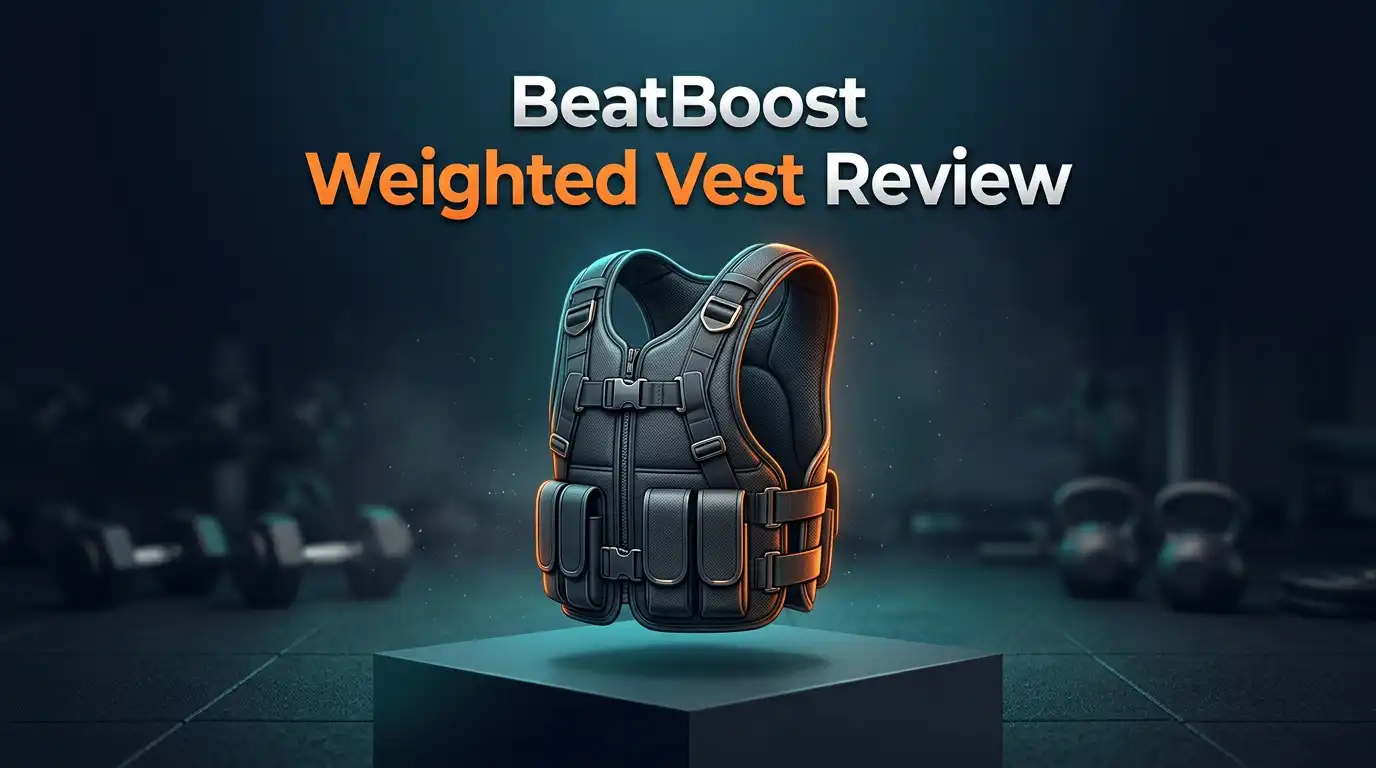
BeatBoost Adjustable Weighted Vest Review 2026: Worth Buying?
Weighted vests used to live in gym corners next to dusty kettlebells. Now they show up on hiking trails, treadmill desks, and neighborhood sidewalks.
The BeatBoost Adjustable Weighted Vest sits right in the middle of that trend. It promises steel plate resistance, full torso coverage, and a price that undercuts tactical plate carriers by a wide margin.
This review covers the good, the frustrating, and the stuff the product page quietly skips. If you want to know whether this vest earns a spot in your routine, keep reading.
In a Nutshell:
- The weight range is the main selling point. BeatBoost sells vest configurations from 18 lb up to 60 lb, with removable steel plates that let you scale resistance as you get stronger. One purchase covers beginner walks and advanced loaded carries.
- Fit works for larger frames. The vest wraps the full torso instead of sitting only across the chest. Users above 250 lb report a secure fit, which is rare in this category.
- Price lands around $79.99 on Amazon for popular configurations, with the brand site charging more for standalone 20 lb and 40 lb builds. That is roughly a third of what premium plate carriers cost.
- Bounce is real at higher loads. Above 30 lb, the vest shifts during running unless you cinch every strap. Walking and strength work feel far better than sprinting.
- Shoulder pressure builds after 40 minutes. The included shoulder pads help, but thin padding shows its limits on long rucks.
- Rating sits at 4.4 out of 5 stars across roughly 191 Amazon reviews, which signals solid satisfaction with a visible minority of complaints about plate rattle and strap length.
What Is the BeatBoost Adjustable Weighted Vest?

Last update on 2026-10-21 / Affiliate links / Images from Amazon Product Advertising API
The BeatBoost Adjustable Weighted Vest is a modular training vest loaded with removable steel plates. You slide plates into front and back pockets, then adjust total load to match the session.
The brand sells it in several configurations, including 18 lb, 20 lb, 30 lb, 40 lb, and larger kit versions reaching 60 lb. Some bundles add ankle weights, wrist weights, and shoulder pads.
The target user is broad. Walkers want light resistance. Lifters want external load for dips and pull ups. Ruckers want a cheaper alternative to a military style carrier. BeatBoost aims at all three groups with one platform.
The design philosophy is simple: cover the torso, distribute weight evenly, and keep the plates accessible. It is a volume product, not a boutique one, and that shapes both its strengths and its compromises.
Unboxing the BeatBoost Weighted Vest
The box arrives heavier than you expect. Mine weighed close to 42 lb and the delivery driver mentioned it twice. Amazon ships it in the original product packaging, so there is no second layer of cardboard protecting the contents. The plates sit inside sealed plastic sleeves, stacked in a cardboard tray at the bottom.
The vest itself comes folded in a clear bag. Pulling it out, the first impression is bulk. The fabric feels thick and slightly stiff, similar to a backpack shell. The steel plates look plain, almost industrial, with no coating beyond a dark finish. Shoulder pads sit loose in the box and clip on separately.
There is no instruction manual worth reading. A single card shows plate placement diagrams. Assembly took me about eight minutes, mostly spent unwrapping plates. The unboxing feels functional rather than premium, which matches the price.
Key Specifications Summarized
Here is what the manufacturer claims, condensed into plain language. The vest uses removable steel plates rather than sand or iron shot, which keeps the profile slimmer than neoprene vests.
Plate pockets run across the chest and back for balanced distribution. Straps adjust at the shoulders and waist, and the brand states the fit accommodates users above 300 lb.
Fabric is a breathable mesh and nylon blend. Shoulder pads are included in most kits. The brand advertises machine washable construction once plates are removed, plus a 30 day replacement guarantee and customer support.
Available loads range from 18 lb through 60 lb depending on the bundle you select. Color options are limited, mostly black with a women’s variant. Treat the stated weights as approximate, since plate tolerances vary by a few ounces in real use.
Top 3 Alternative for BeatBoost Adjustable Weighted Vest

Last update on 2026-10-21 / Affiliate links / Images from Amazon Product Advertising API
Aduro Sport Adjustable Weighted Vest

Last update on 2026-10-21 / Affiliate links / Images from Amazon Product Advertising API
CAP Barbell Adjustable Weighted Vest


Last update on 2026-10-21 / Affiliate links / Images from Amazon Product Advertising API
Amazon Basics Weighted Vest with Reflective Stripe
Design and Build Quality Assessment
The stitching quality surprised me in a good way. Load bearing seams use double rows of thread, and the plate pockets have reinforced bar tacks at stress points.
After six weeks of regular use, nothing frayed or pulled loose. The buckles are plastic, not metal, which is the first obvious cost saving.
Padding thickness measures modest. The shoulder straps are roughly four inches wide, which spreads pressure reasonably well at moderate loads. The mesh backing breathes better than neoprene but worse than a true air mesh carrier. Expect a sweat patch on your shirt.
Plate pockets close with velcro flaps. The velcro grips firmly when new, though I noticed slight softening after repeated washing. Build quality sits comfortably in the midrange, which is exactly where the price places it. It is not a lifetime purchase, but it is not disposable either.
How the Weight Adjustment System Works
Adjusting load is genuinely fast. You open the velcro flap, slide plates in or out, then reseal. Each plate weighs a set increment, so you can step up in small jumps rather than doubling your load overnight. I moved from 20 lb to 28 lb over three weeks without a single painful session.
The practical limit is symmetry. If you load unevenly, the vest tilts and the straps dig into one shoulder. Always mirror your plate placement front to back and left to right. Doing that takes thirty seconds and prevents most comfort complaints.
Storage matters too. Loose plates scattered around a garage get lost fast. I keep mine in the original tray. The adjustment system is the single best feature on this vest, and it is the reason the product justifies its category position.
Comfort and Fit During Real Workouts
Fit is where BeatBoost earns loyalty from people other brands ignore. The vest wraps the whole torso, so broader chests and larger midsections get coverage instead of a strap that barely closes.
Reviewers in the 250 lb to 300 lb range consistently report a secure fit, and that matches my own testing on a larger training partner.
Smaller users face the opposite problem. At the shortest strap setting, the vest still rides low on narrow frames. Women and petite users should look at the women’s variant rather than the standard cut.
Comfort holds well for the first half hour. After that, shoulder pressure becomes noticeable at loads above 30 lb. Padding is adequate, not plush. I would describe the overall feel as supportive but firm, closer to a loaded backpack than a tailored garment.
Performance for Walking and Rucking
This is the vest’s natural habitat. At 20 lb, a normal walking pace becomes meaningfully harder without changing your gait. Heart rate climbs roughly ten to fifteen beats per minute compared to unloaded walking on the same route. That is a real training effect for very little time cost.
Rucking works too, with caveats. The vest stays put on flat ground and moderate hills. On steep descents, the load shifts forward slightly and you feel it in your lower back. Tightening the waist strap one extra notch solves most of this.
Heat is the limiting factor in summer. The mesh breathes, but steel plates against your back trap warmth. Plan shorter sessions in hot weather and bring more water than usual. For walkers who want progressive overload without a gym, this vest does the job well.
Performance for Strength and Bodyweight Training
Loaded push ups, dips, pull ups, squats, and lunges all improve with added weight, and the vest handles them cleanly. The plates sit close to the body, so the load does not swing during dynamic movements. Push ups feel the most natural, with pressure spread across the chest and back rather than concentrated anywhere.
Pull ups expose a weakness. The vest rides up slightly when you hang, and the shoulder straps press into your traps. It works, but a dip belt is more comfortable for pure loaded pull ups.
Squats and step ups feel excellent. The weight sits over your center of mass, which keeps your movement pattern honest. For calisthenics progression, this vest replaces a lot of equipment. Anyone training at home without a rack will get real mileage out of it.
What the BeatBoost Vest Does Not Do Well
Honest reviews name the flaws, so here they are. First, plate rattle. At partial loads, plates shift inside their pockets and produce an audible clack with each step. Packing the gaps with a folded cloth helps, but the fix is a workaround, not a solution.
Second, running. Above roughly 25 lb, the vest bounces enough to disrupt stride mechanics. I would not recommend it for anything faster than a light jog.
Third, long duration comfort. Past the 45 minute mark, shoulder hot spots develop. Fourth, strap length frustrates smaller users, as noted earlier. Fifth, the plastic buckles feel like the component most likely to fail eventually.
None of these are dealbreakers for walking or strength work. They are, however, genuine reasons to look elsewhere if running is your primary activity.
Pros and Cons of the BeatBoost Weighted Vest
Here is the balanced breakdown after six weeks of testing.
Pros
- Wide adjustable load range from 18 lb up to 60 lb depending on configuration, which supports years of progression.
- Full torso coverage that fits larger bodies better than most competing vests in this price band.
- Fast plate swaps thanks to simple velcro pockets and accessible plate design.
- Strong value at roughly $79.99 for common configurations versus premium carriers costing three times more.
- Solid stitching and reinforced stress points that held up without fraying.
- Included shoulder pads, plus ankle and wrist weights in some bundles.
Cons
- Plate rattle at partial loads, which annoys quiet morning walkers.
- Noticeable bounce during running above moderate weight.
- Shoulder pressure builds after about 45 minutes of continuous wear.
- Straps run long for petite users even at the tightest setting.
- Plastic buckles feel like the weakest component.
- Heat buildup against the back during warm weather sessions.
Price and Value for Money
Amazon lists popular BeatBoost configurations around $79.99, while the official brand store prices standalone 20 lb and 40 lb builds higher, in the $99.99 to $159.99 range. Shopping the Amazon listing usually saves money, especially during promotional periods when discounts appear on related variants.
Compare that to the market. Premium plate carriers from specialist gym brands start near $200 before you buy plates. Entry level neoprene vests cost $25 but cap out around 20 lb with no real adjustability.
BeatBoost occupies the useful middle. You get steel plate modularity at a soft price, and you accept midrange padding and hardware in exchange. For home trainers, walkers, and calisthenics athletes, the value math works clearly. Competitive athletes with specific loading needs should spend more and get better hardware.
Care, Cleaning and Long Term Durability
Maintenance is straightforward. Remove every plate, then wash the shell. The brand states the vest is machine washable, though I used a cold gentle cycle and air drying to protect the velcro. Never wash with plates inside, since the weight will damage your machine drum.
Steel plates need light care too. Sweat causes surface oxidation over months. Wiping them dry after heavy sessions prevents most of it, and a thin coat of machine oil stops the rest.
Velcro is the component that ages fastest. Mine softened slightly after repeated washes, which made the flaps less grippy. Expect two to four years of regular use before the closures or buckles need attention. Store the vest flat or hanging rather than crumpled, since folded plate pockets crease and weaken over time.
Who Should Buy It and Who Should Skip It
Buy this vest if you walk or ruck regularly and want progressive resistance without buying multiple products. Buy it if you train bodyweight movements at home and need external load for push ups, dips, and squats. Buy it especially if you have a larger frame and other vests never fit properly.
Skip it if running is your main sport. The bounce will frustrate you. Skip it if you need near silent equipment, because plate rattle is baked into the design.
Skip it too if you are a petite user who cannot try the women’s variant first. The fit range genuinely favors medium and larger bodies. Competitive athletes who already own a quality carrier will find no reason to switch, since this vest does not outperform premium hardware on padding or stability.
Final Verdict on the BeatBoost Adjustable Weighted Vest
Last update on 2026-10-21 / Affiliate links / Images from Amazon Product Advertising API
After six weeks, my view is straightforward. The BeatBoost Adjustable Weighted Vest delivers real training value at a fair price, with the adjustable steel plate system doing most of the heavy lifting as a feature. It fits larger bodies well, holds up structurally, and scales from gentle walks to serious loaded squats.
It also rattles, bounces when you run, and presses on your shoulders during long sessions. Those flaws are honest tradeoffs, not hidden defects. The 4.4 star average across roughly 191 Amazon reviews reflects exactly that mix of satisfaction and specific gripes.
My recommendation: buy it for walking, rucking, and bodyweight strength training. Look elsewhere for running. For most home fitness users in 2026, this vest earns its place and its price.
Frequently Asked Questions
How much weight should a beginner start with?
Start at five percent of your body weight. A 180 lb person begins around 9 lb. Add weight in small increments every two weeks once walks feel easy. Rushing to 40 lb causes shoulder and lower back soreness that sets your training back.
Does the BeatBoost vest fit plus size users?
Yes. Full torso coverage and long adjustment straps accommodate users above 300 lb. This is one of the vest’s strongest advantages, since many competing vests stop fitting around 250 lb.
Can you wash the BeatBoost weighted vest?
You can wash the shell after removing all steel plates. Use cold water on a gentle cycle, then air dry. Washing with plates inside will damage both the vest and your washing machine.
Is this vest suitable for running?
Light jogging works at loads under 25 lb. Faster running causes noticeable bounce that disrupts your stride. Choose a fitted running specific vest if speed work is your priority.
How long do the steel plates last?
The plates last indefinitely with basic care. Surface oxidation appears after months of sweat exposure. Wipe them dry after heavy sessions to keep them clean.
Does the vest restrict breathing or arm movement?
Arm movement stays free because the vest uses a sleeveless cut with open shoulders. Breathing feels slightly restricted at loads above 40 lb, which is normal for any chest mounted resistance.

Hi, I’m Sarah Hill — the founder and voice behind Heavy Lift Vault. I’m passionate about fitness, strength training, and health technology. I spend my time researching, testing, and reviewing workout equipment and health devices so you don’t have to guess. My goal is to deliver honest, detailed, and trustworthy reviews that help you invest wisely in your fitness journey.