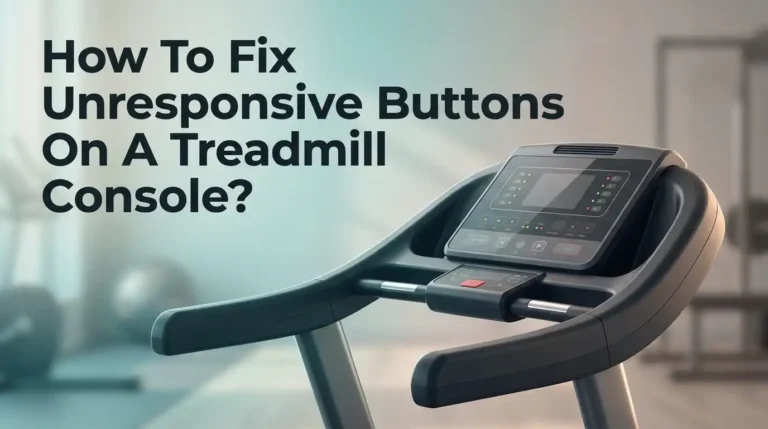
How To Calibrate A Treadmill Incline That Won’t Go Down?
Your treadmill incline shoots up just fine. Then you press the down button and nothing happens. The deck stays locked at a steep angle. Your knees ache, your workout feels wrong, and frustration builds fast. You are not alone in this problem.
A treadmill incline that refuses to lower is one of the most common machine faults reported by home users. The good news is that most cases come down to simple causes.
Calibration glitches, loose wires, or a tired lift motor are usually behind it. You can fix many of these yourself with a few basic tools and some patience.
Key Takeaways
- Calibration is your first move. A stuck incline usually means the machine forgot its top and bottom limits. Running a full calibration cycle fixes most cases instantly.
- A hard reset clears hidden glitches. Unplugging the treadmill for 60 seconds discharges stored power and wipes minor electronic faults that block the incline from lowering.
- Loose wiring is a frequent culprit. Vibration shakes connectors loose over time. Checking and reseating the incline wiring harness often restores signal flow right away.
- Listen to the motor for clues. Humming means binding, grinding means worn gears, and silence means no voltage. The sound tells you where the fault sits.
- A multimeter confirms the real problem. Testing voltage at the motor control board shows whether the motor failed or the board failed. This saves you from buying the wrong part.
- Know when to call a pro. Repeated calibration failures, burning smells, or a motor that stalls with no load point to deeper issues that need a technician.
Why Your Treadmill Incline Won’t Go Down
Your incline runs on a small electric lift motor and a position sensor. The motor raises and lowers the deck. The sensor tells the console where the deck sits. The motor control board sends power and signals between them. When one link breaks, the incline gets stuck.
The most common reason is calibration loss. Your treadmill stores its top and bottom incline limits in memory. A power outage, a recent move, or a firmware update can wipe this memory. The machine then loses its reference points and freezes the deck where it last sat.
Other causes include loose wiring, a worn lift motor, mechanical blockage under the deck, or a failed position sensor. Each one shows different symptoms. Knowing the cause helps you pick the right fix instead of guessing and wasting time.
Start With A Simple Safety And Power Check
Before you open anything, run through a quick checklist. These basic checks prevent wrong diagnoses and protect you from accidents. Many incline problems vanish at this stage.
First, plug the treadmill directly into a wall outlet. Power strips and surge protectors can limit current. This weak power supply often stops the incline from completing a calibration cycle. A stable wall outlet gives the motor the voltage it needs.
Next, confirm the safety key is fully seated. Most consoles disable all incline functions when the key sits loose. Then power on the console and watch the boot up. A slow or frozen console points to a communication fault. Finally, clear away any clothing, dust, or objects near the front lift motor.
Pros: This step takes two minutes, needs no tools, and often solves the issue on its own.
Cons: It rarely fixes deeper faults like a dead motor or a broken sensor, so it is only a starting point.
Perform A Hard Reset On Your Treadmill
A hard reset is your fastest real fix. It clears temporary data and resolves minor electronic faults that block incline movement. This step alone fixes a surprising number of stuck inclines across all major brands.
Start by removing the safety key. Then turn off the treadmill using the rear power switch. Unplug the unit from the wall and leave it for at least 60 seconds. This wait time matters. It lets the internal capacitors fully discharge and wipes the stored glitch.
After 60 seconds, plug the machine back in. Turn on the power switch and reinsert the safety key. Now test the incline with the down button. Smooth downward movement means the reset worked.
Pros: A hard reset is free, fast, and safe. It needs no tools and carries almost no risk of damage.
Cons: It does not repair physical faults. If wiring, gears, or the motor have failed, the incline will stay stuck after the reset.
How To Run A Full Incline Calibration Cycle
Calibration is the core fix for a stuck incline. It restores the machine’s memory of its top and bottom limits. When this data gets corrupted, the deck freezes or moves unevenly. A full cycle teaches the treadmill its travel range again.
First, enter calibration mode using your model’s key sequence. The most common combinations are STOP plus SPEED UP, or STOP plus INCLINE UP. Some models need you to hold the safety key while powering on. Check your manual for the exact method.
Once in calibration mode, the deck rises to its maximum incline. This sets the upper limit. Then it lowers to its minimum incline to set the lower limit. Wait for the console to show CALIBRATION COMPLETE or return to the home screen. Test the incline manually after.
Pros: Calibration fixes the most common cause directly and needs no tools or part replacement.
Cons: If the motor stalls or the cycle stops partway, it signals a wiring or motor fault that calibration cannot fix.
Brand Specific Calibration Tips You Should Know
Calibration steps differ between brands. Using the wrong sequence wastes time and can frustrate you. Knowing your brand’s method makes the process smooth and quick.
For ProForm and NordicTrack models, press and hold the STOP and INCLINE UP buttons together. While holding them, insert the safety key. The machine enters calibration mode and runs its full incline cycle on its own.
For Star Trac and Matrix units, the STOP plus SPEED UP combination is common. Sole treadmills like the F63 use a dedicated calibration mode found in the engineering menu. Technogym models often need technician level console access, so home calibration may not be possible.
One important note. Woodway and other slat belt treadmills do not use a standard incline motor. Standard calibration steps do not apply to them.
Pros: Following your exact brand sequence avoids errors and gets calibration right on the first try.
Cons: Some brands lock calibration behind technician access, which means you cannot do it at home without help.
Inspect The Incline Wiring Harness And Connectors
If calibration fails or stalls, the wiring is your next suspect. Vibration from daily use slowly loosens connectors over time. A loose plug breaks the signal between the console, the control board, and the motor.
First, unplug the treadmill for safety. Remove the motor hood at the front of the deck. Take a clear photo of all wiring before you touch anything. This photo helps you restore the exact setup later and prevents reassembly mistakes.
Now inspect every incline related connector. Look for burnt pins, corrosion, discoloration, or loose plugs. Gently pull each connector to confirm it sits fully seated. Clean any dirty contacts with electronic cleaner, then push them back firmly. Replace the hood and run calibration again.
Pros: This fix is cheap and often restores movement instantly when a loose wire is the cause.
Cons: It requires opening the machine, basic comfort with tools, and care to avoid damaging delicate connectors or pins.
Listen To Your Incline Motor For Diagnostic Clues
Your incline motor tells you a lot through sound. Pressing the incline button and listening closely reveals the type of failure. This simple step needs no tools and points you toward the right fix.
A humming sound with no movement means the motor receives voltage but cannot move. This usually points to mechanical binding or a jammed gearbox. A clicking or grinding noise means the internal gears are worn or stripped. The motor is failing inside.
Complete silence tells a different story. No sound means no voltage reaches the motor at all. The fault then sits in the wiring or the motor control board, not the motor itself. This auditory check saves you from replacing the wrong part.
Pros: This method is free, quick, and narrows your search to electrical or mechanical faults fast.
Cons: Sound alone gives a clue, not proof. You still need a voltage test to confirm the exact failed component.
Check For Mechanical Blockage Under The Deck
Sometimes the electronics work fine but something physical blocks the deck. Mechanical resistance stops the incline from lowering even when the motor tries hard. This cause is easy to miss but simple to fix.
Unplug the machine first. Then look under the deck and around the lift assembly. Check for debris caught in the mechanism, bent brackets, or a jammed lift screw. A misaligned lift arm can also block smooth downward travel.
Clear away any debris you find. Inspect the lift screw and brackets for bends or strain. Lubricate the moving parts only if your manufacturer recommends it. After clearing the path, run calibration again to confirm the deck now lowers smoothly.
Pros: Clearing a blockage costs nothing and restores full movement when debris is the cause.
Cons: Bent or strained lift components are a warning sign. If parts look distorted, stop and call a technician to avoid further damage.
Test The Motor Control Board Voltage Output
When sound and visual checks point to an electrical fault, a multimeter gives you the answer. This test shows whether the motor failed or the control board failed. It separates the two most expensive parts cleanly.
Set your multimeter to AC volts. Put the treadmill into calibration mode, which tries each direction one at a time. Measure across the white and black wires first, then across the white and red wires. A working board reads around 120 volts on one of these.
If you read voltage but the motor does not move, the motor is bad and needs replacing. If you read no voltage at all, the fault sits in the power board. The board fails to send power to the lift motor.
Pros: This test gives a clear answer and stops you from buying the wrong replacement part.
Cons: It involves live voltage and carries shock risk. Only attempt this if you have real electrical experience, or leave it to a pro.
How To Know When The Incline Motor Has Failed
Sometimes calibration and wiring checks lead nowhere because the motor itself is dead. Knowing the warning signs helps you stop wasting effort on fixes that cannot work. A failed motor needs replacement, not repair.
Watch for stalling under minimal load. If the motor struggles to lower the deck even with nobody standing on it, its torque has dropped too far. Jerky or partial movement points to stripped internal gears that slip and skip.
Other clear signs include overheating, a burning smell during operation, and failure to complete calibration cycles. A motor that cannot reach its top or bottom limit is worn out inside. One field trick works too. Remove the motor, reconnect the wiring, and run it outside the treadmill. This sometimes unjams a stuck gearbox.
Pros: Spotting a dead motor early prevents repeated breakdowns and protects the control board from extra strain.
Cons: A new incline motor costs money and the swap takes mechanical skill, so this is the priciest common fix.
Could The Position Sensor Be The Real Problem?
The position sensor tracks where the deck sits and reports it to the console. When this sensor fails, the machine loses track of the incline level. The deck then sticks or moves the wrong way.
A bad sensor shows a clear test result. Put the treadmill into calibration mode and watch the incline display window. A healthy sensor shows a blinking dashes symbol during calibration. If the incline moves but you see no blinking dashes, the sensor has failed.
The good news here is real. A position sensor often costs far less than a full motor. Many repair suppliers stock common incline sensors separately. This means you may fix the problem without replacing the whole motor unit.
Pros: A sensor swap is cheaper than a motor and solves a frustrating, hard to spot fault.
Cons: Finding the exact sensor for your model takes research, and reaching it inside the machine can require some disassembly.
Quick Home Fixes You Can Try Right Now
Before you call anyone or buy parts, try these fast fixes. They solve incline problems on most machines and take only minutes. Run through them in order for the best results.
Start by rerunning the incline calibration. This realigns the top and bottom limits and often restores movement at once. Next, reset the power by unplugging the machine for 60 seconds to clear console and board errors.
Then clean the connectors to improve signal flow. Clear debris from the lift area and make sure the treadmill sits level on the floor. An uneven floor forces the motor to work harder. Finally, check that the belt is not overtightened, since a tight belt adds deck resistance.
Pros: These fixes are free, fast, and resolve a large share of stuck incline cases without any tools.
Cons: They will not repair failed hardware. If a part has truly broken, these steps only confirm that deeper work is needed.
When You Should Call A Professional Technician
Many incline fixes are safe for home users. But some situations call for a trained technician. Knowing the line protects you and your machine from further harm.
Call a pro when calibration fails again and again. Repeated failures point to deep wiring, motor, or board faults. Also call if your multimeter shows no voltage from the control board. Board level repair involves live voltage and delicate components best handled by an expert.
You should also seek help when the motor stalls with no load, when you smell burning, or when the incline moves on its own. Inconsistent behavior after resets and calibration signals a hidden PCB or sensor fault. A technician traces these problems faster and prevents costly mistakes.
Pros: A pro brings the right tools, finds the true cause quickly, and avoids the risk of further damage.
Cons: Professional service costs money and may take a few days. For older machines, the repair bill can approach replacement value.
How To Prevent Incline Problems In The Future
Good habits keep your incline working smoothly for years. A little care now saves you repair headaches later. These practices protect the motor, sensor, and lift system from early failure.
First, run incline calibration about once a month. Regular calibration keeps the top and bottom limits aligned and prevents the motor from overextending. Keep the area around the front lift motor clean and free of dust and debris.
Place your treadmill on level, stable flooring. An uneven floor forces the incline motor to fight the surface and wear out faster. Use a grounded outlet to protect against voltage spikes that corrupt calibration data. Wipe down the motor compartment now and then to stop buildup that blocks the lift.
Pros: These habits cost almost nothing and greatly extend the life of your incline system.
Cons: They take consistent effort over time, and they cannot save a part that has already worn out.
Frequently Asked Questions
Why will my treadmill incline not go down?
The most common reasons are calibration errors, a stuck lift motor, a failed position sensor, or no voltage reaching the incline motor. Running a full calibration cycle fixes most cases. If calibration fails, check the wiring next, then test the motor and board.
Why is my treadmill incline stuck after moving it?
Moving a treadmill can shift the sensors or jostle the wiring. This knocks the incline indexing out of alignment. Recalibration usually resolves the issue right away. Run a full calibration cycle and the deck should find its limits again.
How do I know if my treadmill incline motor is bad?
A failing motor shows clear signs. Listen for grinding noises, watch for hesitation during lift, and feel for overheating. Stalling even with nobody on the deck is a strong sign. If voltage reaches the motor but it still will not move, the motor is the problem.
Can I calibrate my treadmill incline without a manual?
Yes, in most cases. Try the common sequences first, which are STOP plus SPEED UP or STOP plus INCLINE UP. Some models calibrate when you hold the safety key during power on. If none work, search your exact model name online for the correct sequence.
How often should I calibrate my treadmill incline?
A monthly calibration keeps the top and bottom limits aligned. Regular calibration prevents the motor from overextending and catches small problems early. You should also calibrate after moving the machine, after a power outage, or after any firmware update.
Why does my treadmill incline move by itself?
This usually means the position sensor or limit switch sends wrong signals to the control board. Firmware glitches, stuck buttons, or shorted wiring can also cause it. Running calibration often fixes it, but constant self movement needs a wiring and console check.
Is it safe to test the control board voltage myself?
Only if you have real electrical experience. The test involves live 120 volt power and carries a genuine shock risk. If you are unsure at all, skip this step and let a qualified technician handle the voltage testing safely.

Hi, I’m Sarah Hill — the founder and voice behind Heavy Lift Vault. I’m passionate about fitness, strength training, and health technology. I spend my time researching, testing, and reviewing workout equipment and health devices so you don’t have to guess. My goal is to deliver honest, detailed, and trustworthy reviews that help you invest wisely in your fitness journey.