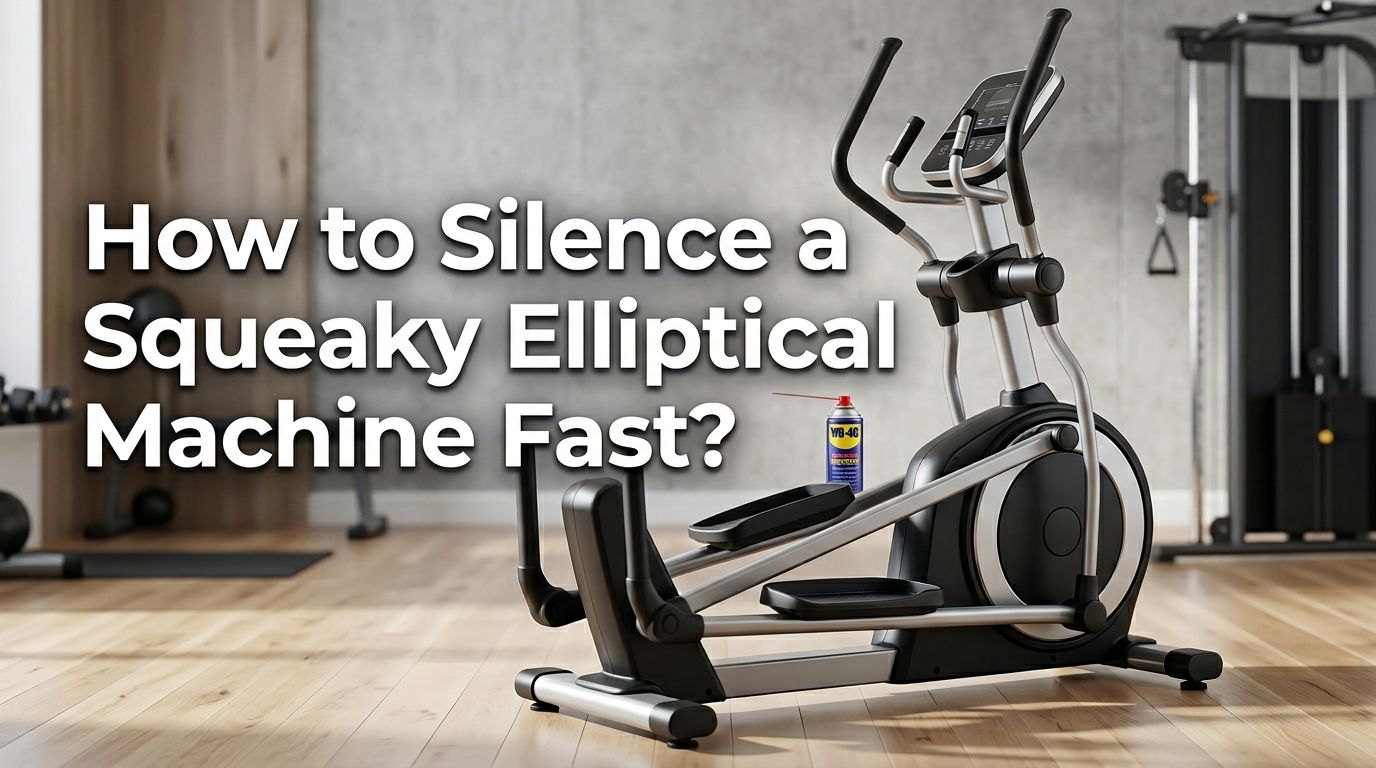
How to Silence a Squeaky Elliptical Machine Fast?
Nothing kills a good workout faster than a loud, annoying squeak coming from your elliptical machine. You hop on, start moving, and suddenly your living room sounds like a rusty gate swinging in the wind.
It breaks your focus, irritates everyone in the house, and makes you wonder if something is seriously wrong with your equipment. The good news?
Most elliptical squeaks are easy to fix with a few simple tools and a little know how. The causes usually come down to loose bolts, dry joints, dust buildup, or worn parts.
In a Nutshell
- Loose hardware is the number one cause of elliptical squeaks. Bolts, screws, and nuts vibrate loose over weeks of regular use. A simple check with a wrench or Allen key can stop the noise in minutes.
- Dry pivot points and joints create metal on metal friction that produces a high pitched squeak. Applying the right lubricant to these areas solves the problem fast and keeps it from returning.
- Dust and debris trapped between moving parts like the drive belt, flywheel, and roller wheels cause squeaking sounds during each pedal stroke. Regular cleaning removes this buildup and restores quiet operation.
- Worn bushings, bearings, or drive belts produce squeaks that lubrication alone cannot fix. Identifying and replacing these parts is the long term solution for persistent noise.
- An uneven or unstable machine rocks during use and creates friction at unexpected points. Leveling your elliptical on a flat surface or using a rubber equipment mat can eliminate this hidden source of squeaking.
- A consistent monthly maintenance routine that includes tightening, cleaning, and lubricating your elliptical prevents squeaks from starting in the first place. Prevention is always easier and cheaper than repair.
Why Does Your Elliptical Machine Squeak in the First Place
Understanding the root cause of the squeak helps you fix it faster. Elliptical machines have dozens of moving parts. Pedal arms, handlebars, pivot bolts, roller wheels, drive belts, and flywheels all work together during each stride.
Friction is the primary enemy. Every time two surfaces rub against each other without proper lubrication, they produce noise. Over time, the factory grease on your elliptical dries out. Dust settles into joints and crevices. Bolts loosen from the constant vibration of regular workouts.
The type of squeak also tells you a lot. A rhythmic squeak that matches your pedal stroke usually points to a problem at the pedal arms, bushings, or roller wheels. A constant high pitched noise often means the drive belt or flywheel needs attention. A random squeak that comes and goes may indicate loose hardware somewhere on the frame.
Temperature and humidity can also play a role. Cold, dry air causes metal parts to contract slightly, which can increase friction at joints. Knowing these basics gives you a clear starting point for your fix.
Tools You Need Before You Start
Gather your tools before you begin so you do not have to stop midway. The list is short and most items are probably already in your home.
You will need an adjustable wrench, a set of Allen keys (hex wrenches), and a Phillips head screwdriver. These cover nearly all the bolts and screws found on standard elliptical machines. A socket wrench set is also helpful for larger bolts on the pedal arms and frame connections.
For cleaning, grab a dry cloth, a small vacuum or handheld vacuum, and a stiff brush. These help you remove dust and debris from tight spaces around the flywheel and drive belt area.
For lubrication, pick up silicone based lubricant spray or white lithium grease. Silicone spray works great for rails and ramp areas. White lithium grease is better for metal on metal pivot points and joints. Avoid using standard WD 40 as a primary lubricant because it evaporates quickly and does not provide lasting protection.
Pros: These tools are inexpensive and reusable for ongoing maintenance.
Cons: Some internal parts may require removing covers or panels, which can feel intimidating at first.
Step 1: Tighten All Loose Bolts and Screws
This is the fastest and most common fix. Loose hardware causes the majority of elliptical squeaks. Vibration from regular use gradually loosens bolts, screws, and nuts throughout the machine.
Start at the pedals and work your way up. Check every bolt on the pedal arms, the connection points where the arms meet the frame, the handlebar joints, and the base stabilizers. Use your wrench or Allen key to snug each one firmly. Do not overtighten because you can strip the threads or crack plastic housings.
Pay special attention to the pedal arm pivot bolts. These carry the most stress during each stride and loosen faster than other hardware. Many users report that simply tightening these two bolts stopped their squeak completely.
Also check the bolts on the console mast and any covers or shields. Even a loose plastic cover can vibrate and create a squeaking or rattling noise during use.
Pros: This fix takes less than 10 minutes and costs nothing.
Cons: The bolts will loosen again over time, so you need to repeat this check monthly.
Step 2: Lubricate All Pivot Points and Joints
If tightening the hardware did not stop the squeak, lubrication is your next step. Dry joints are the second most common cause of elliptical noise. Every point where two parts rotate or slide against each other needs grease.
Focus on the pedal arm pivot points first. These are the large bolts where the pedal arms connect to the main frame. Apply white lithium grease directly to the bolt and the surrounding bushing area. Move the pedal back and forth a few times to work the grease into the joint.
Next, lubricate the handlebar pivot points at the top of the machine. These joints also experience constant movement and dry out over time. A few sprays of silicone lubricant or a small amount of grease will do the job.
If your machine has a ramp or rail system, apply liquid silicone lubricant along the rail surface. This reduces friction as the roller wheels glide back and forth. Wipe off any excess with a clean cloth to prevent dust from sticking.
Pros: Lubrication provides an immediate noise reduction and protects parts from wear.
Cons: You need to reapply every 4 to 6 months depending on how often you use the machine.
Step 3: Clean the Drive Belt and Flywheel Area
The drive belt and flywheel sit inside the main housing of your elliptical. Dust, pet hair, and carpet fibers collect in this area over time. This debris creates friction and causes squeaking or slapping sounds during use.
Remove the side covers or shroud panels to access the internal components. Most covers are held in place by a few Phillips head screws. Set the screws aside in a safe place so you do not lose them.
Use a vacuum with a narrow attachment to remove dust and debris from around the flywheel, drive belt, and pulleys. Follow up with a dry cloth to wipe down the belt surface and the flywheel edge. A stiff brush can help dislodge stubborn buildup in hard to reach spots.
Check the drive belt for signs of wear, cracking, or fraying. A worn belt can slip on the pulleys and create noise even after cleaning. If the belt looks damaged, replacement is the best option.
Pros: Cleaning the interior improves performance and extends the life of internal parts.
Cons: Removing covers requires a bit of patience and you must reassemble everything correctly.
Step 4: Inspect and Replace Worn Bushings
Bushings are small cylindrical sleeves that sit inside the pivot joints of your elliptical. They reduce friction between the bolt and the arm. Over time, bushings wear down and allow metal to rub directly against metal. This produces a persistent squeak that lubrication alone will not fix.
You can usually spot a worn bushing by looking for visible wear marks, cracks, or a loose fit around the pivot bolt. If the pedal arm has any side to side play or wobble at the joint, the bushing is likely worn out.
Most elliptical manufacturers sell replacement bushings through their parts departments. You can also find universal bushing kits that fit many common models. To replace a bushing, remove the pivot bolt, slide out the old bushing, and press in the new one. Apply a thin layer of grease before reassembling.
This fix is especially common on machines that are more than two or three years old or that get heavy daily use. Replacing bushings restores the tight, quiet feel of a new machine.
Pros: New bushings provide a long lasting fix and eliminate the root cause of the squeak.
Cons: Finding the correct size bushing for your specific model may take some research, and the repair requires basic disassembly.
Step 5: Check the Roller Wheels and Bearings
Many elliptical machines use small roller wheels that glide along a rail or track. These wheels contain bearings that can dry out, collect grit, or wear flat over time. A squeaking or grinding sound that matches your stride often comes from these rollers.
Remove the pedal foot plates if possible to get a clear view of the roller wheels. Spin each wheel by hand and listen for noise. A healthy roller spins smoothly and quietly. A bad roller will feel rough, gritty, or make noise when spun.
If the rollers look worn or flat on one side, replace them. If the bearings inside the rollers feel rough but the wheel surface looks fine, you can try adding a drop of silicone lubricant to the bearing. This sometimes extends the life of the roller by a few more months.
Also check that the rollers sit properly on the track. A misaligned roller can rub against the edge of the rail and squeak with every stride.
Pros: Roller and bearing replacement is straightforward and parts are usually affordable.
Cons: You need to identify the exact roller size and type for your model before ordering replacements.
Step 6: Level Your Elliptical Machine
An unlevel machine rocks slightly during use. This rocking creates friction and contact at points that were not designed to touch. The result is a mysterious squeak that seems to come from everywhere at once.
Place a level on the base frame of your elliptical to check if it sits flat. Most machines have adjustable leveling feet at the base. Turn these feet clockwise or counterclockwise to raise or lower each corner until the machine is perfectly level.
If your floor is uneven, consider placing the elliptical on a thick rubber equipment mat. This absorbs vibration, prevents the machine from shifting, and protects your floor from scratches.
A stable machine puts less stress on all of its joints and hardware. This means bolts stay tight longer and moving parts experience less uneven wear. Leveling is a small step that makes a big difference in overall noise and longevity.
Pros: Leveling is free, takes less than five minutes, and reduces wear on the entire machine.
Cons: Some floors are too uneven for the adjustable feet to compensate, requiring a mat or floor repair.
Silicone Spray vs. White Lithium Grease: Which One Should You Use
Choosing the right lubricant matters. Using the wrong type can make the problem worse or damage certain parts. The two best options for elliptical machines are silicone based spray and white lithium grease.
Silicone spray is lightweight, clean, and ideal for plastic on metal surfaces. Use it on rails, ramp surfaces, and roller wheels. It dries to a slick film that repels dust and does not leave a sticky residue. However, it does not last as long as grease on heavy load bearing joints.
White lithium grease is thicker and stickier. It works best on metal on metal pivot points, bolts, and bushings. It stays in place longer and handles the pressure and heat generated at high friction joints. The downside is that it can attract dust if over applied.
Use silicone spray for sliding surfaces and white lithium grease for rotating joints. This combination covers every lubrication need on your elliptical. Avoid petroleum based products on plastic parts because they can cause cracking and degradation over time.
Pros of silicone spray: Clean application, safe for plastics, and good dust resistance.
Cons of silicone spray: Shorter lasting on heavy load joints.
Pros of white lithium grease: Long lasting, excellent for metal joints, and handles high friction areas.
Cons of white lithium grease: Can attract dust and is messier to apply.
How to Identify the Exact Source of the Squeak
Sometimes the squeak is hard to pinpoint. It sounds like it comes from one area but the actual source is somewhere else entirely. A systematic approach saves you time and frustration.
Have someone else use the machine while you listen closely from different positions. Start near the pedals, then move to the arms, then the base, and finally the rear flywheel cover. Your ear will pick up volume changes as you get closer to the source.
Another trick is the paper towel test. Hold a rolled up paper towel to your ear like a stethoscope and place the other end against different parts of the frame. This amplifies the sound at the contact point and helps you zero in on the exact location.
You can also use the process of elimination method. Remove the moving arms and pedal with just your feet. If the squeak stops, the arms or their pivot points are the cause. If it continues, the problem is in the base, flywheel, or drive system.
Marking the squeak location with a piece of tape helps you remember the spot when you start your repair. This simple step prevents you from chasing the wrong problem.
When to Call a Professional
Most elliptical squeaks are easy DIY fixes. But some situations call for a trained technician. Knowing the difference saves you from causing accidental damage.
Call a professional if the squeak comes from deep inside the flywheel housing and does not stop after cleaning and lubrication. Internal bearing failure or a cracked flywheel requires specialized tools and knowledge to repair safely.
You should also seek help if the machine makes a grinding or crunching sound instead of a squeak. This indicates serious component wear or misalignment that could worsen quickly if not addressed properly.
If your elliptical is still under warranty, contact the manufacturer before doing any internal work. Opening the flywheel housing or replacing certain parts yourself may void the warranty coverage. Many manufacturers offer free or discounted service calls during the warranty period.
Pros of professional repair: Expert diagnosis, proper tools, and warranty protection.
Cons of professional repair: Service calls can cost between $100 and $250 depending on your location and the complexity of the issue.
Monthly Maintenance Routine to Prevent Future Squeaks
Prevention is the most effective strategy. A quick monthly maintenance routine keeps your elliptical running quiet and smooth for years.
Week one of each month, do a hardware check. Go around the entire machine and tighten every bolt and screw. This takes about five minutes and catches loose hardware before it causes noise.
Every three to four months, lubricate all pivot points and sliding surfaces. Apply white lithium grease to the pedal arm joints and handlebar pivots. Use silicone spray on the rails and roller wheels. Wipe off any excess to prevent dust accumulation.
Vacuum around and underneath the machine weekly. Dust and pet hair travel into the internal components through ventilation openings. Keeping the surrounding area clean reduces the amount of debris that reaches the drive belt and flywheel.
Inspect the drive belt and roller wheels every six months. Look for cracks, flat spots, or signs of wear. Early replacement of worn parts prevents bigger problems and more expensive repairs down the road.
Pros: A maintenance routine takes minimal time and prevents most common issues.
Cons: It requires consistency, which is easy to forget without setting a calendar reminder.
Common Mistakes to Avoid When Fixing a Squeaky Elliptical
Even well intentioned repairs can go wrong if you make certain mistakes. Avoiding these common errors saves you time, money, and headaches.
Do not use standard WD 40 as your primary lubricant. It works as a cleaner and penetrating oil but evaporates fast. It does not provide the lasting lubrication that elliptical joints need. Use silicone spray or white lithium grease instead.
Never overtighten bolts. Cranking a bolt too hard can strip the threads, crack plastic components, or deform bushings. Tighten until the bolt is firm and snug, then stop.
Do not ignore a new or changing noise. A squeak that suddenly gets louder or changes pitch may indicate a part that is about to fail. Continuing to use the machine can cause further damage and a more expensive repair.
Avoid lubricating dirty parts. Always clean the surface first, then apply lubricant. Grease applied over dust and grime creates a paste that accelerates wear instead of reducing it.
Finally, do not skip reassembly steps. If you removed covers or panels, make sure every screw goes back in place. Loose covers rattle and vibrate, creating new noises that you then have to troubleshoot all over again.
Frequently Asked Questions
Why does my elliptical squeak only at certain speeds?
Speed related squeaks usually point to the drive belt or flywheel. At certain speeds, the belt tension changes and may slip slightly on the pulleys. This creates a squeak that appears only during fast or slow pedaling. Cleaning the belt and pulleys, checking the belt tension, and ensuring proper alignment usually fixes this issue.
Can I use cooking oil or olive oil to lubricate my elliptical?
No. Cooking oils are not suitable for fitness equipment. They turn rancid, attract dirt, become sticky, and do not withstand the friction and heat generated by moving parts. Always use silicone based lubricant or white lithium grease that is made for mechanical applications.
How often should I lubricate my elliptical machine?
A good rule is to lubricate all pivot points and joints every three to four months with regular use. If you use your elliptical daily or for long sessions, lubricate every two to three months. Rails and ramp surfaces benefit from silicone spray every four to six months.
My elliptical is brand new and already squeaks. Is that normal?
A slight squeak on a new machine can happen. Factory lubricant sometimes needs a break in period, and bolts may not have been tightened to the ideal specification during assembly. Tighten all hardware and apply a small amount of grease to the pivot points. If the squeak continues, contact the manufacturer because it could be a defective part covered under warranty.
Is it safe to use my elliptical if it squeaks?
In most cases, a squeaking elliptical is safe to use in the short term. The noise usually indicates friction or loose hardware, not a dangerous structural problem. However, do not ignore the squeak for weeks or months because ongoing friction wears parts faster and can lead to a breakdown. Fix the squeak as soon as you can to keep the machine safe and in good condition.
Will placing a mat under my elliptical stop the squeaking?
A mat helps in some situations. It absorbs vibration, stabilizes the machine, and prevents rocking on uneven floors. If the squeak comes from the machine shifting or rocking during use, a mat can eliminate the noise. However, if the squeak comes from internal parts like bushings or the drive belt, a mat will not fix it. Use a mat as part of your overall setup, but address internal squeaks directly.

Hi, I’m Sarah Hill — the founder and voice behind Heavy Lift Vault. I’m passionate about fitness, strength training, and health technology. I spend my time researching, testing, and reviewing workout equipment and health devices so you don’t have to guess. My goal is to deliver honest, detailed, and trustworthy reviews that help you invest wisely in your fitness journey.