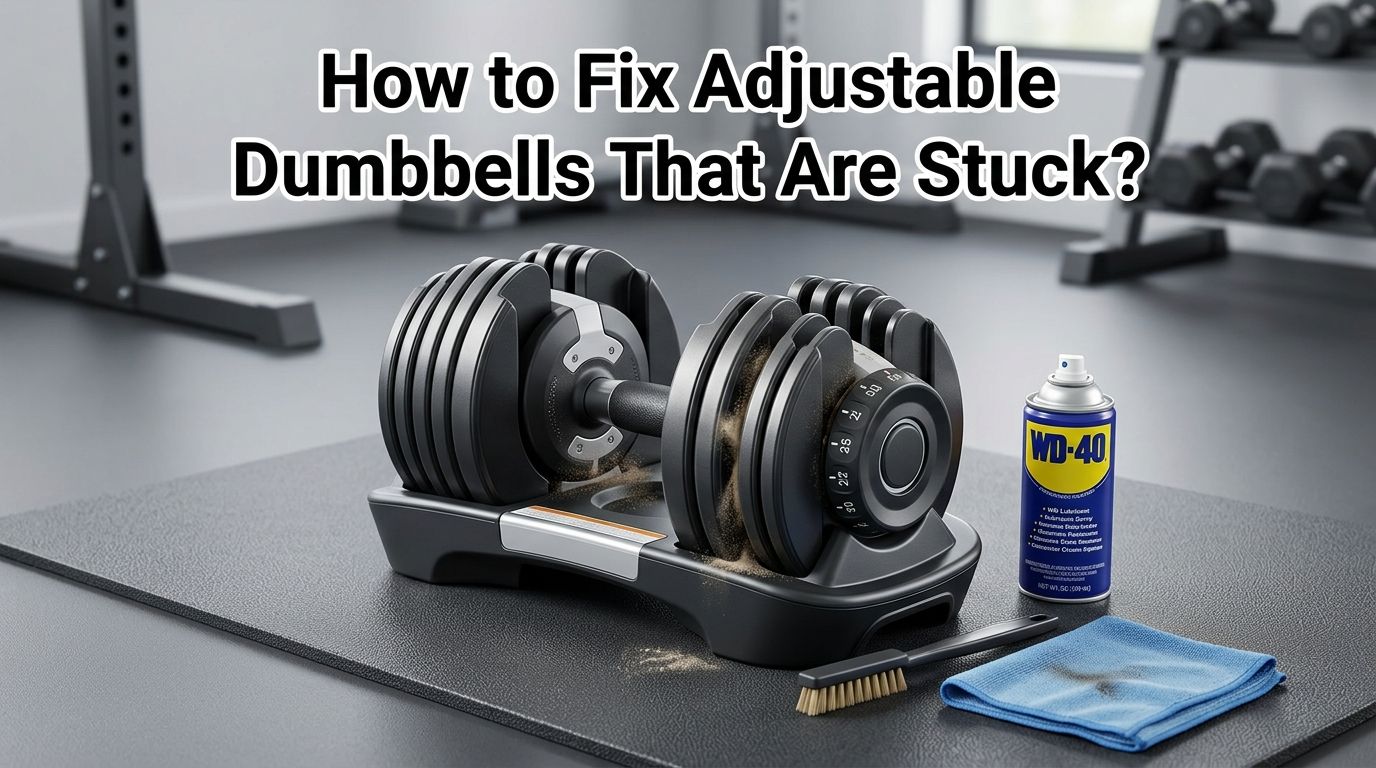
How to Fix Adjustable Dumbbells That Are Stuck?
You just finished a great set of bicep curls and now you want to change the weight. You twist the dial or pull the handle, and nothing happens. Your adjustable dumbbell is completely stuck. This is one of the most frustrating problems home gym owners face. The good news? Most of the time, the fix is simple and takes less than 10 minutes.
Adjustable dumbbells save space and money, but their internal mechanisms can jam for several reasons. Dust buildup, misaligned plates, worn locking tabs, or even placing the dumbbell back in the cradle incorrectly can cause the dial to freeze or the plates to lock up.
You do not need to throw your dumbbells away or buy new ones. In most cases, a quick reset, some cleaning, or a minor adjustment will get them working again.
In a Nutshell
- Stuck dials are usually caused by misaligned weight plates inside the cradle or handle. Placing the dumbbell back into the base at an angle can shift the plates out of position, which prevents the dial from turning. A simple reset often solves the problem within minutes.
- Dust, sweat, and small debris are silent culprits that build up over time inside the adjustment mechanism. Regular cleaning with a dry cloth and occasional use of compressed air keeps the moving parts free and functional.
- A hidden reset button exists on many popular models. Several dial based adjustable dumbbells have a small black button on the underside of the handle. Pressing this button while turning the dial releases the locking mechanism and restores normal function.
- Lubrication goes a long way but must be done correctly. A light silicone spray on the moving parts reduces friction and prevents future jamming. Avoid heavy oils because they attract dust and make the problem worse over time.
- Forcing a stuck dial or mechanism can cause permanent damage. If your dumbbell is stuck, resist the urge to use excessive force. Cracked locking tabs and bent internal parts are much harder to fix than the original jam.
- Proper storage and careful handling prevent most stuck dumbbell issues. Always return the dumbbell to the cradle straight and flat. Avoid dropping the unit, and store it in a dry place away from moisture.
Why Adjustable Dumbbells Get Stuck in the First Place
Understanding the root cause helps you fix the problem faster and prevent it from happening again. The most common reason is plate misalignment. Each weight plate has small tabs or grooves that must line up with the internal selector mechanism. If even one plate shifts slightly, the entire system can lock up.
Another frequent cause is debris inside the cradle or base. Small particles of dust, rubber shavings, or even pet hair can work their way into the channels where the plates slide. This creates friction that stops the dial or lever from turning freely.
Sweat and moisture also play a role. Over time, humidity can cause slight corrosion on metal parts. This creates resistance in the adjustment mechanism. Dropping the dumbbells or placing them roughly back into the cradle causes the most damage. Impact can bend internal tabs and crack plastic components that hold the entire system together.
How to Fix a Stuck Dial on Adjustable Dumbbells
A frozen dial is the most reported issue with adjustable dumbbells. Start by setting the dumbbell flat on the floor outside of the cradle. This removes any interference from the base plates.
Flip the handle upside down and look for a small black button on the bottom. Many models include this hidden reset button that releases the internal locking mechanism. Press the button firmly with a blunt object like a pen cap while slowly turning the dial to the lowest weight setting.
If your model does not have a reset button, try a different approach. Hold the handle firmly in one hand and gently tap each weight plate with your other palm. This can shift misaligned plates back into position. Do not use a metal hammer directly on the plates. If you must tap harder, wrap the tool in a soft cloth first.
Pros: This method is quick and requires no tools. Cons: It does not work if the internal locking tabs are broken.
How to Reset Misaligned Weight Plates
Misaligned plates are the number one reason adjustable dumbbells jam. To reset them, first turn both dials to the lowest weight setting. Then carefully lift the handle straight up and out of the cradle.
Set the handle aside and inspect the plates left in the base. Each plate should face the same direction with the locking tab pointing outward, away from the center grip area. If any plate is turned the wrong way, flip it around so all tabs face the dials. Even a single reversed plate can block the entire mechanism.
Now inspect the handle. Check if any plates are stuck inside it. If plates remain attached to the handle when they should not be, gently wiggle and slide them off. Place everything back into the base in the correct order. Reinsert the handle slowly and straight down. Test the dial by turning it through each weight setting before lifting.
Pros: This fully addresses the root cause of most jams. Cons: It takes more time and requires you to handle each plate individually.
How to Clean the Adjustment Mechanism
Regular cleaning prevents most stuck dumbbell problems before they start. Remove the handle from the base and set it on a clean surface. Use a dry microfiber cloth to wipe down the handle, the inside of the cradle, and each weight plate.
For stubborn dirt or buildup, use compressed air to blow out dust from the channels, grooves, and locking tab slots. Pay special attention to the area around the dials on both ends of the handle. This is where most debris collects because sweat drips down from your hands during use.
A soft bristle brush, like an old toothbrush, works well for scrubbing grime off the locking tabs. Avoid using water directly on the mechanism. Moisture can lead to rust on internal metal parts. If you need a liquid cleaner, use a small amount of rubbing alcohol on a cloth and wipe dry immediately after.
Pros: Cleaning is free and easy. Cons: It is a preventive measure and may not fix a dumbbell that is already severely jammed.
How to Lubricate Stuck Dumbbell Parts Safely
Lubrication is your next step if cleaning alone does not solve the problem. Use a light silicone based spray rather than heavy machine oil. Silicone spray does not attract dust, which makes it ideal for adjustable dumbbell mechanisms.
Apply a thin coat to the channels where the plates slide in and out. Spray lightly around the base of each dial and on any visible moving parts. Wipe away excess lubricant immediately with a clean cloth. Too much spray creates a slippery buildup that actually makes the problem worse over time.
Avoid using WD 40 as a long term lubricant. While WD 40 works well for initial loosening, it evaporates quickly and leaves behind a residue. Silicone spray or dry PTFE lubricant provides longer lasting results. Apply lubricant once every two to three months for regular home gym use, or more often if you work out daily.
Pros: Silicone lubricant provides long lasting smooth operation. Cons: Over application attracts dirt and requires re cleaning.
How to Fix Plates That Are Stuck in the Handle
Sometimes individual weight plates get trapped inside the handle and refuse to release back into the cradle. This usually happens when the locking tabs engage at the wrong time during weight selection.
Remove the handle from the base completely. Hold it horizontally and turn both dials to the lowest setting. If the plates still do not release, flip the handle upside down and gently shake it. Many users report this simple technique dislodges plates that were stuck for weeks.
If shaking does not work, place your foot on the base to hold it steady. Insert the handle back into the cradle and press down firmly while turning the dial back and forth. The pressure combined with the dial rotation often frees the plates. Repeat this process two or three times if needed. Each attempt loosens the plates slightly more.
Pros: No tools or special skills required. Cons: Repeated shaking can stress the handle if done too aggressively.
How to Fix a Pin Selector Adjustable Dumbbell That Is Stuck
Pin selector dumbbells use a pull pin system instead of dials. The pin slides into holes on a weight stack to select the desired load. When the pin gets stuck, the fix is different from dial based models.
First, make sure the pin is fully pulled out. Sometimes the pin only partially disengages and catches on the edge of a hole. Pull the pin all the way out, realign it with the correct weight hole, and push it back in firmly. A bent pin can also cause jamming. Inspect the pin for any bends or damage and straighten it carefully with pliers if needed.
Check the weight stack for debris in the pin holes. A small piece of dirt can prevent the pin from seating properly. Use compressed air or a thin wire to clear each hole. Lubricate the pin with silicone spray for smoother insertion and removal going forward.
Pros: Pin systems have fewer moving parts and are easier to fix. Cons: A damaged pin usually needs full replacement rather than repair.
How to Fix Twist Lock Dumbbells That Won’t Turn
Twist lock adjustable dumbbells use a threaded collar system. You twist the end caps to tighten or loosen the plates. When the collars seize up, it is usually due to cross threading or corrosion.
Start by applying penetrating oil around the threaded collar area. Let it sit for five minutes to soak into the threads. Then grip the collar firmly with a rubber glove or rubber jar opener for extra traction. Twist slowly and steadily rather than using quick jerky motions. Quick movements can strip the threads and make the problem permanent.
If the collar still will not budge, try warming the metal slightly with a hair dryer. Heat causes metal to expand, which can break the bond created by corrosion or dried sweat. Apply heat for 30 seconds, then try twisting again. Once freed, clean the threads thoroughly and apply anti seize lubricant to prevent future sticking.
Pros: This fix restores the collar to like new operation. Cons: Over tightening after repair can cause the same problem again.
When to Replace Parts Instead of Repairing
Some problems go beyond what cleaning and lubricating can fix. Cracked plastic locking tabs, broken dials, and bent internal plates require part replacement. Continuing to use a damaged dumbbell is a safety risk because plates could drop mid exercise.
Contact the manufacturer directly for replacement parts. Most major brands sell individual components like handles, dials, base trays, and locking mechanisms separately. Keep your model number and serial number handy when you reach out, because parts vary between models even from the same brand.
If your dumbbell is still under warranty, the manufacturer may replace defective parts for free. Check the warranty card or receipt that came with your purchase. Document the issue with photos before contacting support. This speeds up the process and helps the support team identify the correct replacement part.
Pros: New parts restore full function and safety. Cons: Parts can be expensive, and some older models have discontinued components.
How to Prevent Adjustable Dumbbells From Getting Stuck Again
Prevention is always easier than repair. The single most important habit is placing the dumbbell back into the cradle correctly every time. Lower it straight down without tilting or angling. Make sure both dials click into the base before releasing your grip.
Wipe down the handle and cradle after every workout. Sweat is acidic and accelerates corrosion on metal parts. A quick wipe with a dry cloth takes five seconds and saves you from dealing with a jammed mechanism later.
Store your dumbbells in a cool, dry area. Humidity and temperature swings cause metal components to expand and contract, which loosens internal fittings over time. Never leave adjustable dumbbells on the floor near open windows or in a garage without climate control. A simple dumbbell stand keeps them elevated and clean.
Avoid dropping the dumbbells at the end of a set. The impact can shift plates, crack internal tabs, and damage the dial mechanism. Place them down gently every single time.
Common Mistakes That Make Stuck Dumbbells Worse
Many people make the problem worse by using the wrong approach. The biggest mistake is forcing the dial with excessive strength. This cracks the internal locking tabs and turns a five minute fix into a costly repair.
Another common error is using heavy grease or cooking oil as lubricant. These substances attract dust and create a sticky paste inside the mechanism. Always use silicone spray or dry PTFE lubricant specifically made for mechanical parts.
Some users try to disassemble the entire dumbbell without understanding the internal layout. Taking apart the dial mechanism incorrectly can scatter small springs and washers that are difficult to reassemble. If you must open the mechanism, take photos at each step so you have a reference for reassembly.
Finally, ignoring small issues leads to bigger ones. A slight stiffness in the dial today becomes a fully locked mechanism next month. Address minor resistance as soon as you notice it with a quick clean and light spray of lubricant.
Final Thoughts on Fixing Stuck Adjustable Dumbbells
A stuck adjustable dumbbell does not mean the end of your home gym investment. Most jams are caused by simple issues like misaligned plates, dust, or lack of lubrication. These problems take minutes to fix with the right approach.
Start with the easiest solution first. Check for the reset button, realign the plates, and clean the mechanism. Move on to lubrication if cleaning alone does not work. Only consider part replacement after you have tried every other option. In most cases, you will never need to go that far.
Build good habits around storage and handling to prevent future issues. A few seconds of careful placement and a quick wipe down after each session keep your dumbbells running smoothly for years. Your adjustable dumbbells are built to last, and a little care goes a long way.
Frequently Asked Questions
Why is my adjustable dumbbell dial not turning?
The most common reason is misaligned weight plates inside the cradle. When plates shift out of position, they block the internal locking tabs and prevent the dial from rotating. Remove the handle from the base, check that all plates face the correct direction with tabs pointing outward, and reinsert the handle straight down. Also check for a small reset button on the underside of the handle.
Can I use WD 40 on my adjustable dumbbells?
WD 40 works as a short term solution to loosen stuck parts, but it is not ideal for long term lubrication. It evaporates quickly and leaves residue that attracts dust. Use a silicone based spray or dry PTFE lubricant instead for lasting smooth operation. These products keep the mechanism clean while reducing friction.
How often should I clean my adjustable dumbbells?
Wipe down the handle and cradle after every workout to remove sweat and surface dust. Perform a deeper cleaning with compressed air and a soft brush once a month. If you work out daily or in a dusty environment, increase the deep cleaning frequency to every two weeks. Regular maintenance prevents most jamming issues.
What should I do if plates are stuck inside the handle?
Turn both dials to the lowest weight setting and flip the handle upside down while gently shaking it. This dislodges most trapped plates. If that does not work, place the handle back in the cradle, press down firmly, and turn the dial back and forth. The combination of pressure and rotation usually frees the plates after a few attempts.
Is it safe to use adjustable dumbbells that feel slightly loose?
No. Even slight looseness means the locking mechanism is not fully engaged. Plates could shift or drop during exercise, which creates a serious injury risk. Stop using the dumbbell immediately and inspect the locking tabs, dial alignment, and plate positioning. Fix the issue before resuming your workout.
Should I contact the manufacturer if nothing works?
Yes. If you have tried resetting the plates, cleaning, lubricating, and checking for the reset button without success, the problem likely involves a broken internal component. Contact the manufacturer with your model number and photos of the issue. Many brands offer replacement parts or warranty coverage for mechanical failures.

Hi, I’m Sarah Hill — the founder and voice behind Heavy Lift Vault. I’m passionate about fitness, strength training, and health technology. I spend my time researching, testing, and reviewing workout equipment and health devices so you don’t have to guess. My goal is to deliver honest, detailed, and trustworthy reviews that help you invest wisely in your fitness journey.