How to Fix Treadmill Belt Slipping When Running?
You step onto your treadmill, hit your stride, and suddenly the belt jerks or hesitates under your feet. That sudden slip breaks your rhythm and puts you at risk of losing balance. A slipping treadmill belt is one of the most common and frustrating problems runners face at home.
The good news? Most causes of belt slipping are simple and fixable. You likely do not need to call a repair technician or buy a new machine. The fix could be as easy as a quarter turn of a bolt or a quick application of silicone lubricant.
This guide walks you through every reason your treadmill belt slips and shows you exactly how to fix each one. Whether your belt slides when you push off, drifts to one side, or stops altogether under your weight, you will find the answer here. Let us get your treadmill running smooth again.
Key Takeaways
- Belt tension is the number one cause of slipping. A running belt stretches over time, and when it becomes too loose, it cannot grip the rollers. You can test this by lifting the belt at the center of the deck. It should rise about two to three inches. If it lifts higher, the belt needs tightening.
- Lubrication matters more than most people realize. A dry deck creates friction that makes the belt stick and then slip. Applying 100% silicone lubricant every one to three months keeps the belt moving freely and protects the deck surface from heat damage.
- The drive belt and the running belt are two different things. The running belt is the surface you walk on. The drive belt sits inside the motor compartment and transfers power from the motor to the front roller. Either one can cause slipping, and each requires a different fix.
- Belt drift causes uneven wear and slipping. If your belt slides to the left or right, it loses contact with the rollers. Small adjustments to the rear roller bolts will center the belt and restore smooth operation.
- Some slipping problems need a professional. If you smell burning, hear grinding, or see scorch marks on the motor control board, stop using the treadmill and call a qualified technician. Electrical problems are beyond safe DIY repair.
- Regular maintenance prevents most slipping issues before they start. Clean the deck, check belt tension monthly, lubricate on schedule, and stay within the machine’s weight limit.
How to Tell If Your Treadmill Belt Is Actually Slipping
Before you grab your tools, confirm that the belt is truly slipping. A slipping belt hesitates or jerks when your foot pushes off during a stride. You may feel the surface momentarily pause beneath you before catching again.
Turn the treadmill on at a low speed. Walk on it and press down firmly with each step. If the belt pauses or stutters under your weight, the belt is slipping. Another test involves standing still on the belt while it runs. If the belt stops or stalls under your body weight but the motor keeps running, you have a confirmed slipping problem.
Listen for sounds too. A faint squeaking near the motor area may point to the drive belt. A rhythmic thumping suggests the running belt or roller is the source.
How to Check and Adjust Belt Tension to Stop Slipping
Loose belt tension is the most common reason a treadmill belt slips during running. The running belt stretches gradually with use. When it becomes too loose, it cannot maintain grip on the front and rear rollers.
To test the tension, unplug the treadmill first. Lift the running belt at the center of the deck with your fingers. A properly tensioned belt rises about two to three inches. If it lifts much higher, the belt is too loose.
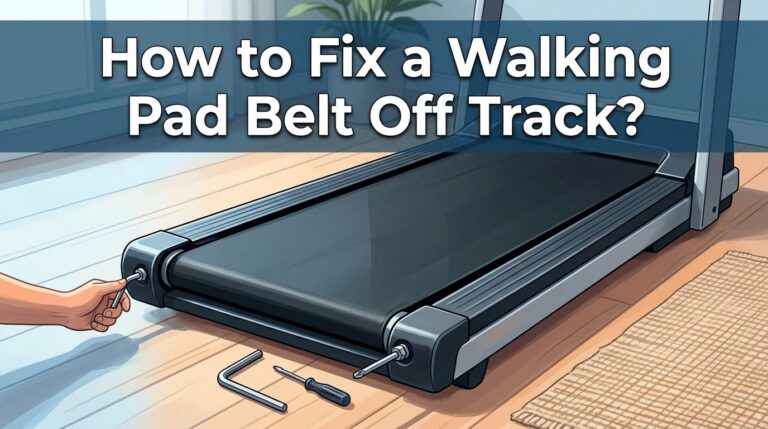
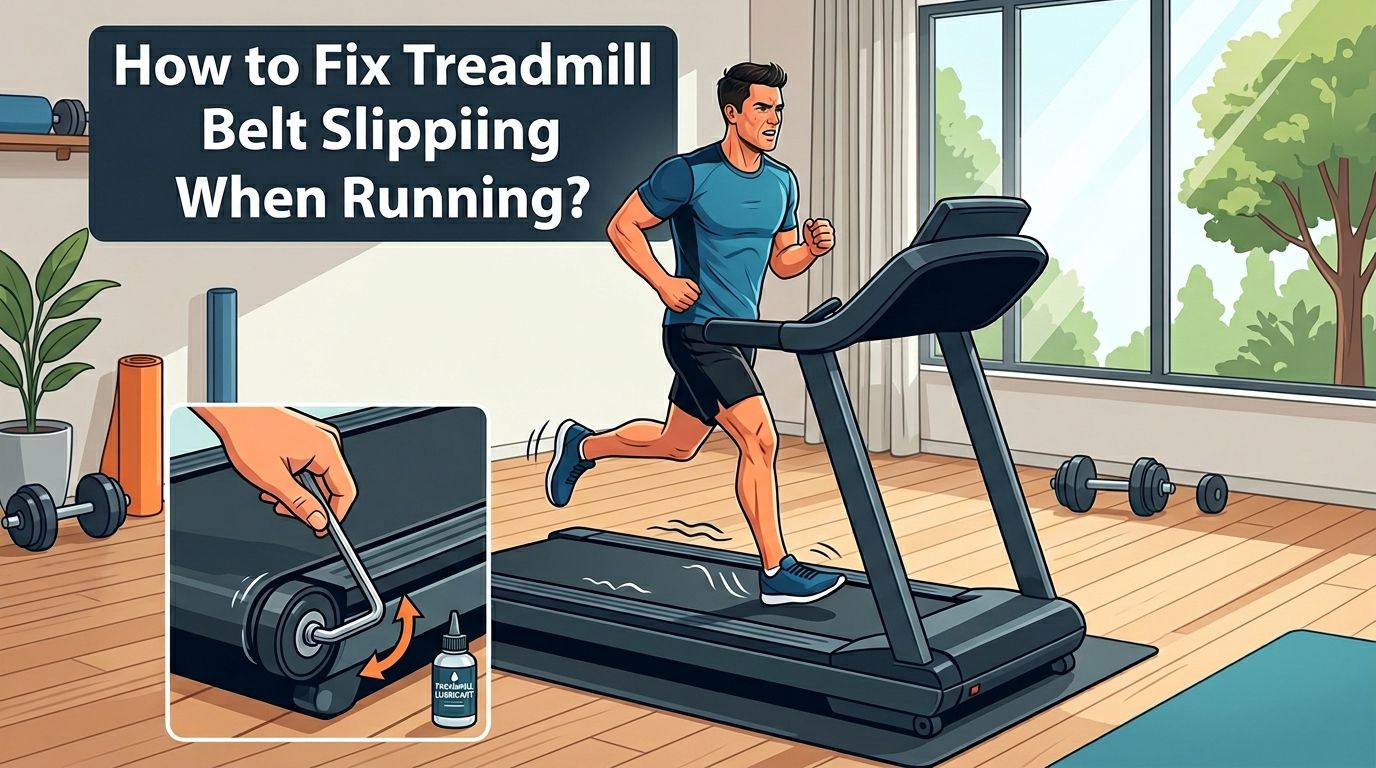
To tighten it, locate the two adjustment bolts at the rear of the treadmill. Use an Allen wrench to turn each bolt a quarter turn clockwise. Always tighten both sides equally to keep the belt centered. After each adjustment, plug the treadmill in and walk on it at a low speed to test the result. Repeat until the slipping stops.
Pros: This is the fastest and easiest fix. It costs nothing and takes under five minutes.
Cons: Over tightening puts strain on the motor and rollers. If the belt barely lifts after adjustment, loosen the bolts slightly.
How to Lubricate Your Treadmill Deck and Prevent Friction Slipping
A dry deck creates excess friction between the running belt and the surface beneath it. This friction can make the belt stick, stutter, and then slip during your run. Proper lubrication reduces this friction and protects both the belt and the deck from heat damage.
Unplug the treadmill before you start. Lift one side of the belt and slide your fingers along the deck surface. If the surface feels dry or dusty rather than slightly slick, you need to lubricate. Apply a thin line of 100% silicone lubricant from front to back on each side of the deck, underneath the belt.
After applying, move the belt by hand a few times to spread the lubricant. Then plug the machine in and run it at a low speed for one minute with nobody on it. This distributes the silicone evenly across the entire deck surface.
Pros: Lubrication is cheap, quick, and dramatically extends belt life. It also reduces motor strain.
Cons: Using the wrong lubricant (like WD 40 or petroleum based products) can damage the belt material. Always use 100% silicone unless your manual specifies otherwise.
How to Fix a Treadmill Belt That Slips to One Side
A belt that drifts left or right loses even contact with the rollers. This misalignment causes uneven friction, accelerated wear, and slipping during your workout. Belt drift usually results from uneven tension on the rear roller bolts or an unlevel treadmill.
Start the treadmill at a slow speed. Watch which direction the belt moves. If the belt drifts left, tighten the left rear roller bolt by a quarter turn. If it drifts right, tighten the right rear roller bolt by a quarter turn.
Let the treadmill run for about 30 seconds after each small adjustment. The belt needs time to settle into its new position. Repeat this process in small increments until the belt stays centered on the deck.
Pros: Alignment correction is simple and prevents long term damage to the belt edges.
Cons: Over correcting can pull the belt too tight on one side. Always make tiny adjustments and wait between each one.
How to Inspect and Tighten the Drive Belt Inside the Motor Compartment
The drive belt is a separate belt inside the motor housing that connects the motor to the front roller. When this belt becomes loose or worn, the motor runs but the front roller cannot maintain speed under your weight.
A common sign of drive belt slipping is a treadmill that runs fine when empty but hesitates the moment you step on it. You may also hear a faint squeaking or rubbing near the motor. Unplug the treadmill and remove the motor cover to access the drive belt.
Press lightly on the drive belt. It should feel firm. If it deflects easily or feels slack, it needs tightening. Loosen the motor mount bolts slightly, slide the motor forward to increase tension on the drive belt, and retighten the bolts. Test the treadmill at a low speed afterward.
Pros: This fix addresses a hidden cause that many people overlook. It is relatively straightforward with basic tools.
Cons: Accessing the motor compartment can be intimidating. If the drive belt shows cracks or glazing, tightening will not help and you will need a replacement belt.
How to Check If Your Treadmill Rollers Are Causing Belt Slippage
The front and rear rollers guide the running belt and help maintain consistent tracking. Dirt buildup, worn bearings, or a damaged roller surface can all cause slipping even when belt tension and lubrication are correct.
Unplug the treadmill. Spin each roller by hand. A healthy roller turns smoothly and quietly. If you hear grinding, clicking, or feel resistance, the bearings may be failing. Also check the roller surface for dust, debris, or flat spots that reduce grip on the belt.
Clean dirty rollers with a dry cloth. Remove any debris lodged between the roller and the belt. If the rollers show visible damage, wobble, or produce grinding sounds, they need professional replacement.
Pros: Cleaning rollers is a simple maintenance step that often restores proper grip immediately.
Cons: Bearing replacement requires professional service. Attempting it without proper tools can cause belt misalignment.
How to Identify a Worn Running Belt That Needs Replacement
Sometimes the running belt itself is the problem. Over months or years of use, the underside of the belt loses its textured grip and becomes smooth or glazed. A worn belt will slip under load no matter how much you tighten or lubricate it.
Lift the belt and examine the underside. A healthy belt has a slightly rough, textured surface. If the underside looks shiny, smooth, or feels slick without lubricant, the belt has lost its grip. Also look for frayed edges, uneven thickness, or burn marks, all signs of a belt past its useful life.
A stretched belt that wobbles at low speed or cannot hold center after multiple alignment attempts is also a candidate for replacement. At this point, no amount of adjustment will solve the slipping problem.
Pros: A new belt restores full grip and performance. It also protects the deck and rollers from further damage.
Cons: Belt replacement costs money and requires proper sizing by brand and model. Installation can be done at home, but a technician ensures correct fit.
How to Tell If the Motor Control Board Is Causing Belt Slipping
If you have checked the running belt, drive belt, lubrication, and rollers and the treadmill still slips, the motor control board (MCB) may be the cause. The MCB regulates power delivery from the motor to the roller system. When it fails, the motor cannot maintain consistent torque under load.
Typical symptoms include speed that drops suddenly when you step on the belt, a strained hum from the motor, or the treadmill shutting off during use. You may also notice the belt surges and then slows repeatedly.
Perform only visual checks at home. Look for burnt components, loose wiring, or darkened spots on the board. Do not touch the board or test it with a multimeter unless you are a trained technician. Electrical repairs involve high voltage and must be handled by a professional.
Pros: Identifying an MCB issue helps you avoid wasting time on mechanical fixes that will not solve the problem.
Cons: MCB replacement is expensive and requires professional diagnosis and installation.
How to Stay Within Your Treadmill’s Weight Limit and Avoid Overload Slipping
Every treadmill has a maximum user weight rating. Running on a machine near or above this limit causes extra strain on the belt, deck, motor, and rollers. This added pressure can make the belt slip even when all components are in good condition.
Check your treadmill’s manual or the label on the frame for the weight capacity. Most home treadmills support 250 to 350 pounds. Commercial models from major brands may support 400 to 500 pounds.
If you are close to the limit, the belt will experience more stretch and more friction during each stride. This accelerates wear and increases the chance of slipping. Choosing a treadmill rated well above your body weight gives the machine more room to operate without strain.
Pros: Staying within the weight limit extends the life of every component and reduces slipping risk.
Cons: If your current machine is under rated for your weight, upgrading to a higher capacity treadmill is the only long term solution.
How to Prevent Treadmill Belt Slipping With a Regular Maintenance Schedule
Prevention is easier and cheaper than repair. A consistent maintenance routine keeps your treadmill running smoothly and catches small problems before they become big ones.
Clean the deck and belt surface monthly. Use a dry cloth to remove dust and debris from under the belt and around the rollers. Lubricate the deck with 100% silicone every one to three months depending on how often you use the machine.
Check belt tension once a month by lifting the belt at the center. Inspect the drive belt every three to six months. Keep the area around your treadmill free of dust, pet hair, and carpet fibers, which can work their way into the motor and roller system. Place a treadmill mat under the machine to reduce debris and stabilize the frame.
How to Decide Between DIY Repair and Calling a Professional Technician
Most slipping problems are safe and easy to fix at home. Tightening the belt, lubricating the deck, aligning the belt, and cleaning the rollers are all tasks that require only basic tools and a few minutes of your time.
However, some situations demand professional help. If you see scorch marks inside the motor compartment, smell burning, or notice the circuit breaker tripping repeatedly, stop all DIY work immediately. Grinding sounds from the rollers, visible MCB damage, or persistent slipping after all adjustments also require a trained technician.
A professional can test voltage output, replace bearings safely, and match replacement parts to your exact treadmill model. The cost of a service call is far less than the cost of a damaged motor or an injury from a malfunctioning machine.
Pros of DIY: Saves money. Most fixes take under 15 minutes. You learn how your machine works.
Cons of DIY: Misdiagnosis can lead to over tightening or wrong parts. Electrical work is dangerous without training.
Pros of professional service: Accurate diagnosis. Safe handling of electrical components. Correct parts matched to your machine.
Cons of professional service: Service calls cost money and require scheduling.
Frequently Asked Questions
How do I know if my treadmill belt is too tight or too loose?
Lift the belt at the center of the deck while the treadmill is unplugged. It should rise about two to three inches with moderate pressure. If it lifts much higher, the belt is too loose and may slip. If it barely moves, the belt is too tight and could strain the motor. Adjust the rear roller bolts in quarter turn increments until you reach the right tension.
Can I use WD 40 to lubricate my treadmill belt?
No. WD 40 is a solvent, not a lubricant suitable for treadmills. It can damage the belt material and leave residue that attracts dust. Always use 100% silicone lubricant specifically intended for treadmill decks. Check your owner’s manual for the manufacturer’s recommended product.
Why does my treadmill belt slip only at higher speeds?
At higher speeds, each foot strike puts more force on the belt. If the belt is slightly loose or the deck is slightly dry, the problem may not show up during walking but becomes obvious during running. Tighten the belt and lubricate the deck to address this speed dependent slipping.
How often should I replace my treadmill running belt?
Most running belts last three to five years with regular use and proper maintenance. Heavy use or poor lubrication shortens this lifespan. If the belt underside is smooth, the edges are frayed, or it slips despite correct tension and lubrication, it is time for a replacement.
Is it safe to use a treadmill with a slipping belt?
No. A slipping belt can cause sudden hesitation or jerking that throws off your balance. This creates a fall risk, especially at higher speeds. Stop using the treadmill and fix the slipping issue before your next workout.
What does black dust under my treadmill mean?
Black dust typically comes from a worn drive belt. As the drive belt degrades, it sheds small rubber particles that collect under the motor cover and around the base of the machine. This is a clear sign that the drive belt needs inspection and likely replacement.

Hi, I’m Sarah Hill — the founder and voice behind Heavy Lift Vault. I’m passionate about fitness, strength training, and health technology. I spend my time researching, testing, and reviewing workout equipment and health devices so you don’t have to guess. My goal is to deliver honest, detailed, and trustworthy reviews that help you invest wisely in your fitness journey.