
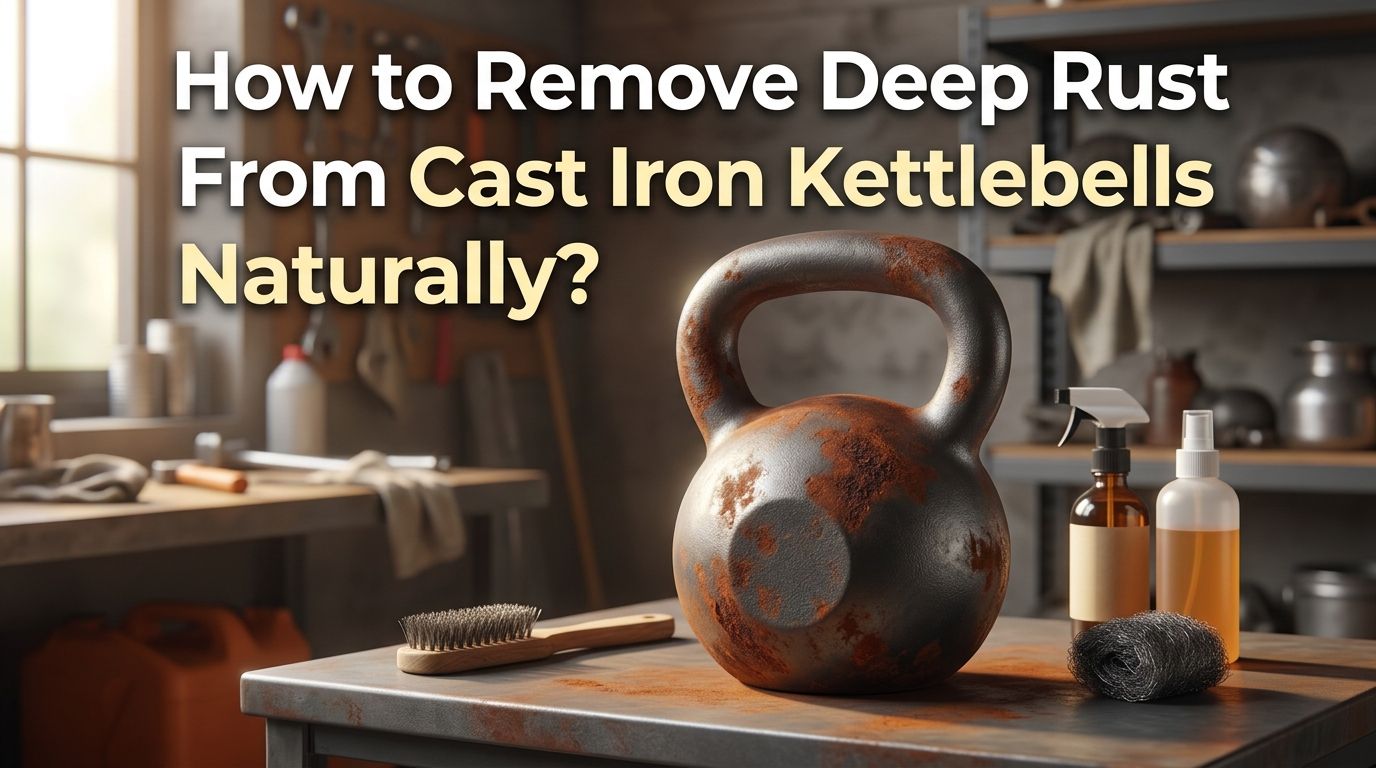
How to Remove Deep Rust From Cast Iron Kettlebells Naturally?
Your favorite cast iron kettlebell has turned orange and flaky. You pick it up, and rust crumbles onto your hands. Deep rust on a kettlebell feels like a death sentence for your gear, but it is not.
The good news is you do not need expensive commercial chemicals or toxic sprays to fix this problem. A few common household items can strip away even the worst rust and bring your kettlebell back to life.
This post gives you clear, step by step methods to remove deep rust from cast iron kettlebells using safe and natural solutions. You will learn exactly what works, what to avoid, and how to protect your kettlebell from rusting again.
In a Nutshell
- White vinegar is your best friend for deep rust removal. A 50/50 mix of distilled white vinegar and water can dissolve heavy rust when you soak the kettlebell for several hours. The acetic acid breaks the bond between rust and iron without damaging the base metal underneath.
- Coarse salt and a cut potato can remove moderate rust spots fast. The oxalic acid in raw potatoes reacts with iron oxide, and the salt acts as a gentle abrasive. This combo works well for patches of rust that have not yet eaten deep into the surface.
- Baking soda paste is ideal for lighter rust and final cleanup. Mix baking soda with a small amount of water to form a thick paste. Apply it, let it sit, and scrub with a stiff brush. This method is gentle and leaves no residue behind.
- Steel wool and sandpaper handle the physical scrubbing stage. After a vinegar soak loosens the rust, you still need mechanical action to remove the softened deposits. Use medium grade steel wool or 80 to 120 grit sandpaper for deep rust, then finish with finer grits.
- Seasoning your kettlebell after rust removal is critical. Bare cast iron will rust again within hours if left unprotected. A thin coat of flaxseed oil or food grade mineral oil baked at high heat creates a protective barrier that blocks moisture.
- Proper storage prevents rust from returning. Keep your kettlebell indoors in a dry space. Wipe it down after every workout. Consider placing moisture absorbers or silica gel packs nearby if you store it in a garage or shed.
Why Cast Iron Kettlebells Rust So Easily
Cast iron is a porous metal. It absorbs moisture from the air and from your sweat during workouts. Iron plus oxygen plus water creates iron oxide, which is rust. This reaction happens faster in humid environments, coastal areas, and unheated garages.
Kettlebells are especially vulnerable because they get handled with sweaty palms. Sweat contains salt, and salt accelerates corrosion. If you set your kettlebell down after a workout without wiping it, that thin film of salty moisture starts eating into the surface right away.
Powder coated kettlebells resist rust better than bare cast iron. But once the coating chips or wears down on the handle, the exposed iron underneath starts to corrode quickly. Even a small scratch can become a rust patch within weeks in the wrong conditions.
Assessing the Severity of Rust on Your Kettlebell
Before you start cleaning, figure out how bad the problem actually is. Surface rust looks like a thin orange film. It wipes off easily with a dry cloth and does not feel rough to the touch. This type responds well to a quick baking soda scrub.
Moderate rust feels bumpy and textured. You can see raised orange patches, and the color has deepened to a brownish red. A vinegar soak combined with steel wool will handle this level effectively.
Deep rust creates pits and craters in the metal. The surface feels very rough, and chunks of rust may flake off when you press on them. This level needs an extended vinegar soak, aggressive sanding, and possibly multiple treatment rounds. Deep rust does not mean the kettlebell is ruined. Cast iron is thick and durable. You can remove a significant amount of surface material and still have a perfectly functional bell.
The White Vinegar Soak Method
White vinegar is the most effective natural rust remover for cast iron. The acetic acid dissolves iron oxide on contact. For deep rust, you need a full submersion soak.
Fill a plastic tub or bucket large enough to hold your kettlebell. Mix equal parts distilled white vinegar and water. Place the kettlebell in the solution and make sure it is fully covered. Let it soak for 4 to 8 hours for deep rust. Check it every couple of hours and scrub loose deposits with a brush.
After soaking, remove the kettlebell and scrub it with steel wool or a stiff wire brush. The rust should come off much more easily now. Rinse with clean water and dry the kettlebell immediately with a towel. Do not let it air dry, or flash rust will form within minutes.
Pros: Cheap, highly effective on deep rust, safe to use, no toxic fumes. Cons: Requires long soak time, can darken the iron surface slightly, needs immediate drying and oiling afterward.
The Baking Soda Paste Method
Baking soda works best on surface rust and as a follow up treatment after a vinegar soak. It is gentle, non toxic, and mildly abrasive. This makes it perfect for final cleanup without scratching the metal.
Mix three parts baking soda with one part water to create a thick paste. Spread the paste generously over all rusted areas. Let it sit for 30 to 60 minutes. Then scrub with a stiff nylon brush or steel wool in circular motions.
Rinse the kettlebell with warm water and dry it completely. You may need to repeat this process two or three times for stubborn spots. Do not combine vinegar and baking soda at the same time. They neutralize each other, and you lose the cleaning power of both.
Pros: Very safe, no odor, easy to apply, great for touch ups and lighter rust. Cons: Not strong enough for deep rust on its own, requires multiple applications, needs physical scrubbing effort.
The Salt and Potato Scrub Technique
This method sounds unusual, but it works. Raw potatoes contain oxalic acid, a natural compound that breaks down iron oxide. Coarse salt provides the abrasive power to scrub loosened rust away.
Cut a large potato in half. Dip the cut face into a pile of coarse salt or kosher salt. Press the salted potato firmly against the rusted area and scrub in small circles. Add more salt as needed. The potato will turn brown as it reacts with the rust.
This technique is best for localized rust patches rather than full coverage. If your entire kettlebell is deeply rusted, use the vinegar soak first and then use the potato method for remaining stubborn spots.
Pros: Uses items already in your kitchen, no chemicals involved, effective for spot treatment. Cons: Labor intensive, not practical for severe full body rust, requires a lot of potatoes and salt for large kettlebells.
Using Sandpaper and Steel Wool for Deep Rust
Physical abrasion is a key part of removing deep rust. After a vinegar soak softens the corrosion, you need to scrub it off. Steel wool and sandpaper are the most effective tools for this job.
Start with 80 grit sandpaper or medium grade steel wool to remove the heaviest rust deposits. Work in small sections and apply firm, even pressure. Switch to 120 grit sandpaper once the major rust is gone. Finish with 220 grit to smooth the surface and prepare it for seasoning.
For the kettlebell handle, wrap a strip of sandpaper around it and pull back and forth like you are shining a shoe. This ensures even coverage on the curved surface. Wear gloves during this process to protect your hands from both rust particles and metal splinters.
Pros: Removes the deepest rust completely, gives a smooth finish, no soaking required. Cons: Time consuming, creates dust, can remove too much metal if you are overly aggressive, requires physical effort.
The DIY Electrolysis Method
Electrolysis is a safe and surprisingly simple way to pull rust off cast iron without any scrubbing. It uses a low voltage electrical current to reverse the oxidation process. You need a plastic container, washing soda (sodium carbonate), a manual battery charger, and a piece of sacrificial steel.
Fill the container with water and add half a cup of washing soda per gallon. Place a steel plate or rebar in the water as the anode. Connect the positive (red) clamp from the battery charger to the steel piece. Connect the negative (black) clamp to the kettlebell. Turn on the charger and set it to a low amperage.
Bubbles will appear on the kettlebell surface. This means the process is working. Leave it running for 6 to 24 hours depending on rust severity. When finished, remove the kettlebell and wipe away the loose black residue with a cloth or brush.
Pros: Removes rust without scrubbing, safe for the base metal, reaches crevices and textured areas. Cons: Requires basic electrical setup, takes time, produces hydrogen gas so ventilation is important, not as simple as a vinegar soak.
The Citric Acid Alternative
Citric acid powder is another natural option. You can find it in the canning section of most grocery stores. It dissolves rust effectively and works faster than vinegar in many cases.
Dissolve two to three tablespoons of citric acid powder per gallon of hot water. Submerge the kettlebell and let it soak for 2 to 6 hours. The solution will turn yellow or brown as it lifts rust from the surface. Remove the kettlebell, scrub with a brush, and rinse well.
Citric acid can etch the iron surface slightly if left too long. Check on the kettlebell every couple of hours and remove it as soon as the rust is gone. This method is faster than vinegar for moderate to heavy rust.
Pros: Faster than vinegar, very effective, natural and food safe, affordable. Cons: Can etch metal if over soaked, less commonly found than vinegar, solution must be discarded after one use.
How to Season Your Kettlebell After Rust Removal
Removing rust exposes bare cast iron. That bare surface will flash rust within an hour if you do not protect it. Seasoning creates a thin, hard layer of polymerized oil that blocks moisture and prevents corrosion.
Dry the kettlebell thoroughly with a towel after cleaning. Apply a very thin coat of flaxseed oil, food grade mineral oil, or canola oil over the entire surface. Use a lint free cloth and wipe away any excess. The coat should be almost invisible.
Place the kettlebell upside down in an oven set to 400 to 450 degrees Fahrenheit. Bake for one hour. Turn off the oven and let the kettlebell cool inside slowly. Repeat this process two or three times for a strong, durable finish. Each layer adds more protection.
Common Mistakes to Avoid During Rust Removal
Leaving the kettlebell wet after cleaning is the most common mistake. Even 30 minutes of air drying can create new rust on clean iron. Always towel dry immediately and apply oil right away.
Using vinegar and baking soda together at the same time cancels out their cleaning properties. Use them separately. Vinegar first to dissolve rust, then baking soda later to neutralize any remaining acid on the surface.
Skipping the seasoning step is another frequent error. A clean kettlebell without seasoning will rust faster than it did before because the porous surface is now fully exposed. Never leave bare cast iron unprotected.
Soaking too long in vinegar or citric acid can also cause problems. Extended acid exposure can pit the iron surface and weaken it. Set a timer and check your kettlebell regularly during any acid soak.
How to Store Kettlebells to Prevent Future Rust
Storage makes or breaks your rust prevention efforts. Keep your kettlebell indoors whenever possible. A climate controlled room with low humidity is ideal.
If you must store it in a garage or shed, place silica gel packs or moisture absorbers near the kettlebell. You can also keep it in a sealed rubber tote with a few desiccant packets inside. This creates a dry microenvironment around the bell.
Wipe your kettlebell down with a dry cloth after every workout. Sweat is the number one cause of rust on fitness equipment. A quick 30 second wipe removes the salt and moisture before they can do damage. Apply a light coat of oil to the handle every few weeks if you live in a humid area.
Building a Regular Maintenance Routine
Prevention is easier than restoration. Set up a simple routine to keep your kettlebells in top shape year round. Inspect the surface once a month for any small rust spots. Catch them early and a quick baking soda scrub will handle the problem in minutes.
After each workout, wipe the kettlebell with a dry microfiber cloth. Once a month, apply a thin coat of mineral oil to the handle and body. If you notice the seasoning wearing thin, do a quick oven seasoning session to rebuild the protective layer.
Store your kettlebells on a rubber mat rather than bare concrete. Concrete absorbs and releases moisture, which can accelerate corrosion on the bottom of the bell. A simple rubber mat creates a moisture barrier between the iron and the floor.
When to Consider Repainting Your Kettlebell
If rust has removed the original powder coat or paint from large sections of your kettlebell, you may want to repaint it after cleaning. A fresh coat of high temperature enamel spray paint bonds well to clean cast iron and provides long lasting protection.
Sand the entire surface to 220 grit smoothness after removing all rust. Wipe it down with rubbing alcohol to remove dust and oils. Apply a rust inhibiting primer first, then two to three thin coats of enamel paint. Let each coat dry fully before applying the next.
Leave the handle bare if you prefer the raw iron grip feel. Season the handle with oil instead of painting it. Many kettlebell users prefer an unpainted handle because it offers better grip and chalk adhesion during workouts.
Frequently Asked Questions
Is rust on a cast iron kettlebell dangerous to your health?
Small amounts of iron oxide are not toxic. You will not get sick from handling a rusty kettlebell. However, rough rust can tear calluses and cut skin during swings and presses. Rusty surfaces also harbor bacteria more easily because the pitted texture is hard to clean. For both comfort and hygiene, it is best to remove rust and keep the surface smooth.
How long should you soak a kettlebell in vinegar?
For surface rust, 1 to 2 hours is enough. For moderate rust, soak for 4 to 6 hours. Deep, heavy rust may need 8 to 12 hours. Check the kettlebell every couple of hours and scrub loose deposits away. Do not leave it in vinegar for more than 24 hours, as prolonged acid exposure can pit the iron.
Can you use Coca Cola to remove rust from a kettlebell?
Yes, cola contains phosphoric acid, which dissolves rust. Soak the kettlebell overnight in a tub of cola. The results are similar to a vinegar soak, though vinegar is generally more effective and cheaper. Cola also leaves a sticky sugar residue that you need to wash off thoroughly.
What is the fastest natural method to remove deep rust?
Citric acid powder dissolved in hot water works faster than vinegar for heavy rust. A strong citric acid solution can loosen deep rust in 2 to 4 hours. Combine the soak with steel wool scrubbing for the fastest results. Electrolysis is also effective but requires more setup time.
Will removing rust weaken my kettlebell?
No. Cast iron kettlebells are solid and thick. Removing surface rust takes off only a fraction of a millimeter of material. Your kettlebell will remain structurally sound even after aggressive sanding and multiple rust removal sessions. The only concern is cosmetic: repeated treatments may slightly change the surface texture.
How often should you oil a kettlebell to prevent rust?
In dry climates, oiling once a month is enough. In humid environments or coastal areas, oil the handle and body every one to two weeks. Use a thin coat of food grade mineral oil or flaxseed oil. Wipe off any excess so the surface does not become slippery during workouts.

Hi, I’m Sarah Hill — the founder and voice behind Heavy Lift Vault. I’m passionate about fitness, strength training, and health technology. I spend my time researching, testing, and reviewing workout equipment and health devices so you don’t have to guess. My goal is to deliver honest, detailed, and trustworthy reviews that help you invest wisely in your fitness journey.