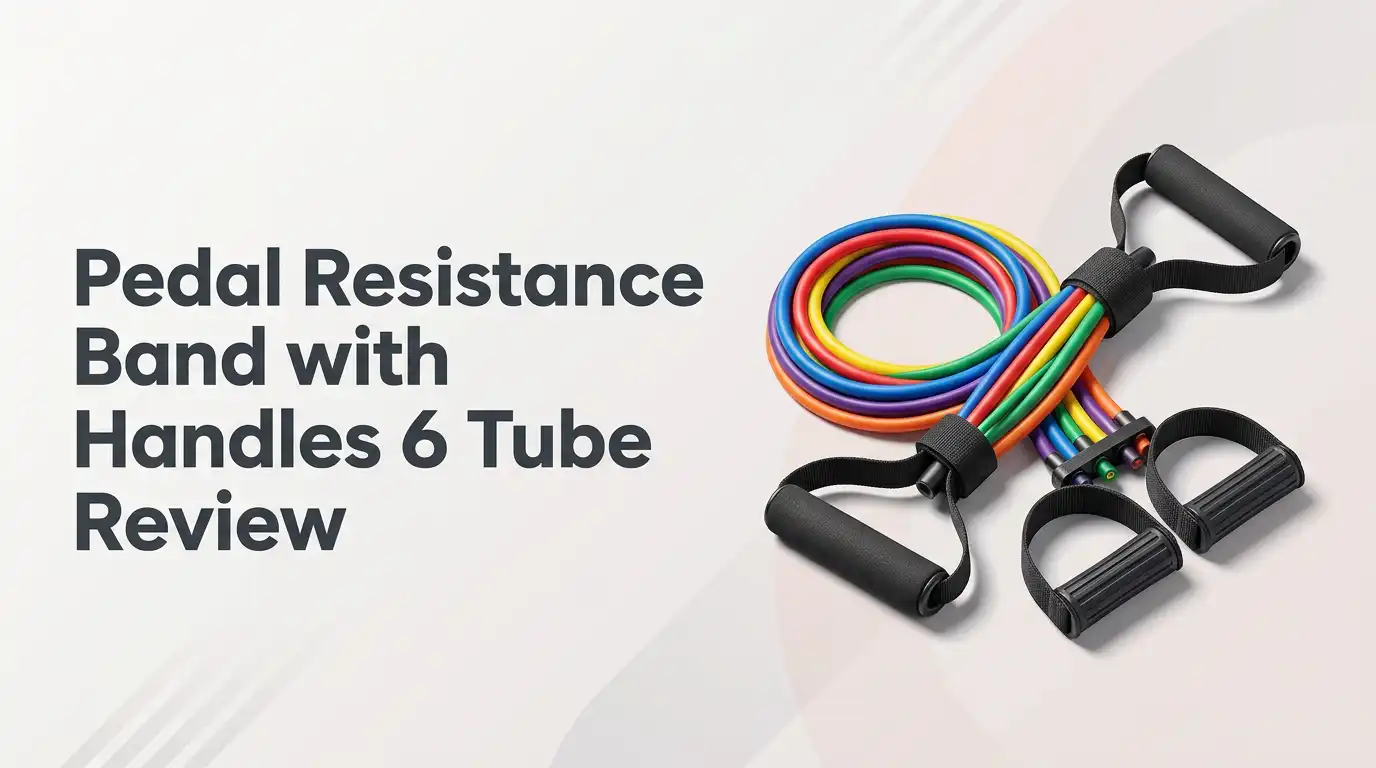
Pedal Resistance Band with Handles 6 Tube Review 2026: Worth Buying?
Home workout gear keeps getting smaller, cheaper, and smarter. The pedal resistance band with handles sits at the far end of that trend. It weighs less than half a pound, costs less than a pizza, and claims to replace a rack of dumbbells.
The 6 tube version promises stronger tension than the common 4 tube models. That sounds great on a product page. Real floors, real feet, and real sweat tell a different story. I used this band for daily core work, arm pulls, and stretching sessions. Some parts impressed me.
Some parts frustrated me fast. This review covers the unboxing, the tension, the comfort, the weak spots, and the honest limits of the product. Read on before you add it to your cart, because this little band is more specific than the marketing suggests.
In a Nutshell:
- The 6 tube build feels noticeably stronger than 4 tube versions. Most listings quote around 50 lbs of total tension with a stretch reach near 3.6 feet. That extra pull makes sit ups, rows, and arm curls feel like real resistance training rather than light stretching.
- The price is the biggest selling point. The popular Spechance model sells for about $9.99 on Amazon. At that price, the band costs less than one month of most gym memberships, which lowers the risk if you simply want to test banded training at home.
- Comfort depends heavily on socks. The foam pedal presses into bare feet during longer sets. The manufacturer even recommends wearing socks, which tells you something real about the padding.
- Durability is the weak link. The product holds a 3.7 star average across more than 2,300 ratings, and Amazon flags it as a frequently returned item. Snapped tubes and loose pedal seams appear often in buyer feedback.
- It works best as a core and upper body accessory, not a full gym. The band shines for abs, shoulders, and rehab style movement. It cannot load your legs or back the way weights can.
- Set your expectations at the beginner to intermediate level. Strong lifters will outgrow the tension quickly, while new exercisers and desk workers get the most value.
What Is the Pedal Resistance Band with Handles 6 Tube?

Last update on 2026-10-27 / Affiliate links / Images from Amazon Product Advertising API
This product is a compact pull rope system. Six elastic tubes connect a padded foot pedal to two foam handles. You place your feet on the pedal, grip the handles, and pull against the tubes.
The design targets the abs, waist, arms, shoulders, and legs from a seated or lying position. Think of it as a floor based cable machine without the machine.
Most versions use NBR rubber or natural rubber tubing with foam sleeves on the grips. The whole unit weighs about 7 ounces and folds into a pocket.
The 6 tube layout is the main upgrade over older models. Four tube versions deliver roughly 25 to 30 lbs of pull. The six tube build raises that figure by about 30 percent, which changes how useful the band feels for anyone past the absolute beginner stage.
Unboxing Experience: What Arrives in the Bag
The packaging is plain, and that is fine for a ten dollar product. My unit arrived in a thin poly mailer with the band sealed inside a clear plastic sleeve.
Inside you get the pedal unit with all six tubes already attached, two foam handles, and a small instruction sheet. No assembly is required, which removes the most annoying part of cheap fitness gear.
The first thing I noticed was the rubber smell. It fades after two or three days of airing out, but it is strong on day one.
The second thing I noticed was the weight, or the lack of it. The band feels almost like a toy in your hand. That lightness is both the charm and the warning sign.
The instruction sheet shows six basic exercises with simple drawings. It is thin on detail and offers no rep guidance.
Build Quality and Materials Review
The tubing is the star component. Each tube measures a few millimeters thick, and the six strand bundle feels dense when you squeeze it.
The pedal uses soft foam wrapped around a plastic or metal core. The stitching and crimp points where the tubes meet the pedal are the weakest area. Mine held up, but this is the spot buyers mention most in complaints.
The handles are hollow plastic tubes with foam sleeves. They feel acceptable, not premium. The foam compresses under heavy pulls and can rotate slightly on the core.
Some listings advertise recycled material certification and a Climate Pledge Friendly badge. That is a nice extra, though it does not change the mechanical quality.
Overall, the materials match the price exactly. You get functional gear, not heirloom equipment.
Key Specifications at a Glance
Here is the short version of what the manufacturer claims and what I measured in use.
Tube count: six elastic tubes bundled into one resistance path. Stated tension: roughly 50 lbs at full stretch, with some sellers listing 50 to 60 lbs. Maximum stretch: about 3.6 feet from resting length.
Weight: around 7 ounces, under half a pound in most listings. Material: NBR or natural rubber tubing with foam pedal and foam grip sleeves. Colors: usually black, purple, pink, blue, and gray options.
The pedal fits most adult foot sizes, though wide feet hang over the edges. The handles suit average hands well and feel slightly thin for very large palms.
One spec the box never mentions is lifespan. No seller gives a cycle rating or warranty length beyond the standard 30 day return window.
Top 3 Alternative for Pedal Resistance Band with Handles 6 Tube


Last update on 2026-10-27 / Affiliate links / Images from Amazon Product Advertising API
Resistance Bands with Handles, 6 Tube Foot Pedal Natural Rubber Strength Trainer

Last update on 2026-10-27 / Affiliate links / Images from Amazon Product Advertising API
FEFURS Upgrade Pedal Resistance Band, 4 Tube Elastic Sit Up Pull Rope

Last update on 2026-10-27 / Affiliate links / Images from Amazon Product Advertising API
Pedal Resistance Band, 4 Tube Elastic Pull Rope with Foot Pedal
How the 6 Tube Design Changes the Resistance
The tube count directly controls difficulty. More tubes mean more rubber fighting your pull.
With six tubes, the first few inches of stretch feel light. The resistance builds sharply in the last third of the range. That curve suits exercises where you want the hardest point at full contraction, like a sit up finish or a bicep squeeze.
The downside is the uneven feel. Elastic resistance does not match the steady load of a dumbbell. Your muscles work hardest at the top and barely at the bottom.
You cannot remove individual tubes on most models, so the resistance level is fixed. That single setting is the biggest design limitation here.
To make moves harder, you shorten your grip or sit farther from the pedal. To make them easier, you slide your hands up the tubes.
Comfort Test: Handles and Foot Pedal
The handles performed better than expected. The foam absorbs sweat for a while and the diameter sits comfortably in average hands.
After about 20 minutes, the foam starts to slip against the plastic core. It never failed, but it rotated enough to break my grip rhythm twice.
The foot pedal is the comfort problem. Barefoot use hurts during longer sets because the foam presses a hard line across your arches. The brand itself suggests wearing socks, and thick socks or trainers fix most of the discomfort.
Foot placement also matters. Center your midfoot on the pedal or the whole unit twists sideways under tension.
People with sensitive feet or plantar issues should plan on shoes. That small detail changes the experience from painful to pleasant.
Best Exercises You Can Do With It
Core work is where this band earns its keep. Assisted sit ups feel smooth because the band supports your torso on the way up and resists it on the way down.
Seated rows build upper back strength well. Place both feet on the pedal, sit tall, and pull the handles to your ribs.
Bicep curls and shoulder presses work from a seated position. The tension arrives exactly where your muscles are strongest, which feels satisfying.
Leg extensions and hamstring stretches use the band as an assist tool rather than a load. That makes it useful for warm ups and cool downs.
Pilates style leg presses and core rotations also fit this tool nicely. You can build a 20 minute full body circuit from six or seven moves without ever standing up.
What This Band Does Not Do Well
Honest reviews need this section, so here is the blunt truth.
It cannot load your lower body meaningfully. Squats, deadlifts, and lunges need far more than 50 lbs of tension to challenge trained legs. The band simply runs out of resistance.
It offers no adjustability. You cannot add or remove tubes, so one person in a household may find it too easy while another finds it too hard.
The pedal slides on hard floors during explosive moves despite the anti slip texture. A yoga mat helps, but the instability remains.
It also does not replace a gym. Marketing copy calls it an instant home gym, which overpromises badly.
Finally, it is not a long term purchase. Treat it as a consumable item you replace every six to twelve months with regular use.
Durability Report: How Long Does It Last?
This is the section that should shape your decision. The band carries a 3.7 star rating from over 2,300 reviews, and Amazon labels it a frequently returned item.
Tube failure is the most common complaint. Buyers report tubes snapping within days or weeks, sometimes on the very first session. One widely shared video showed a unit breaking after two days.
My unit survived six weeks of three sessions per week without visible damage. That matches the better outcomes, not the worst ones.
The risk concentrates at the crimp points near the pedal and handles. Inspect those joints before every session and look for cracks, thinning, or chalky patches.
Store it away from sunlight and heat. UV exposure and warm storage accelerate rubber breakdown faster than exercise does.
Pros and Cons of the 6 Tube Pedal Resistance Band
Pros
- The price sits near $9.99, which makes experimenting with banded training almost risk free.
- Six tubes deliver around 50 lbs of tension, a genuine step up from standard 4 tube models.
- It weighs under half a pound and fits in a carry on bag, a purse, or a desk drawer.
- Core and upper body exercises feel effective, especially assisted sit ups and seated rows.
- Low impact resistance reduces joint strain, which suits rehab work and older beginners.
- No assembly is needed, so you can start training within two minutes of opening the package.
Cons
- Tube breakage reports are frequent, and Amazon flags high return rates on the listing.
- Resistance is fixed, with no option to add or remove tubes for different users.
- The foam pedal hurts bare feet during longer sets, so socks or shoes are required.
- Tension is far too light to challenge trained legs or experienced lifters.
- Handle foam rotates on the plastic core after extended use.
- The included instruction sheet is minimal and gives no programming guidance.
Price and Value for Money
At around ten dollars, the value math is simple. One month of gym access costs five to eight times more.
If the band lasts three months, you paid about three dollars per month for daily core and arm work. That is a fair trade even with the durability risk.
If it snaps in week one, you use the 30 day return window and lose nothing but time. Most sellers offer free returns on this category.
The real cost is not money, it is disappointment. People who expect a full gym replacement feel cheated, while people who expect a travel friendly core trainer feel delighted.
Compare it to a quality tube band set from a known brand at four to six times the price. Those last longer and offer stackable resistance, but they also cost more upfront.
Setup and Safety Tips for New Users
Start by checking every connection point for cracks or loose crimps. Do this before each session, not just the first one.
Place a mat under the pedal on tile, wood, or laminate. The mat stops the pedal from sliding mid rep.
Wear socks or trainers from day one. This single habit removes most comfort complaints.
Move slowly through each rep and never let the handles snap back toward your face. Controlled negatives protect both your joints and the tubing.
Keep your wrists straight, your spine tall, and your knees tracking over your toes. Elastic tension pulls your body out of alignment if you let it.
Stop immediately if you hear a popping sound or feel sudden slack. That usually signals a tube beginning to fail.
Care, Cleaning, and Storage
Rubber hates three things: sunlight, heat, and oil. Keep the band away from all three.
Wipe the handles and pedal with mild soap and water after sweaty sessions, then dry them fully. Damp foam turns slippery and breeds odor.
Never store the band stretched out or hanging under tension. Coil it loosely in a drawer or pouch instead.
Avoid talc, lotion, and sunscreen transfer onto the tubes. These substances degrade rubber faster than friction does.
Check the tubes monthly under good light. Replace the band at the first sign of cracking, stickiness, or color change rather than trying to repair it.
Good care easily doubles the service life of a cheap band. It will not make the product indestructible, but it shifts the odds in your favor.
Who Should Buy This Band and Who Should Skip It
Buy it if you are new to resistance training and want a low cost entry point. Buy it if you travel often and need something that fits in hand luggage.
It suits desk workers who want short core sessions between meetings. It also suits anyone rebuilding gentle strength after a layoff, with professional guidance where needed.
Skip it if you already lift weights seriously. The tension will bore you within one session.
Skip it if you need adjustable resistance for multiple family members at different strength levels. Skip it if you want equipment that lasts for years without replacement.
Also skip it if sudden band failure would genuinely injure or frighten you. The breakage reports are too common to ignore for cautious users.
Final Verdict: Is It Worth Buying in 2026?
The pedal resistance band with handles 6 tube is a good ten dollar tool pretending to be a hundred dollar gym. Judge it as the former and you will like it.
The six tube build genuinely improves on older four tube models. Core work, seated rows, and arm training all feel productive, and the portability is unmatched.
The durability record holds it back. A 3.7 star average and a frequently returned label are real warnings, not noise.
My recommendation is conditional. Buy it as a cheap, portable core and upper body accessory with a short expected lifespan.
Do not buy it as your main strength training solution. Pair it with bodyweight work or dumbbells and it fills a useful gap in your routine.
Frequently Asked Questions
How much resistance does the 6 tube pedal band provide?
Most listings quote around 50 lbs of total tension at full stretch, with some sellers claiming up to 60 lbs. That figure applies to the whole bundle pulled to its maximum length of about 3.6 feet. In practice, light stretches feel easy and the final inches feel hard.
Is the 6 tube version better than the 4 tube version?
Yes for strength, with a catch. The six tube build offers roughly 30 percent more tension than standard four tube models, which makes it better for rows, curls, and presses. The extra tension also makes it harder for complete beginners and people doing gentle rehab work.
Can this band replace dumbbells or a gym?
No. It supplements them. The tension suits core and upper body accessory work well, but it cannot load your legs, hips, or back the way free weights do. Treat it as a travel tool and warm up aid rather than a gym substitute.
Why do the tubes break so often?
Failures usually start at the crimp points where tubes meet the pedal or handles. Sudden jerking movements, overstretching past the rated length, sunlight exposure, and oil contact all speed up rubber fatigue. Slow controlled reps and cool dry storage reduce the risk noticeably.
Do I need to wear shoes or socks with it?
Socks at minimum. The foam pedal presses a firm line across bare arches and becomes uncomfortable after a few minutes. The manufacturer itself recommends socks, and thick socks or training shoes make longer sessions far more pleasant.
Is it safe for beginners and older adults?
Generally yes, with sensible precautions. The low impact resistance reduces joint strain, which helps new exercisers and people returning from a break. Anyone recovering from injury should check with a physical therapist first and inspect the tubing before every single session.

Hi, I’m Sarah Hill — the founder and voice behind Heavy Lift Vault. I’m passionate about fitness, strength training, and health technology. I spend my time researching, testing, and reviewing workout equipment and health devices so you don’t have to guess. My goal is to deliver honest, detailed, and trustworthy reviews that help you invest wisely in your fitness journey.