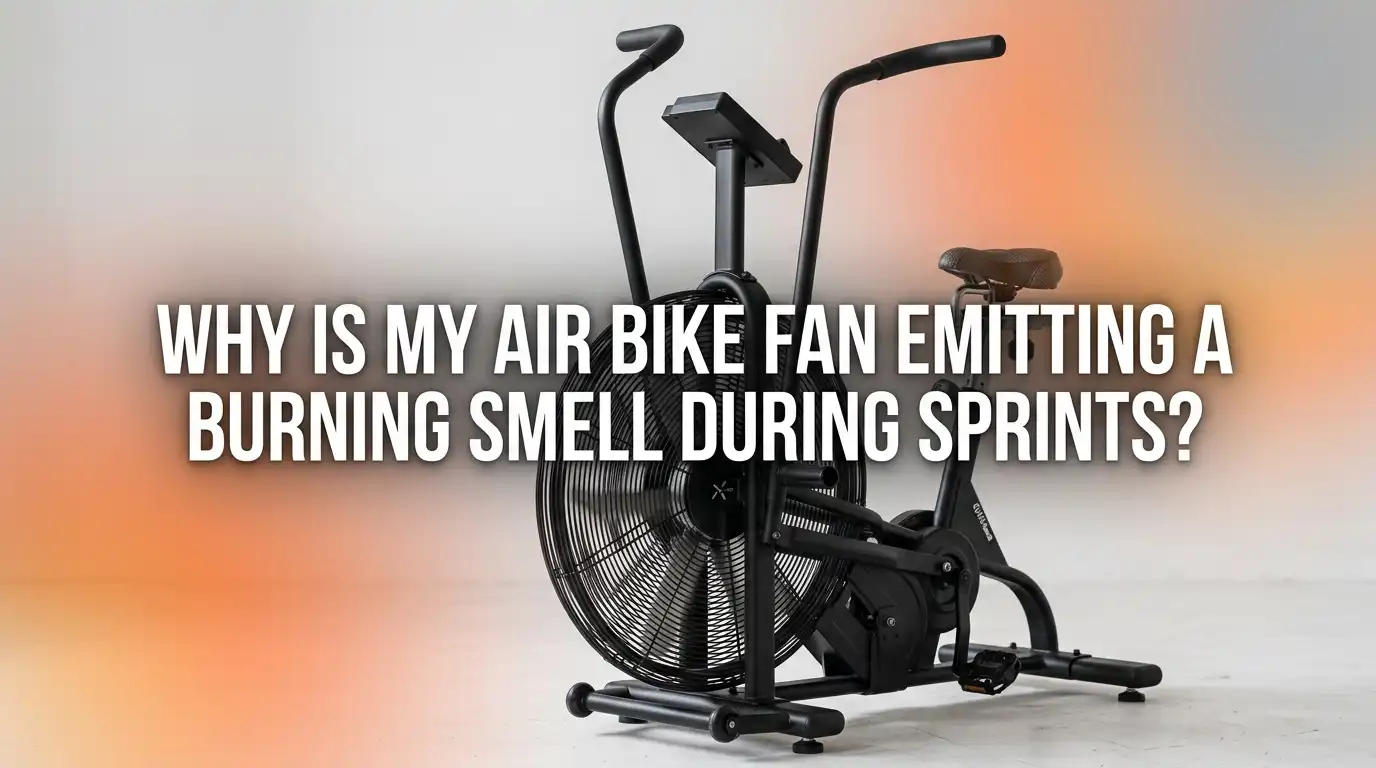
Why Is My Air Bike Fan Emitting a Burning Smell During Sprints?
Pushing hard on your air bike feels amazing until that sharp, smoky scent hits your nose. You pause mid sprint, sniff the air, and wonder if your equipment is about to fail.
A burning smell from your fan bike is a clear warning sign. It means something inside the machine is getting too hot or rubbing too much.
The good news is that most causes are simple to identify and fix at home. You don’t need to be a mechanic to handle these issues.
Key Takeaways
- Belt friction is the top cause of burning smells. A loose, dirty, or worn belt slips against the pulley during high speed sprints and produces a hot rubber odor.
- Chain dryness or rust affects chain driven models like the Schwinn Airdyne. Dry metal links grind against the sprocket and create a sharp metallic burning smell.
- Bearing failure in the crank or fan axle generates intense heat. Worn bearings need grease or full replacement to stop the smell and prevent damage.
- Dust buildup inside the fan housing and on moving parts acts like fuel. When parts get hot, the dust burns and releases that classic scorched odor.
- New bike break in smells are normal for the first few rides. Factory coatings, fresh rubber belts, and packing residues burn off naturally within a week of use.
- Regular maintenance, including monthly cleaning, belt checks, and chain lubrication, prevents nearly all burning smell problems before they start.
What a Burning Smell on an Air Bike Actually Means
A burning smell is your air bike telling you that something is creating too much friction or heat. During sprints, you push the fan blades and drive system to their limits. Parts move faster and rub harder.
If any component is misaligned, dry, or worn, the energy turns into heat instead of motion. That heat scorches rubber, oil residue, dust, or metal. The smell itself is a clue about the cause.
Rubber smells point to the belt, metallic smells point to the chain or bearings, and dusty burnt smells point to debris inside the housing.
Pay attention to when the smell appears. If it only shows up during sprints, the problem is load related. If it appears even at low speeds, the issue is more serious and needs faster attention.
Cause One: A Slipping or Worn Drive Belt
Most modern air bikes use a belt drive system. The belt connects the crank pulley to the fan pulley. During hard sprints, the belt must grip tightly to transfer power. If the belt is loose, glazed, or cracked, it slips and creates intense friction heat. That heat melts the rubber surface slightly and releases a sharp burning smell.
How to check the belt:
Remove the side shroud or plastic cover near the crank. Press your finger against the belt midway between the pulleys. It should flex about half an inch with firm pressure. If it feels loose or you see shiny worn spots, it needs adjustment or replacement.
Pros of fixing the belt yourself: Quick, low cost, no special tools needed.
Cons: Some bikes have sealed housings that are hard to open, and a wrong tension can damage bearings.
Cause Two: A Dry or Rusty Chain on Chain Driven Models
If you own a Schwinn Airdyne, Marcy fan bike, or another chain driven model, the chain is the most likely culprit. Chains need regular lubrication to glide over the sprocket teeth. Without oil, metal grinds on metal during sprints. This creates heat, tiny metal shavings, and a sharp burning metallic odor.
Step by step fix:
First, wipe the chain with a clean cloth to remove old grime. Then apply a few drops of bicycle chain lubricant to each link while slowly turning the pedals. Wipe off any excess so dust does not stick.
Pros of chain lubrication: Cheap, fast, extends chain life significantly.
Cons: Over lubrication attracts dust, and severely rusted chains may need full replacement, which costs more time and money.
Cause Three: Worn or Damaged Bearings
Air bikes have bearings in the crank, the fan axle, and sometimes the pedal arms. Bearings allow smooth rotation under load. When they wear out, the balls inside scrape against the race instead of rolling. This generates heat and a strong burning grease smell.
You may also hear clicking, grinding, or popping sounds during pedaling. To test, lift the pedal and spin the fan by hand. If you feel rough spots or hear unusual noises, the bearings need attention.
The fix: Lightly used bearings can be regreased by removing the cover and packing in fresh marine grade grease. Severely worn bearings must be replaced.
Pros of regreasing: Affordable and quick for minor wear.
Cons: Replacement requires bearing pullers and some mechanical skill. Calling a fitness equipment technician may be safer for beginners.
Cause Four: Dust and Debris Buildup Inside the Fan Housing
Air bikes pull massive amounts of air through the fan during sprints. All that air carries dust, lint, hair, and skin cells. Over months of use, this debris collects on the fan blades, inside the shroud, and around the pulley. When parts heat up under load, the debris cooks and produces that classic burnt dust smell.
Cleaning steps:
Unplug the console if your bike has power. Use a vacuum with a brush attachment to clean the fan blades and the inside of the cage. Wipe the pulley and belt area with a dry microfiber cloth. Do this once a month if you sprint hard several times a week.
Pros: Free, easy, and prevents many other problems too.
Cons: Takes about 15 minutes, and you may need to remove a guard to reach everything.
Cause Five: New Bike Break In Period
If your air bike is brand new, that burning smell may be completely normal. Factories coat metal parts with protective oils to prevent rust during shipping. New rubber belts also have a slight chemical odor when they first heat up. Plastic shrouds can off gas mildly.
These smells usually disappear within the first five to ten workouts. They are strongest during your first few sprint sessions because the heat speeds up the process. There is no fix needed here, just patience.
Pros of waiting it out: No work required, smell goes away on its own.
Cons: Hard to tell at first if it is normal break in or a real problem. If the smell continues past two weeks or gets stronger, treat it as a real issue and inspect the bike.
Cause Six: Misaligned Pulleys or Bent Fan Blades
Sometimes the belt smell is not from the belt itself but from misalignment. If the crank pulley and fan pulley do not line up perfectly, the belt rubs sideways against the flange. This sideways friction creates heat fast.
Bent fan blades also cause problems. A blade that hits the cage or wobbles puts uneven load on the bearings and shaft. To check alignment, look down the length of the belt from the side. It should run perfectly straight. Spin the fan slowly and watch for any wobble.
The fix: Loosen the pulley mounting bolts slightly, realign by eye, then retighten. For bent blades, gently bend them back or contact the manufacturer for replacement.
Pros: Solves a hidden cause many people miss.
Cons: Requires careful work to avoid making the alignment worse.
Cause Seven: Overheating From Extended Sprint Sessions
Air bikes are built for tough workouts, but they still have heat limits. If you do back to back HIIT sessions or hour long sprints without rest, the belt and bearings keep getting hotter. Even a healthy bike can produce a mild burning smell under extreme use.
This is more common in hot garages or rooms with poor airflow. The fan cools you but does little to cool the internal parts.
What to do: Take a five minute break between intense intervals. Let the machine sit and cool. Open a window or run a separate room fan to lower ambient temperature.
Pros of cooling breaks: Protects your equipment and improves your own recovery.
Cons: Some users feel it interrupts their training flow, but the trade off is worth it for equipment longevity.
Cause Eight: Electrical or Console Issues
A few air bikes have powered consoles, magnetic resistance, or built in fans for cooling electronics. If the burning smell is more like hot plastic or scorched wiring, the cause may be electrical. Loose wire connections, damaged battery terminals, or a failing console can overheat and melt insulation.
Inspection steps:
Unplug the bike if it is corded. Remove the console and check for darkened plastic, melted wires, or a hot battery. Sniff each component to find the source.
Pros of catching electrical issues early: Prevents fire risk and console failure.
Cons: Electrical repairs usually require manufacturer parts and sometimes professional service. Do not attempt to repair damaged wires yourself unless you have experience.
How to Inspect Your Air Bike Step by Step
A full inspection takes about 20 minutes and finds most problems. Start with the bike unplugged and cool to the touch. Work from the outside in, checking each system in order.
First, look at the fan cage for dust, debris, and bent blades. Second, remove the side cover and inspect the belt or chain for wear, slack, and dryness. Third, spin the crank and the fan by hand to feel for rough bearings. Fourth, check that all bolts are tight, especially on the pedals and seat post.
Write down what you find. Note any smells, sounds, or visual damage. This helps you track problems over time and explains symptoms clearly if you call customer service.
Preventive Maintenance That Stops Burning Smells Before They Start
The best fix is the one you never need. Regular maintenance prevents almost every burning smell issue. A simple monthly routine keeps your bike running smoothly for years.
Monthly checklist:
Wipe the frame and fan cage with a damp cloth. Vacuum dust from inside the shroud. Inspect the belt or chain for wear. Lubricate the chain if your bike has one. Tighten pedal arms, seat bolts, and handlebar bolts. Spin the fan and crank to listen for noises.
Pros of routine care: Saves money, extends equipment life, and keeps workouts safe.
Cons: Takes a small time investment, but most owners find it worthwhile after the first repair they avoid.
When to Call a Technician or Replace Parts
Sometimes a problem is too big for a home fix. If you smell burning even after cleaning and adjustment, or if the smell comes with smoke, grinding, or visible damage, stop using the bike. Continuing to sprint on a failing machine can ruin expensive parts and even cause injury.
Call a technician when:
You see melted plastic or wires. The bearings grind loudly even after regreasing. The belt is shredded or the chain has broken links. The fan wobbles severely or the cage cracks.
Pros of professional service: Expert diagnosis and proper parts.
Cons: Service calls cost money, and parts for older models may be hard to source. Compare repair cost to replacement cost before deciding.
Final Thoughts on Keeping Your Air Bike Smell Free
A burning smell during sprints is your air bike asking for attention. Most of the time, the cause is simple friction from a belt, chain, bearing, or dust buildup. With a quick inspection and basic maintenance, you can solve the problem in under an hour.
Stay ahead of issues by cleaning monthly, lubricating chains, and checking belts every few weeks. Listen to your bike during workouts. Strange smells, sounds, and vibrations are early warnings that always get worse if ignored. Treat your air bike like a training partner. Take care of it, and it will deliver brutal, satisfying sprints for many years to come.
Frequently Asked Questions
Is it normal for a new air bike to smell like burning rubber?
Yes, a mild rubber or chemical smell is common during the first few workouts on a new air bike. Factory coatings, fresh belt material, and packaging residues burn off as the parts heat up. The smell should fade within five to ten sessions. If it lasts longer than two weeks or gets stronger, inspect the belt and bearings.
Can I keep using my air bike if it smells like burning?
It depends on the source. A faint smell from break in or light dust is usually fine. A strong smell paired with smoke, grinding noises, or visible damage means you should stop and inspect. Using a damaged bike can wreck expensive parts and create safety risks.
How often should I lubricate my air bike chain?
Most experts suggest lubricating the chain on a fan bike once a month if you ride several times a week. Heavy users may need to do it every two weeks. Always wipe off the old grime first and apply lubricant lightly to avoid attracting dust.
Why does my belt driven air bike smell only during sprints?
Sprints put maximum load on the belt. If the belt is slightly loose or worn, it slips against the pulley under high force and creates heat. At low speeds the slip is too small to notice, but during sprints the friction multiplies and produces a burning rubber smell.
Can dust really cause a burning smell on a fan bike?
Yes. Air bikes pull large volumes of air through the fan and shroud. Dust, hair, and lint collect on hot parts like the pulley and bearings. When those parts heat up during sprints, the debris burns and releases a noticeable scorched odor. Monthly cleaning prevents this issue completely.

Hi, I’m Sarah Hill — the founder and voice behind Heavy Lift Vault. I’m passionate about fitness, strength training, and health technology. I spend my time researching, testing, and reviewing workout equipment and health devices so you don’t have to guess. My goal is to deliver honest, detailed, and trustworthy reviews that help you invest wisely in your fitness journey.