Why Is My Treadmill Safety Key Not Working When Inserted?
You step onto your treadmill, ready for a great workout. You push the safety key into its slot. But nothing happens. The screen stays dark. The belt refuses to move. That sinking feeling hits you fast.
This problem is more common than you think. A safety key that fails to work can stop your routine cold. The good news is simple. Most of these issues have easy fixes you can handle at home. You do not always need a technician or a costly repair.
This guide walks you through every cause and every solution. You will learn how the key works, why it fails, and how to bring your treadmill back to life. Let us solve this together, one step at a time.
Key Takeaways
- The safety key is a magnet, not a real key. It triggers a hidden switch inside the console. If the magnet weakens or sits wrong, your treadmill will not start.
- A dark console often points to power issues first. Always check the wall outlet, the cord, and the on/off switch before you blame the key itself.
- Cleaning the key slot and reseating the key solves a surprising number of cases. Dust and debris block the magnetic connection more often than people realize.
- A weak or cracked magnet is a frequent culprit. Testing with a spare key quickly tells you if the original part is the problem.
- The internal safety switch, also called a reed switch, can fail over time. This needs a deeper inspection inside the console housing.
- Never bypass the safety switch permanently. This feature protects you from injury. Skip it only for short testing, then restore it right away.
How the Treadmill Safety Key Actually Works
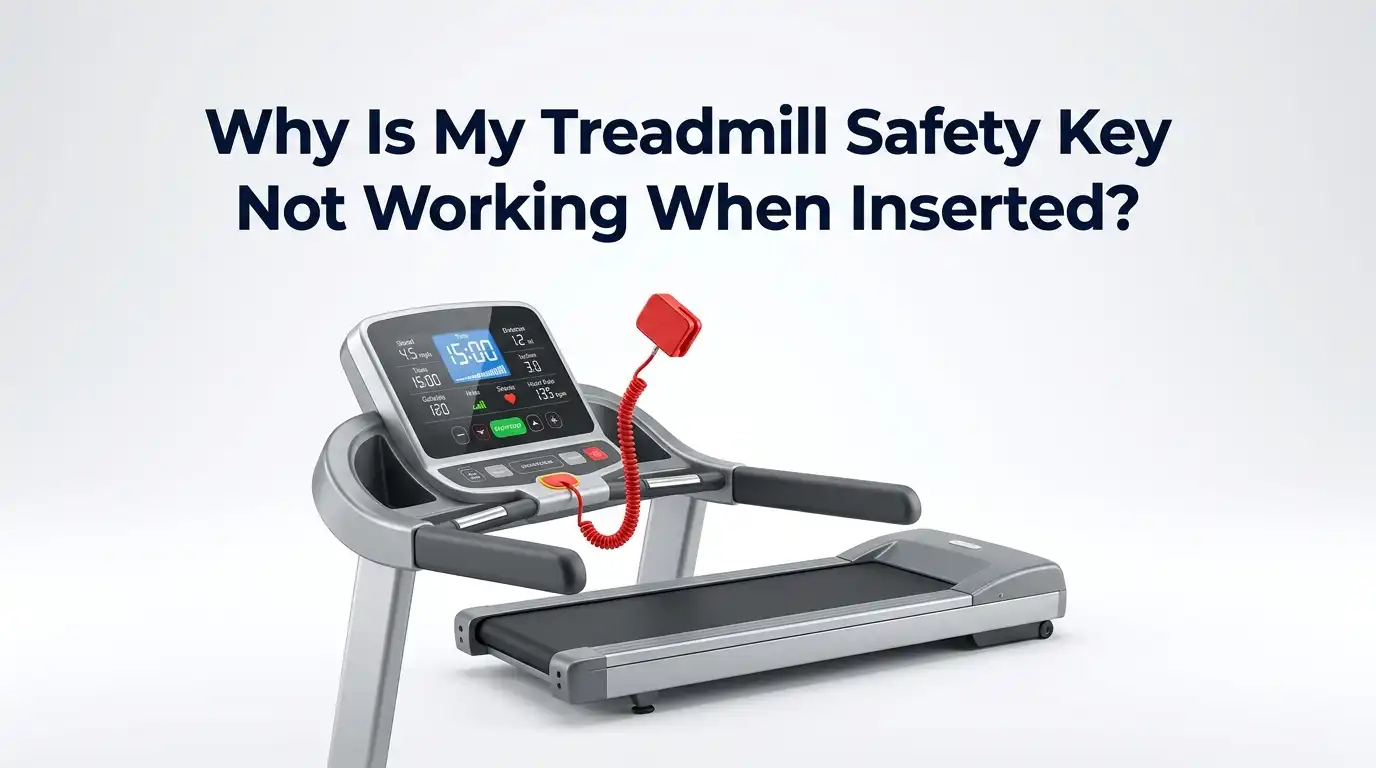
Many people think the safety key is a metal key with teeth. It is not. The safety key is usually a small plastic clip that holds a magnet inside. When you place it into the slot on your console, the magnet sits close to a hidden sensor.
This sensor is often a reed switch. The magnet pulls two tiny metal contacts together. That action closes an electrical circuit. The closed circuit tells your treadmill it is safe to run.
You clip the other end of the key to your shirt. If you stumble or fall, the key pulls free. The magnet moves away. The circuit breaks instantly, and the belt stops. This design saves people from serious injury every day. Understanding this helps you spot where the failure hides.
First Check the Power Source Before the Key
Before you panic about the key, look at the power supply. A dead console can trick you into thinking the key has failed. In truth, the treadmill may not be getting electricity at all.
Start with the wall outlet. Plug a lamp or phone charger into the same socket. If the lamp does not turn on, your outlet is the real problem. Reset the circuit breaker in your home panel. Press the reset button on any GFCI outlet too.
Next, inspect the power cord. Make sure it sits fully inside both the wall and the treadmill socket. Look for cuts, kinks, or pinched spots. Avoid extension cords and power strips. They reduce current flow and cause weak startups. Connect the treadmill straight into a grounded wall outlet on its own circuit.
Inspect the Safety Key for Visible Damage
Now give the key a close look. Physical damage is one of the easiest problems to spot. Hold the key under bright light and study every part.
Check the body of the clip first. Look for cracks, chips, or bent sections. A broken housing can shift the magnet out of place. Even a small crack can move the magnet just enough to miss the sensor.
Some older keys have two metal legs that slide into the console. Examine these legs carefully. They should be straight, fully extended, and free of rust. Bent or corroded legs block the connection. Gently straighten any bent metal with care. If you see heavy corrosion, clean it with a dry cloth.
Pros of this step: it costs nothing and takes seconds. Cons: visible damage is not always the only issue, so you may need to keep checking.
Clean the Key Slot and Magnet Area
Dust loves to gather inside treadmill slots. A dirty slot can stop the magnet from reaching the sensor. This simple cause fools many treadmill owners.
Unplug your treadmill first for safety. Take a dry cloth and wipe the key and its magnet surface. Remove any lint, dust, or grime you find. Avoid using water or liquid cleaners near the electronics.
For the slot itself, use a can of compressed air. Spray short bursts into the opening. This blows out trapped debris without damage. You can also use a soft, dry cotton swab to reach inside gently.
Pros of cleaning: it is free, fast, and safe. It often fixes the problem completely. Cons: it will not help if the magnet itself is weak or the internal switch has failed. Still, this step is always worth trying first.
Reseat the Key the Right Way
Sometimes the key just sits wrong. A loose or crooked key breaks the magnetic link. Reseating it correctly can solve the issue in moments.
Pull the key out fully. Then turn off your treadmill. Unplug the unit and wait about thirty seconds. This clears any stuck electronic state in the console. Plug it back in and turn it on.
Now place the key back into the slot. Push it firmly until it sits snug. It should not wiggle or feel loose. With magnetic keys, you may need to test a few positions. Slide the magnet slightly up, down, or sideways. Watch the console for any sign of life.
Pros: this method needs no tools and works often. Cons: it only helps with seating problems, not with broken parts. Repeat the test several times to be sure.
Test With a Spare or Replacement Key
If cleaning and reseating fail, the key magnet may be weak. Magnets lose strength over years of use. A faded magnet cannot trigger the sensor anymore.
The fastest way to confirm this is with a spare key. If your treadmill came with two keys, grab the backup. Insert the second key and watch the console. If it lights up, your first key is the problem.
You can also test the magnet strength. Hold the key magnet near a metal paperclip or fridge. A healthy magnet grabs metal with a firm pull. A weak one feels barely magnetic. This quick test reveals a dying key.
Pros: testing with a spare gives a clear answer fast. Cons: not everyone owns a spare key. If yours is weak, you will need to order a matching replacement for your model.
Check the Magnet Inside the Console
Some treadmills hide a magnet inside the console too. This internal magnet works with the key to complete the circuit. If it comes loose, the system fails.
Unplug your treadmill before you open anything. Remove the screws that hold the console cover. Look near the key slot for a small rectangular magnet. It should be glued or clipped firmly in place.
If you find the magnet loose or fallen, that is your culprit. Glue it back into its original spot. Use a strong adhesive and let it set fully. Make sure it sits in the exact position it left.
Pros: fixing a loose magnet restores function cheaply. Cons: opening the console takes care and a little skill. If you feel unsure about electronics, pause here and consider a technician instead.
Examine the Internal Safety Switch
The safety switch is the heart of this system. If the switch fails, no key will ever start your treadmill. This part sits behind the slot inside the console.
To test it, unplug the machine and open the console housing. Find the two wires connected to the switch. Set a multimeter to continuity mode. Touch the probes to the two switch terminals.
The reading should change when you bring the magnet close. It reads open with no magnet and closed with the magnet near. If the reading never changes, the switch is dead. A faulty switch needs replacement.
Pros: this test pinpoints a hidden failure that nothing else reveals. Cons: it requires a multimeter and comfort with wiring. Order a switch that matches your treadmill model for the best fit.
Look at the On Off Switch and Fuse
Your treadmill may have a main power switch and a fuse. A blown fuse or stuck switch can mimic a key problem. Both deserve a quick check.
Find the on/off switch near where the cord enters the frame. Flip it off and back on a few times. This clears dust or corrosion from the contacts. Make sure it rests in the on position.
Next, locate the fuse holder beside the switch. Pull the fuse out and hold it to the light. A good fuse shows an unbroken wire inside. A blown fuse looks black or has a broken filament. Replace it with the same rating, often 250V and 15A or 20A.
Pros: replacing a fuse is cheap and simple. Cons: if a new fuse blows fast, you have a deeper short. Never use a higher rated fuse, since that risks fire.
Test the Wiring Harness and Connections
Loose wires cause many treadmill faults. A single disconnected plug can stop the key from working. These connections sit between the console and the control board.
Unplug your treadmill and remove the console cover. Follow the thin low voltage cable from the slot area. Check every plug along the path. Push each connector in until it clicks firmly.
Look closely at the pins inside each plug. Bent, rusty, or pushed back pins break the signal. Straighten bent pins with great care using fine tweezers. Wipe away any corrosion with a dry cloth.
Pros: tightening a loose plug is free and often fixes the whole issue. Cons: it takes patience to trace every wire. Move slowly so you do not pull a cable loose by accident. Recheck each link before you close the cover.
When the Motor Control Board Is the Problem
If everything else checks out, the control board may be at fault. This board controls power to the console and the motor. It is the most common electronic failure in treadmills.
Unplug the machine and remove the motor cover at the front. Find the flat board with many wires attached. Look for burnt spots, melted plastic, or a burnt smell. These signs point straight to board failure.
Many boards have a small LED light. If power reaches the board but the LED stays dark, the board is likely bad. A failed board cannot send the start signal even with a perfect key.
Pros: spotting a burnt board explains a stubborn problem. Cons: a new control board costs more than other parts and may need expert installation. Confirm the diagnosis fully before you buy this part.
Should You Bypass the Safety Key Temporarily
You might wonder if you can skip the key entirely. You can bypass the safety switch, but only for testing. This helps you confirm where the fault lies.
To test, unplug the treadmill and find the two safety switch wires. Place a small jumper across the two terminals. This mimics a closed circuit. If the treadmill runs, your switch or key was the issue.
Here is the serious warning. Never leave a bypass in place for daily use. The safety key stops the belt if you fall. Without it, the belt keeps running and can drag or injure you badly.
Pros: a brief bypass confirms a diagnosis quickly. Cons: it removes a vital safety feature and carries real danger. Use this only for a quick test, then restore the key system right away. Your safety always comes first.
How to Prevent Safety Key Problems in the Future
A little care keeps these problems away. Good habits extend the life of your key and switch. Small steps now save you trouble later.
Store your key in a safe, dry spot when not in use. Heat and moisture weaken magnets over time. Keep it away from other strong magnets too, since they can drain its strength.
Wipe the key and slot clean every few weeks. Dust buildup is the slow enemy of a clean connection. A quick wipe stops debris from gathering inside.
Plug your treadmill into a surge protector. Power spikes damage the control board and switch. Turn off the main switch between workouts to reduce wear. These habits protect every electronic part, not just the key. A clean, well powered treadmill rarely fails when you need it most.
Frequently Asked Questions
Why does my treadmill console stay dark even with the key inserted?
A dark console usually means a power problem, not just a key fault. Check the wall outlet, the cord, the on/off switch, and the fuse first. If power reaches the unit and the screen stays dark, the safety switch or control board may have failed.
Can a weak magnet stop the safety key from working?
Yes. The key relies on a magnet to trigger the internal sensor. Over years, magnets lose strength. A weak magnet cannot close the circuit. Test with a spare key or hold the magnet near metal to check its pull. A replacement key fixes this fast.
Is it safe to use my treadmill without the safety key?
No, not for regular use. The key stops the belt if you fall or step off suddenly. Running without it removes that protection. You may bypass the switch briefly to test the fault, but always restore the key system before you work out.
How do I know if the safety switch itself is broken?
Use a multimeter set to continuity mode. Touch the probes to the two switch wires inside the console. Bring the magnet close and watch the reading. A working switch changes from open to closed. If it never changes, the switch is dead and needs replacement.
Where can I get a replacement safety key for my treadmill?
You can order a key that matches your specific treadmill brand and model. Some universal magnetic keys also fit many common machines. Check your owner manual for the correct part number. Always confirm the key style and magnet position match your console slot before buying.
Why does cleaning the key slot sometimes fix the problem?
Dust and lint gather inside the slot over time. This debris blocks the magnet from reaching the sensor. Even a thin layer can break the connection. Cleaning the slot with compressed air or a dry swab removes the blockage and often restores full function instantly.

Hi, I’m Sarah Hill — the founder and voice behind Heavy Lift Vault. I’m passionate about fitness, strength training, and health technology. I spend my time researching, testing, and reviewing workout equipment and health devices so you don’t have to guess. My goal is to deliver honest, detailed, and trustworthy reviews that help you invest wisely in your fitness journey.