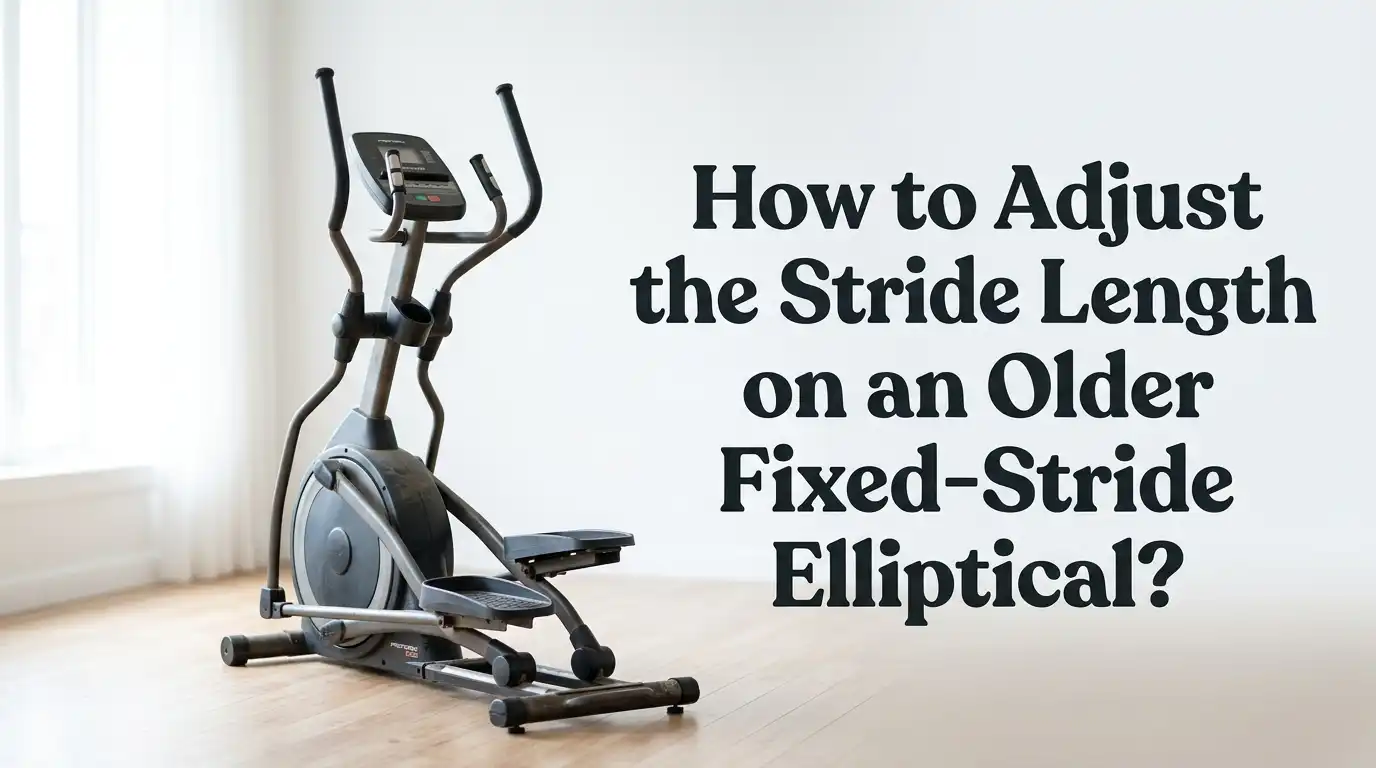
How to Adjust the Stride Length on an Older Fixed-Stride Elliptical?
Do you own an older elliptical that feels too short or too long for your legs? You step on, start pedaling, and the motion feels cramped or stretched. Your knees bend too much.
Your hips strain at the back. This problem is common with fixed-stride machines, and many people think they are stuck with it forever.
Here is the good news. You have real options. A fixed-stride elliptical does not let you turn a dial and change the stride. But you can still improve how the machine feels through smart adjustments, body positioning, and a few mechanical tricks.
In a Nutshell:
- A true fixed-stride elliptical cannot change its stride length through a built-in setting. The pedal path is welded and bolted into one shape. You cannot make 18 inches become 20 inches with a button.
- You can still change how the stride feels. Adjusting incline, foot placement, posture, and pace changes your effective range of motion a lot more than people expect.
- The crank arm and pedal arm geometry control the stride. Some machines allow small mechanical changes here, but this carries risk and may void warranties.
- Stride length should match your inseam, not just your height. A 30 to 32 inch inseam usually fits an 18 to 20 inch stride comfortably.
- A poor stride fit causes real problems. Too short feels choppy and cramped. Too long strains the hips and lower back. Both reduce workout quality.
- Sometimes replacing the machine is the smartest choice. When the mismatch is large, fighting it costs more in joint health than buying an adjustable model.
Why Older Ellipticals Have Fixed Stride Lengths
Older and budget ellipticals use a simple, sealed design. The pedal arms connect to a crank, and that crank spins in one fixed circle. This circle creates the oval pedal path you step into. The size of that oval is the stride length.
Manufacturers built these machines this way to keep them affordable and reliable. Fewer moving parts means fewer breakdowns. A fixed-stride elliptical has no motor, dial, or lever to change the pedal path. The geometry is locked in at the factory.
This is why you cannot find a “stride adjustment” setting in the menu of an older unit. The machine was never built to offer one. Knowing this saves you hours of searching for a button that does not exist. Instead, you focus on the adjustments that actually work.
How to Confirm Your Stride Length Is Actually the Problem
Before you change anything, confirm the real issue. Many comfort problems blamed on stride length come from posture, resistance, or worn parts. Diagnose first, then act.
Step onto the machine and pedal at a steady pace for two minutes. Watch your body closely. Does your heel lift hard off the pedal at the back? That points to a stride that feels too long. Does the motion feel short, bouncy, and cramped? That points to a stride that feels too short.
Next, measure your inseam. Stand against a wall, place a book firmly between your legs, and measure from the floor to the book spine. A 30 to 32 inch inseam fits an 18 to 20 inch stride well. If your numbers are far off the machine spec, stride length is likely your real problem. If they match, look elsewhere.
Adjust the Incline Ramp to Change Effective Stride
This is the easiest and safest method. Many older ellipticals have a manual incline ramp under the front roller wheels. Changing the ramp angle changes the shape of your pedal path. A steeper ramp lifts the oval and shortens the effective forward reach. A flatter ramp stretches it out.
To adjust it, unplug the machine first. Look near the front foot rails for a pin, knob, or bolt holding the ramp. Move the ramp up or down one setting, then test your stride. Repeat until the motion feels smooth.
Pros: Free, fast, fully reversible, and uses a built-in feature. No tools or risk involved on most units.
Cons: The change is modest, often only one to two inches of feel. Not every older machine has an adjustable ramp, so check yours first.
Reposition Your Feet on the Pedals
Where you place your feet changes your stride feel more than you might think. Standing closer to the front of the pedal shortens your effective stride. Standing toward the back lengthens it slightly.
Try moving your feet forward by an inch or two. Keep your weight centered over the middle of the foot, not on the toes. Then pedal and notice how the motion changes. Small foot shifts create surprisingly large comfort gains.
You can also adjust your toe angle. Pointing toes slightly outward sometimes eases hip strain on a stride that feels too long.
Pros: Completely free, instant, and safe. You can fine tune it every single workout with zero tools.
Cons: The effect is limited and temporary. You must remember your foot position each time. It treats the symptom, not the fixed geometry itself.
Fix Your Posture and Body Position
Posture changes how your whole body meets the machine. Many people lean forward and grip the handles too hard. This forces a cramped, unnatural motion that feels like a stride problem.
Stand tall. Keep your torso upright and your core gently braced. Let your hips swing through a full natural range instead of bobbing up and down. Bend your knees softly and keep them tracking over your toes.
When you stand upright, you use the full pedal path the machine offers. A slumped posture wastes part of your available stride. This single fix often solves a complaint that felt mechanical.
Pros: Free, healthy, and improves your workout form overall. It also protects your knees, hips, and lower back during every session.
Cons: It takes practice and body awareness. It cannot fix a stride that is truly mismatched to your inseam by several inches.
Adjust the Crank Arm Position (Advanced Mechanical Method)
This method is for handy owners only. On some older ellipticals, the pedal arm bolts to the crank at a fixed hole. A few designs include a second mounting hole closer to or farther from the crank center. Moving the bolt to a different hole changes the size of the pedal circle.
Unplug the machine. Remove the plastic cover near the crank with a screwdriver. Look for the bolt connecting the lower link arm to the crank, usually a 5mm Allen bolt. If a second hole exists, move the bolt there, then test the stride slowly by hand before stepping on.
Most machines have only one hole, so this option does not always exist.
Pros: This can create a real, lasting change to the actual stride geometry, not just the feel.
Cons: High risk. It may void your warranty, throw off pedal balance, or stress parts not built for it. Only attempt this if you understand the mechanism fully.
Add or Swap Pedal Spacers and Adapters
Some owners use small spacers or aftermarket pedal adapters to shift foot position on the pedal arm. A spacer behind the pedal moves your foot, and a thicker pedal pad can subtly change your contact angle.
To try this, check the pedal mounting bolts. A small rubber or metal spacer can shift your foot placement permanently so you do not have to remember it each workout. Always use a spacer rated for the load and tighten the bolts firmly.
This is a middle ground between free positioning and full mechanical changes. It locks in a foot position that works for you.
Pros: Semi-permanent, low cost, and easier than crank changes. It removes the need to reposition your feet every time.
Cons: It only shifts foot placement, not the true pedal path. Poorly fitted spacers can loosen and create a safety hazard, so check them often.
Adjust Resistance and Pace to Smooth the Motion
Resistance and speed change how a fixed stride feels under your feet. A stride that feels too long at high speed often feels fine at a slower, controlled pace. Lower resistance lets you move smoothly without forcing your hips.
Set a moderate resistance level. Pedal at a steady rhythm rather than rushing. Let the flywheel carry the motion instead of fighting it. When you slow down and control each stroke, an awkward stride often becomes manageable.
This will not change the inches of your stride. But it changes your comfort and joint stress in a meaningful way during every workout.
Pros: Free, instant, and protects your joints. It works on any machine regardless of age or design.
Cons: It does not change the stride length itself. People who want a faster, intense workout may find this limiting.
Lubricate and Service the Moving Parts
Sometimes the “stride problem” is really a worn, dry, or loose machine. An old elliptical with a dry track, worn rollers, or loose bolts feels jerky and uneven. People mistake this rough feel for a bad stride.
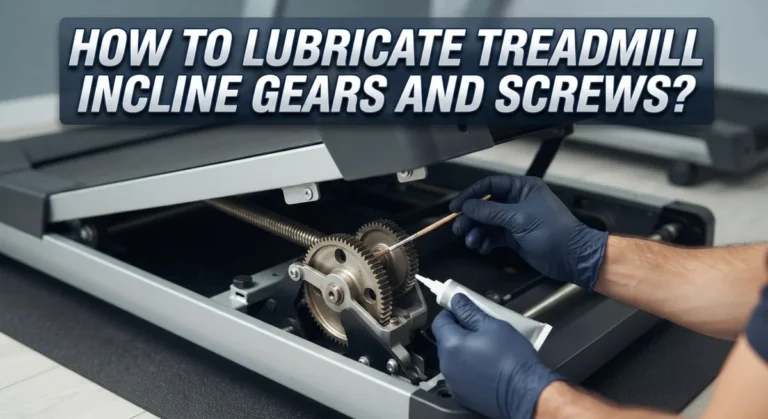
Unplug the machine. Clean the roller tracks and wipe away grime. Apply a light silicone lubricant to the rollers and pivot points, then tighten every visible bolt. Check the drive belt for slipping or cracks.
A smooth machine reveals the true stride feel. Often, servicing alone removes most of the discomfort you blamed on stride length.
Pros: Cheap, improves machine lifespan, and fixes hidden problems. Every owner should do this regardless of stride concerns.
Cons: It does not change stride geometry. Very worn parts may need replacement, which costs more time and money.
Use Proper Footwear to Improve Stride Comfort
Your shoes change your contact with the pedals. Thin, flat, supportive shoes give you a stable base and let you use the full pedal path. Thick, soft running shoes can make a long stride feel even longer and less controlled.
Wear shoes with a firm, low sole and good lateral support. Cross training shoes usually work better than cushioned distance running shoes on an elliptical. Lace them snugly so your foot does not slide forward.
Small footwear changes adjust your heel position and stride feel for free. This pairs well with the foot placement method above.
Pros: Free if you already own suitable shoes. It improves stability and reduces ankle strain instantly.
Cons: The effect is small. It helps comfort but will not fix a large stride mismatch on its own.
When to Repair, Modify, or Replace the Machine
At some point, you must decide if the machine is worth keeping. Be honest about the math. If your inseam needs a 20 inch stride and the machine offers 14 inches, no adjustment will fully close that gap.
Choose repair when the parts are worn but the stride roughly fits you. Choose modification when a safe second crank hole or spacer brings real improvement. Choose replacement when the mismatch is large and forces poor form session after session.
Protecting your knees, hips, and back is worth more than saving an old machine. A stride that is several inches too short or too long can cause lasting joint discomfort.
Pros of replacing: You can buy an adjustable-stride model that fits your whole household.
Cons of replacing: It costs money and effort. A working machine still has value, so weigh the trade carefully.
Smart Long-Term Habits to Get the Most From a Fixed-Stride Elliptical
Once you find a setup that works, lock it in and protect it. Note your best incline setting, foot position, and resistance level. Write these down so every workout starts from your ideal setup.
Service the machine every few months. Keep the tracks clean and the bolts tight. Replace worn rollers before they make the motion rough again. Consistent care keeps your good stride feel from slowly fading away.
Listen to your body over time. Give yourself two to three weeks to adapt to any change before judging it. Some muscle soreness is normal at first, but sharp joint pain is a signal to adjust again.
These habits turn a basic old machine into a reliable, comfortable workout tool for years.
Frequently Asked Questions
Can I change the stride length on any fixed-stride elliptical?
No. A true fixed-stride elliptical has a sealed, welded pedal path that you cannot change through a setting. You can only change how the stride feels through incline, foot placement, posture, and pace. A small number of machines have a second crank hole that allows a minor mechanical change, but most do not.
What stride length should I have for my height?
Use your inseam for the best fit. Under 28 inches suits a 14 to 16 inch stride. A 28 to 30 inch inseam fits 16 to 18 inches. A 30 to 32 inch inseam fits 18 to 20 inches, and over 34 inches fits 21 to 22 inches or more. Inseam matters more than height alone.
Is it safe to modify the crank arm myself?
Only if you fully understand the mechanism. Always unplug the machine, work slowly, and test by hand before stepping on. This method can void your warranty and stress parts not built for it. If you feel unsure, skip it and use the safer positioning methods instead.
Why does my elliptical feel cramped even at the right stride length?
This often comes from poor posture, leaning on the handles, or a dry, worn machine. Stand tall, brace your core, and let your hips move fully. Then clean and lubricate the tracks and tighten the bolts. These fixes solve most comfort complaints that are not true stride problems.
Should I just buy a new elliptical instead?
Replace the machine when the stride mismatch is large and forces bad form every session. Protecting your joints is worth more than keeping an old unit. An adjustable-stride model fits many users and lasts longer. But if simple adjustments make your current machine comfortable, keep using it.
How long should I test a new setup before judging it?
Give your body two to three weeks to adapt to any change. Mild muscle soreness in new areas is normal during this window. Sharp or lasting joint pain is a signal to adjust again. After the adaptation period, ask yourself if the motion feels smooth, upright, and pain free.

Hi, I’m Sarah Hill — the founder and voice behind Heavy Lift Vault. I’m passionate about fitness, strength training, and health technology. I spend my time researching, testing, and reviewing workout equipment and health devices so you don’t have to guess. My goal is to deliver honest, detailed, and trustworthy reviews that help you invest wisely in your fitness journey.