How To Tell If A Treadmill Walking Belt Needs To Be Replaced?
Your treadmill belt works hard every time you walk or run. Over time, it wears down just like your sneakers do.
But how do you know when it’s time to swap it out? Many walkers ignore small signs until the belt fails completely.
This can lead to bigger problems, like damage to the motor or deck underneath.
The good news? Your treadmill gives you clues before it breaks down. Strange noises, slipping, and visible damage all tell a story.
Most belts last around two years with regular use. But that number changes based on how often you walk and how well you maintain your machine.
In this guide, we will show you exactly what to look for. You will learn the warning signs that mean trouble is coming.
In a Nutshell
- Check the surface first. Look for cracks, tears, or spots that seem thinner than the rest. These are clear signs of damage.
- Listen for strange noises. A loud or grinding sound during your walk often means the belt is failing.
- Watch for slipping or jerking. If the belt moves unevenly under your feet even after you adjust tension, it likely needs replacing.
- Flip it over and feel the underside. It should feel textured, not smooth. A smooth underside means the grip is gone for good.
- Inspect the edges and seams closely. Curled edges or peeling seams show the belt is coming apart from the inside.
- Remember the two year rule. Most belts last about two years with regular use. If yours is older and showing multiple warning signs together, it’s probably time for a new one.
Understanding the Role of the Walking Belt
The walking belt is the most important part of your treadmill. It’s the surface where your feet actually land when you walk or run. Without a healthy belt, your entire workout becomes uncomfortable and risky.
Your belt sits on top of the deck. The deck is a flat platform underneath that supports the belt’s movement. When you step on the belt, it moves forward smoothly, carrying you along. The motor powers this movement by spinning two rollers at each end of the belt.
The belt needs to grip your feet properly. This grip comes from the texture on the belt’s surface. Over time, this texture wears down from constant friction with your shoes. Once the texture disappears, your feet can slip and slide, which feels unsafe and unstable.
The belt also protects the deck beneath it. Think of the belt like a shield. When the belt is in good condition, it absorbs impact from your steps. A worn out belt stops protecting the deck, and your steps can damage the motor and rollers underneath.
Your belt experiences constant stress. Every footstep creates friction. Every rotation creates heat. Every mile you walk adds wear to the material. The belt stretches slightly over time, which is why tension adjustments become necessary.
Understanding these functions helps you spot problems early. When the belt starts failing, it sends signals. The texture disappears first, then comes slipping. Cracks and tears appear next. Fraying edges show the material is breaking down from the inside.
A failing belt doesn’t just affect your comfort. It puts extra strain on the motor and rollers. This extra strain can damage expensive internal parts. Replacing the belt early prevents these bigger, costlier problems. That’s why paying attention to your belt’s condition matters so much for your treadmill’s overall health and your safety during exercise.
Warning Signs Your Treadmill Belt Is Wearing Out
Your treadmill belt shows you exactly when it needs replacement if you know what to look for. The warning signs are clear and easy to spot once you understand them.
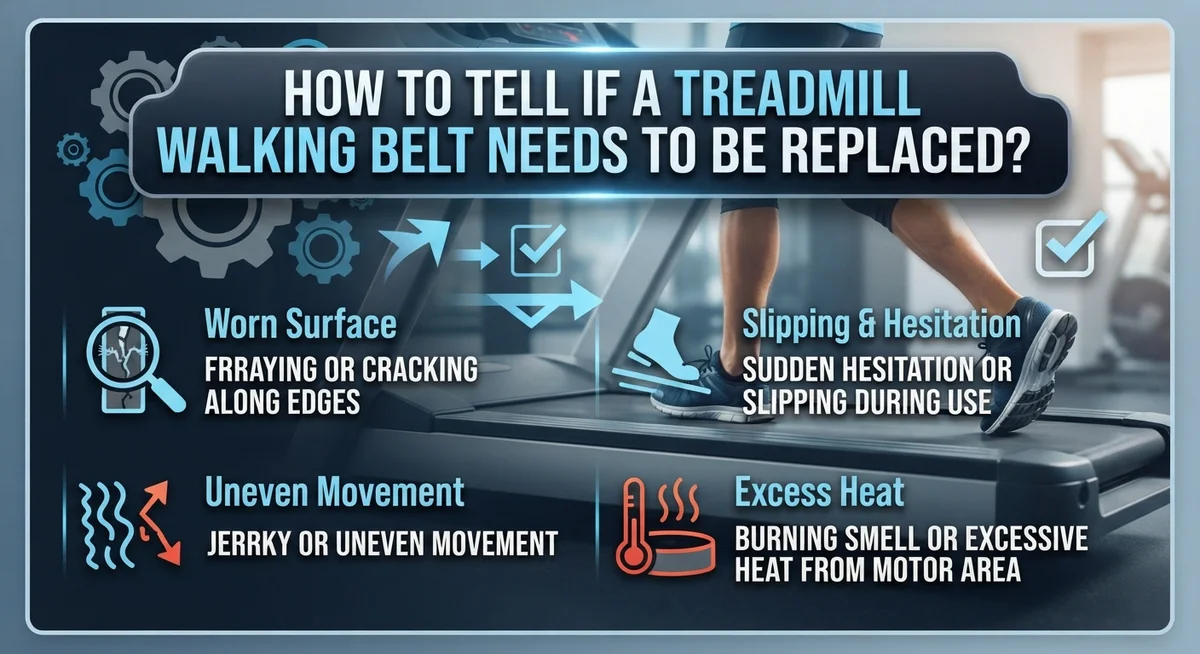
Visible surface damage is the first red flag. Cracks, tears, and thin spots mean the belt structure is breaking down. Run your hand across the belt surface while it’s off. You should feel a consistent texture. If some areas feel smoother than others, wear is uneven and replacement is near.
Listen carefully during your workouts. A grinding, squeaking, or loud noise signals belt problems. Normal treadmills operate quietly. Strange sounds mean the belt is deteriorating or misaligned. If noise continues after you tighten the belt tension, damage is likely present.
Check for slipping and jerking movements. When you walk, your feet should stay steady on the belt. If the belt slips backward or jerks forward, this indicates serious wear. Even after you adjust the tension properly, persistent slipping means the belt’s grip is gone.
Flip the treadmill off and examine the underside. The bottom surface should feel textured and slightly rough. This texture provides grip between the belt and deck. A smooth underside means the protective coating has worn away. Smooth belts cannot grip properly and need replacement soon.
Look at the edges and seams carefully. Curled or frayed edges show the belt is coming apart. Peeling or separated seams indicate delamination. These problems mean the belt’s layers are failing. The belt will not hold much longer.
Multiple warning signs together mean replacement time has arrived. One small issue might be fixable with adjustments. But when you see several problems at once, the belt has reached the end of its life. Trust these signs and replace your belt before complete failure occurs.
How to Inspect Your Treadmill Belt Step-by-Step
Start by turning off your treadmill and unplugging it. Safety comes first when you inspect any part of your machine. Wait a few minutes to let the belt cool down completely.
Look at the top surface carefully. Scan the entire belt for cracks, tears, or thin spots. Run your hand gently across the surface to feel for rough patches or areas where the texture has worn away. These spots indicate the belt is breaking down.
Check the belt edges next. Look for curling, fraying, or peeling at both sides. Curled edges mean the belt is coming apart and needs replacement soon. Frayed edges suggest the belt is failing faster than normal.
Examine the seams closely. The seams are where the belt ends connect. Look for separation or peeling at these joints. Delamination at seams is a serious sign that replacement is necessary.
Flip the treadmill off and check underneath. The belt’s underside should feel textured and slightly rough. If it feels smooth or slippery, the grip texture has worn away. A smooth underside means the belt cannot grip your feet properly anymore.
Test the belt during operation. Walk on it slowly and pay attention to how it moves. Does it slip or jerk under your feet? Does it drift to one side? If the belt moves unevenly even after you adjust the tension, replacement is likely needed.
Listen for unusual sounds. Grinding, squeaking, or loud noises during use indicate internal damage. These sounds often mean the belt’s structure is breaking down.
Write down what you find. Multiple warning signs appearing together mean your belt needs replacement soon. A belt showing just one or two minor issues might last longer, but keep monitoring it closely.
Testing for Slipping, Jerking, and Unusual Noises
When you step on your treadmill, the belt should move smoothly beneath your feet. If something feels off, pay close attention. Slipping happens when your feet stay in one spot while the belt moves underneath you. This means the belt surface has lost its grip texture or the belt itself has stretched too much.
Start by walking slowly on your treadmill. Notice if your feet slide backward even though you’re moving forward. Stop immediately if this happens. Slipping gets worse over time and can cause you to fall or injure yourself.
Jerking feels different from slipping. Your feet move with the belt, but the motion feels uneven or stuttering. The belt might stop and start suddenly, or it might move in waves instead of smoothly. Jerking usually means the belt has internal damage, worn spots, or alignment problems that adjustment won’t fix.
Listen carefully while you walk or run. Unusual noises tell you a lot about belt condition. A grinding sound suggests internal friction or damage to the belt structure. Squeaking often means the belt rubs against the frame. Loud popping or cracking noises indicate tears or cracks inside the belt material.
These three problems often appear together. You might hear noise AND feel slipping at the same time. When multiple issues happen together, your belt needs replacement soon.
Test your belt in different ways. Walk at slow speed, then increase your pace. Notice when problems appear. Do they happen only at fast speeds? Do they start after five minutes of use? These details help you understand how serious the damage is.
Never ignore these warning signs. A damaged belt puts stress on the treadmill motor and deck. Continuing to use a failing belt causes more expensive damage to your entire machine. Replace your belt as soon as you notice slipping, jerking, or unusual noises.
Checking the Belt’s Underside Texture and Grip
The underside of your treadmill belt tells you a lot about its health. You need to check this area regularly because it’s where problems often start.
The texture underneath matters most. A healthy belt has a rough, textured surface that grips the rollers. This grip keeps the belt moving smoothly and prevents slipping. When you flip your treadmill off and run your hand underneath, you should feel some resistance.
A smooth underside is a major warning sign. If the bottom feels slick or polished, the belt has lost its grip texture. This happens from constant friction and wear over time. A smooth belt will slip during your workouts, no matter how tight you adjust it.
Smoothness means replacement is coming. Many people try to fix slipping by tightening the belt or adjusting alignment. These fixes don’t work if the underside is smooth. The problem isn’t tension or position. The belt itself has worn down too much.
Check the entire underside, not just one spot. Wear patterns might be uneven. Some areas could be smooth while others still have texture. Uneven wear shows the belt is breaking down unevenly.
Look for other damage while you’re checking underneath. Cracks or tears on the bottom surface indicate serious wear. Delamination (layers separating) at the seams is another bad sign. These problems combined with a smooth surface mean your belt won’t last much longer.
Don’t wait until the belt fails completely. A smooth underside paired with slipping during use means you should plan for replacement soon. Continuing to use a worn belt risks damage to your treadmill’s motor and rollers. The underside inspection gives you clear information about your belt’s remaining lifespan.
Common Mistakes When Diagnosing Belt Problems
People often make mistakes when figuring out if their treadmill belt needs replacement. Understanding these errors helps you make better decisions about your equipment.
One major mistake is confusing belt slipping with misalignment. Many owners assume the belt is just loose and try to tighten it themselves. They adjust the tension and alignment multiple times without success. However, if the underside is smooth and slippery, tightening won’t help. The belt itself has worn out and needs replacement. Adjustment fixes only work when the belt structure is still good.
Another common error is ignoring multiple warning signs at once. You might notice one problem like slight noise and think it’s minor. But when noise appears alongside slipping and visible wear, your belt is failing. People often focus on just one issue instead of looking at the complete picture. Check all the signs together before deciding what to do.
Some owners dismiss early fraying as cosmetic damage. They think a few frayed edges don’t matter yet. In reality, fraying means the belt is coming apart. This problem gets worse quickly. Waiting too long can cause the belt to fail suddenly during use, which is unsafe and inconvenient.
Many people also skip checking the underside completely. They only look at the top surface and seams. The underside texture is actually the most important indicator. A smooth bottom means the belt has lost its grip on the rollers. This causes slipping and jerking no matter how much you adjust tension.
Finally, owners sometimes mistake normal wear for damage. Regular use does create some surface marks. But deep cracks, tears, and delamination at seams are different. These indicate serious structural problems requiring replacement.
Avoid these mistakes by checking all warning signs, testing during use, and examining the complete belt including the underside.
Troubleshooting: When Adjustments Won’t Fix the Issue
When your treadmill belt continues to slip, jerk, or drift even after you’ve tried tightening and realigning it, the problem likely runs deeper. Adjustments work well for minor issues. They don’t fix structural damage.
Multiple warning signs appearing together signal replacement time. If your belt slips AND makes grinding noises AND feels jerky, adjustments won’t solve this. Each symptom points to wear that adjustments cannot address. You’re fighting a losing battle by trying to fix what’s already broken.
Visible damage is your clearest indicator. Cracks, tears, or fraying edges mean the belt’s integrity is compromised. The material has started breaking down. No amount of tension adjustment restores structural integrity.
Check the belt’s underside carefully. A smooth, slippery texture indicates the grip coating has worn away. This smoothness prevents the belt from gripping the rollers properly, causing constant slipping. Tightening won’t restore grip. Only replacement does.
Delamination at the seams is another red flag. This happens when layers separate from each other. You might see peeling or lifting at the edges or seams. Once delamination starts, it spreads. The belt will eventually fail completely.
Listen for persistent loud noises even after adjustments. Grinding, squeaking, or unusual sounds suggest internal damage to the belt material or rollers beneath it. These noises won’t disappear with tightening.
The belt typically lasts about two years with regular use. If yours is approaching this age and showing multiple problems, replacement is likely your only option. Attempting endless adjustments wastes your time and frustration.
Stop troubleshooting when you notice structural damage, smoothness underneath, or ongoing slipping after adjustment attempts. These situations demand replacement, not repair. Your treadmill will function properly again only with a new belt installed.
Final Thoughts
Your treadmill belt tells you when it needs attention. You just need to know what signs to watch for.
Trust your senses during every workout. If you hear grinding, feel jerking, or notice slipping, your belt is talking to you.
Regular checks make a big difference. Take a few minutes each month to inspect the belt’s surface, edges, and underside.
Don’t panic over small imperfections. Some wear is normal after months of use.
But multiple problems together mean it’s time to act. A belt that slips, feels rough, and shows cracks needs replacement soon.
Remember that smoothness underneath is not fixable through adjustment. No amount of tightening will restore lost grip texture.
This single fact saves people time and frustration. It also prevents wasted effort on repairs that won’t work.
Think of your treadmill belt like tires on a car. Both wear down over time and both affect your safety.
Waiting too long can cause bigger problems. A failing belt can strain your motor or cause a fall.
Catching issues early keeps repairs simple and affordable. It also keeps your workouts safe and smooth.
Two years is a helpful guideline, but usage matters more than the calendar. Heavy daily use wears belts faster than occasional walking.
Pay attention to how your treadmill feels and sounds. Your own experience is often the best diagnostic tool you have.
If something feels off, investigate right away. Small issues become bigger ones when ignored.
Replacing a worn belt keeps your treadmill running well. It also protects other parts from extra stress.
A fresh belt gives you smoother strides and quieter runs. It makes your workouts more enjoyable overall.
Stay alert, check often, and act when you spot real warning signs. Your treadmill will reward you with reliable performance for years to come.
Frequently Asked Questions
How often should I inspect my treadmill belt?
Check your belt every two to four weeks if you use your treadmill regularly. A quick visual inspection takes just a few minutes. Look at the top surface for cracks or tears. Then flip down and examine the underside for smoothness or texture loss. This habit catches problems early before they become expensive repairs.
What does a smooth belt underside mean?
A smooth underside means the belt has lost its grip texture. This happens from normal wear over time. You cannot fix smoothness through adjustment or tightening. A smooth belt needs replacement. This is the key difference between a loose belt and a worn out belt.
Can I keep using my treadmill if the belt frays slightly?
Minor fraying at the edges is not an emergency. However, fraying signals that your belt is aging. Pay close attention to other warning signs like slipping or noise. If fraying appears alongside multiple other issues, replacement time has arrived. Do not ignore fraying combined with other damage.
What should I do if the belt slips after I’ve adjusted it?
Slipping after adjustment attempts means the problem goes deeper than tension. Your belt underside may be smooth. The internal layers might be separating. These issues require replacement, not more adjustments. Stop trying to fix it through alignment and plan for a new belt.
How do I know if my belt has delamination?
Delamination happens when belt layers separate from each other. You will see this most often at the seams. The belt may look bumpy or uneven at these spots. Run your hand along the seams carefully. Separation at the seams means replacement is necessary.

Hi, I’m Sarah Hill — the founder and voice behind Heavy Lift Vault. I’m passionate about fitness, strength training, and health technology. I spend my time researching, testing, and reviewing workout equipment and health devices so you don’t have to guess. My goal is to deliver honest, detailed, and trustworthy reviews that help you invest wisely in your fitness journey.