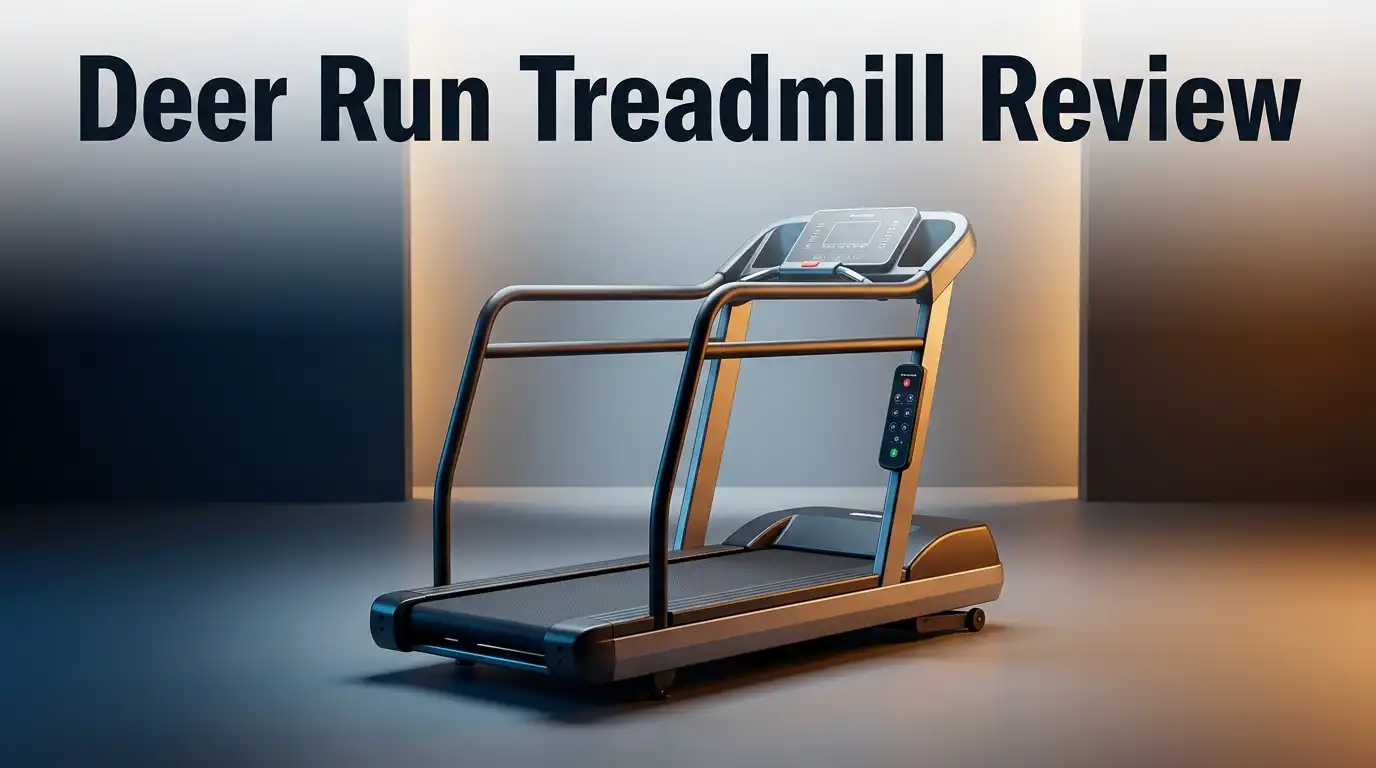
Deer Run Treadmill Review 2026: Worth Buying?
Walking pads went from a quiet trend to a full blown category, and Deer Run sits right in the middle of that shift. The brand sells compact treadmills that slide under a desk, fold under a bed, and cost far less than a gym machine.
That combination pulls in thousands of buyers every month. It also raises a fair question. Does a treadmill this cheap actually hold up?
I spent time with the Deer Run lineup, read through hundreds of owner reports, and looked closely at what breaks and what lasts. This review covers the real experience, including the parts Deer Run would rather you skipped.
In a Nutshell:
- Price is the headline feature. Deer Run walking pads start near $140 and the full size folding models sit under $500. That undercuts nearly every established treadmill brand. You pay less and get more machine per dollar, but you also accept shorter warranties and thinner support.
- The motor performs better than expected. Deer Run uses 2.5 HP to 3.0 HP motors across the range. Testers logged ten mile runs on the A1 Pro without the motor failing. Noise measures roughly 49 dB to 65 dB, quiet enough for a home office call if you keep the speed low.
- Belt size is the biggest limitation. Most Deer Run decks run 16 inches to 20 inches wide. Standard running treadmills use 60 inch decks. Deer Run gives you 44 inches. Tall runners will feel cramped almost immediately.
- Incline is a genuine bonus at this price. Manual 6% incline appears on budget models. The Z10 adds a 12% automatic incline controlled by remote, which is rare under $400.
- Quality control is inconsistent. Owners report damaged covers, belt drift, and app connection drops. Deer Run support responds, but response speed varies.
- Best fit: walkers, hybrid workers, apartment dwellers, and light runners.
Why the Deer Run Treadmill Gets Attention in 2026

Last update on 2026-10-18 / Affiliate links / Images from Amazon Product Advertising API
Deer Run built its reputation on one simple promise. You get a working treadmill for the price of a decent pair of running shoes. That message lands hard in 2026, when home fitness budgets have tightened and floor space keeps shrinking.
The brand now sells through Amazon and its own store. Amazon listings show 700 or more units moving each month on the entry walking pad alone. Those numbers signal real demand, not just clever marketing.
The second reason is design. Deer Run pads look better than the generic white slabs that flooded the market in 2022. Rose gold, deep green, and matte black finishes make the machine easier to leave out in a living room.
The third reason is feature creep in a good direction. Auto incline, app tracking, remote control, and handlebars now appear on models that cost less than $300. Competitors charge double for the same spec sheet. That value gap keeps Deer Run in the conversation.
DeerRun Under Desk Walking Pad Treadmill
This is the model most people mean when they search for a Deer Run treadmill. It sells for around $139.99 and holds a 4.0 star average across more than 250 reviews.
The specs read well for the money. You get a 2.5 HP motor, a speed range of 0.6 to 3.8 MPH, a 300 pound weight capacity, and a 6% manual incline. App control and a remote both come included.
The manual incline deserves a note. You lift the rear frame and lock it into position by hand. It takes about twenty seconds. Once set, the grade adds real effort to a slow walk, which helps when your top speed caps at 3.8 MPH.
The 4.0 star rating tells the honest story. Most buyers are satisfied. A visible minority report belt alignment issues within the first month. Check your belt tracking on day one and use the included tool to adjust before the drift worsens.
Unboxing Experience: What Actually Arrives
The box lands heavy and flat. Expect roughly 60 pounds for the walking pad and closer to 90 pounds for the folding models. Ask a neighbor for help with the doorway. One person can manage it, but two makes it painless.
Inside, the treadmill sits between two thick foam blocks wrapped in a plastic sleeve. Deer Run ships the unit fully assembled. You unfold it, plug it in, and start walking within five minutes. No tools required for the basic walking pads.
The accessory pouch contains a remote, two AAA batteries, a safety key on a lanyard, a silicone oil bottle, and an Allen wrench. The manual is thin and the translation is rough in places, though the diagrams make sense.
One recurring complaint is worth flagging. Several owners report scuffed or torn protective covers on arrival. The damage is cosmetic in most cases, but photograph everything before you toss the packaging. It speeds up any warranty claim.
DeerRun Z10 Walking Pad with 12% Auto Incline

Last update on 2026-10-18 / Affiliate links / Images from Amazon Product Advertising API
The Z10 is the model worth stretching your budget for. It carries a 12% automatic incline that you adjust mid workout using the remote or the phone app. No stopping, no lifting, no guessing.
That single feature changes the machine. A 3.8 MPH walk at 10% grade burns calories at a rate closer to a slow jog. Your knees stay happy while your heart rate climbs. For anyone who cannot or does not want to run, this is the most useful upgrade in the Deer Run catalog.
Capacity sits at 300 pounds and the unit stays under desk height when flat. It rates around 4.2 stars from owners.
The trade off is noise. The incline motor whirs audibly when it lifts, and the frame sits slightly taller than the basic pad, so it may not clear very low desks. Measure your desk clearance before ordering. Owners with sit stand desks report no issues at all.
Top 3 Alternative for Deer Run Treadmill
No products found.
Sperax Walking Treadmill Pad with APP

Last update on 2026-10-19 / Affiliate links / Images from Amazon Product Advertising API
WalkingPad C2 Foldable Walking Pad Treadmill

Last update on 2026-10-18 / Affiliate links / Images from Amazon Product Advertising API
CURSOR Folding Treadmill with Incline
Build Quality and Frame Stability
Deer Run frames use steel with plastic side rails. The steel is thinner than what you find on a $1,200 machine, and you can feel that difference if you have used both. Still, the frame does not flex the way generic no name pads do.
Reddit owners who compared Deer Run against random Amazon brands consistently mention the same thing. The deck stays planted during a fast walk. Side rails are narrow but sturdy enough to stand on while you mount and dismount.
The handlebar models add a second layer of confidence. The bar folds up and locks with a latch. It is not a weight bearing grab rail. Treat it as a balance guide, not a support system. Leaning your full body weight on it will loosen the mounting over time.
One long term report covers roughly 500 miles of use with no frame or motor failure. That is a meaningful data point for a machine in this price bracket.
Motor Power and Noise Levels
Deer Run fits 2.5 HP motors in walking pads and 3.0 HP motors in the folding treadmills. Horsepower ratings from budget brands run optimistic, so treat them as a rough guide rather than gospel.
In practice, the motors perform above their price class. A reviewer completed a continuous ten mile run on the 3.0 HP A1 Pro with no overheating and no belt slip. That is more punishment than most owners will ever apply.
Noise output measures between 49.5 dB and 65 dB. The low end matches a quiet refrigerator. The high end matches normal conversation. At walking speeds under 2.5 MPH, most people can take a video call without muting.
Here is the honest caveat. Motor noise rises noticeably above 3 MPH, and hard footfalls transmit through the floor. Downstairs neighbors will hear you run. A rubber mat underneath helps, though several owners note the mat itself can create a rubbing sound.
Belt Size and Walking Comfort
This section matters more than any spec on the box. Deer Run decks measure roughly 16.5 inches wide by 44 inches long on the compact models and about 20 inches wide on the larger pads.
A standard gym treadmill gives you 60 inches of belt. Deer Run gives you 44. That difference is the single biggest limitation of the entire lineup.
Walking feels fine. At speeds under 4 MPH, your stride stays short and the deck length is plenty. Anyone under 5 feet 10 inches will walk comfortably for an hour.
Running is where the math breaks down. Runners taller than 6 feet will drift toward the rear roller within minutes. Even shorter runners report shortening their stride to stay centered, which changes running form in ways that are not ideal for regular training.
Cushioning is firm. There is shock absorption in the deck, but it is modest. Wear proper shoes.
Incline Options Explained
Deer Run splits incline into two camps. The budget pads use manual incline and the Z series uses automatic incline.
Manual incline on the walking pads is a fixed 6%. Independent measurement put the real grade near 5%, which is honest enough. You set it before your workout and it stays there. No interval training, no mid session changes.
The upside is that manual incline still delivers. Unlike many budget machines where the incline setting barely registers, the Deer Run grade produces genuine leg burn within ten minutes.
Automatic incline on the Z10 reaches 12% across multiple steps. You change it with a button press while walking. This unlocks hill intervals, which are the most efficient way to raise intensity on a machine with a low speed cap.
Some higher tier Deer Run models advertise incline up to 20%. Verify the exact grade on the listing before you buy, since the brand uses similar model names across very different spec levels.
App Control and the PitPat Connection
Deer Run treadmills pair over Bluetooth with the PitPat app. Pairing takes under a minute and the app tracks speed, distance, time, and calories.
PitPat adds gamified content. You build an avatar, join virtual races, and compete against other users. Some owners love this. Others find it unnecessary.
The app operates on a freemium model. Basic tracking is free. The full feature set costs around $10 per month. Paid events charge $1 to $5 with small cash prizes for winners.
Here is my honest reservation. PitPat requests broad device permissions, including location access. The company says this prevents bots from winning prize events, which is a reasonable explanation. Still, permission heavy fitness apps deserve a careful read before you tap accept.
The good news is that the app is entirely optional. Every Deer Run treadmill works fully with the remote and onboard display alone. You lose nothing essential by skipping the app completely.
Folding, Storage and Portability
Portability is the reason most people choose Deer Run over a traditional treadmill. The walking pads fold flat to roughly four inches tall and slide under a bed or behind a sofa.
Transport wheels sit at the front edge. You tilt the pad up and roll it. Weight ranges from 44 pounds to 86 pounds depending on the model, so rolling is easy but lifting is not.
The folding treadmills fold flat and then stand upright against a wall. Footprint when stored is about the size of a large suitcase.
Now the frustration. The A1 Pro folding mechanism requires an Allen wrench. You loosen a bolt on each side to lower the console, then tighten them again. It takes two or three minutes each way.
That is tolerable once a week and genuinely annoying daily. There is also a real concern that those bolts will strip after months of repeated use. Deer Run should have used a lever lock here.
Pros of the Deer Run Treadmill
Here is what Deer Run gets right.
- Outstanding price to feature ratio. Auto incline, app control, and a 300 pound capacity for under $300 is not something established brands match in 2026.
- Genuinely quiet at walking speeds. Measured output starts near 49 dB, which lets you work, take calls, or watch television while you walk.
- True plug and play setup. The walking pads arrive assembled. You unbox, unfold, and start moving in roughly five minutes with no tools.
- Compact storage that actually works. A four inch folded height slides under most beds and sofas, so the machine disappears when you finish.
- Incline that you can feel. Both the manual 6% and the automatic 12% add real workout intensity, unlike token incline features on competing budget pads.
- Proven durability in long term use. Reports covering 500 miles and continuous ten mile runs suggest the motors survive far more than casual use.
- Colour and style choices that make the machine tolerable in a living space rather than an eyesore you hide.
Cons of the Deer Run Treadmill
Now the honest downsides.
- The deck is too short for real running. At 44 inches, anyone with a long stride will drift backward. A 10 MPH top speed on a 44 inch belt is an ambitious claim, not a practical one.
- Inconsistent quality control. Damaged covers, misaligned belts, and dead remotes appear regularly in owner reports. Most issues are fixable, but you should inspect immediately.
- Warranty coverage is thin. One year is standard. Premium brands offer three to ten years on the motor and frame.
- The folding bolts on the A1 Pro are a design miss. Needing an Allen wrench for daily folding is impractical, and stripping is a legitimate long term risk.
- Firm cushioning. Shock absorption exists but stays minimal. Joint sensitive users will notice.
- App permission requirements feel excessive for a treadmill tracking app.
- Customer support response times vary widely. Some owners get fast replacement parts. Others wait weeks.
What the Deer Run Treadmill Does Not Do Well
I want to be direct here, because glowing reviews help nobody.
This is not a running treadmill. The marketing says 10 MPH. The physical reality of a 44 inch deck says otherwise. If you plan to train for a half marathon indoors, buy something else. You will fight the machine every session.
It is not built for daily heavy mileage. The motors survive occasional long runs, but nothing about the construction suggests two hours of use per day for five years. Treat it as a light use machine and it will last. Treat it as a gym replacement and it will not.
The display is basic. Speed, time, distance, and calories only. No step counter, no heart rate, no programmed workouts on the entry models.
Calorie readouts are estimates at best. They do not account for your weight accurately. Ignore the number and track effort instead.
Handlebars are guides, not supports. Leaning heavily on them will loosen the hardware and skew your walking mechanics.
Price and Value in 2026
Deer Run pricing in 2026 breaks into three clear tiers.
The entry under desk pad sits around $139.99. The handlebar and incline models land between $186 and $280. The folding running treadmills like the A1 Pro stay under $500 and often drop below $400 during sales.
Compare that to the wider market. A WalkingPad C2 costs more for fewer features. A NordicTrack folding treadmill starts near $1,000. The value argument for Deer Run is strong and not really debatable.
The question is cost per year rather than cost per unit. A $150 pad that dies in eighteen months costs more annually than a $600 machine that runs for six years. Long term owner data is still limited because the brand is young.
My read is this. If you walk three to five times a week at moderate speed, Deer Run offers excellent value. If you run daily, the cheaper machine becomes the more expensive choice.
Who Should Buy and Who Should Skip
Buy a Deer Run treadmill if you work from home and want to add steps during calls or reading. The quiet operation and low profile make this effortless.
Buy it if you live in an apartment, a dorm, or a rental. The machine stores away completely and moves without a truck.
Buy it if you are starting a fitness routine and do not want to spend $1,000 on a habit you have not built yet. A $150 machine you use beats a $1,500 machine you avoid.
Buy it if you train outdoors and need a backup for bad weather days.
Skip it if you are taller than 6 feet and plan to run. The deck will not accommodate your stride safely.
Skip it if you need a long warranty and same week support. Established brands do this better.
Skip it if you have significant joint issues. The firm deck offers less protection than cushioned premium models.
Final Verdict on the Deer Run Treadmill
Deer Run delivers exactly what it promises, provided you read the promise carefully. This is a walking machine that can also run, not a running machine that can also walk.
Inside those limits, it performs impressively. The motors are quiet and durable. The incline works. The folding design is genuinely compact. The price undercuts every major competitor by a wide margin.
The weak points are real and worth repeating. The deck is short. Quality control varies. The warranty is one year. The A1 Pro folding system needs a redesign.
My recommendation: the Z10 with automatic incline is the sweet spot of the lineup. It costs modestly more than the base pad and the adjustable incline turns a simple walk into a proper cardio session.
For walkers, hybrid workers, and small space dwellers, Deer Run earns a solid recommendation in 2026. For committed runners, put your money toward a full length deck instead.
Frequently Asked Questions
Is Deer Run a reliable treadmill brand?
Deer Run is a newer brand with a growing track record. Owner reports covering 500 or more miles show the motors and frames holding up under regular walking. Reliability concerns centre on quality control at delivery rather than long term mechanical failure. Inspect your unit on arrival and document any damage immediately. The one year warranty is shorter than what premium brands offer, so factor that into your decision.
Can you run on a Deer Run treadmill?
You can run on the folding models like the A1 Pro, which reach 10 MPH with a 3.0 HP motor. Whether you should is a different question. The 44 inch deck suits short strides and speeds up to about 7.5 MPH comfortably. Taller runners will feel cramped. The under desk walking pads cap at 3.8 MPH and are built strictly for walking.
How loud is a Deer Run treadmill?
Measured noise runs between 49.5 dB and 65 dB depending on speed. At walking pace you can hold a phone call without anyone noticing. At running speeds, footfall impact becomes the dominant noise, and neighbours below you will likely hear it. A rubber mat reduces vibration transfer, though some owners report the mat causing its own rubbing sound.
Do you need the PitPat app to use it?
No. Every Deer Run treadmill works completely through the remote and onboard display. The PitPat app adds gamified races and detailed tracking, with a premium tier around $10 per month. The app requests broad device permissions, so review those before installing. Skipping it costs you nothing essential.
What weight can a Deer Run treadmill hold?
Most Deer Run walking pads support 300 pounds. The A1 Pro folding treadmill supports 350 pounds. Stay well under the stated maximum for best longevity, since capacity ratings on budget machines assume walking rather than running impact.
How long does a Deer Run treadmill last?
Owner reports suggest several years with light to moderate use, meaning roughly thirty to sixty minutes of walking most days. Heavy daily running shortens that considerably. Regular belt lubrication every three months and correct belt tension are the two maintenance tasks that matter most.

Hi, I’m Sarah Hill — the founder and voice behind Heavy Lift Vault. I’m passionate about fitness, strength training, and health technology. I spend my time researching, testing, and reviewing workout equipment and health devices so you don’t have to guess. My goal is to deliver honest, detailed, and trustworthy reviews that help you invest wisely in your fitness journey.