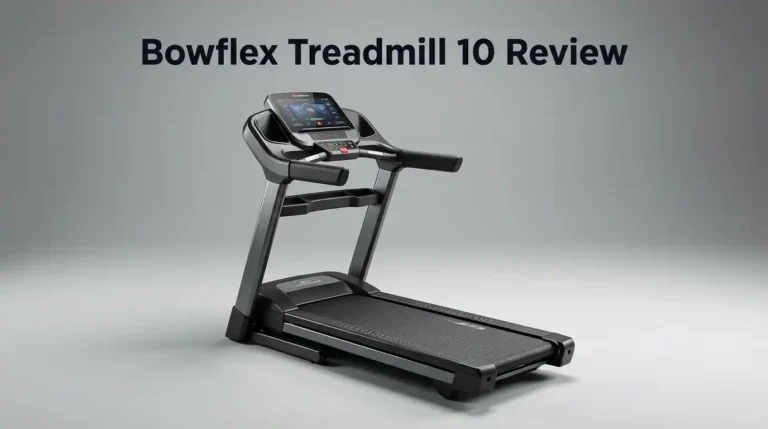

Sole TT8 Treadmill Review 2026: Worth Buying?
Buying a treadmill that costs as much as a used car feels like a big decision. The Sole TT8 sits near the top of the Sole lineup, and it promises gym floor durability inside your spare room.
It carries a 4.0 HP motor, a 22 by 60 inch belt, decline settings, and a 15.6 inch touchscreen. It also weighs close to 300 pounds and refuses to fold.
So is this machine a smart buy in 2026, or is it simply heavy and expensive? This review walks through the unboxing, the running feel, the software quirks, the real complaints owners report, and the alternatives worth a look. Read on before you spend the money.
In A Nutshell:
- The motor and frame are the main reason to buy. A 4.0 HP motor, a 400 pound user capacity, and a welded steel frame that does not fold give this treadmill a planted, gym like feel at high speeds.
- Decline training is rare at this price. The TT8 offers 6 levels of decline and 15 levels of incline, so you can train for downhill road races instead of only climbing.
- The deck runs firm. Sole uses a 22 by 60 inch, two ply belt with a reversible deck. Runners who want soft cushioning will feel the firmness within a mile.
- The screen is big but the software is average. The 15.6 inch touchscreen loads Netflix, YouTube, Spotify, and more, yet menus respond slowly and Android screen mirroring is confusing.
- Assembly and wiring are the weak points. Several owners report loose console cables, clacking noises, and service calls. Paid in room assembly is money well spent here.
- Price sits around $2,899. That is real money, so casual walkers should look at cheaper Sole models instead.
Sole TT8 Treadmill: The Quick Verdict

Last update on 2026-10-17 / Affiliate links / Images from Amazon Product Advertising API
The Sole TT8 is a light commercial treadmill sold for home use. Sole positions it above the F85, and the spec sheet backs that up. You get a 4.0 HP motor, a stationary steel frame, 3 inch crowned rollers, and a warranty that covers light commercial settings.
The TT8 shines when you run long and run often. Marathon trainers, households with three or four active adults, and small training studios all fit the profile. The belt stays centered, the motor never strains at 10 mph, and the 400 pound capacity welcomes larger runners.
The tradeoffs are real though. This machine does not fold, so it owns a permanent 82.5 by 38 inch patch of floor. The deck feels firm underfoot. The onboard software feels a step behind NordicTrack and Peloton. Buy it for the hardware, not the screen.
Unboxing And First Impressions
The delivery day sets the tone. The TT8 arrives strapped to a pallet inside a thick crate, and the shipping weight lands near 340 pounds. Curbside delivery is the default on many orders, which means you and two strong friends will be sliding a crate across the driveway.
Cut the bands and the first thing you notice is packaging quality. Every painted surface sits under foam and film, and the hardware comes sorted in a labeled tray. Sole includes the tools you need, plus a spare safety key and a small bottle of cleaner on most shipments.
Lifting the deck assembly out of the crate is the hard part. The base alone accounts for most of the weight. Once it sits flat, the build feels premium. The footrails are textured aluminum, the motor hood is thick plastic, and the frame welds look clean. Nothing about the first impression feels cheap.
Assembly: Harder Than Sole Admits
Sole rates assembly at roughly 45 minutes for two people. Plan on 90 minutes and you will be closer to reality. The uprights, the console, the arm rails, and the shroud each need careful alignment.
The wiring deserves your full attention. Cables run from the base up through both uprights and into the console, and they pinch easily when you tighten the mounting screws. This single step causes most of the early problems owners report online, including dead incline buttons and unresponsive heart rate grips.
Push every connector together firmly until it seats. Then look up inside the upright with a flashlight before you bolt the shroud on. Keep slack away from screw holes.
Honestly, this is the one product where I recommend paying for professional in room assembly. The upcharge is small next to the machine price, and a technician removes the biggest failure risk. A bad install ruins an otherwise excellent treadmill.
Top 3 Alternative for Sole TT8 Treadmill


Last update on 2026-10-17 / Affiliate links / Images from Amazon Product Advertising API
NordicTrack Commercial 2450 Treadmill

Last update on 2026-10-17 / Affiliate links / Images from Amazon Product Advertising API
Horizon Fitness Advanced Training Treadmill

Last update on 2026-10-17 / Affiliate links / Images from Amazon Product Advertising API
NordicTrack Commercial 1250 Treadmill
Build Quality And Frame Stability
This is where the TT8 earns its price. The frame does not fold, and that single design choice removes the hinge, the latch, and the flex that folding decks introduce. The result is a platform that stays quiet and still while you sprint.
The machine weighs roughly 296 pounds assembled. Heavy is the point. At 11 mph with a 200 pound runner, the handrails do not shake and the console does not wobble. Larger users report the same stability, which matches the 400 pound weight rating.
The Z shaped frame looks modern and gives you clear space to step on and off. Aluminum side rails feel grippy under sweaty shoes. Transport wheels exist, but treat them as a tool for nudging the machine an inch, not for moving rooms.
Measure your space twice. The footprint runs 82.5 inches long, 38 inches wide, and 66 inches tall, and it never gets smaller.
Motor Power And Speed Performance
The 4.0 HP motor is the headline number. For context, most home treadmills ship with 2.5 to 3.5 HP. That extra headroom matters when a heavy runner trains at 8 mph for an hour, because the motor loafs instead of straining.
Speed runs from 0.5 to 12 mph in 0.1 increments. The 0.5 mph floor is genuinely useful for rehab walking and warmups. Quick keys sit beside the screen, and rocker switches on the arms let you nudge pace without looking down.
Speed transitions are smooth but not instant. Jumping from 4 mph to 9 mph takes several seconds, which annoys sprint interval fans. Runners who use longer intervals will never notice.
Noise sits in the moderate range. The motor itself stays quiet, while footstrike on the deck produces most of the sound. Downstairs neighbors will still hear you, so a thick treadmill mat is a smart add.
Incline And Decline Training
The TT8 uses two separate motors to handle elevation. You get 15 levels of incline and 6 levels of decline, which is unusual outside commercial gyms. Decline changes the workout more than people expect.
Downhill running loads your quads eccentrically, and that is exactly the stress that wrecks untrained legs in hilly races. Training on decline builds tolerance for events with long descents. Walkers can also use gentle decline to vary muscle recruitment.
Sole labels these as levels rather than percentages, and the levels do not map perfectly to grade. Treat them as relative settings, not lab accurate percentages. Consistency across workouts still holds, so progress tracking works fine.
Elevation changes move slowly. Climbing from level 2 to level 12 takes a noticeable pause, so program your interval blocks with that lag in mind. Decline plus a 4.0 HP motor is the TT8 combination that competitors rarely match.
Running Deck, Belt, And Cushioning
The 22 by 60 inch belt is wide and long. Tall runners with long strides stop worrying about clipping the motor hood, and side to side drift never becomes an issue. The 3 inch crowned rollers pull the belt back to center automatically.
Sole uses a two ply belt that arrives prewaxed. You do not lubricate it on a schedule the way you would with a budget treadmill. The deck is reversible, so you flip it around the 20,000 mile mark and gain a fresh running surface.
Cushioning is the divisive part. Sole tunes this deck firm. Runners who want road realism love it. People with cranky knees who expect a soft, forgiving platform often find it harsher than a NordicTrack deck.
Try it before committing if joint pain drives your purchase. Firm is a design choice here, not a defect, but it will not suit everyone.
The 15.6 Inch Touchscreen And App Experience
The screen is large, bright, and easy to read from the deck. It loads Netflix, YouTube, Prime Video, Max, Hulu, Peacock, Spotify, ESPN, and Kinomap directly. No Sole subscription is required, which saves you real money over time.
That freedom is the best part of this console. You watch what you already pay for rather than renting a fitness library. The Sole Plus app syncs workout data to your phone, and Bluetooth pairs chest straps and watches.
Now the honest part. The interface feels sluggish. Taps sometimes need a second press, app loading takes a while, and the layout looks dated next to iFIT or Peloton. Screen mirroring works well on iPhones and turns into a scavenger hunt on Android.
The screen also barely tilts. Treat this as a big tablet bolted to a great treadmill, not as a polished smart fitness platform.
Extra Features: Fan, Speakers, And Charging
Sole loads the console with convenience features, and the results are mixed. The Bluetooth speakers face forward and sound decent for podcasts and playlists. Bass is thin, but you can hear dialogue clearly over your footsteps.
The fan is the weak feature. It moves a polite amount of air toward your chest and barely registers during a hard tempo run. Every serious user I know ends up buying a floor fan anyway, so plan for that.
Storage is generous. Two cup holders, two small accessory trays, and a tablet shelf above the screen give you places for gels, keys, and a phone. The shelf fits most tablets unless you use a thick case.
Wireless charging sits on the console and works well with compatible phones. There is no USB port as a backup, which is a strange omission in 2026. Check your phone supports wireless charging first.
What The Sole TT8 Does Not Do Well
Every review should name the flaws plainly, so here they are. First, quality control at assembly is inconsistent. Owner reports mention clacking sounds under load, incline buttons that die, and console cables that were pinched during installation.
Second, service can be slow. Sole covers parts generously, but scheduling a technician takes time, and some owners needed multiple visits before a board swap fixed things. Warranty paperwork is only as good as the local service network.
Third, the software lags behind rivals. Fourth, the fan underperforms. Fifth, the machine is immovable in practice, so a bad room choice is permanent.
Finally, the price. At roughly $2,899, you pay a premium over the F85 for decline, a larger screen, and light commercial coverage. Walkers and casual joggers will not use enough of that capability to justify the gap. Be honest about your weekly mileage before you buy.
Pros And Cons Of The Sole TT8
Pros
- Powerful 4.0 HP motor handles long runs, heavy users, and multiple daily sessions without strain or overheating.
- Stationary steel frame with a 400 pound capacity delivers rock solid stability at top speed.
- 6 decline levels and 15 incline levels allow downhill and uphill race preparation on one machine.
- Huge 22 by 60 inch belt suits tall runners and long strides comfortably.
- No subscription required for the streaming apps loaded on the 15.6 inch touchscreen.
- Low maintenance belt arrives prewaxed, and the deck flips for a second life around 20,000 miles.
- Lifetime frame and motor warranty covers residential and light commercial use.
Cons
- The frame does not fold, so it permanently occupies roughly 82.5 by 38 inches of floor.
- Assembly wiring is fragile, and pinched cables cause many early electrical faults.
- The touchscreen software feels slow and dated compared with iFIT and Peloton interfaces.
- The built in fan is weak and the deck cushioning runs firm.
- Wireless charging only, with no USB charging backup.
- Price near $2,899 is steep for walkers who will not use the motor headroom.
Sole TT8 vs Sole F85 And F80
Shoppers almost always cross shop these three. The F80 sits at the entry point of Sole’s serious range with a folding frame and a 350 pound capacity. It suits one or two regular runners in a shared living space.
The F85 adds power and a larger screen while keeping the folding deck. For most households, the F85 delivers 85 percent of the TT8 experience for meaningfully less money. That is the honest comparison.
The TT8 separates itself in three ways. It declines, it does not fold, and it carries light commercial warranty coverage. Those three items justify the jump only if you log heavy weekly mileage or share the machine across several users.
Pick the F80 for budget, the F85 for value, and the TT8 for volume. If you run fewer than 15 miles a week, the savings on an F85 buy a lot of running shoes.
Who Should Buy The Sole TT8
Last update on 2026-10-17 / Affiliate links / Images from Amazon Product Advertising API
This treadmill fits a specific runner. Marathon and half marathon trainers benefit most, because the motor, deck length, and decline settings support long structured sessions. Hill repeats and downhill simulation work here in a way most home machines cannot copy.
Households with several active adults are the second group. A 400 pound capacity and light commercial warranty mean the machine tolerates three or four sessions a day without complaint.
Larger runners are the third group. Heavier users routinely wear out 2.5 HP budget treadmills, and the TT8 removes that worry entirely.
Who should skip it? Walkers, casual joggers, apartment dwellers who need a folding frame, anyone chasing plush cushioning, and shoppers who want polished class based software. Those buyers will be happier spending less on an F63, an F80, or a NordicTrack with iFIT. Match the machine to your actual weekly mileage.
Warranty, Maintenance, And Long Term Ownership
Sole covers the frame and motor for life in residential use, with 3 years on parts and 1 year of labor. Light commercial buyers get lifetime frame and motor coverage, 2 years of parts, and 1 year of labor. That is strong coverage on paper.
Maintenance stays light. You never lubricate the prewaxed belt, so upkeep drops to wiping the deck, vacuuming under the motor hood twice a year, and checking belt tension. Flip the deck near 20,000 miles and the running surface feels new again.
Plan for a dedicated outlet and a surge protector rated for treadmills. Power problems cause console faults that look like hardware failures.
One practical tip: register the machine immediately and keep your serial number handy. Service turnaround improves when your paperwork is already in the system. Owners who logged issues early reported smoother parts replacement than those who waited.
Frequently Asked Questions
Does the Sole TT8 fold up for storage?
No. The TT8 uses a stationary frame by design, which improves stability and removes the folding hinge as a failure point. It needs roughly 82.5 by 38 inches of permanent floor space, plus clearance behind it.
How much does the Sole TT8 cost in 2026?
Sole lists the TT8 at about $2,899.99. Prices shift during holiday sales, so watch for promotions in spring and late autumn. Delivery upgrades and in room assembly usually cost extra.
Is the Sole TT8 good for heavy users?
Yes. The 400 pound weight capacity, 4.0 HP motor, and heavy steel frame make it one of the better home options for larger runners and walkers. The wide 22 inch belt also helps comfort.
Do I need a subscription to use the screen?
No. The 15.6 inch touchscreen loads streaming and fitness apps directly, and Sole does not charge a membership fee. You only pay for services you already subscribe to, such as Netflix or Spotify.
Does the belt need lubrication?
No regular lubrication is required. The two ply belt ships prewaxed. You simply keep it clean, check tension occasionally, and flip the reversible deck around 20,000 miles.
Is the Sole TT8 quiet enough for an apartment?
It is quieter than most budget treadmills, but footstrike noise still travels through floors. A thick rubber treadmill mat helps. A ground floor room is the safer choice for shared buildings.
What is the biggest reason people return it?
Assembly related electrical faults top the list, usually caused by pinched or loose console cables. Professional installation removes most of that risk and is worth the extra cost on a machine this heavy.

Hi, I’m Sarah Hill — the founder and voice behind Heavy Lift Vault. I’m passionate about fitness, strength training, and health technology. I spend my time researching, testing, and reviewing workout equipment and health devices so you don’t have to guess. My goal is to deliver honest, detailed, and trustworthy reviews that help you invest wisely in your fitness journey.