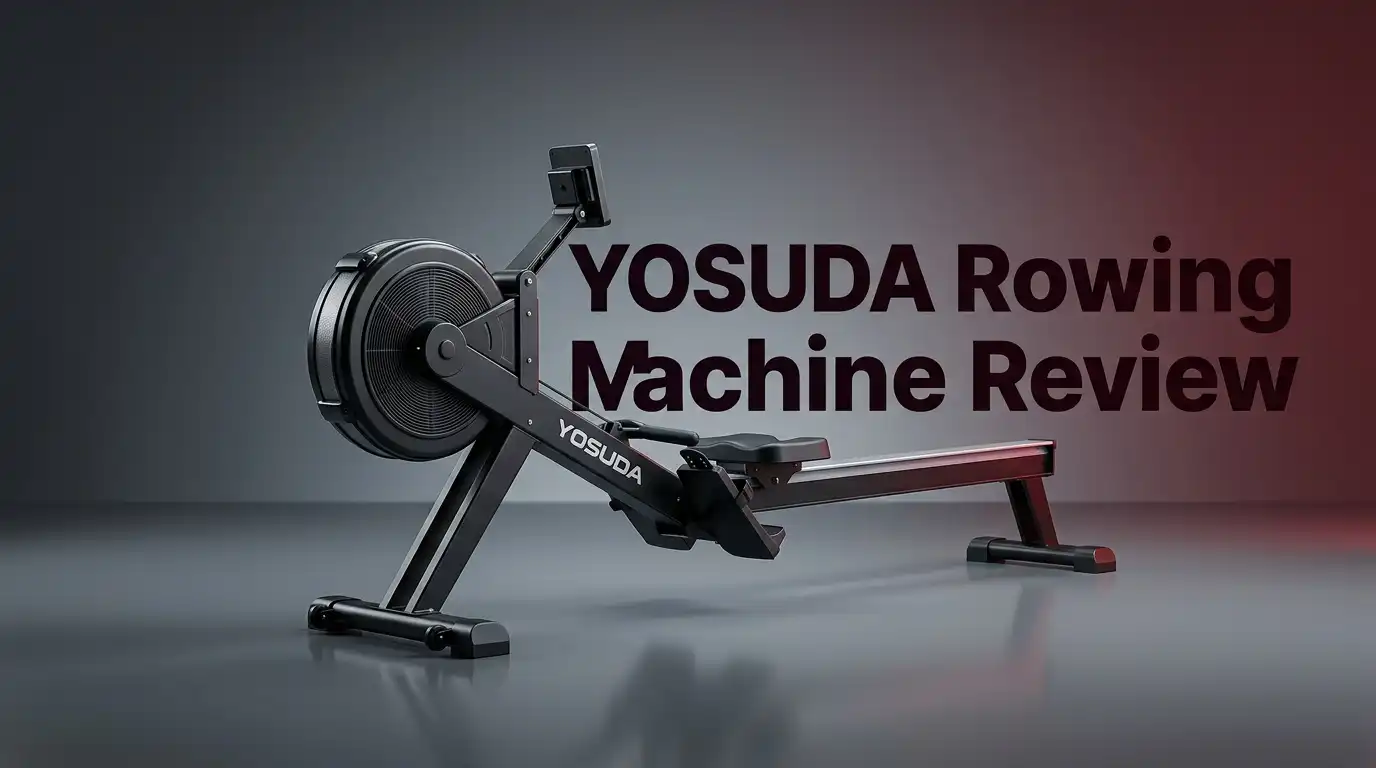
YOSUDA Rowing Machine Review 2026: Worth It?
Rowing machines promise a full body workout in a small space. YOSUDA promises that same workout for roughly a quarter of the price of a gym grade erg. That gap makes people suspicious, and it should.
I spent weeks pulling the handle, reading hundreds of owner reports, and comparing tester notes from independent labs to find out where the savings show up.
The answer is more interesting than a simple thumbs up. This rower gets the fundamentals right and then cuts corners in three specific places. Here is exactly what you get, what you lose, and whether that trade works for your goals in 2026.
In A Nutshell:
- The core machine is genuinely good. The magnetic flywheel runs quiet and smooth, the belt holds tension at the catch, and 16 resistance levels give you a real range from easy cardio to heavy pulls. Independent testing measured roughly 15 pounds of pull at level one and about 33 pounds at level sixteen.
- The monitor is the weakest part. It tracks time, stroke count, calories, distance, and total strokes. It does not show stroke rate or 500 meter split, and it displays only one metric at a time unless you use scan mode. Serious rowers will find this limiting.
- Assembly takes longer than advertised. YOSUDA claims 20 minutes. Plan on 30 to 45 minutes with the included multi tool, or about 20 with your own ratchet set.
- Capacity is solid for the price. The magnetic models support 350 pounds and users up to 6 feet 6 inches. The wooden water version supports 400 pounds and riders up to 6 feet 8 inches.
- Comfort is average, not great. Multiple testers flagged the firm seat and the pivoting foot pedals. Sessions under 30 minutes feel fine. Longer sessions expose both.
- Best fit: beginners, apartment dwellers, and anyone building a cardio habit on a budget under $350.
YOSUDA Magnetic Rowing Machine With 16 Level Resistance

Last update on 2026-10-17 / Affiliate links / Images from Amazon Product Advertising API
This is the model most buyers land on, and for good reason. It pairs a magnetic resistance flywheel with a nylon belt drive, so the stroke stays quiet and the parts stay cheap to replace.
The frame measures about 75 inches long, 19.3 inches wide, and 27.5 inches tall. Total machine weight sits near 60 pounds, which is light enough to tilt and roll but heavy enough to feel planted during hard pulls.
You get a tablet holder, a padded seat, adjustable foot straps, and a twist knob for resistance. The knob has a faucet style grip and clicks into each of the 16 settings, so you always know where you are. It feels like a machine built by people who actually row, then costed down by accountants. That description fits the whole product.
Unboxing And First Impressions
The box arrives large and flat, roughly 46.5 inches long by 27 inches wide by 8 inches tall. Plastic bands wrap the outside, which makes it easier to drag through a doorway alone. Check which end holds the manual before you cut tape. Mine was buried at the opposite end, which meant unpacking everything first.
Inside, precut styrofoam blocks hold every component in place, and each part comes individually wrapped in plastic. Nothing rattled. Nothing arrived scuffed. Two AAA batteries for the monitor sit in the hardware bag, which is a small kindness most brands skip.
One warning worth repeating. The unit gives off a strong rubber smell on day one. It fades within a few hours in a ventilated room. Open a window before you start assembly.
Assembly: How Long Does It Really Take?
YOSUDA advertises 10 screws and 20 minutes. The screw count is honest. The clock is not.
The hardware comes in labeled plastic sleeves, one per step, which removes almost all guesswork. You attach the front stabilizer, the rear foot, the seat rail, the console mast, and the pedals. The instructions use clear diagrams with very little text. A first time builder with no tool experience can finish this without help.
Real world timing lands closer to 30 to 45 minutes using the bundled multi tool. Swap in a socket wrench and you cut that roughly in half. The multi tool works, but it forces short turns in tight spots near the rail bracket.
Tip: leave the rail bolts slightly loose until every part is on, then tighten in sequence. That prevents the misalignment complaint that shows up in owner reviews.
Top 3 Alternative for YOSUDA Rowing Machine

Last update on 2026-10-17 / Affiliate links / Images from Amazon Product Advertising API
Concept2 RowErg Indoor Rowing Machine

Last update on 2026-10-17 / Affiliate links / Images from Amazon Product Advertising API
MERACH Q1S Magnetic Rowing Machine

Last update on 2026-10-17 / Affiliate links / Images from Amazon Product Advertising API
Sunny Health and Fitness SF RW5801 Magnetic Rowing Machine
Resistance System And How It Feels
Magnetic resistance works by moving magnets closer to a spinning flywheel. No air, no water, no noise. The resistance stays constant regardless of how hard you pull, which is the key difference from an air rower.
That constant feel is a blessing and a curse. On the plus side, the handle always has tension, so the catch feels smooth and connected from the first inch. On the minus side, the machine never punishes a lazy stroke. Pull harder on a Concept2 and the air fights back. Pull harder here and you simply move faster.
Level one through five suits warmups and long steady sessions. Levels ten through sixteen deliver a genuinely heavy pull that builds back and leg strength. Owners who train for rowing technique will miss the dynamic feedback. Owners who want sweat and calories will not notice.
YOSUDA Water Rowing Machine: The Wooden Upgrade

Last update on 2026-10-17 / Affiliate links / Images from Amazon Product Advertising API
If the plastic and steel look does not suit your living room, YOSUDA makes a wooden framed water rower. A four blade paddle spins inside a sealed tank, and you adjust resistance by changing the water volume. The whoosh sound mimics a real boat, which many owners find oddly motivating.
Specs improve here. Capacity rises to 400 pounds, and the rail fits users up to 6 feet 8 inches. The frame stands upright for storage, and a dedicated monitor pairs with the YOSUDA app over Bluetooth.
Honest caveats apply. Water rowers need occasional tank maintenance with purification tablets. The unit weighs noticeably more than the magnetic version. Independent testers also found the seat and footholds no more comfortable than the cheaper model, so you are paying for looks and feel, not ergonomics.
The Monitor And App Experience
This is where the price cut lands hardest. The LCD console reports time, stroke count, calories burned, distance, and lifetime total strokes. It shows one value at a time, with a scan function that rotates through them automatically.
What is missing matters. There is no strokes per minute reading and no 500 meter split, the two numbers real rowers live by. Calorie estimates are rough, since the console has no idea of your weight. A basic fitness watch with a rowing mode captures more useful data than this screen.
Newer models add Bluetooth and pair with the YOSUDA app for session logging and simple workout videos. The app is functional rather than polished. It will not replace a Kinomap or Concept2 style ecosystem. Budget for a watch or phone app if metrics motivate you.
Seat, Footrests And Comfort Over Time
The seat uses firm synthetic coated foam shaped to the hip curve. It rides on nylon rollers with steel bearings, and you can tighten a jack screw underneath to remove any wobble that develops. Sessions up to about 30 minutes feel fine. Past that, most riders notice the firmness.
The footrests are the more interesting design choice. They pivot on a bolt just behind the ball of your foot. That pivot adds ankle comfort at the front of the stroke, but it also steals a little power at the drive, because your legs push against an angled surface instead of a flat one.
Testers at multiple outlets called the pedals the least refined part of the machine. Some described them as unstable. A cheap gel cushion and proper shoes solve most of the discomfort for under $30.
Build Quality And Weight Capacity
The frame uses powder coated steel with molded plastic shrouds over the flywheel. Rated capacity is 350 pounds on magnetic models and 400 pounds on the water version. Both numbers are honest for home use, not commercial use.
Each foot includes a built in leveler, which fixes rocking on uneven floors. The rail feels rigid under load, though heavier riders report mild flex at full extension. That flex is normal at this price and does not signal failure.
Longevity is the open question. Magnetic systems have few wearing parts, so the flywheel and magnets should outlast the rest. The belt, seat rollers, and console are the parts most likely to need replacing after a few years of daily use. YOSUDA sells replacements, and customer service gets consistently decent marks for shipping parts quickly.
Noise Level For Apartment Rowing
This is the strongest argument for the magnetic model. There is no fan, no splash, and no chain. You hear the soft hum of the seat rollers and your own breathing. Most owners compare it to a quiet fan running in another room.
I have seen no credible complaints about downstairs neighbors. You can row at 6 a.m. in a studio apartment without waking anyone. You can also watch television at normal volume while rowing, which matters more than people admit for habit building.
The water version is louder by design. The paddle swish reaches conversational volume at a hard pace. Some find it relaxing. Others find it annoying after ten minutes. If shared walls are your concern, pick magnetic.
Storage And Moving It Around
The rail folds upright. You remove a locking pin, loosen a threaded knob, lift the rail vertical, and refasten the bolt into a second hole. Folded footprint drops to roughly 28.7 inches long by 19.3 inches wide, standing about 4 feet tall.
Two transport wheels sit on the front foot. Tilt the back up, and 60 pounds rolls easily across hardwood or tile. Carpet takes more effort. One person can store this machine without help, which separates it from most air rowers.
The fold takes about 30 seconds once you learn it. That speed matters, because a machine that takes five minutes to store ends up living in the middle of your floor. This one genuinely disappears into a closet or behind a door.
What The YOSUDA Rowing Machine Does Not Do Well
Authentic reviews name the flaws, so here they are plainly.
It does not give you competitive rowing metrics. No split times, no stroke rate, no reliable calorie math. Training for a 2K test on this machine is frustrating.
It does not replicate the feel of a boat. The rail tilts about 6 degrees upward, and the pivoting pedals soften the drive. Purists will feel both compromises immediately.
It does not offer plush comfort. The seat is firm and the pedals are mediocre.
It does not include a guided content platform. There is no subscription, which saves money, but also means no instructor pushing you on hard days.
If any one of those four points is a deal breaker, spend more money instead of hoping you adapt.
Pros And Cons
Pros
- Very quiet magnetic resistance suits apartments and early mornings
- 16 resistance levels cover light cardio through heavy strength pulls
- Folds upright in seconds and rolls on two transport wheels
- Strong 350 pound capacity and 6 foot 6 inch rail for the price
- No subscription required, ever
- Clear labeled hardware makes assembly approachable
- Sturdy tablet holder fits laptops and large tablets
Cons
- Monitor omits stroke rate and 500 meter split
- One metric visible at a time without scan mode
- Firm seat gets uncomfortable past 30 minutes
- Pivoting footrests reduce drive power and feel loose to some users
- Assembly takes longer than the advertised 20 minutes
- Strong rubber odor for the first few hours
- App experience is basic compared with rival ecosystems
Who Should Buy It And Who Should Skip It
Buy it if you are starting from zero, you want low impact cardio at home, and your budget sits under $350. Buy it if you live in an apartment and noise worries you. Buy it if floor space is tight and the machine must fold. Buy it if you plan 20 to 40 minute sessions a few times a week while watching something.
Skip it if you row competitively or want to compare workouts with a club. Skip it if you chase split times and watts. Skip it if you weigh above 350 pounds or stand taller than 6 feet 6 inches on the magnetic model. Skip it if you need instructor led classes to stay motivated.
The honest framing is this: YOSUDA sells a reliable cardio tool, not a training instrument. Match the purchase to that reality and satisfaction follows.
Price And Value In 2026
Direct pricing sits around $315 for the magnetic 100 series, with Amazon frequently discounting to the $230 to $290 range during sales events. The wooden water rower runs higher. A Concept2 RowErg costs roughly three times as much.
That price gap buys you a durable flywheel, honest resistance range, and quiet operation. It costs you data, comfort refinement, and resale value. Concept2 machines hold value for a decade. YOSUDA machines do not.
Value depends entirely on your dropout risk. If you are unsure you will stick with rowing, spending $270 to find out is smart. If you already know you love it, the cheaper machine becomes a stepping stone you replace in two years. Buying twice costs more than buying right once.
Frequently Asked Questions
Is the YOSUDA rowing machine good for beginners?
Yes. The constant belt tension, simple resistance knob, and quiet operation make it forgiving while you learn the stroke. The low price also removes pressure if rowing turns out not to suit you.
How much does the YOSUDA rowing machine weigh?
The magnetic models weigh about 60 pounds assembled. The wooden water rower weighs more. Both roll on transport wheels, so one adult can move either one.
Does the YOSUDA rower connect to apps?
Newer models include Bluetooth and pair with the YOSUDA app for session tracking. Compatibility with third party platforms is limited, so verify before you buy if you want a specific app.
What is the maximum user height and weight?
Magnetic models handle 350 pounds and users up to 6 feet 6 inches. The water version handles 400 pounds and users up to 6 feet 8 inches.
Is magnetic or water resistance better?
Magnetic runs quieter and needs no maintenance. Water feels more like a real boat and looks better in a living room. Choose magnetic for shared walls and water for atmosphere.
How long does the YOSUDA rowing machine last?
With home use and occasional bolt checks, expect several years. The belt, seat rollers, and monitor wear first, and replacement parts are available from the brand.

Hi, I’m Sarah Hill — the founder and voice behind Heavy Lift Vault. I’m passionate about fitness, strength training, and health technology. I spend my time researching, testing, and reviewing workout equipment and health devices so you don’t have to guess. My goal is to deliver honest, detailed, and trustworthy reviews that help you invest wisely in your fitness journey.