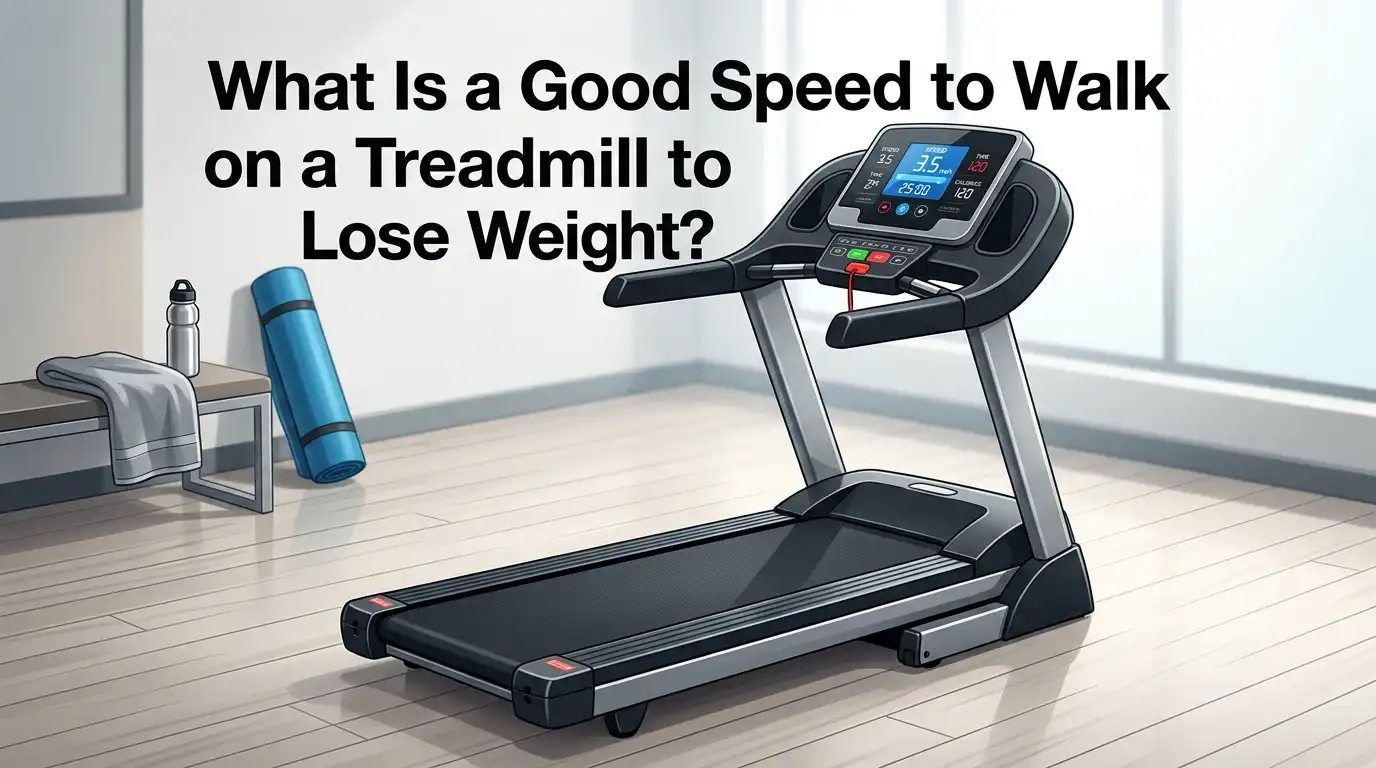
What Is a Good Speed to Walk on a Treadmill to Lose Weight?
Walking on a treadmill is one of the easiest and most effective ways to lose weight. But there is a catch. If you walk too slowly, you barely burn calories. If you push too hard, you risk burnout or injury. So what is the right speed?
Most fitness experts agree that 3 to 4 mph is the sweet spot for weight loss through treadmill walking. At this pace, a 155 pound person can burn 133 to 175 calories in just 30 minutes.
But speed alone does not tell the full story. Your incline, duration, body weight, and walking style all play a massive role in how much fat you actually lose.
Key Takeaways
- A walking speed of 3 to 4 mph is ideal for most people who want to lose weight on a treadmill. This range keeps your heart rate in the fat burning zone without overworking your joints or muscles. Beginners should start at 2.5 to 3 mph and build up gradually over two to three weeks.
- Adding incline boosts calorie burn significantly. Research shows that walking at a 5% incline increases calorie expenditure by 52% compared to flat walking. At a 10% incline, that number jumps to 113%. You do not need to walk faster if you walk steeper.
- Aim for 30 to 60 minutes per session, at least five days a week. The CDC recommends a minimum of 150 minutes of moderate intensity exercise per week. Brisk treadmill walking at 3.5 mph or above counts as moderate intensity activity.
- Interval walking burns up to 20% more calories than steady pace walking, according to research from Ohio State University. Switching between fast and slow speeds forces your body to work harder and use more energy.
- Your fat burning heart rate zone is 60% to 70% of your maximum heart rate. You can calculate your max heart rate by subtracting your age from 220. Walking at 3 to 4 mph typically keeps most adults in this optimal range.
- Consistency matters more than intensity. Walking at a moderate pace every day produces better long term weight loss results than occasional high intensity sessions. Make it a daily habit and results will follow.
Understanding the Fat Burning Zone on a Treadmill
Your body burns a mix of fat and carbohydrates during exercise. At lower intensities, your body uses a higher percentage of fat for fuel. This is the fat burning zone, and it sits at about 60% to 70% of your maximum heart rate.
To find your fat burning zone, subtract your age from 220. That gives you your estimated maximum heart rate. Then multiply that number by 0.60 and 0.70. For a 40 year old, the max heart rate is 180, and the fat burning zone falls between 108 and 126 beats per minute.
Walking at 3 to 4 mph on a treadmill puts most adults right in this range. You should feel like you are working, but you can still hold a conversation. If you are gasping for breath, you have gone too fast. If you feel no effort at all, you need to speed up or add incline.
Pros: Low impact, sustainable, easy to maintain for long sessions.
Cons: Burns fewer total calories per minute than higher intensity exercise.
The Best Walking Speed for Beginners
If you are new to exercise or returning after a long break, start at 2.5 to 3 mph. This pace feels like a comfortable, purposeful walk. It gives your body time to build endurance without causing soreness or injury.
A 150 pound person walking at 3 mph on a flat treadmill burns roughly 100 calories in 30 minutes. That may sound small, but it adds up fast. Five sessions per week equals 500 extra calories burned, which contributes to about one pound of weight loss every seven weeks from exercise alone.
Focus on building the habit first. Walk for 20 minutes at this speed during your first week. Add five minutes each week until you reach 30 to 45 minutes per session. Once you can walk comfortably for 30 minutes at 3 mph, increase your speed by 0.5 mph.
Pros: Very low risk of injury, builds a strong exercise habit, great for people with joint issues.
Cons: Slower calorie burn, results take longer to appear.
Moderate Walking Speed for Steady Fat Loss
Once you have built a base, move to 3.5 to 4 mph. This is a brisk walk. Your arms swing naturally, your breathing picks up, and your heart rate rises into the moderate intensity zone.
At 3.5 mph, a 155 pound person burns about 150 calories in 30 minutes on a flat surface. Bump that up to 4 mph and the burn increases to roughly 175 calories in the same time. This speed range is where most people see consistent, steady weight loss results.
Brisk walking at this pace also improves cardiovascular health, lowers blood pressure, and reduces stress. These benefits make it easier to stick with the program long term. You feel better after each session, which motivates you to come back tomorrow.
Pros: Burns significantly more calories than casual walking, still very sustainable, joint friendly.
Cons: May feel challenging for beginners or those with mobility issues.
How Incline Walking Supercharges Your Results
Speed is important, but incline is the real game changer for weight loss on a treadmill. Walking uphill engages your glutes, hamstrings, and core far more than flat walking. This extra muscle activation drives your calorie burn much higher.
Studies show that walking at a 10% incline can burn 113% more calories than walking on a flat surface at the same speed. A 2025 study published in the International Journal of Exercise Science found that incline walking at 12% grade and 3 mph burned 7% more fat than running on a flat treadmill.
The popular 12 3 30 workout uses this principle. You set the treadmill to a 12% incline, walk at 3 mph, and go for 30 minutes. This workout is effective because the steep incline forces your body to recruit large muscle groups, which burns more energy overall.
Pros: Dramatically increases calorie burn, targets lower body muscles, burns a higher percentage of fat.
Cons: Can strain calves and lower back if done too aggressively, may not be suitable for all fitness levels right away.
Interval Walking for Maximum Calorie Burn
Steady pace walking works well, but interval walking takes it further. Research from Ohio State University found that varying your walking speed burns up to 20% more calories than maintaining a constant pace.
Here is a simple interval walking plan. Walk at 3 mph for two minutes. Then increase to 4 mph for one minute. Repeat this cycle for 30 minutes. As you get fitter, you can extend the fast intervals or increase the speed to 4.5 mph.
Your body burns extra calories during interval workouts because it has to constantly adjust. Speeding up and slowing down requires more energy than cruising at one speed. This also creates a mild afterburn effect, where your metabolism stays elevated for a short time after the workout ends.
Pros: Burns more calories in less time, prevents boredom, improves fitness faster.
Cons: Requires more focus, can feel more tiring, may not suit people with balance issues.
How Long Should You Walk on a Treadmill to Lose Weight
Duration matters just as much as speed. The general recommendation is 30 to 60 minutes per day, at least five days per week. This aligns with the CDC guideline of 150 minutes of moderate intensity activity weekly.
If you walk at 3.5 mph for 45 minutes, a 155 pound person burns approximately 225 calories. Do that five times a week and you burn 1,125 calories from walking alone. Combined with a modest reduction in daily food intake, this creates the calorie deficit needed for weight loss.
You do not have to do all your walking in one session. Two 20 minute walks or three 10 minute walks count just the same. The total weekly volume is what drives results. Find a schedule that fits your life and protect that time.
Pros: Flexible scheduling, builds cumulative calorie deficit, easy to track progress.
Cons: Longer sessions require more time commitment, can feel repetitive without music or entertainment.
The Role of Body Weight in Calorie Burn
Your body weight directly affects how many calories you burn while walking. Heavier individuals burn more calories at the same speed and duration because their bodies must work harder to move the extra weight.
A 200 pound person walking at 3.5 mph for 30 minutes burns about 190 calories. A 130 pound person at the same speed and duration burns roughly 120 calories. This difference is significant over weeks and months.
As you lose weight, your calorie burn naturally decreases. This is one reason weight loss can slow down after several weeks. To counteract this, gradually increase your speed, incline, or duration. Small adjustments every few weeks keep your body challenged and your progress moving forward.
Walking Speed Compared to Jogging for Weight Loss
Many people wonder if they should jog instead of walk. Jogging at 5 mph burns about 250 calories in 30 minutes for a 155 pound person. That is almost double the calorie burn of walking at 3 mph.
However, walking has clear advantages for sustained weight loss. It is easier on your knees, hips, and ankles. You can do it every day without needing rest days for recovery. And you are far less likely to quit a walking program than a running program.
A 2025 study confirmed that incline walking at 12% and 3 mph burned a higher percentage of fat than running at a self selected pace. So while jogging burns more total calories per minute, walking with incline may actually burn more fat. The best choice depends on your fitness level and preferences.
Pros of walking: Lower injury risk, more sustainable, higher fat burn percentage with incline.
Cons of walking: Burns fewer total calories per minute than jogging or running.
Common Treadmill Walking Mistakes That Slow Weight Loss
Many people walk regularly but still struggle to lose weight. The reason is often small mistakes that reduce the effectiveness of their workouts.
Holding the handrails is the most common error. Gripping the rails takes weight off your legs and can reduce calorie burn by 20% or more. Use the rails only for balance if needed, then let go once you feel stable.
Walking at the same speed and incline every single day is another mistake. Your body adapts to repeated stress. After a few weeks, the same workout burns fewer calories because your muscles become efficient at that movement. Change your speed, incline, or duration every one to two weeks.
Skipping the warmup leads to stiff muscles and poor form. Walk at 2 mph for three to five minutes before increasing to your target pace.
A Sample Weekly Treadmill Walking Plan for Weight Loss
Following a structured plan keeps you on track and ensures progressive challenge. Here is a seven day sample schedule that uses different speeds and inclines.
Monday: Walk at 3.5 mph, 0% incline, for 40 minutes. This is your steady state base session.
Tuesday: Interval walk. Alternate between 3 mph for two minutes and 4 mph for one minute. Total time: 30 minutes.
Wednesday: Walk at 3 mph, 8% incline, for 30 minutes. Focus on controlled steps and good posture.
Thursday: Rest day or light 20 minute walk at 2.5 mph.
Friday: Walk at 3.5 mph, 5% incline, for 40 minutes.
Saturday: Longer session. Walk at 3 mph, 0% incline, for 60 minutes.
Sunday: Walk at 3 mph, 12% incline, for 30 minutes (12 3 30 workout).
Adjust this plan based on your fitness level. If any session feels too easy, increase the speed by 0.5 mph or add 2% more incline.
How Diet Works Together with Treadmill Walking
Exercise alone rarely produces dramatic weight loss. You need a calorie deficit to lose weight, and diet is the most powerful tool for creating one. Treadmill walking adds to that deficit, but it cannot overcome a poor diet.
A pound of fat contains roughly 3,500 calories. To lose one pound per week, you need a daily deficit of 500 calories. If your walking burns 200 calories per day, you need to cut about 300 calories from food. That might mean skipping a sugary drink, reducing portion sizes, or choosing whole foods over processed options.
Focus on protein rich meals to preserve muscle while losing fat. Drink plenty of water before, during, and after your treadmill sessions. Avoid eating back all the calories you burned. Many people overestimate their calorie burn and overeat after exercise, which cancels out the progress.
Tracking Your Progress and Staying Motivated
Measuring your results keeps you motivated and shows whether your plan is working. Track your weight weekly, not daily. Daily weight fluctuates based on water, food, and other factors. Weekly averages give you a clearer picture.
Use your treadmill’s built in display or a fitness app to log your speed, incline, duration, and estimated calorie burn after each session. Over time, you will see your fitness improve. You will walk faster or longer before feeling tired. These performance gains matter even when the scale moves slowly.
Set small goals every two weeks. Walk an extra five minutes, add 1% incline, or increase speed by 0.2 mph. These small wins build momentum and make the process feel rewarding. Take progress photos monthly because the mirror and your clothes often show changes before the scale does.
When to Increase Your Treadmill Walking Speed
Your body adapts to exercise over time. If your current routine feels easy and you are no longer losing weight, it is time to make changes. This does not always mean walking faster. You have several options.
First, try increasing your speed by 0.5 mph and maintain it for two weeks. If 3.5 mph feels comfortable, move to 4 mph. Second, add incline instead of speed. Going from 0% to 5% incline can double your effort without any change in pace.
Listen to your body. If your knees ache or your shins hurt, slow down and add incline instead. If your heart rate stays below your fat burning zone throughout the workout, you need more challenge. The goal is steady, progressive overload that keeps your body burning calories efficiently.
Pros of gradual progression: Reduces injury risk, creates consistent adaptation, maintains motivation.
Cons of staying at the same level too long: Plateaus in weight loss, reduced calorie burn, loss of motivation.
Frequently Asked Questions
Is 3 mph a good walking speed to lose weight on a treadmill?
Yes, 3 mph is a solid starting speed for weight loss, especially for beginners. A 155 pound person burns about 133 calories in 30 minutes at this pace. To boost results, add a 5% to 10% incline. As your fitness improves, increase the speed to 3.5 or 4 mph for a greater calorie burn.
How fast should I walk on a treadmill to lose belly fat?
Walking at 3.5 to 4 mph with a moderate incline of 5% to 12% is effective for reducing belly fat. Research shows that incline walking at 12% grade and 3 mph burns 7% more fat than flat running. Combine this with a calorie controlled diet for the best belly fat results.
Is 30 minutes of treadmill walking enough to lose weight?
Thirty minutes is a good starting point. At a brisk pace of 3.5 mph, you burn about 150 calories per session. For faster results, aim for 45 to 60 minutes or add incline. The CDC recommends at least 150 minutes of moderate intensity activity per week for weight management.
Does the 12 3 30 treadmill workout really work for weight loss?
The 12 3 30 method sets the treadmill to 12% incline, 3 mph speed, and 30 minutes duration. A peer reviewed study confirmed this workout burns a higher percentage of fat than self paced running. It is an effective and time efficient option, but beginners should start at a lower incline and build up.
Should I hold the handrails while walking on the treadmill?
Avoid holding the handrails if possible. Gripping the rails reduces your calorie burn by taking weight off your legs. It also encourages poor posture. If you need the rails for balance, hold them lightly and let go as soon as you feel stable. Walking hands free engages your core and arms, increasing your total energy expenditure.
Can I lose weight by walking on a treadmill without dieting?
Walking alone can create a calorie deficit, but it is much slower without dietary changes. A typical 30 minute walk burns 100 to 200 calories. To lose one pound per week, you need a 500 calorie daily deficit. Combining treadmill walking with moderate dietary adjustments produces faster, more sustainable results.

Hi, I’m Sarah Hill — the founder and voice behind Heavy Lift Vault. I’m passionate about fitness, strength training, and health technology. I spend my time researching, testing, and reviewing workout equipment and health devices so you don’t have to guess. My goal is to deliver honest, detailed, and trustworthy reviews that help you invest wisely in your fitness journey.