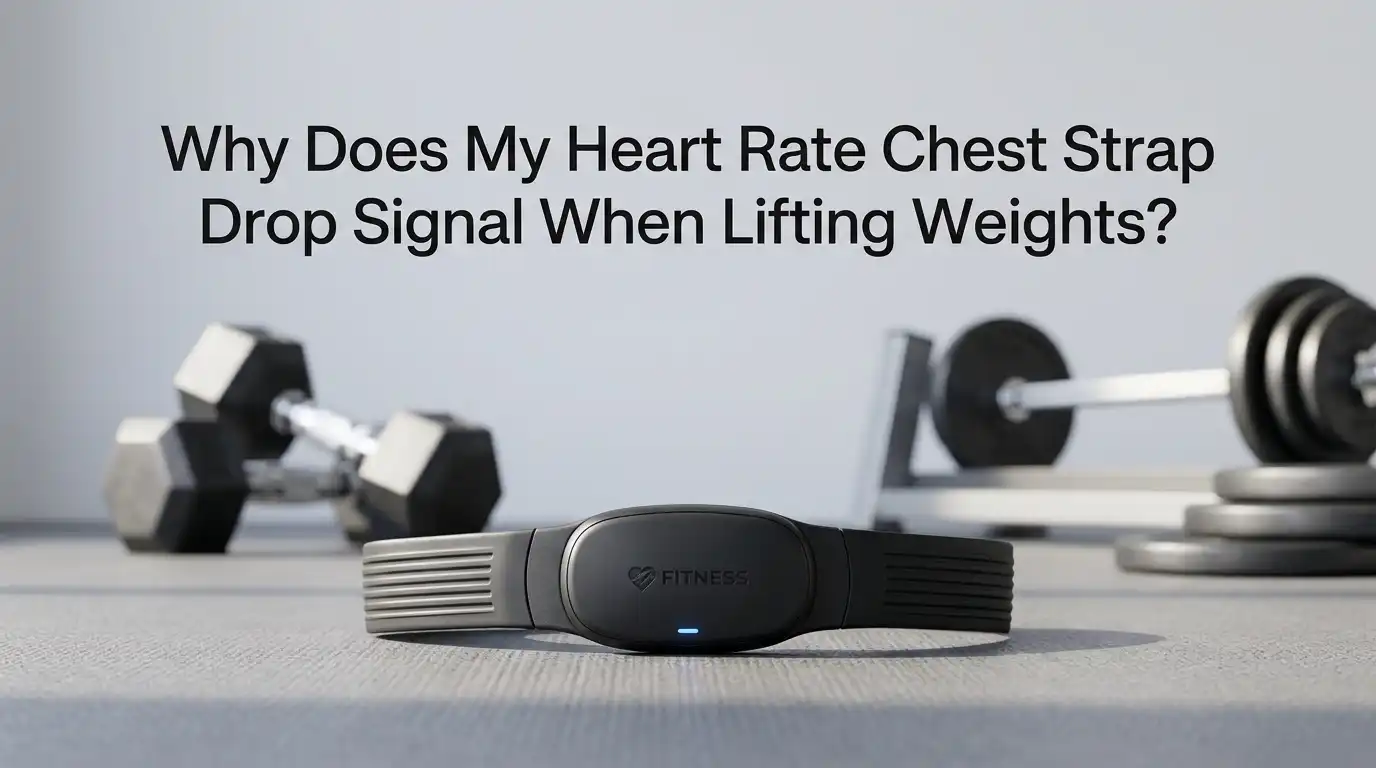
Why Does My Heart Rate Chest Strap Drop Signal When Lifting Weights?
You finish a heavy set of squats, glance at your watch, and the heart rate reading shows a flat line or a wild number like 210 bpm. Sound familiar?
Chest straps are praised as the gold standard for accuracy, yet many lifters watch the signal vanish the moment they grip a barbell. The good news is that the problem is rarely a broken strap.
In most cases, the issue comes from sweat, fit, static, or radio interference, and each of these has a simple fix. This guide walks you through every cause and shows you exactly what to do about it.
In a Nutshell
- Dry electrodes are the number one culprit. A chest strap needs moisture to read your heart’s electrical signal. Wet the sensor pads before every workout, not just when you sweat heavily.
- Static electricity from synthetic shirts creates fake spikes and total dropouts. Cotton shirts and antistatic spray fix this fast.
- A loose or poorly placed strap slides during pressing, rowing, and overhead work. Tighten the band one notch and position it just below the pec line.
- Bluetooth and ANT+ interference from gym TVs, phones, and cable machines can scramble the signal. Switching channels or moving away from electronics restores the connection.
- Cadence lock and muscle artifact trick the strap into reading your rep tempo instead of your pulse. Replace the battery, clean the contacts, and check the strap for wear every six months.
What Actually Happens Inside Your Chest Strap
A chest strap is a tiny ECG machine. Two electrode pads on the inside of the band read the electrical pulse that travels through your chest each time your heart beats. The transmitter pod then sends that data to your watch over Bluetooth or ANT+.
This system works beautifully during running or cycling because your chest stays wet, warm, and still. Weight training breaks all three of those conditions. You start dry, your chest muscles flex hard, and you may hold your breath under load.
When any one of those electrodes loses skin contact for even a half second, the strap reports a gap. Your watch fills that gap with a guess, which is why you see drops, freezes, or impossible spikes.
Reason 1: Dry Skin and Dry Electrode Pads
Most signal drops in the first ten minutes of a lifting session come down to one thing. Your skin is dry. An ECG signal needs moisture to travel from your heart to the sensor.
Lifters often skip the warm up sweat that runners build naturally. You walk in cool, strap on the band, and start pressing. The pads have nothing to read.
Fix it like this. Run the two grey or ribbed sensor pads under the tap for five seconds. If you want a longer lasting solution, dab a small amount of conductive ECG gel or even saline contact lens solution on each pad before you wear it.
Pros: free, takes seconds, works for everyone.
Cons: water alone dries out quickly in air conditioned gyms, so you may need to reapply mid session.
Reason 2: Static Electricity From Your Shirt
Static is the silent killer of chest strap signals. Synthetic fabrics like polyester and nylon rub against the strap during every rep and build up a charge. That charge looks exactly like a heartbeat to the sensor, only much stronger.
You will notice this as random spikes to 180 or 200 bpm during sets, followed by long flat zeros. Cold gyms in winter make it worse.
The fastest fix is to wear a cotton or merino wool shirt on lifting days. If you love your performance tee, spray the inside of it with a household antistatic spray before you put it on. Some lifters also rub a thin layer of unscented lotion on the strap area to keep the skin slightly damp.
Pros of cotton: cheap, comfortable, eliminates static almost entirely.
Cons: cotton holds sweat and feels heavy by the end of a long session.
Reason 3: The Strap Is Too Loose or Too High
A chest strap that slides during a bench press will drop signal every set. The band needs to sit snugly just below your pectoral muscles, right at the bra line for women or about an inch under the nipples for men.
If you can slide more than two fingers between the strap and your skin, it is too loose. If it leaves a deep mark after thirty minutes, it is too tight and may restrict breathing.
Adjust it like this. Tighten it one notch at a time until it feels secure but allows full inhale. Pull the strap down slightly after warming up because it tends to creep upward.
Pros of a snug fit: solves most movement related dropouts instantly.
Cons: a very tight strap can chafe under heavy breathing during squats or deadlifts.
Reason 4: Sweat Washing Away Conductive Contact
This sounds backward, but too much sweat can be just as bad as too little. When sweat pools between the strap and your skin, it can cause the band to slip and break electrode contact during pulling movements.
You will see this later in a workout, usually after twenty minutes of hard sets. The signal was fine, then suddenly cuts out during rows or pull ups.
Fix it by wiping the strap area with a small towel between heavy sets. You can also choose a strap with a silicone grip strip on the inside, which holds position even when soaked.
Pros of wiping and silicone straps: keeps contact stable for the whole session.
Cons: extra step between sets, and silicone straps cost more than basic elastic bands.
Reason 5: Bluetooth and ANT+ Interference in the Gym
Modern gyms are radio frequency soup. Treadmill consoles, cable machines, smart mirrors, phones, and other people’s watches all broadcast on the same 2.4 GHz band as your chest strap.
If your signal drops only in certain corners of the gym, interference is the cause. The dead zone is often right next to the cardio deck or near a wall mounted TV.
Try these steps in order. Pair your strap directly to your watch using ANT+ instead of Bluetooth if both are supported, since ANT+ handles crowded environments better. Move at least ten feet away from large electronics between sets. Restart your watch if the dropout persists.
Pros of ANT+: more stable in crowded spaces, supports multiple device connections.
Cons: not all phones and watches support ANT+, so Bluetooth is sometimes your only choice.
Reason 6: Cadence Lock and Muscle Artifact
When you contract your chest, lats, or abs hard, those muscles produce their own electrical signal. The strap can mistake this muscle noise for a heartbeat, a phenomenon called muscle artifact.
In a few cases, the algorithm locks onto your rep tempo and reports a heart rate that matches how fast you are moving the bar. This is unusual on chest straps but can happen.
The fix is to stop the activity, take a slow breath, and let the strap recalibrate for about ten seconds before your next set. Replacing the battery often helps because a weak battery amplifies noise. A fresh CR2032 cell makes a surprising difference.
Pros of a fresh battery: cheap, takes one minute, restores clean readings.
Cons: only a temporary fix if the strap itself is worn out.
Reason 7: A Worn Out Strap or Dirty Contacts
Chest straps do not last forever. The elastic stretches, the snap contacts oxidize, and the electrode pads lose conductivity after about one to two years of regular use.
Look at the inside of your strap. If the sensor pads are cracked, peeling, or shiny smooth, they are done. If the metal snaps where the pod attaches show green or white corrosion, that is the source of your dropouts.
Clean the snaps with a cotton swab dipped in rubbing alcohol. Wash the fabric strap in mild soap and rinse well, never use fabric softener because it coats the electrodes. Replace the strap portion every twelve to eighteen months. The transmitter pod itself usually lasts five years or more.
Pros of replacing the strap only: low cost, fast, restores like new performance.
Cons: easy to forget, and many users replace the whole unit unnecessarily.
Reason 8: Breath Holding and the Valsalva Maneuver
When you hold your breath during a heavy lift, you perform what is called the Valsalva maneuver. This briefly raises your blood pressure, then drops it sharply when you exhale.
Your real heart rate can swing fifteen to twenty beats in a couple of seconds during this process. The strap reports the change accurately, but it looks like an error.
This one does not need a fix because the data is correct. Just know that sudden drops right after a max effort set are often physiology, not equipment failure. If you want smoother data, breathe more rhythmically through your reps when training submaximally.
Pros of understanding this: stops you from chasing a fake problem.
Cons: makes interpreting average heart rate during powerlifting style sessions less straightforward.
Step by Step Troubleshooting Routine Before Every Workout
Here is a simple pre lift checklist that solves about ninety percent of strap problems. Do this once, and most dropouts disappear.
First, wet both electrode pads with water or a drop of gel. Second, position the strap just below your pecs and snug it one notch tighter than feels normal. Third, put on a cotton shirt or spray antistatic on a synthetic one. Fourth, confirm the strap is paired to your watch and showing a steady reading before you start.
If the signal still drops, replace the battery and clean the snap contacts. Test the strap on a treadmill walk to rule out hardware failure before blaming weightlifting specifically.
Pros of a routine: catches every common cause in under two minutes.
Cons: requires discipline to do it every single session.
Alternative Sensor Placements That Work Better for Lifting
If chest straps keep failing you, you have options. An upper arm optical band, worn on the bicep or tricep, gives readings nearly as accurate as a chest strap for most lifters. The arm moves less than the chest during pressing, so contact stays stable.
A forearm band is another solid choice. Worn just below the elbow, it avoids the wrist flexion that ruins watch readings during barbell work.
Pros of arm bands: more comfortable, no static issues, no electrode wetting, accurate during strength work.
Cons: slightly slower to respond to fast heart rate changes than ECG, battery life is shorter, and they cost more than basic chest straps.
For HRV tracking or zone two training, stick with the chest strap. For pure lifting sessions, an arm based optical sensor is often more reliable.
When the Problem Is Actually Your Watch, Not the Strap
Sometimes the strap is innocent. The receiver, your watch, can be the weak link. Watches placed on the wrist of the arm doing the lifting often lose Bluetooth connection because your forearm muscles block the signal.
Try wearing your watch on the opposite wrist, or rotate the face to the inside of your wrist so the antenna points toward the strap. Update the watch firmware regularly because dropout fixes are often included in software updates.
If you use a phone app to record workouts, keep the phone within six feet and out of a metal locker. Concrete walls and steel racks block radio signals.
Pros of checking the watch: solves a hidden cause many people never consider.
Cons: not always possible to switch wrists if you wear other equipment.
Frequently Asked Questions
Why does my heart rate read zero only during bench press?
The bench press flattens your chest muscles against the strap and can push it out of position. Tighten the band one notch and shift it slightly lower on your ribcage before benching. Wetting the pads helps too.
Can I wear my chest strap upside down for better contact?
Some lifters do, especially women who find the natural position uncomfortable. As long as both electrode pads stay in contact with skin, the strap reads correctly. Just make sure the transmitter pod logo orientation matches what your watch expects, or readings may invert.
Is an arm band really as accurate as a chest strap?
For steady state cardio, chest straps still win. For weightlifting, a quality optical arm band often performs better because it avoids the static and contact issues that plague chest straps during lifts.
How often should I replace the battery in my chest strap?
Most CR2032 batteries last about a year of regular use. If you see signal drops, weak Bluetooth pairing, or random spikes, replace the battery first. It is the cheapest and most effective fix.
Will sweat permanently damage my chest strap?
No, but dried salt residue degrades the electrodes over time. Rinse your strap in cool water after every workout and let it air dry. Never put it in a washing machine or dryer unless the manufacturer says it is safe.
Why does my heart rate spike to 200 during deadlifts?
That spike is almost always static electricity from your shirt or the strap losing contact momentarily. Switch to a cotton shirt and wet your electrodes before your next session, and the spike should disappear.

Hi, I’m Sarah Hill — the founder and voice behind Heavy Lift Vault. I’m passionate about fitness, strength training, and health technology. I spend my time researching, testing, and reviewing workout equipment and health devices so you don’t have to guess. My goal is to deliver honest, detailed, and trustworthy reviews that help you invest wisely in your fitness journey.