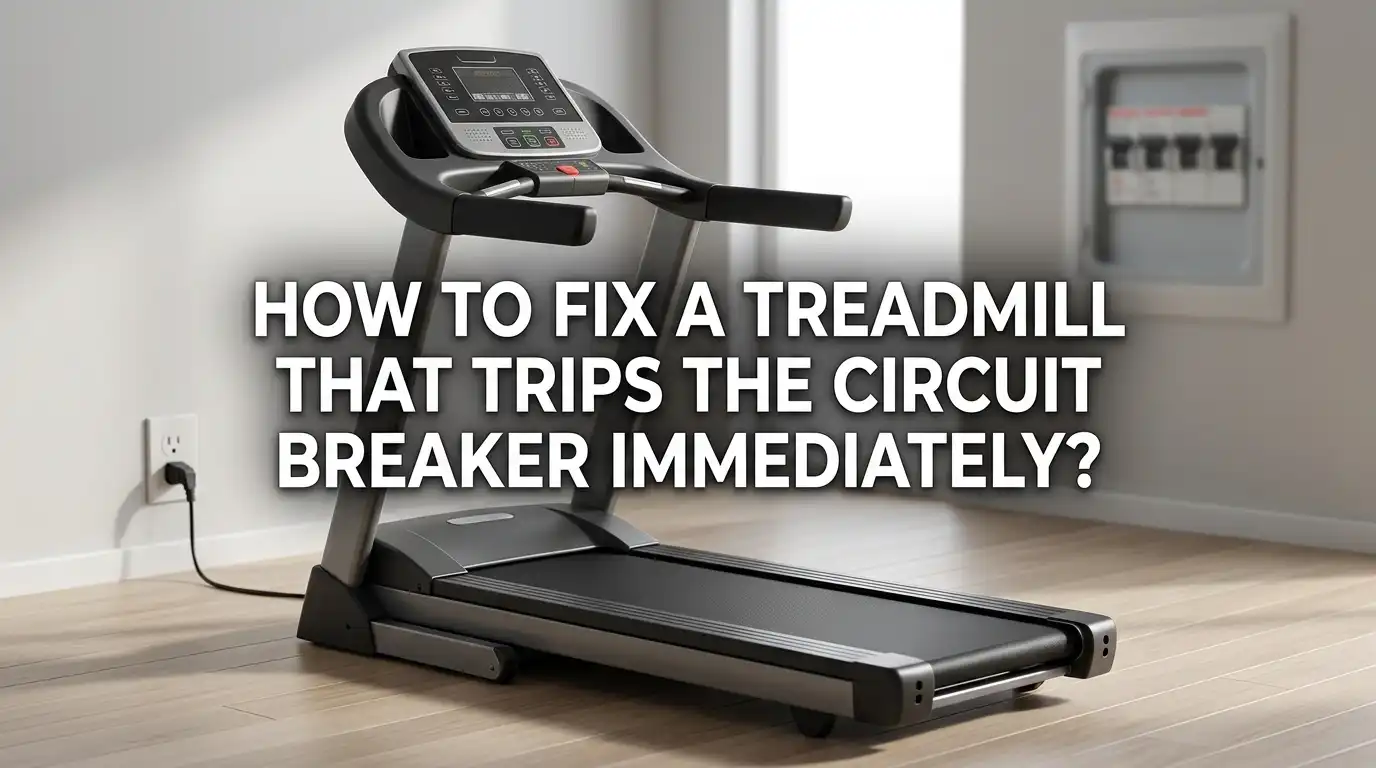
How To Fix A Treadmill That Trips The Circuit Breaker Immediately?
You step on your treadmill, press start, and the room goes dark. The breaker trips before the belt even moves. That sudden snap is frustrating, and it feels like your machine just died on you.
The good news is that this problem usually has a clear cause. Most treadmills trip a breaker because of a short circuit, an overloaded outlet, a faulty power component, or a wrong wall setup. You can fix many of these issues yourself with basic tools and a little patience.
This guide walks you through every likely reason and gives you simple steps to test and repair each one. You will learn how to spot a dead short, check your wall circuit, inspect the motor, and decide when a part needs replacing. Let us get your treadmill running again.
Key Takeaways
- A breaker that trips instantly almost always means a short circuit. A short pulls a huge amount of current in a split second, and the breaker cuts power to protect your home. This is different from a breaker that trips after a few minutes of running.
- The power cord and inlet are the easiest places to start. A pinched, frayed, or crushed cord can create a direct short. Inspect it first because it costs nothing and takes only minutes.
- Treadmills need a dedicated circuit. Sharing an outlet with other appliances overloads the line. A 20 amp dedicated circuit is the safest choice for most home machines.
- The motor control board is a common failure point. Burned MOSFETs, blown diodes, or shorted capacitors on the board can trip the breaker the moment you power on.
- A bad motor can short internally. Worn brushes, damaged windings, or a seized rotor force the motor to draw excessive current.
- GFCI and surge protectors can cause false trips. Treadmill motors create electrical noise that fools these devices. Plugging directly into a standard dedicated outlet often solves it.
Why A Treadmill Trips The Breaker Immediately
When a breaker trips the instant you turn on the treadmill, the cause is rarely a slow overload. Instead, a dead short or a failed power component sends a massive current spike through the line. Your breaker senses this spike and shuts off in a fraction of a second to prevent fire or damage.
This is your home protecting itself, which is a good thing. An immediate trip points you toward the electrical heart of the machine, not the belt or deck. The short usually sits in the cord, the power inlet, the control board, or the motor itself.
Understanding this narrows your search right away. You can stop guessing and start testing the parts that actually carry high current. The rest of this guide follows that path step by step.
Stay Safe Before You Touch Anything
Electricity is serious, so safety comes first every single time. Unplug the treadmill from the wall before you open any panel or inspect any wire. Wait a few minutes after unplugging because capacitors on the control board can hold a charge.
Never work on a powered machine, and never touch internal parts with wet hands. Keep one hand in your pocket when probing live areas, though you should avoid live testing whenever possible.
Use insulated tools and wear safety glasses. If you smell burning, see scorch marks, or notice melted plastic, stop and consider professional help.
If you do not feel comfortable with electrical work, that is completely okay. A repair tech or electrician can handle the risky parts. Your safety matters far more than a quick fix.
Step One: Inspect The Power Cord And Plug
The power cord is the first suspect because it takes the most physical abuse. A cord that runs under the treadmill or against a wall can get crushed, pinched, or frayed over time. Damaged insulation lets the hot wire touch the neutral or ground, which creates a direct short.
Unplug the machine and run your hands along the full length of the cord. Look for cuts, melted spots, kinks, or exposed copper. Check the plug prongs for burn marks or looseness. Wiggle the cord near both ends where breaks often hide.
If you own a multimeter, set it to continuity and test the cord end to end. A reading between the hot and ground pins means the cord is shorted and needs replacing.
Pros: Cheap and quick to check, and a new cord is inexpensive.
Cons: A hidden internal break can be hard to spot by eye alone.
Step Two: Test Your Wall Outlet And Circuit
Sometimes the treadmill is fine and the wall is the problem. An outlet shared with other appliances can overload the circuit and trip the breaker. Refrigerators, space heaters, and microwaves draw heavy current and leave little room for a treadmill motor.
Try plugging the treadmill into a different outlet on a separate circuit. If the breaker holds, your original line was simply overloaded. You can also unplug everything else on that circuit and test again.
Check the breaker itself too. A weak or aging breaker can trip below its rated load. An electrician can confirm whether the breaker is faulty.
Pros: Easy to test, and the fix may cost nothing.
Cons: A truly overloaded home may need a new dedicated circuit, which involves an electrician.
Step Three: Set Up A Dedicated Circuit
Most treadmill makers tell you to use a dedicated circuit, and there is a strong reason for that advice. A treadmill motor can pull close to the full capacity of a standard line, especially at startup. When anything else shares that line, the combined draw trips the breaker.
A dedicated circuit means one outlet wired directly to its own breaker, with nothing else attached. A 20 amp dedicated circuit gives most home treadmills plenty of headroom. Many commercial machines require it and even use a special plug with one horizontal prong.
A licensed electrician can install this for you. It removes overload trips for good and protects your machine.
Pros: Permanent fix that stops overload trips and extends motor life.
Cons: Costs money and requires a professional, since it involves panel and wiring work.
Step Four: Remove GFCI And Surge Protectors
Many people plug a treadmill into a GFCI outlet or a surge protector, thinking it adds safety. Treadmill motors produce electrical noise and tiny leakage currents that fool these devices into tripping. This is a false trip, not a real fault.
Try plugging the treadmill straight into a standard wall outlet on a dedicated circuit. If the trips stop, the GFCI or surge strip was the cause. Power strips and extension cords also drop voltage and add resistance, which stresses the motor.
If your local code requires GFCI protection, an isolation transformer can sometimes solve the noise problem. Talk to an electrician about safe options.
Pros: Often an instant fix that costs nothing to test.
Cons: You may lose surge protection, and code rules can limit your choices.
Step Five: Check For A Dead Short In The Internal Wiring
If the cord and wall check out, open the motor hood and look inside. A dead short often hides where internal wires connect the inlet, the on off switch, and the control board. Vibration over years can loosen or chafe these wires until bare metal touches metal.
Unplug the machine first. Inspect every wire for melted insulation, loose terminals, or wires resting against the metal frame. Look closely at the power inlet module, since a cracked solder joint or burned terminal there can short instantly.
Use a multimeter on continuity to check between the hot input and the ground or frame. A beep means a short you must trace and fix.
Pros: Finds faults the outside inspection misses, and many fixes are simple reconnections.
Cons: Requires opening the machine and reading a multimeter, which takes some skill.
Step Six: Inspect The Motor Control Board
The motor control board, or MCB, is the brain that feeds power to the motor. When a MOSFET, diode, capacitor, or bridge rectifier on this board fails, it usually fails as a short. That short trips the breaker the moment power flows.
With the machine unplugged, pull the board and look it over. Burn marks, swollen capacitors, cracked components, or a strong burnt smell point straight to a board fault. You may even see a blackened spot near the power input section.
Test the large power components with a multimeter in diode mode. A MOSFET or rectifier reading near zero ohms in both directions is shorted and must be replaced.
Pros: A clear visual or meter result confirms the fault fast.
Cons: Component level repair needs soldering skill, and a full board swap can be costly.
Step Seven: Test The Motor For An Internal Short
The motor itself can short and pull current that trips the breaker right away. Worn carbon brushes, damaged windings, or a burnt commutator create a low resistance path inside the motor. The result is a huge current spike at power on.
Unplug the treadmill and disconnect the motor wires from the control board. Measure the resistance across the motor terminals with a multimeter. A healthy DC motor shows a few ohms, while a reading near zero ohms signals a winding short.
Spin the motor pulley by hand. It should turn smoothly. A seized or grinding rotor forces the motor to stall and draw excess current.
Pros: Confirms whether the motor or the board is the culprit, which saves wasted spending.
Cons: A shorted motor is often expensive, and replacement may cost as much as a new machine.
Step Eight: Isolate The Fault By Disconnecting Parts
When you cannot pinpoint the short, a process of elimination works well. Disconnect the motor from the control board, then power on the treadmill briefly. If the breaker no longer trips with the motor unplugged, the motor or its wiring holds the fault.
If the breaker still trips with the motor disconnected, the control board or input wiring is the problem. This simple split tells you which half of the machine to focus on next.
Always unplug the treadmill before connecting or disconnecting any part. Only apply power for a moment to observe the result, then unplug again.
Pros: Cuts your search in half and needs no special tools.
Cons: Brief powered testing carries some risk, so work carefully and never linger on a live circuit.
Step Nine: Address Inrush Current On Older Machines
Some treadmills trip the breaker only on the very first start after sitting idle. DC treadmill motors draw a big inrush current at startup because the still rotor offers almost no resistance. That brief surge can be enough to trip a sensitive or aging breaker.
A healthy machine limits this surge with a soft start circuit on the control board. If that circuit weakens, the inrush spike grows and trips the breaker. This often signals a tiring control board rather than a hard short.
Make sure you start the treadmill at the lowest speed. A failing soft start usually means the control board needs service or replacement.
Pros: Explains intermittent trips that confuse many owners.
Cons: The real fix usually points back to a board repair, which is not always cheap.
Step Ten: Clean And Maintain To Prevent Future Trips
Good maintenance stops many electrical faults before they start. Dust and lint build up inside the motor hood and around the control board, trapping heat and inviting shorts. A clean machine runs cooler and lasts longer.
Unplug the treadmill and vacuum the motor area every few months. Lubricate the belt and deck as the maker suggests, since a stiff belt forces the motor to work harder and draw more current. Tighten loose wire connections you find during cleaning.
Keep the cord away from the moving belt and off sharp edges. Store the machine in a dry spot, because moisture raises the risk of shorts.
Pros: Cheap, easy, and prevents many problems entirely.
Cons: Takes regular effort, and it cannot reverse damage that has already happened.
Step Eleven: Know When To Call A Professional
Some repairs sit beyond a quick home fix, and that is perfectly normal. If you find a shorted motor, a burned control board, or panel wiring that needs work, a professional is the smart call. Electrical mistakes can cause fires or injury.
A certified treadmill technician can test components properly and source the right replacement parts. An electrician handles dedicated circuits, breaker swaps, and outlet faults safely. Both protect you and your home.
Weigh the repair cost against the price of a new machine. When a motor or board repair approaches half the cost of a replacement, buying new may make better sense.
Pros: Safe, reliable, and backed by expert knowledge.
Cons: Labor and parts add up, and a major repair may not be worth it on an old treadmill.
Step Twelve: Final Checklist Before You Restart
Before you power up again, run through a short checklist to confirm your fix. Make sure the cord is sound, the outlet is dedicated, and no GFCI or surge strip sits in the path. Confirm all internal wires are secure and no bare metal touches the frame.
Check that the control board shows no burn marks and the motor turns freely by hand. Reassemble the hood and tighten every screw. Then plug in and start at the lowest speed.
Stand clear and watch the first start closely. If the breaker holds and the belt moves smoothly, your repair worked. If it trips again, return to the part you suspect most.
Frequently Asked Questions
Why does my treadmill trip the breaker the instant I turn it on?
An instant trip almost always means a short circuit. The fault usually sits in the power cord, the input wiring, the motor control board, or the motor itself. A short pulls a huge current spike that the breaker cuts off at once to keep your home safe.
Can a treadmill share an outlet with other devices?
It is best not to share. Treadmills draw heavy current, especially at startup, and they can use most of a standard circuit on their own. Sharing the line with other appliances often overloads it and trips the breaker. A dedicated circuit is the safest setup.
Is it safe to plug a treadmill into a GFCI outlet?
It can work, but treadmill motors create electrical noise that often causes false GFCI trips. Many makers advise against GFCI outlets for this reason. A standard dedicated outlet usually solves the problem, though you should follow your local electrical code.
How do I know if my motor or my control board is causing the trip?
Disconnect the motor from the control board, then briefly power on. If the breaker stops tripping, the motor is at fault. If it still trips with the motor unplugged, the control board or input wiring holds the short.
Can I fix a shorted motor control board myself?
You can if you have soldering skill and can read a multimeter. Look for burned MOSFETs, blown diodes, or swollen capacitors, then replace them. Many owners simply swap the whole board, which is easier but more expensive. A technician can do this work safely.
Why does my treadmill only trip on the first start after sitting idle?
This points to inrush current. A DC motor draws a large surge at startup, and a weak soft start circuit on the control board lets that surge grow too big. It often means the control board is tiring and may need service.
Should I repair or replace a treadmill that keeps tripping?
Compare the repair cost to the price of a new machine. Cheap fixes like a new cord or a dedicated outlet are worth it. When a motor or board repair nears half the cost of a replacement, buying a new treadmill often makes more sense.

Hi, I’m Sarah Hill — the founder and voice behind Heavy Lift Vault. I’m passionate about fitness, strength training, and health technology. I spend my time researching, testing, and reviewing workout equipment and health devices so you don’t have to guess. My goal is to deliver honest, detailed, and trustworthy reviews that help you invest wisely in your fitness journey.