Why Is My Treadmill Belt Slipping Every Time I Step On It?
You hop on your treadmill, take one confident step, and the belt suddenly jerks, stalls, or slides out from under your foot. It feels alarming. It throws off your rhythm. Worse, it can make you trip.
If your treadmill belt slips every time you step on it, you are not alone, and the problem is rarely as serious as it feels. Most slipping comes from simple mechanical issues like loose tension, a dry deck, or a worn belt.
The best part is that you can fix many of these yourself in under an hour. This guide walks you through every cause and every solution, step by step, so you can get back to a smooth, safe workout fast.
In a Nutshell:
- Loose belt tension is the number one cause. When the running belt stretches over time, it stops gripping the deck and slips the moment your weight lands on it. A quick turn of the rear bolts often fixes this.
- A dry deck creates sticky friction. When lubrication wears off, the belt drags and hesitates. Adding 100% silicone lubricant restores smooth motion and protects your motor.
- A worn belt cannot be saved by adjustments. If the underside looks shiny and smooth instead of textured, the belt has lost its grip and needs replacing.
- Drive belt and roller problems hide inside the motor cover. If your treadmill runs fine empty but stalls under weight, the drive belt or front roller pulley may be slipping.
- Always unplug first. Every fix in this guide starts with the same safety step. Power off, unplug, and remove the safety key before you touch anything.
- Know when to stop. Burning smells, tripped breakers, or grinding bearings mean it is time to call a technician instead of pushing forward.
What Actually Happens When Your Belt Slips
Your treadmill works through a simple chain of parts. The motor spins a drive belt, the drive belt turns the front roller, and the front roller pulls the running belt across the deck.
When any link in this chain loses its grip, the belt slips. Slipping always means something is interrupting the smooth contact between the belt, the deck, and the rollers.
You feel it most when you step on, because your body weight adds load that the weakened part cannot handle. The treadmill might run perfectly fine with nobody on it.
Then your foot lands, the belt hesitates, and you lurch forward. Understanding this chain helps you find the exact part that needs attention, instead of guessing and wasting time.
Step One: Unplug and Stay Safe Before You Touch Anything
Safety comes first, every single time. A treadmill belt that moves while you work on it can crush fingers or pull in clothing. Always unplug the treadmill from the wall before you start.
Then remove the safety key so the machine cannot start by accident. Wait about thirty seconds for any stored electrical charge to clear from the control board. Clear the floor around the machine so you can reach the rear roller, the sides, and the motor area without leaning over clutter.
Grab a few basic tools: an Allen wrench (usually included with your treadmill), a flashlight, and a clean cloth. Wear shoes, not socks, since you may need to step on the belt to test it. Skipping these steps is how small repairs turn into injuries. Do not rush this part.
Step Two: Check the Belt Tension (The Most Common Culprit)
Loose tension causes more slipping than any other issue. Running belts stretch a little every time you use them. After months of workouts, the belt grows too loose to grip the deck, so it hesitates the moment your weight lands. Here is how to test it.
With the treadmill unplugged, lift the belt at the center of the deck. A healthy belt rises about two to three inches with moderate finger pressure. If it lifts much higher than that, the tension is too loose.
If the belt stalls when you push off while walking, that confirms the problem. This is the first thing to check because it costs nothing and takes only a few minutes. Most slipping cases end right here, with a simple adjustment.
Pros: Free to fix, fast to test, and solves the majority of slipping problems without any parts.
Cons: Tension can slip back over time if your belt is already worn, so it may only be a temporary fix on an old belt.
Step Three: Tighten the Rear Roller Bolts Correctly
Once you confirm loose tension, the fix is straightforward. Find the two adjustment bolts at the back of the treadmill, usually under plastic end caps on each side of the rear roller.
Some models use recessed Allen bolts, while others use external hex bolts. Insert the correct tool fully so you do not strip the bolt head. Turn each side a quarter turn at a time, and always tighten both sides evenly.
Uneven turns pull the belt off center. After each small adjustment, plug the treadmill back in, start it at a low speed, and walk carefully to test for slipping.
Repeat the quarter turn process until the belt feels secure and stops hesitating. Never crank the bolts hard in one go. Slow, even, small turns give you control and protect the belt from sudden strain.
Step Four: Avoid the Trap of Over Tightening
It feels tempting to keep tightening until the slipping stops completely. Resist that urge. An over tightened belt creates a whole new set of problems. When the belt is too tight, it lifts barely at all from the deck.
The motor strains harder under your weight, the front roller and bearings wear out faster, and the belt speed may even feel slower than normal. You might trade one problem for an expensive repair down the road.
The goal is a balanced belt, not the tightest belt. If you reach a point where the motor sounds labored or the belt barely moves under your hand, loosen each bolt slightly until the motion feels smooth again. Remember the target: the belt should lift two to three inches at the center, stay centered, and move without any pause.
Step Five: Lubricate the Deck to Stop Sticky Slipping
A dry deck is the second biggest cause of slipping. Over time, the silicone coating between the belt and the deck wears away. Friction builds, the belt drags, and you feel a sticky hesitation underfoot.
Heat can also collect under the surface, which damages both the belt and the deck. To check, unplug the machine, lift the belt near the center, and slide two fingers along the deck. A properly lubricated deck feels slightly slick. A dry, dusty, or clean surface needs lubrication.
To fix it, lift the belt slightly on one side and apply a thin line of 100% silicone lubricant from front to back. Repeat on the other side. Move the belt by hand to spread it, then run the machine empty at a low speed for one minute.
Pros: Cheap, easy, and it also extends the life of your belt and motor.
Cons: Using the wrong lubricant, like oil or grease, can ruin the belt, and some self lubricating or slat belt models should never be lubricated by hand.
Step Six: Inspect the Running Belt for Wear and Damage
Sometimes tension and lubrication are fine, yet the belt still slips. That points to a worn belt. A healthy running belt has a textured underside that grips the deck. When that texture wears smooth, the belt loses traction no matter how you adjust it.
Flip the belt and look for warning signs. A shiny or glazed underside means the grip is gone. Frayed or curling edges suggest uneven stretch. If one side feels noticeably thinner than the other, the belt has stretched unevenly.
Also look for dark streaks, burn marks, or grooves on the deck, which signal that the belt ran dry and hot for too long. Once a belt is glazed, burned, or stretched beyond spec, adjustments will not help. Replacement becomes the only reliable answer. Catching this early saves your deck from damage too.
Step Seven: Fix a Belt That Slips to One Side
A belt that drifts left or right loses even contact with the rollers. That uneven pressure causes hesitation and speeds up wear. Drift usually comes from uneven belt stretch, rear roller misalignment, or a treadmill that is not sitting level.
Here is how to correct it. Start the treadmill at a low speed, around one to two miles per hour, and watch which way the belt moves. If it drifts left, tighten the left rear roller bolt a quarter turn. If it drifts right, tighten the right bolt a quarter turn.
Let the belt run for several seconds after each turn so it can reposition. Repeat in small steps until it stays centered. Avoid overcorrecting, since turning too far pulls the belt too tight on one side and strains the rear bearings. If drift continues after several careful tries, the belt or roller may be worn.
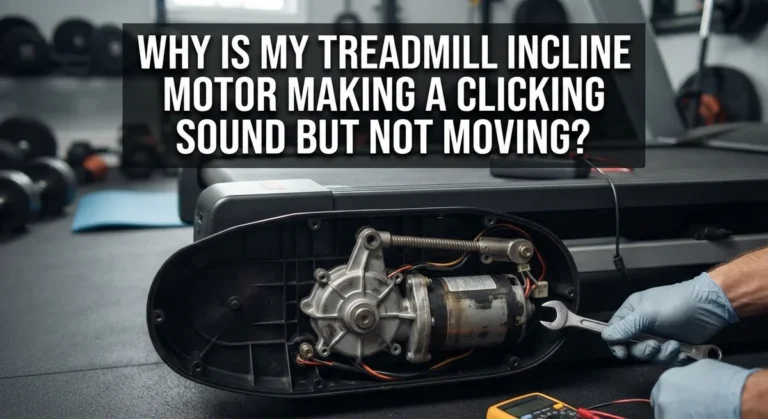
Step Eight: Check the Drive Belt Inside the Motor Cover
If your treadmill runs smoothly with nobody on it but slips the instant you step on, suspect the drive belt. This is the belt that transfers power from the motor to the front roller.
When it loosens or wears, it cannot hold torque under your weight. Here is a quick test. Step on the running belt while it moves. If the belt stops but the front roller keeps spinning, the drive belt is slipping or worn.
You may also hear faint squeaking near the motor, or notice weak and inconsistent speed. To inspect it, unplug the machine, let the power discharge, and remove the motor cover.
Press lightly on the drive belt. It should feel firm, not slack. On many models, you can loosen the motor mount bolts, slide the motor forward to add tension, and retighten.
Pros: Adjusting the drive belt restores strong, consistent power and is often a simple slide and tighten job.
Cons: It requires opening the motor cover, and a cracked or glazed drive belt must be replaced rather than adjusted.
Step Nine: Examine the Rollers and the Front Pulley
The rollers guide your belt and keep it gripping properly. The front roller transfers motor power to the running belt, while the rear roller keeps the belt aligned. When a roller gets dirty or its bearings wear, slipping follows.
Try this test. Step on the belt while it runs. If the running belt stops but the pulley on the front roller keeps turning, the pulley is loose on the roller and needs to be secured or replaced.
Watch for other clues too: rubbing or thumping sounds, debris coating the roller, or a wobble at the rear of the deck. Often a light dust buildup is the only problem.
Cleaning the roller surface with a dry cloth restores grip. But grinding, clicking, or a roller that resists turning by hand means the bearings are failing. That repair belongs to a technician, since bad installation causes belt misalignment.
Step Ten: Confirm You Are Within the Weight Limit
Here is a cause people often overlook. Even a perfectly maintained treadmill can slip if it is pushed near or beyond its maximum user weight rating. Every treadmill has a load limit set by the manufacturer.
When you exceed it, the deck flexes, the belt grips poorly, and the motor struggles to hold speed under your steps. The result feels exactly like a slipping belt, but no adjustment will fix it.
Check your owner’s manual or the serial tag, usually located near the motor housing or on the frame, to find your limit. Home treadmills often handle around 250 to 300 pounds, while commercial machines may support 400 pounds or more.
If you are close to your machine’s limit, slipping may simply be the treadmill telling you it has reached its design ceiling. A sturdier model would solve it.
Step Eleven: Handle the Plastic End Cap Problem on Budget Treadmills
Cheaper treadmills hide a sneaky cause of stubborn slipping. The tension bolts that hold the rear roller sometimes thread directly into plastic end caps instead of metal.
Over time, those bolts pull through the soft plastic. When that happens, no amount of tightening holds the tension, because the bolt simply spins or sinks deeper into the cracked plastic. You might tighten the belt perfectly one day, only to find it loose again the next.
This is one reason people complain that their belt slips even after they tightened it as far as it goes. The lasting fix is to install a metal reinforcement kit or replace the plastic end caps with sturdier ones.
Reinforcing the bolt anchor gives the tension something solid to hold against. If your belt refuses to stay tight no matter what, inspect those end caps closely for cracks or stripped threads.
Step Twelve: Watch for Electrical and Motor Control Issues
Most slipping is mechanical, but sometimes the cause hides in the electronics. The Motor Control Board, often called the MCB, regulates the power flowing to the motor. When it weakens, the treadmill may run fine empty yet stall the moment you add weight.
This mimics a mechanical slip, which makes it tricky to diagnose. Watch for telltale electrical signs: speed that surges or drops on its own, a strained humming from the motor, a burnt smell, or a breaker that trips during use.
You can safely do visual checks only. Unplug the machine, look under the motor hood for burnt spots, loose wires, or darkened areas on the board. Never test live voltage yourself.
Any work involving a multimeter or direct board contact carries shock risk and belongs to a trained technician. A failing MCB needs professional replacement matched to your exact model.
When to Stop and Call a Technician
You have tried the fixes, but some signs mean it is time to step back. DIY repair has limits, and pushing past them risks injury or bigger damage. Stop and call a qualified technician right away if you notice any of these warnings.
A burning smell or scorch marks inside the motor area signal overheating. A breaker that trips repeatedly points to an electrical fault. Grinding or clicking bearings mean the rollers are failing internally.
If the belt keeps slipping under your weight even after correct tension, lubrication, drive belt, and roller checks, the problem runs deeper than home tools can reach. Anything that requires voltage testing or motor control board replacement also belongs to a professional.
Knowing when to hand it over is not giving up. It is protecting both yourself and your machine. A good technician can also confirm whether repair still makes sense.
How to Prevent Slipping From Coming Back
Once you fix the slip, a little routine care keeps it from returning. Prevention is far easier and cheaper than repair. Lubricate the deck on a regular schedule, generally every three months for light use and monthly for heavy daily use, unless your manual says otherwise.
Check belt tension every month or two, since belts stretch slowly and quietly. Keep the deck and belt clean, because dust is one of the biggest killers of treadmill belts and reduces grip on the rollers. Wipe down the surface and vacuum around the motor area now and then.
Place the treadmill on a stable, level surface or a mat to cut vibration and protect the parts. Finally, stay within your weight rating and inspect the drive belt, pulleys, and rollers a couple of times a year. Small habits add years to your machine.
Frequently Asked Questions
Why does my treadmill belt slip only when I step on it?
This happens because the treadmill cannot hold torque once your weight adds load. The usual causes are a loose running belt, a slipping drive belt, or a worn belt that lost its grip. In some cases, a weakening motor control board fails to supply steady power. Start with tension and lubrication, then move inward to the drive belt and rollers if the slip continues.
How tight should a treadmill belt be?
A properly tensioned belt lifts about two to three inches at the center when you pull it up by hand. If it lifts much higher, it is too loose and will slip. If it barely lifts at all, it is too tight and puts extra strain on the motor and rollers. Always adjust both rear bolts evenly, a quarter turn at a time, until you hit that two to three inch range.
How often should I lubricate my treadmill?
Most standard treadmills need silicone lubrication every one to three months, depending on how much you use them. Heavy daily users may need it monthly. Always use 100% silicone lubricant and never oil or grease. Some commercial machines use self lubricating systems and slat belt models should never be lubricated by hand, so check your manual first if you are unsure which type you own.
Can a worn belt cause slipping even when the tension is correct?
Yes. A worn or glazed belt loses the textured underside that grips the deck. Once that texture is gone, the belt slips under your weight no matter how perfectly you set the tension. Flip the belt and look at the underside. If it looks shiny and smooth instead of rough, adjustments will not save it. Replacement is the only reliable solution at that point.
Is it safe to keep running on a slipping belt?
No. A slipping belt can suddenly hesitate or stall mid stride, which throws off your balance and can cause a fall. Stop using the treadmill until you find and fix the cause. Running on it risks both injury to you and further damage to the belt, deck, and motor. Diagnose the problem first, apply the right fix, then test it carefully at a low speed before any real workout.
Why does my belt stay loose even after I tighten it all the way?
This often points to tension bolts that have pulled through plastic end caps, a common flaw on budget treadmills. The bolt loses its anchor and cannot hold tension. Inspect the rear end caps for cracks or stripped threads. The lasting fix is a metal reinforcement kit or sturdier end caps. A worn belt that keeps stretching can also cause this, so check the belt condition too.

Hi, I’m Sarah Hill — the founder and voice behind Heavy Lift Vault. I’m passionate about fitness, strength training, and health technology. I spend my time researching, testing, and reviewing workout equipment and health devices so you don’t have to guess. My goal is to deliver honest, detailed, and trustworthy reviews that help you invest wisely in your fitness journey.