
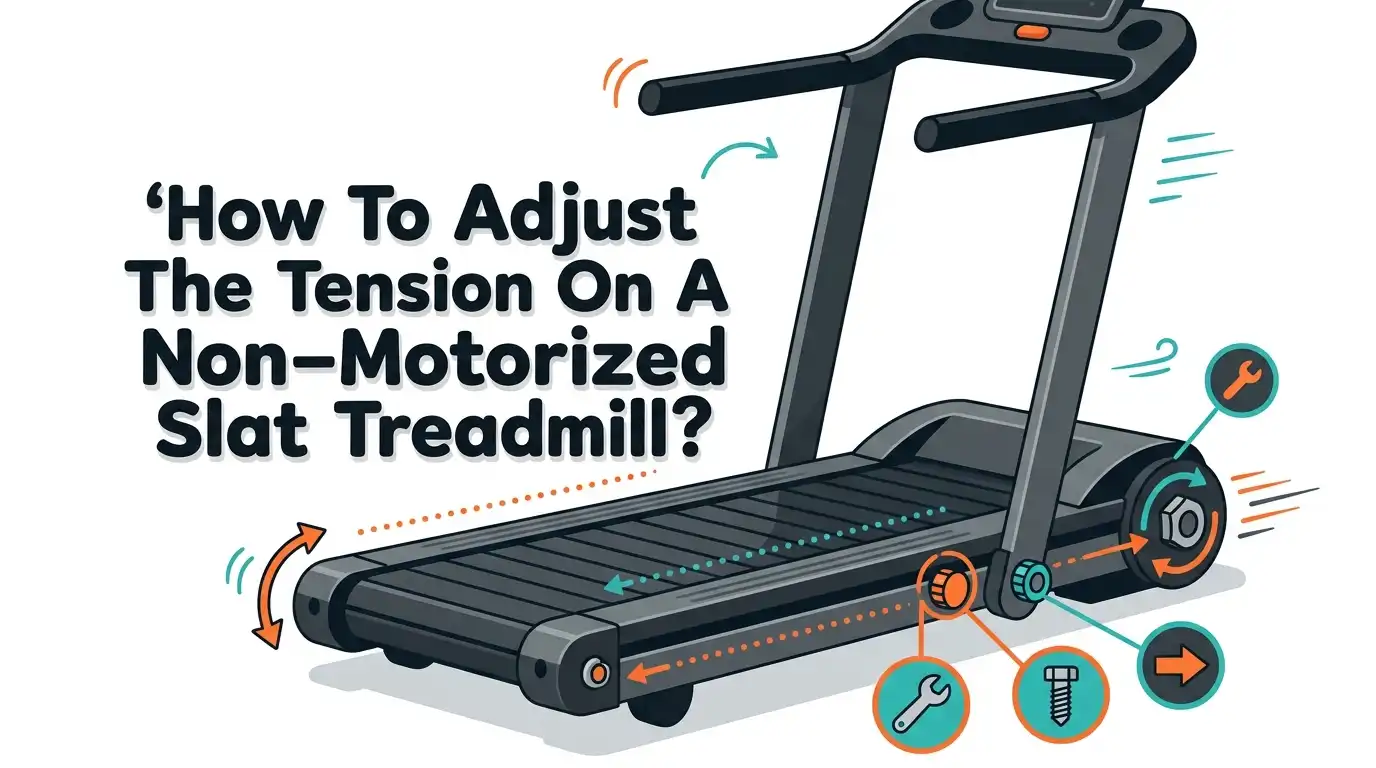
How To Adjust The Tension On A Non-Motorized Slat Treadmill?
Running on a non-motorized slat treadmill feels different from any other machine. You power every step yourself.
The slat belt rolls under your feet because you push it, not because a motor pulls it. But what happens when that belt feels too tight, too loose, or just plain wrong?
Tension problems can ruin your workout fast. A belt that drags slows you down. A belt that slips makes you stumble. Many owners feel stuck because slat treadmills work differently from standard belt machines.
In A Nutshell:
- Slat treadmills use slats, not a single belt. Each slat sits on toothed drive belts and rides on ball bearings. Tension on these machines means belt tightness and resistance level, not just one cable.
- Most tension fixes happen at the rear roller bolts. You turn the bolts with an Allen key in small, even amounts. Always work in quarter or half turns to avoid over tightening.
- Magnetic resistance is separate from belt tension. Many slat treadmills have a resistance knob or dial. This changes how hard you work, not how tight the belt sits.
- Lubrication and bearing care reduce unwanted drag. Clean, well kept bearings keep the belt smooth. A dirty system feels tight even when the bolts are correct.
- Small changes beat big ones. Adjust a little, test, then adjust again. Rushing the job often makes the problem worse and can damage parts.
- Safety always comes first. Unplug nothing because there is no motor, but still keep hands clear of moving parts and follow your manual.
What Tension Means On A Non-Motorized Slat Treadmill
The word tension confuses many owners. On a slat treadmill, tension can mean two different things. The first is the tightness of the slat belt around the rollers. The second is the resistance level that makes your run harder or easier.
Belt tightness affects how the slats move under your feet. A loose belt may sag or shift sideways. A tight belt may drag and waste your energy.
Resistance comes from a magnetic brake or a friction system on many models. This setting controls effort, not belt position. Knowing the difference helps you fix the right problem.
Many people adjust the wrong part and feel frustrated. Once you understand these two ideas, the rest of the process becomes clear and simple.
Why Tension Matters For Your Workout And Your Machine
Correct tension does more than feel nice. It protects your body and your treadmill. A belt with the right tension gives you smooth, steady steps. Your stride stays natural, and your joints take less stress.
Poor tension creates real problems. A loose slat belt can slip mid stride and cause a fall. A belt that sits too tight forces the bearings to work harder. This shortens the life of your machine and adds extra noise.
Resistance tension matters too. The wrong level can make easy runs feel brutal or hard runs feel pointless. Good tension keeps your training consistent. When the belt and resistance both sit correctly, you get safe workouts and a machine that lasts for years. That balance is worth the small effort it takes.
Tools You Need Before You Start
Gather your tools first. This saves time and stops you from stopping halfway. Most slat treadmills need only a few simple items. You likely have some already.
Here is what helps most:
- Allen key or hex wrench set. Your machine usually comes with the correct size. Most rear roller bolts use a standard hex fitting.
- A clean, dry cloth. You use this to wipe slats and rails.
- Treadmill safe lubricant. Only use what your manual lists. Some slat systems use sealed bearings and need no oil at all.
- A flashlight. Good light helps you see bolts and bearings clearly.
- Your owner manual. Every brand sets bolts in slightly different spots.
Keep these items within reach. Working with the right tools prevents stripped bolts and wasted effort. A small toolkit makes the whole job faster and far less stressful.
How To Check Your Current Belt Tension First
Never adjust before you check. Checking shows you what the belt actually does. Start with the treadmill still and your hands clear of the slats. Look at the belt from the side and the rear.
First, watch for sag. Lift one slat gently near the middle. If it rises far off the deck rails, the belt may be loose. A small amount of lift is normal on slat machines.
Next, walk slowly on the belt. Notice any slipping, catching, or sideways drift. A belt that pulls to one side often needs alignment, not just tightening.
Finally, listen. A loud grinding sound points to bearing drag, not belt tension. This simple check tells you whether you face a tightness problem, an alignment problem, or a resistance problem before you touch a single bolt.
Step By Step Guide To Adjusting Belt Tension
Now you adjust the belt. Work slowly and stay patient. Most slat treadmills set tension at the rear roller bolts on each side. These bolts sit at the back of the frame.
Follow these steps:
- Locate both rear bolts. Use your flashlight and find the matching bolts on the left and right.
- Turn in small amounts. To tighten, turn each bolt clockwise a quarter turn. Always match both sides so the belt stays even.
- Test after each turn. Walk slowly and feel the change.
- Repeat as needed. Add small turns until the slip or sag goes away.
To loosen a tight belt, turn the bolts counterclockwise instead. Never force a stiff bolt. Even, gentle turns give you a centered, smooth belt without strain on the bearings or the frame.
Pros and Cons of rear bolt adjustment: The clear benefit is full control over belt tightness with simple tools, and the method works on almost every slat model. The drawback is that uneven turns can cause drift, and over tightening stresses the bearings, so this method rewards patience and punishes rushing.
How To Adjust The Magnetic Resistance Level
Many slat treadmills include magnetic resistance. This system changes effort, not belt position. You usually find a knob, dial, or lever near the front frame or handlebar. Some models offer six to twenty levels.
To adjust it, turn the dial toward the higher number for more resistance. Turn it toward the lower number for an easier feel. The magnet moves closer to the flywheel as you raise the level. This creates the extra drag you feel in your legs.
Test each level with a short walk. Find the setting that matches your goal. Lower levels suit long, steady runs. Higher levels suit sprint or sled style training. This adjustment needs no tools at all. It gives you fast control over workout difficulty without ever touching the belt bolts.
Pros and Cons of magnetic resistance adjustment: The strong advantage is instant, tool free control that lets you change difficulty mid workout. The downside is that not every slat treadmill includes this feature, and the system cannot fix a loose or drifting belt, so it solves effort problems but not tightness problems.
How To Fix A Belt That Drifts To One Side
Belt drift is common and easy to misread. A belt that pulls left or right is not always too loose. It often means the two rear bolts sit unevenly. One side has more tension than the other.
To fix drift, watch which way the belt moves. If it drifts right, tighten the right rear bolt by a half turn. If it drifts left, tighten the left rear bolt instead. Work in half turns only and test after each one.
Center the belt before you stop. A well centered slat belt rides evenly between the side rails. Drift left alone wears the slats and the guide system fast. This small correction keeps your belt straight and protects the bearings from one sided strain over time.
How Lubrication And Bearing Care Affect Tension
Sometimes a belt feels tight when the real issue is friction. Slat treadmills ride on many small ball bearings. Dirt, dust, and grime slow these bearings down. The added drag feels just like high tension.
Clean the rails and slats often with a dry cloth. Remove dust from the bearing tracks when you can see it. A clean system rolls far more smoothly. This alone can fix a belt that feels heavy.
Some slat machines use sealed bearings that never need oil. Others ask for a light lubricant on set parts. Always check your manual before adding any oil. Wrong lubricant can attract dust and make the problem worse. Good bearing care keeps the belt smooth and stops fake tension problems before they start.
Pros and Cons of lubrication and bearing care: The benefit is smoother motion and a longer machine life with very little cost. The risk is that the wrong product or too much oil can clog the system and attract dirt, so this method helps only when you follow your manual exactly.
Common Mistakes To Avoid When Adjusting Tension
Many owners make the same errors. Knowing them saves you time and trouble. The biggest mistake is over tightening the belt. A very tight belt strains the bearings and creates loud, harsh noise.
Another common error is adjusting only one side. This causes drift and uneven wear almost every time. Always match your turns on both bolts.
People also rush the process. They make big turns and test once. Small, slow changes give far better results. Big turns hide the real fix and often cause new problems.
Finally, some owners ignore the manual. Every brand sets bolts and resistance in slightly different ways. Skipping the manual leads to guesswork. Avoid these mistakes, and your adjustments will feel easy, safe, and effective from the very first try.
How Often Should You Check And Adjust The Tension
Routine checks keep your treadmill healthy. You do not need to adjust often, but you should inspect regularly. A quick weekly look catches small problems early.
For light home use, check the belt and resistance once a week. Look for sag, drift, or new noise. Many makers, such as Woodway, suggest weekly and yearly maintenance routines. Heavy users should check more often.
Adjust only when you notice a real change. Constant adjusting can do more harm than good. If the belt stays smooth and centered, leave it alone. Clean the slats and rails during each check to stop friction buildup. A simple habit of looking, wiping, and testing keeps tension correct. This light routine prevents most major problems and extends the life of your machine by years.
When To Call A Professional For Help
Some problems need expert hands. Knowing your limit protects you and your machine. Most tension fixes are safe to do at home. But certain signs point to deeper issues.
Call a professional if the belt still drifts after careful bolt adjustment. Constant drift can mean a bent roller or worn bearing. These repairs need special tools and skill.
Loud grinding that stays after cleaning is another warning sign. It often points to damaged ball bearings inside the frame. Forcing repairs here can cause more harm.
Also seek help if a resistance dial stops working or feels stuck. Magnetic systems use parts you should not open yourself. A trained technician fixes these safely. There is no shame in calling for help. Knowing when to stop saves money and keeps your warranty safe.
Final Thoughts On Keeping Your Slat Treadmill Smooth
Adjusting tension on a non-motorized slat treadmill is simpler than it looks. You now know the two kinds of tension and how to handle each one. Belt tightness lives at the rear bolts. Resistance lives at the dial.
The key is patience. Make small turns, test often, and keep both sides even. Clean your slats and bearings to stop fake tension from friction. These habits keep your belt smooth and your steps safe.
Check your machine each week and adjust only when needed. Most problems stay small when you catch them early. When a fix feels beyond you, call a pro without worry.
Treat your treadmill well, and it will reward you with years of strong, steady workouts. A little care today saves big repairs tomorrow. Now you are ready to run with confidence.
Frequently Asked Questions
Why does my slat treadmill feel harder than a normal treadmill?
Slat treadmills feel harder because you power every step yourself. There is no motor to move the belt for you. The curved or magnetic design adds extra resistance. Many runners find a slat machine more demanding than a standard belt treadmill at the same pace.
Can I over tighten the belt on a slat treadmill?
Yes, and you should avoid it. Over tightening forces the bearings to work too hard. This creates loud noise and shortens the life of your machine. Always turn the bolts in small amounts, match both sides, and test after each turn to find the right tension.
Do all slat treadmills have magnetic resistance?
No, not all of them do. Some slat treadmills rely only on the curved design for resistance. Others include a magnetic brake with several levels. Check your model or manual to learn which type you own. This tells you whether you can adjust resistance separately.
How do I stop my slat belt from drifting sideways?
Drift usually means uneven bolt tension. Tighten the bolt on the same side the belt drifts toward. Work in half turns only and test after each one. Center the belt between the side rails. Even, slow adjustment fixes most drift problems quickly and safely.
Does my slat treadmill need lubrication?
It depends on the model. Many slat treadmills use sealed bearings that need no oil. Others ask for a light lubricant on set parts. Always read your manual first. Using the wrong product can attract dust and create more drag, which feels like extra tension.
How often should I adjust the tension?
You should check weekly but adjust only when needed. Constant adjusting can cause more harm than good. Look for sag, drift, or new noise during each check. If the belt stays smooth and centered, leave it alone. Light, regular inspection keeps tension correct over time.

Hi, I’m Sarah Hill — the founder and voice behind Heavy Lift Vault. I’m passionate about fitness, strength training, and health technology. I spend my time researching, testing, and reviewing workout equipment and health devices so you don’t have to guess. My goal is to deliver honest, detailed, and trustworthy reviews that help you invest wisely in your fitness journey.