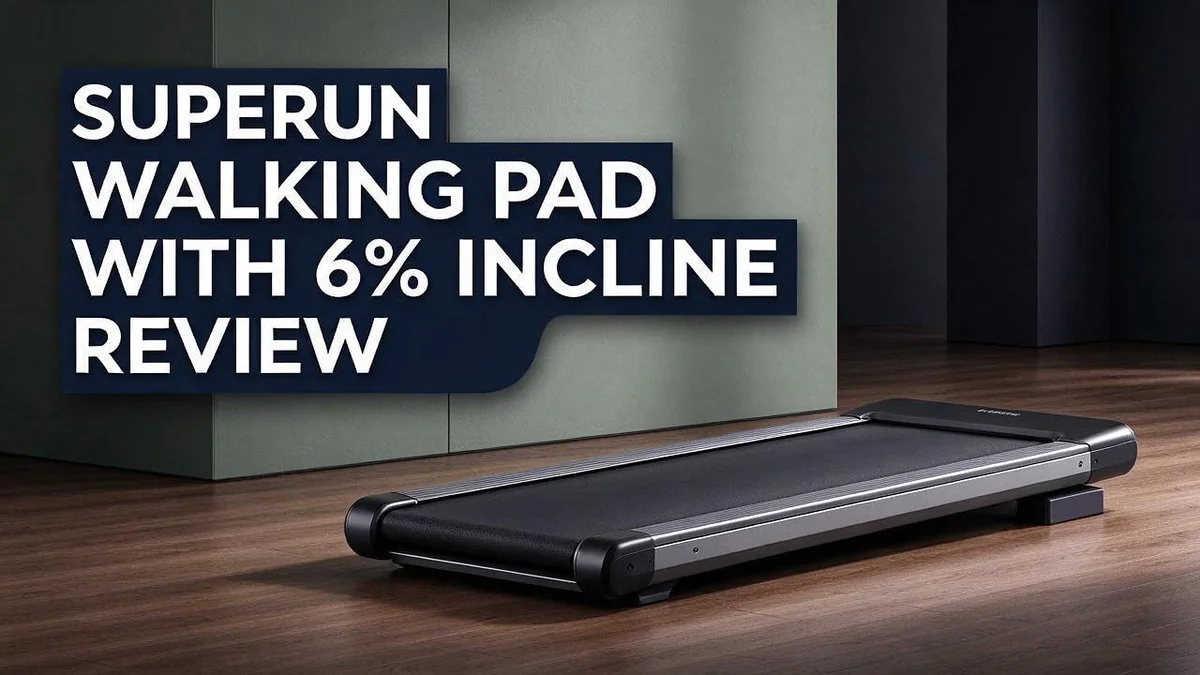
Superun Walking Pad with 6% Incline Review: Worth It?
Want to walk more without leaving home? The Superun Walking Pad with 6% Incline could be the easy fix you need. It is designed for small spaces, so it can fit in a quiet corner of your room.
Walking every day is simple, but busy schedules often get in the way. A walking pad lets you move at your own pace, indoors, rain or shine.
This model adds a 6% incline that may work your legs and glutes. The surface feels stable underfoot. Its 2.5HP motor runs quietly, so it will not disrupt a calm room.
Speeds range from a slow 0.6 MPH stroll to a brisk 3.8 MPH pace. You can control it with a remote or an app.
Keep reading to see what this walking pad does well and where it falls short.
In a Nutshell
- Quiet motor: The motor runs quietly, so you can walk during phone calls, reading time, or family time without filling the room with noise.
- Gentle on the knees: The belt feels stable and supportive underfoot, which many people find easier on their joints than brisk walks on hard outdoor surfaces or fast sessions on a gym treadmill.
- Compact design: This model fits small apartments, home offices, and tight corners, so you can keep it ready without rearranging your furniture every day.
- Easy controls: You can change settings with the included remote or the companion app, which makes starting and stopping a session quick and simple for beginners.
- Belt tracking concerns: Some owners report that the belt slips toward one side during use, so you may need to check alignment often and adjust the belt when needed.
- Motor doubts: One reviewer described the motor as weak and felt the overall quality fell short of expectations, so read several reviews before you decide.
Build and Belt Surface


Last update on 2026-10-29 / Affiliate links / Images from Amazon Product Advertising API
A sturdy build helps you feel confident from the first step. The frame sits low and stays put on the floor. This setup lets you focus on walking instead of wobbling.
The belt surface shapes how each step feels. It offers an even, flat path that feels predictable underfoot. Smooth movement matters most during longer walks.
Your shoes make a big difference on this kind of surface. Athletic shoes with good tread give you steady footing. Flat sandals or socks can slide more easily.
Placement matters more than many people think. Choose a flat floor without rugs or thick mats. Loose rugs can bunch up near the belt and disrupt your walk.
Keep the area clear before you start. Remove cords, toys, and stray items from the belt path. A clear zone lowers the chance of trips.
Cleaning helps the belt last longer. Dust and pet hair can build up underneath over time. Wipe the top surface and vacuum around the base each week.
Give yourself a short warm up. Start at a slow speed and step on only when the belt is moving. Increase speed gradually as you feel comfortable.
Stand on the side rails when you start and stop. This habit keeps your balance while the belt finds its pace. Step onto the belt only after you feel settled.
Think about how long you plan to walk each day. Short sessions need less from the belt, while longer walks test its surface more. Plan your sessions to match your comfort level.
Build a simple routine around the surface. Walk for ten minutes at first and add time over several days. Consistency helps your body adjust to the pace.
Overall, the build and belt give a solid foundation for home walking. A steady frame and even surface help you stay focused. Good habits make the experience even better.
Motor and Speed Performance
Motor power matters more than many buyers expect. The Superun uses a 2.5HP motor to drive the belt. That output gives the unit enough strength for everyday walking at home.
Not every reviewer feels the same way about the motor. One Reddit user called it weak. That opinion matters if you plan to walk at a brisk pace or use the incline often.
Speed control is where the motor shows its work. The belt starts slowly, which helps you find your footing before you pick up the pace. Smooth starts make the first few minutes feel less rushed.
Pick a pace that suits your current fitness. Beginners often do well with a gentle setting. Walkers who already move daily may enjoy the higher range once they feel confident.
Your floor also affects how the motor feels. A hard, flat surface lets the belt move freely, so the drive works less.
Heavier walkers should pay close attention to how the motor responds. Listen for changes in sound or belt speed during your first few sessions.
Watch the display during your first week. Note how the speed matches the number you selected. Consistent results suggest the motor runs as expected.
Long sessions tell you the most about performance. Run the belt for twenty minutes and notice whether the pace drifts. A steady belt usually means the motor handles your routine well.
Keep the motor cool by avoiding constant full speed. Short breaks give the unit time to rest. This habit may extend the life of the drive system over time.
Small changes in speed help the motor work smoothly. Avoid sudden jumps from slow to fast settings.
Overall, the motor and speed options suit casual and moderate walkers well. Serious athletes may want a machine built for faster paces. Think about your goals before you decide.
Incline Workout Benefits
Walking on an incline changes the workout in a useful way. The 6% setting asks your body to climb with every step.
Your legs and glutes do more work. The belt tilts up, so your calves, thighs, and glutes engage more than they do on flat ground. Many people feel this shift within minutes.
You get intensity without heavy impact. Running or jumping can strain joints. A gentle uphill walk keeps your feet on the belt while still raising your heart rate.
Think of incline as a dial for effort. You can keep the same speed and still work harder. That makes incline a simple way to progress without rushing your pace.
The brand claims a bigger calorie burn. The company says the incline can burn 30% more calories in 30 minutes. Your results depend on your body weight, your pace, and how long you stay on the belt.
Start low and build slowly. Try a short session at a comfortable pace with the incline on. Your calves may feel tight at first, so stretch after each walk.
A sample routine to try. Walk five minutes flat to warm up. Then walk ten minutes with the incline on at a steady pace. Finish with five minutes flat to cool down.
Incline walking also suits people who sit at desks all day. A few uphill sessions can break up long periods of sitting and wake up tired legs.
Consistency matters more than intensity. Three to five sessions each week can build strength over time. Keep a simple log so you can see your progress.
Over several weeks, many walkers notice stronger legs and better stamina. Pair your incline sessions with posture checks to keep your core engaged.
Listen to your body. Stop if you feel sharp pain, dizziness, or shortness of breath. Speak with a doctor first if you have joint or heart concerns.
Top 3 Alternatives
Urevo SpaceWalk

Last update on 2026-10-30 / Affiliate links / Images from Amazon Product Advertising API
The Urevo SpaceWalk is a great pick for people who want a compact option. It folds up easily, so it fits under a bed or inside a small closet. Its motor runs quietly, so it will not disturb people in other rooms.
It works well for light walking at home. People who work from a desk can use it while they answer emails or take calls. The belt feels smooth, and the deck gives enough room for steady steps.
Kingsmith WalkingPad

Last update on 2026-10-29 / Affiliate links / Images from Amazon Product Advertising API
The Kingsmith WalkingPad is known for its slim design and easy setup. It has a low profile, so it slides under most sofas and desks. Many shoppers choose it when they want a simple walking routine that fits a busy day.
It also offers a handy app connection. You can track your steps, speed, and time from your phone. This feature helps you stay motivated over the weeks.
Sperax Walking Pad

Last update on 2026-10-29 / Affiliate links / Images from Amazon Product Advertising API
The Sperax Walking Pad is a solid choice for everyday fitness. It has a sturdy frame and a wide walking surface. Users often say it feels stable even at higher speeds, which gives extra confidence.
Setup is quick and the controls are easy to learn. A remote or touch panel lets you change speed with one tap. It suits beginners and regular walkers alike, so the whole family can share it.
Remote and App Controls
Controls shape how your walk feels from start to finish. The Superun pad offers both a remote and an app. You can choose the option that fits your routine.
The remote feels simple and direct. You press buttons to change speed while you walk. Most people feel comfortable with it after a few sessions.
The remote works well for quick changes. You never need to look at a screen. Small taps keep your focus on your steps.
The app adds another layer. You can use your phone to manage the pad. Many walkers like checking their progress on a bigger display.
Connection matters more than many buyers expect. A steady link keeps commands responsive. If the signal drops, the pad may ignore your input.
Keep your phone close while you walk. This habit helps the app respond without delay. It also reduces frustration during longer sessions.
Set up both methods before your first walk. Pair the app and test the remote at a slow speed. This gives you time to learn each button.
Try switching between the remote and the app while the belt moves slowly. This practice builds confidence. You will know which method feels natural.
Safety deserves attention too. Keep the remote in a fixed spot near the frame. A remote that slides off the surface can cause a sudden stop.
Think about who else uses the pad. Shared homes often need clear controls. Family members should learn the start and stop buttons.
A quick demo prevents surprises. Show others how to stop the belt first. This simple step protects everyone in the room.
Flexible controls suit many people. Beginners often feel calm with the remote. Experienced walkers may prefer the app for tracking habits over time.
Overall, the remote and app give you useful options. Pick the method that matches your daily plans. Your walks will feel easier to manage.
Space, Capacity and Setup
Space comes first when you plan your walks. The Superun Walking Pad is designed for small spaces, so it fits well in a home office, a spare bedroom, or a quiet corner of the living room. Still, measure the area before you commit.
Clear space matters more than the pad itself. You need room to step on and step off safely. Keep extra space at both ends of the belt. Remove rugs, cords, and loose boxes from the walking path.
Think about what you will look at while you walk. Some people face a window for fresh light. Others prefer a wall so they stay focused on the belt. Choose the view that keeps you motivated.
Capacity is another key detail. The pad supports up to 300 pounds. Check that your weight stays well below that limit. Keep the belt free of bags or pets while you walk, so the limit applies only to you.
Setup starts with a flat and level surface. Uneven floors can make the belt drift. Some reviewers report the belt slipping to one side, so check alignment on day one. Follow the manual for belt tension and centering adjustments.
Place the pad near a power outlet. This keeps the cord away from the walking area. Route the cord along a wall so it never tangles near the belt edges. A surge protector adds another layer of safety for the electronics.
Add a mat under the pad to protect your floor. A mat also helps keep the area tidy and easy to clean.
Take a few minutes to test the setup before your first full session. Walk slowly and watch how the belt tracks. A simple check now makes every walk smoother later. Good preparation turns a small corner into a useful workout space.
Pros and Cons
Pros
- The walking surface feels stable and gentle on the knees.
- The belt grips well, so each step feels secure.
- The motor runs quietly, which suits early morning walks.
- The compact design fits into small rooms.
- The manual incline keeps the setup simple.
Cons
- Some owners report the belt drifting to one side.
- A few reviewers say the motor feels weak.
- Online feedback is mixed, so read several reviews.
- Speed ranges vary between listings, so check the exact specs first.
Who Should Buy It
Walking at home suits many people. This pad fits people who want to move more without leaving the house. It helps busy adults who struggle to find time for a walk outside.
Desk workers often sit for hours. A walking pad lets them move during calls, emails, or reading. Many people find this habit easier to keep than a gym visit.
Beginners who want a gentle start often enjoy this type of machine. They can build stamina at their own pace. Those returning to exercise after a long break may also appreciate a calm routine.
Rainy or cold weather no longer blocks daily steps. People who live in busy cities or noisy areas can walk indoors whenever they like. Parents with a free moment may also use it while kids nap.
Older adults may enjoy the steady pace and simple routine. Students and remote workers also benefit from short movement breaks at home.
Serious runners want speed and power. This pad serves walkers, not sprinters. Shoppers who want heavy strength training may need more equipment too.
Readers who value detailed tracking should check features first. Some people want heart rate data or long training plans. Those goals may need a different machine or a fitness watch.
Anyone with health conditions should talk with a doctor before starting.
Think about your schedule too. A short daily session often beats one long weekly visit. Start with fifteen minutes and see how your body responds. Consistency matters more than intensity for most beginners.
A quick check before you decide: Ask yourself three questions. Do I want to walk daily? Do I have a stable spot at home? Will I use the pad for at least a few weeks? If you answer yes, this walking pad may suit your routine well.
Final Verdict
The Superun Walking Pad is a solid choice for light, everyday walking. It handles gentle sessions well. It suits people who want to move more without leaving home.
Mixed feedback still deserves your attention. Reports of belt drift and a weak motor are real concerns. Ask yourself whether you can live with a few quirks in exchange for convenience.
Treat the calorie claim with care. The “30% more calorie burn in 30 minutes” figure comes from marketing, not independent testing. Your actual results depend on your pace, your body weight, and how often you use the pad.
Think of this pad as a habit tool, not a fitness machine. It helps you add steps to a normal day. It does not replace structured training or a sprint routine.
Check the return policy before you commit. A short trial window lets you test belt tracking and motor strength under your own conditions. Run it at your normal walking pace for several days before you decide.
Confirm the speed range too. Listings disagree on units, so verify the exact top speed with the seller. This small step prevents surprises after delivery.
Buy this pad if you want a simple walking option with minimal joint strain. Skip it if you need heavy duty power or detailed performance tracking. Your goals should guide the final call.
Set a simple weekly goal before you start. Aim for three short sessions in the first week. Build up slowly as the routine feels natural.
Keep a short log of your walks. Notes on time, speed, and how the belt behaves help you spot problems early. This record also shows whether the pad keeps you moving.
Consistency matters more than any single feature. A walking pad works best when it fits your daily schedule and sits in a spot you use often. If the pad passes your trial and stays steady, it can become a reliable part of your day.
Frequently Asked Questions
How much weight can this walking pad hold?
The pad supports up to 300 pounds. Check your body weight against this limit before you buy. Heavier users should look at a sturdier model.
Can I control the pad without leaving my seat?
Yes, the pad includes a remote and app controls. The remote works well for quick speed changes during a session. The app can help you track your movement over several days.
Does the 6% incline make walking harder?
The slope adds some effort for your legs and glutes. It does not add heavy impact to your joints. Begin with a gentle speed so the incline feels comfortable.
Can I use the pad while working at my desk?
Many people use it during calls or while reading. Keep the speed low so you can type or hold a phone with ease. Short sessions often fit a work day better than one long walk.
What should I look for before choosing this model?
Compare the speed range, weight limit, and return policy. Read several recent reviews, since owner feedback varies. A simple checklist helps you avoid surprises after delivery.

Hi, I’m Sarah Hill — the founder and voice behind Heavy Lift Vault. I’m passionate about fitness, strength training, and health technology. I spend my time researching, testing, and reviewing workout equipment and health devices so you don’t have to guess. My goal is to deliver honest, detailed, and trustworthy reviews that help you invest wisely in your fitness journey.


