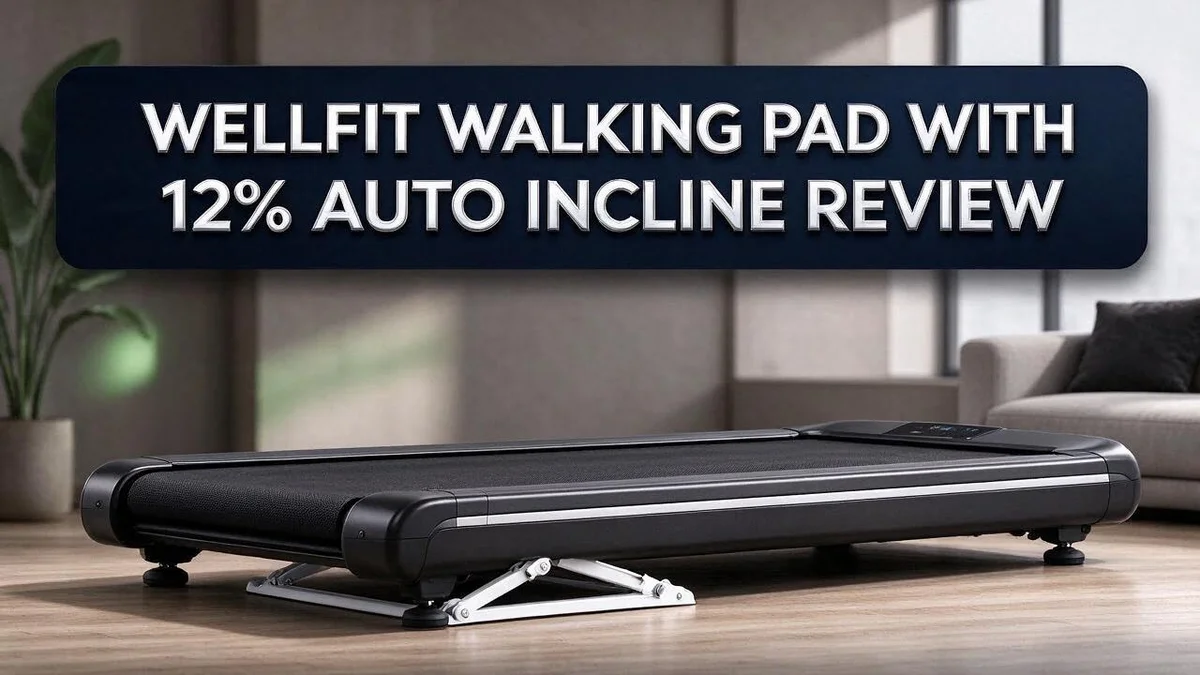
WELLFIT Walking Pad with 12% Auto Incline Review: Is It Worth It?
Are you looking for a simple way to get more from every walk? The WELLFIT Walking Pad with 12% Auto Incline could be the answer. It brings a hill climb feel right into your home office or living room.
The best part is the automatic incline. It rises up to 12% in six levels. Your workout gets harder without any speed changes. That means you can climb higher while keeping a calm, steady pace.
The unit also folds up easily. Storage is simple, so it fits into smaller spaces.
Still, every walker has different needs. Some owners report motor noise and frame creaking at higher speeds. Keep that in mind as you read on.
In this review, we break down the specs, the real pros and cons, and how it compares to its top rivals. Let’s find out if this walking pad fits your routine.
In a Nutshell
- Auto incline up to 12%: The walking pad adjusts its slope across six levels. Your walk gets harder while your speed stays the same.
- Compact fold flat frame: The unit folds flat for simple storage. It fits well in small homes or offices.
- Solid motor and large belt: One listing shows a 4 HP motor. The main belt measures 18″ × 45″ for comfortable strides.
- Possible noise issues: Some owners report a loud motor. A few also hear frame creaking at higher speeds.
- Belt alignment concerns: One Reddit user said the belt would not stay centered. Check the alignment before your first long session.
- Stronger sibling model: The WELLFIT TM037 Pro offers a 40″ belt and side handrails. It also has a higher weight capacity, which may suit heavier walkers.
Incline Workouts Without Speed Changes

Last update on 2026-10-29 / Affiliate links / Images from Amazon Product Advertising API
Incline changes how hard each step feels. Your walking speed stays the same, but your legs push uphill. This lets you work harder without rushing your pace.
Think of it like walking up a gentle hill. Your calves, glutes, and hips do more of the work. Your heart rate often climbs too.
Many people find flat walking easy after a few weeks. Their bodies adapt, and the workout stops feeling challenging. Incline offers a simple next step.
Here is an easy way to start. Choose a speed you already walk comfortably. Then raise the incline by one level. Walk for five minutes and notice how your legs feel.
A simple weekly pattern can help:
- Warm up for five minutes on flat ground.
- Raise the incline one level every few minutes.
- Hold that level for a short block.
- Lower the incline again to cool down.
Keep your posture upright. Look ahead instead of down at the belt. Relax your shoulders and let your arms swing naturally. Use the handrails for balance only.
Your body needs time to adjust. Start with lower levels for a week or two. Move higher only when your legs feel steady and strong.
Incline walking also works well on tired days. A gentle slope can feel better than a fast jog. You still earn a solid session without strain.
Tracking your progress keeps motivation high. Write down the level and time after each session. Over a month, you will see clear gains. Small notes make big changes visible.
This style suits many walkers. Beginners can use it to build strength. Experienced walkers can use it for extra challenge on a rainy day.
Listen to your knees and lower back. Stop if you feel sharp pain. Steady progress beats rushing to the top levels. Your body will thank you later.
Motor Strength, Noise, and Belt Stability
Motor strength decides how smoothly the belt moves. A strong motor keeps the speed steady when you walk on an incline. A weaker motor may slow down under load, which can make each step feel jerky.
Check the motor details on the listing before you buy. Think about how fast you plan to walk and how long each session will last. A brisk pace for thirty minutes asks more from the motor than a slow stroll.
Noise can change how you use the pad. Many people walk while watching shows or taking calls. A loud hum or rattle can pull your attention away from your music or your thoughts.
Place the pad on a thick mat. A mat absorbs vibration and cuts down on rattling. Keep the pad off bare tile when you can.
Tighten all bolts and screws every few weeks. Loose parts often cause creaking. A quick check keeps the frame quiet.
Walk at a moderate speed during your first sessions. Higher speeds bring out more motor and frame sound. You can increase your pace slowly once you know the sound level.
A centered belt protects your stride. When the belt drifts sideways, your feet may land off center. This can leave you feeling unsteady.
Check the belt position before each walk. Walk slowly for one minute and watch which edge moves. Note any drift to the left or right.
Many walking pads include an adjustment for belt tracking. Turn the adjustment bolts a quarter turn at a time. Test the belt again before you increase speed.
Keep the area around the pad clear. Cords, rugs, and pets can pull the belt off track. A clean space helps the belt run straight.
Stop the pad right away if the belt slips under your feet. Slipping can cause a fall. Recheck the tension and try again later.
Recheck the belt after the first week. Belts often stretch slightly during early use. Small fixes now prevent bigger problems later.
Foldability and Space Footprint
Space matters a lot before you bring a walking pad home. Many people use a corner of a living room or a spare bedroom. Think about where the pad will sit every day.
The fold flat design opens up room fast. You lift the front edge, then lower the deck until it rests upright against the wall. This takes only a few seconds once you know the motion.
Practice the folding steps a few times before your first use. Stand beside the pad, keep your back straight, and bend at the knees. Never lift with your back alone.
Check the height of the folded unit too. A tall upright pad may not fit under a low shelf or a sloped ceiling. Measure the space before you commit to a spot.
Measure the full footprint, not only the belt. The running area is about 18 inches wide and 45 inches long. Add room for the frame, the handrails, and your arms as you swing them.
Plan a safe clearance zone. Keep at least a few feet of open floor behind the pad. This gives you space to step off safely if you need to stop quickly.
Moving the pad is easier with a helper. Ask someone to hold the frame while you tilt it. Carry it slowly and keep your fingers clear of the hinges.
Protect your walls and floors. Leave a small gap between the folded frame and the wall. This stops scuffs and keeps the paint looking fresh.
Under desk models suit small offices. These slim designs slide beneath a standing desk. They fit well in spaces where a regular treadmill would never fit.
Look at your daily routine next. Think about how often you will fold and store the pad. Frequent folding means you want a spot that stays clear and easy to reach.
Choose a spot you can reach quickly. A pad that sits in a closet may stay unused. Keep it near your normal path so you walk more often.
Top 3 Alternatives
UREVO SpaceWalk


Last update on 2026-10-27 / Affiliate links / Images from Amazon Product Advertising API
The UREVO SpaceWalk suits people who want a compact walking option. It folds up easily, so it fits in small rooms.
Many users like its quiet motor and simple controls. You can walk while you work, watch shows, or take calls. Setup takes only a few minutes, so you can start right away.
Merach Walking Pad

Last update on 2026-10-27 / Affiliate links / Images from Amazon Product Advertising API
The Merach Walking Pad offers a simple setup for daily walks. Its slim frame slides under a bed or sofa when folded.
The remote control makes speed changes easy. Beginners often prefer its calm pace. Check the belt width if you have a longer stride.
Sperax Walking Pad

Last update on 2026-10-29 / Affiliate links / Images from Amazon Product Advertising API
The Sperax Walking Pad focuses on easy use and everyday comfort. Its low profile design suits small apartments.
The display shows time, distance, and steps at a glance. *New walkers can start slow and build up over time. The belt offers a smooth surface for brisk walks.
Assembly, Daily Use, and Price Value
Unboxing comes first. Lay every part on a clean floor. Count the pieces against the packing list before you begin.
Keep the manual nearby. Diagrams show which bolt goes where. Read each step once before you touch a tool.
Most builds need only basic tools. A wrench and a screwdriver usually cover the job. Ask a friend to hold the frame while you attach the handrails.
Plan about thirty minutes for the first build. Rushing leads to missed steps. Take short breaks when your hands feel tired.
Then test the controls before you walk. Power on the pad and press the start and stop buttons. Confirm the safety key clips firmly in place.
Daily use starts with a simple routine. Many people walk before breakfast or during a lunch break. Pick one time and stick with it for several days.
Pair the pad with a favorite podcast or playlist. Time passes quickly when your mind stays busy. Keep your phone on a stand within easy reach.
Use the remote to change incline levels during a session. Start with a low level, then raise it slowly. The six levels let you adjust effort without touching the speed.
Cooldown matters too. Walk slowly for a few minutes at the end. Then wipe the belt and side rails with a dry cloth.
Dust collects near the motor cover over time. Vacuum that area on a regular basis. Clean surfaces help the pad last longer.
Now consider the features you receive. The 12% auto incline offers six levels. That range gives hill-like effort on a flat floor.
Two models give you more choice. The standard pad uses an 18 by 45 inch belt. The TM037 Pro adds side handrails and a longer 40 inch belt for extra stability.
Read the spec sheet closely before you decide. Compare belt length, handrails, and weight capacity side by side. Choose the layout that fits your habits.
Overall, the pad offers useful features for home walkers. Its incline function adds challenge without raising speed. That mix suits anyone who wants a steady indoor routine.
Pros and Cons
Pros
- The automatic incline adds intensity without changing your speed.
- Six incline levels let you pick a challenge that fits your day.
- The TM037 Pro offers a longer 40 inch belt for more stride room.
- The TM037 Pro supports a higher weight capacity.
- The TM037 Pro includes side handrails for extra support.
Cons
- Some reviews mention frame creaking when the pad runs at higher speeds.
- Some models have a narrower 16 by 40 inch running surface.
- Steep inclines may strain the calves of new walkers.
Who Should Buy It
Not every walker needs the same machine. This pad suits certain people best. Knowing your goals helps you decide.
Office workers are a strong match. Many people sit for hours each day. A walking pad lets you move while you answer emails or join calls. Even ten minutes can help.
Beginners can keep a relaxed pace. Walking at a comfortable speed helps new users build a habit. Small wins build confidence over time.
People with joint concerns may prefer low impact walking. Soft, flat surfaces feel easier on the knees than hard pavement. Pair this with supportive shoes. Check with a doctor first if you have an injury.
Quiet home workouts matter to some people. Some owners notice motor noise at higher speeds. Light walkers working at a low pace will likely feel fine.
Noise matters most in shared spaces. It can bother neighbors if you share walls. It can also disturb light sleepers in the same home.
Older adults may find it useful with support. Many seniors want gentle activity at home. Holding the handrail keeps balance steady. Ask a health professional about safe session lengths.
Who might skip this model? Runners chasing speed need a treadmill built for faster paces. Very tall or heavy users should compare weight limits carefully. Shoppers who want a steady belt should read recent reviews first.
Anyone who wants more daily steps fits well. Health guides often suggest steady daily movement. This pad helps you move indoors on busy or rainy days. Consistency matters more than intensity for most people.
Think about your daily routine first. Ask yourself where you will walk and how often. Write down three goals before you shop. A clear answer makes your choice much easier.
Final Verdict
Our final verdict is positive for most home walkers. The WELLFIT walking pad offers useful features for its class. It helps you move more without much fuss.
The auto incline does the heavy lifting for you. Your body still gets a real challenge at a gentle pace. Think of the incline as a dial for effort, not a race.
Think about your daily routine first. A pad works best when it fits your habits. If you walk while answering emails or reading, this machine fits well.
Choose the standard model for simple needs. It covers most everyday walking goals. Shoppers who want extra stability should look at the higher model instead.
Test the noise before it becomes a problem. Listen closely during your first few walks. If sounds bother you, try a quieter hour or a lower speed.
Check the belt after setup. A quick look helps you spot drift early. Adjust the belt as your manual describes to keep it centered.
Compare it with other brands before you decide. The LONTEK incline pad offers a similar design. Read recent owner reviews and check warranty terms. Real feedback often tells you more than ads.
Pick the pad that matches your goals. Some people want light activity for health. Others want a steady way to stay active during long workdays. Both goals fit this machine well.
Set a small weekly target. Ten minutes a day can build momentum. Track your sessions on paper or in an app. Small wins keep motivation high.
Think about your space before you order. Measure the area where the pad will sit. Leave room on all sides for safe stepping and easy folding. Clear floor space keeps the setup stress free.
Final thought: this pad suits steady everyday movers. It makes walking easy to fit into work or home life. It rewards patience and consistency. Start slow, build a habit, and enjoy the progress over time.
Frequently Asked Questions
Does the WELLFIT walking pad fold for storage?
Yes, it has a fold flat design. You can store it against a wall or in a closet when you finish walking. This works well for small homes or shared rooms.
Do I need a mat under my walking pad?
A mat helps protect hard floors and carpet. It also keeps the pad steady on slick surfaces. Place the pad on a level spot before you start.
How long should my first sessions last?
Start with short sessions of about 10 minutes. Add a few minutes each week as your stamina grows. This approach keeps your legs fresh and makes the habit easier to stick with.
How much space should I measure before setup?
Measure the length and width of the belt area first. Leave some open space at both ends and on each side. Check the ceiling height too, so you can walk upright without bumping into anything.
How do I keep the walking pad clean and steady?
Wipe the handrails and console with a dry cloth after each session. Vacuum the area around the motor every few weeks to limit dust buildup. Check the bolts and frame every few months to keep the unit firm.

Hi, I’m Sarah Hill — the founder and voice behind Heavy Lift Vault. I’m passionate about fitness, strength training, and health technology. I spend my time researching, testing, and reviewing workout equipment and health devices so you don’t have to guess. My goal is to deliver honest, detailed, and trustworthy reviews that help you invest wisely in your fitness journey.