How to Fix a Walking Pad Belt Off Track? Ultimate Guide
You just stepped onto your walking pad, hit start, and noticed something wrong. The belt is sliding to one side, rubbing against the frame, and making a terrible sound.
This is one of the most common issues walking pad owners face, and it can feel frustrating. But here is the good news. A walking pad belt off track is usually a simple fix you can do at home in minutes.
A misaligned belt does not mean your machine is broken. It does not mean you need to call a technician or spend money on repairs. In most cases, all you need is an Allen wrench and a few careful adjustments.
In a Nutshell
- A walking pad belt drifts off track due to uneven tension, an unlevel surface, or worn parts. Most of the time, you can fix the problem by adjusting the rear roller bolts with a simple Allen wrench. This is the most common and effective solution for belt misalignment.
- Always place your walking pad on a flat, hard surface before troubleshooting. An uneven floor can cause the belt to shift even if nothing is mechanically wrong with the machine. Check this first before making any adjustments.
- Turn the adjustment bolts in small increments, no more than a quarter turn at a time. Over-tightening one side can cause the belt to drift in the opposite direction or create excess friction that damages the motor and belt over time.
- Regular maintenance prevents belt tracking issues from returning. Lubricating the belt every 30 to 60 days, keeping the deck clean, and checking bolt tightness monthly will keep your walking pad running smoothly for years.
- If the belt keeps slipping off track after repeated adjustments, the belt or rollers may need replacement. Worn belts lose grip, and damaged rollers cannot hold alignment. Contact your manufacturer for the correct replacement parts.
- Never run the walking pad at high speed while the belt is off center. This can cause permanent damage to the belt edges, scratch the deck, and even burn out the motor. Always fix the alignment before resuming regular use.
Why Does a Walking Pad Belt Go Off Track
A walking pad belt drifts off track for several reasons. The most common cause is uneven tension on the rear roller. Every walking pad has two adjustment bolts at the back, one on each side. If one bolt is tighter than the other, the belt will pull in that direction.
Another frequent cause is an uneven floor surface. If your walking pad sits on carpet, a rug, or a slightly sloped floor, the belt can shift during use. Worn belts, dried out lubrication, and loose internal components can also contribute to tracking problems.
Your walking style matters too. If you consistently walk closer to one side of the belt, your body weight pushes the belt in that direction over time. Understanding the root cause helps you choose the right fix.
Tools You Need Before You Start
Before you touch your walking pad, gather a few basic tools. You will need an Allen wrench (also called a hex key), which most walking pad manufacturers include in the box. Common sizes are 5mm or 6mm, but check your user manual.
You may also want a silicone based treadmill lubricant, a clean cloth, and a level tool. The level helps you check if your floor surface is even. A flashlight can help you inspect the belt edges and rollers for damage.
Place your walking pad on a hard, flat surface before starting any adjustments. Remove any mat or rug underneath it during the troubleshooting process. This ensures you get accurate results from your adjustments.
Step by Step Guide to Centering the Belt
This is the primary fix for most belt tracking issues. Follow these steps carefully. Turn off and unplug your walking pad first. Safety always comes before any repair.
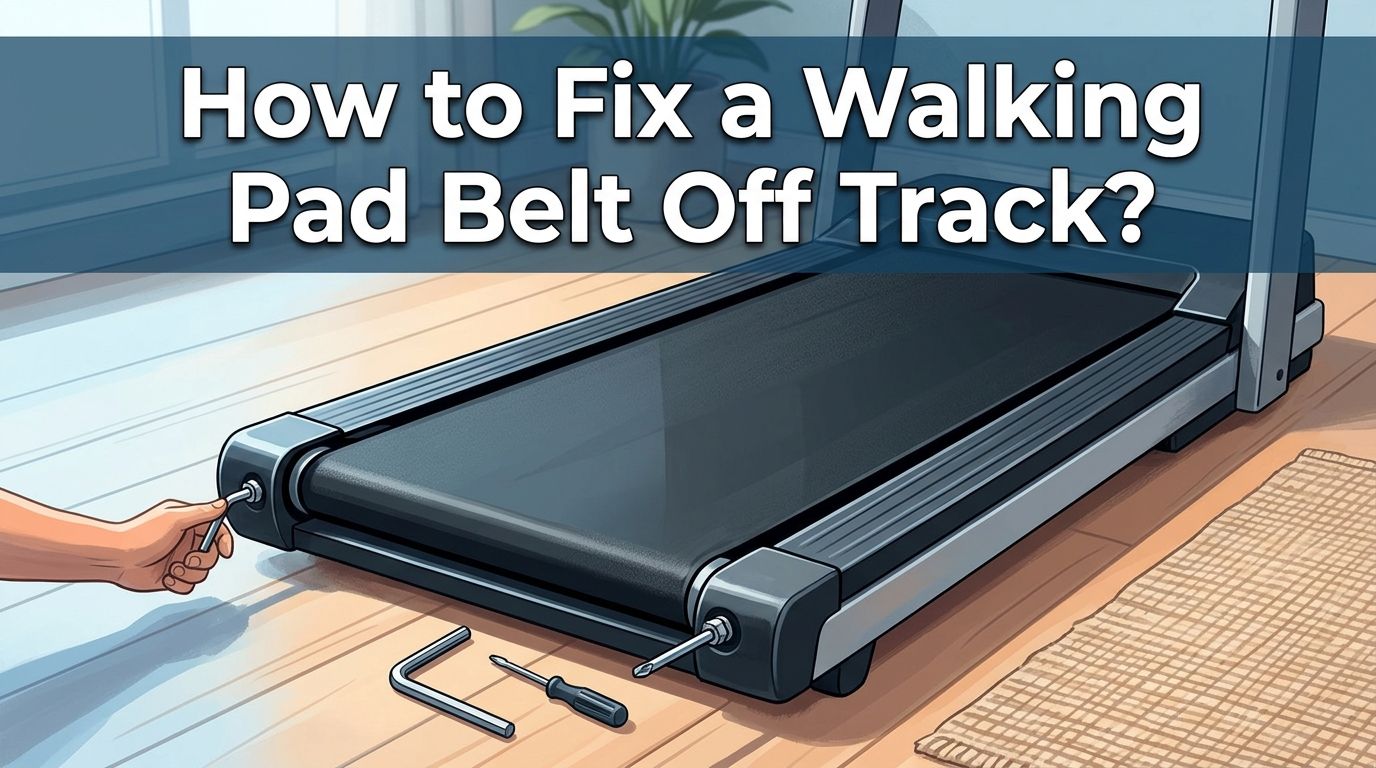
Locate the two adjustment bolts at the rear of the machine. These bolts control the rear roller. If the belt has shifted to the left, use your Allen wrench to turn the left bolt clockwise by a quarter turn. If the belt has shifted to the right, turn the right bolt clockwise by a quarter turn.
Plug the machine back in and run it at a low speed without stepping on it. Watch the belt for 30 to 60 seconds. If it still drifts, repeat the adjustment with another quarter turn. Never adjust more than a quarter turn at a time. Patience is important here because over-adjusting will create new problems.
Pros: This method fixes the issue 80% of the time. It is free, fast, and requires no special skills.
Cons: Over-tightening can damage the roller bearings or stretch the belt unevenly.
How to Check if Your Floor Is Level
Many people skip this step and go straight to bolt adjustments. That is a mistake. An unlevel surface is one of the top reasons walking pad belts drift off track, especially on carpet or older flooring.
Place a level tool on top of your walking pad deck. Check it from side to side and from front to back. Even a small slope can cause the belt to shift during use. If you do not own a level, you can download a free level app on your smartphone.
If the floor is uneven, move your walking pad to a flatter area. You can also place thin shims under the lower side of the machine to balance it out. Hard floors like tile, hardwood, or concrete work best for walking pads.
Pros: This is the easiest check and costs nothing. It can solve the problem without any mechanical adjustments.
Cons: Not every home has a perfectly level spot, and shims can shift over time.
Adjusting Belt Tension Properly
A belt that is too loose or too tight will drift off center. The correct tension allows you to lift the belt about 2 to 3 inches from the deck at the center of the walking pad. If you can lift it higher, the belt is too loose. If you can barely lift it, the belt is too tight.
To tighten the belt, turn both rear roller bolts clockwise by equal amounts. Use quarter turns on each side to keep the tension even. To loosen the belt, turn both bolts counterclockwise by equal amounts.
After adjusting, run the walking pad at low speed and walk on it normally. Pay attention to whether the belt slips under your feet. A properly tensioned belt should feel firm and steady with no hesitation when you step forward.
Pros: Correct tension improves belt life and prevents future tracking issues.
Cons: Incorrect tension adjustments can cause motor strain and premature belt wear.
The Role of Belt Lubrication
A dry belt creates friction against the deck. This friction can cause the belt to stick, skip, or drift to one side. Most manufacturers recommend lubricating your walking pad belt every 30 to 60 days depending on usage.
Use only 100% silicone based lubricant. Never use WD-40, petroleum jelly, or cooking oil. These products damage the belt material and the deck surface. Lift one edge of the belt at the center and apply a thin line of silicone lubricant across the width of the deck. Repeat on the other side.
After applying the lubricant, run the walking pad at low speed for two to three minutes. This spreads the lubricant evenly across the deck surface. A well-lubricated belt tracks better, runs quieter, and puts less strain on the motor.
Pros: Lubrication extends the life of both the belt and the motor. It also reduces noise.
Cons: Over-lubrication can make the belt too slippery and cause it to slide off center.
What to Do if the Belt Keeps Drifting After Adjustment
You have adjusted the bolts, checked the floor, and lubricated the deck. But the belt still drifts. This usually points to a deeper mechanical issue. The belt itself may be stretched unevenly, or one of the rollers may be worn or damaged.
Inspect the belt edges closely with a flashlight. Look for fraying, cracks, or uneven wear. Run your hand along the underside of the belt to feel for rough spots or bumps. These signs indicate the belt needs replacement.
Check the rollers by spinning them gently with your hand while the machine is off and unplugged. Both rollers should spin smoothly and evenly. If one roller wobbles or feels rough, it may need to be replaced. Contact your walking pad manufacturer for the correct replacement parts specific to your model.
Common Mistakes to Avoid During Belt Adjustment
The biggest mistake people make is turning the adjustment bolts too much at once. A full turn can throw the belt completely to the opposite side and damage the roller alignment. Always use quarter turns and test between each adjustment.
Another common error is adjusting the belt while standing on it. Your body weight changes the belt’s position. Always run the machine empty at low speed first to check alignment. Then step on carefully to confirm it holds position under load.
Do not ignore unusual sounds. Grinding, squealing, or clicking noises during belt movement can signal roller damage, motor issues, or debris trapped under the belt. Stop the machine immediately if you hear these sounds and investigate before continuing.
When to Replace the Walking Pad Belt
Belts do not last forever. Most walking pad belts have a lifespan of 1,500 to 3,000 miles depending on quality, usage, and maintenance. If your belt shows visible signs of wear, it is time for a replacement.
Signs that your belt needs replacing include visible fraying on the edges, a smooth or shiny surface that has lost its texture, cracks in the material, or a belt that keeps slipping even at proper tension. A worn belt cannot grip the rollers properly, which causes constant tracking problems.
Replacement belts are available through manufacturers and third party suppliers. Make sure you buy the exact size for your walking pad model. Installing a new belt usually involves removing the motor cover, loosening the roller bolts, sliding the old belt off, and threading the new one into place.
How Your Walking Style Affects Belt Tracking
Your walking pattern plays a bigger role than you might expect. If you favor one side while walking, you push the belt in that direction with every step. Over time, this creates a persistent drift.
Try to walk in the center of the belt with even strides. Keep your posture straight and avoid looking down at your feet, which can cause you to lean forward or to one side. Some people find it helpful to place a small piece of tape at the center of the console as a visual guide.
Wearing proper footwear also matters. Shoes with uneven soles or heavy treads on one side can push the belt off center. Choose flat, clean soled sneakers for walking pad use.
Preventive Maintenance Schedule for Your Walking Pad
Prevention is always easier than repair. Set a simple monthly maintenance routine to keep your walking pad belt centered and healthy.
Every month, check the belt tension by lifting the belt at the center. It should lift 2 to 3 inches. Check the alignment by running the machine empty at low speed for one minute. Apply silicone lubricant every 30 to 60 days or more often if you use the walking pad daily.
Every three months, wipe down the deck surface under the belt with a dry cloth to remove dust and debris. Inspect the belt edges for early signs of fraying. Tighten any loose bolts. This routine takes less than 15 minutes and can prevent most tracking issues from ever starting.
Signs You Need Professional Help
Most belt tracking issues are DIY fixes. But some situations call for a trained technician. If you have adjusted the bolts, replaced the belt, checked the floor, and lubricated the deck but the belt still drifts, the problem may be with the motor, the drive belt, or the internal electronics.
A grinding noise from inside the motor housing is a red flag. So is a burning smell during use or a belt that moves at inconsistent speeds. These symptoms suggest internal damage that requires professional diagnosis.
Check your warranty before paying for repairs. Many walking pad manufacturers offer one to two year warranties that cover motor and roller defects. Keep your receipt and registration information accessible so you can file a claim quickly if needed.
Frequently Asked Questions
Why does my walking pad belt keep moving to one side?
The most common reason is uneven tension on the rear roller bolts. One side may be tighter than the other, pulling the belt in that direction. An unlevel floor surface, a worn belt, or a consistent off-center walking pattern can also cause this issue. Start by checking the floor and then adjust the rear bolts in small quarter turn increments.
Can I use WD 40 to lubricate my walking pad belt?
No. WD-40 is not safe for walking pad belts. It can degrade the belt material and damage the deck surface. Always use 100% silicone based treadmill lubricant. This type of lubricant reduces friction without causing damage and is specifically designed for the materials used in walking pad construction.
How often should I adjust my walking pad belt?
There is no fixed schedule for belt alignment adjustments. Check the alignment once a month by running the machine at low speed without stepping on it. If the belt runs straight, no adjustment is needed. If you notice any drift, make small corrections right away before the problem gets worse.
How tight should a walking pad belt be?
You should be able to lift the belt 2 to 3 inches from the deck at the center of the machine. If the belt lifts higher than 3 inches, it is too loose and may slip during use. If you can barely lift it, the belt is too tight and will put excess strain on the motor and rollers.
Is it normal for a new walking pad belt to drift?
Yes, it can be. New belts sometimes need a short break in period. The belt material may stretch slightly during the first few uses, which can cause minor drifting. Run the machine at low speed for 10 to 15 minutes and then check alignment. A small adjustment is usually all that is needed to center a new belt.
How much does it cost to replace a walking pad belt?
Replacement belts typically cost between $30 and $80 depending on the brand and model. Professional installation can add another $50 to $100 if you choose not to do it yourself. Many users successfully replace belts at home using online video guides and the tools included with their walking pad.

Hi, I’m Sarah Hill — the founder and voice behind Heavy Lift Vault. I’m passionate about fitness, strength training, and health technology. I spend my time researching, testing, and reviewing workout equipment and health devices so you don’t have to guess. My goal is to deliver honest, detailed, and trustworthy reviews that help you invest wisely in your fitness journey.