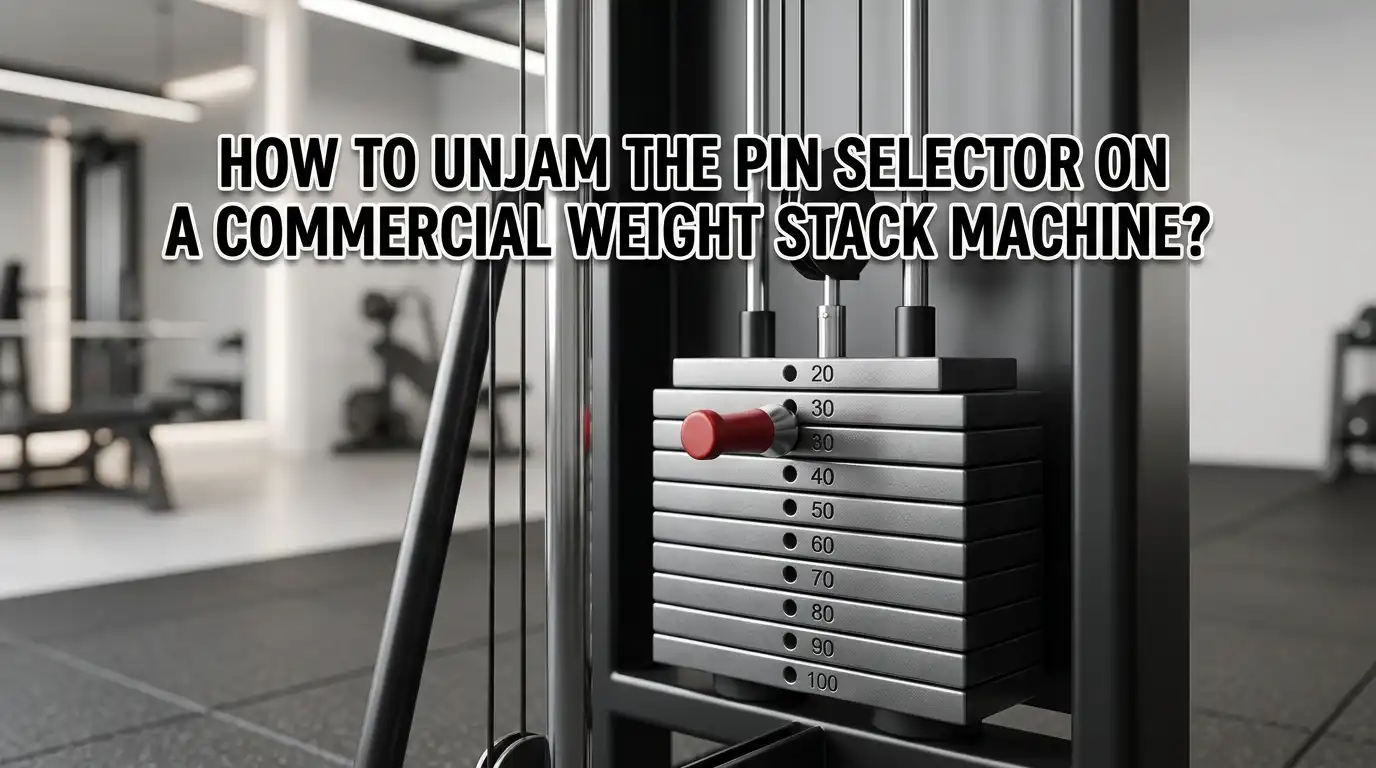
How to Unjam the Pin Selector on a Commercial Weight Stack Machine?
A jammed pin selector can stop your workout in seconds. One moment you are ready to crush a set, and the next, the pin will not budge from the stack.
This problem hits commercial gyms, home setups, and hotel fitness rooms alike. The good news? Most stuck pins come out fast once you know the right moves.
This guide walks you through every cause, every safe fix, and every habit that keeps the pin sliding smooth.
In a Nutshell
- Never force the pin with hard yanks. A jammed pin almost always means the stack still carries tension, the plates are out of line, or grit is blocking the hole. Forcing it bends the pin and damages the plate edges.
- Always unload the stack first. Lower the handle gently and let the top plate rest fully before you touch the pin. Zero tension equals an easy pull.
- Wiggle the plate, not the pin. A small side to side nudge on the selected plate lines up the holes and frees the pin without strain.
- Keep a small fix kit nearby. A nylon brush, clean cloth, flashlight, silicone spray, and pliers solve nine out of ten pin problems on the spot.
- Prevent more than you repair. Teach users to control the return, wipe pins weekly, and keep the machine level. Boring habits beat emergency fixes every time.
- Tag and pause the machine when the pin still will not move after a calm, full check. Pushing harder risks bigger repair bills.
Why the Pin Selector Gets Stuck in the First Place
A selector pin works inside a tight tolerance system. The pin slides through aligned holes in a top plate and the chosen weight plate. When anything shifts those holes by even a millimeter, the pin binds.
Five causes show up again and again. Load tension on the stack pinches the pin. Misalignment from a slammed stack twists the plates. Debris like chalk dust, sweat residue, and rubber crumbs clogs the hole. Burrs form on metal edges from rough inserts. Guide rod drag pulls the stack off true.
Knowing the cause guides the fix. A pin stuck under load needs a handle release, not a brush. A pin stuck from grit needs cleaning, not muscle. Diagnose first, then act.
Quick Safety Check Before You Touch Anything
Safety takes thirty seconds and saves hours of repair work. Start by asking the user to fully release the handles and step back from the stack. Hands stay clear of the plates while you work.
Look at the top plate. Is it resting flat on the stack, or floating slightly above? A floating plate means tension is still on the pin. Never put fingers between plates. Stacks can drop suddenly when tension releases.
Confirm no one is pulling the cable, belt, or handle. Even a small tug locks the pin in place. Always treat the stack like it could move, because under the right conditions, it will. A clear work zone protects you and the machine.
Step One: Fully Unload the Stack
Most stuck pins fix themselves the moment the stack truly rests. Ask the user to lower the handle slowly to the resting position. On cable rows, lat pulldowns, and chest presses, the cable must go fully slack.
Sometimes the top plate looks seated but is not. Lift the handle a tiny amount, then let it settle gently. This small motion helps the plates drop flush against each other. The pin then slides out with light finger pressure.
Pros of this method: It is free, fast, and fixes about half of all stuck pin cases. Cons: It does nothing if the real cause is debris or a burr. Still, it should always be your first move because it rules out the most common problem in seconds.
Step Two: Wiggle the Plate, Not the Pin
Once the stack is unloaded, place one hand flat on the side of the selected plate. Nudge the plate forward and backward by just a few millimeters. Do not slide your fingers between plates. Use the outer face only.
This micro-movement realigns the plate hole with the top plate hole. The pin then has a clean channel to exit. Pull the pin straight out, never at an angle.
Pros: This trick clears alignment jams in under a minute and needs no tools. Cons: It will not work if a burr or thick debris is wedged in the hole. If the pin still resists after two or three gentle nudges, stop and move on to inspection. Forcing a misaligned pin scrapes the hole and creates new burrs that cause future jams.
Step Three: Check for a Half Inserted Pin
Sometimes the pin is not stuck because of weight. It is stuck because it never fully entered the far hole. The tip catches on the inside edge of the plate, and any pull just wedges it tighter.
Push the pin firmly inward until you feel or hear a soft click. The magnet or stop should sit flush against the top plate. Now pull straight out with steady, light pressure.
Pros: This fix takes five seconds and handles a surprisingly common cause. Cons: It feels backwards to push a stuck pin in deeper, so users rarely try it on their own. Train staff to test this step early. A pin that goes in clean almost always comes out clean.
Step Four: Inspect and Clean the Pin Shaft
Once the pin is free, look at the shaft under good light. You are hunting for sticky residue, rough patches, dents, or a slight bend. Run your fingernail along the shaft. Any catch means trouble.
Wipe the pin with a clean, dry cloth first. For sticky residue, use a slightly damp cloth with mild soap. Avoid harsh degreasers, which can leave a film that attracts more dust later.
If you feel a burr, smooth it gently with fine sandpaper or a metal file. Pros of cleaning: It removes the most common cause of repeat jams and costs almost nothing. Cons: A bent pin cannot be straightened reliably. Replace it instead. Bent pins damage plate holes every time they enter the stack.
Step Five: Clean the Plate Holes and Selector Channel
The pin shaft is only half the equation. The plate holes themselves collect grime, especially in busy commercial gyms. Use a flashlight to look down the selector channel. You may see dust clumps, hair, or even small debris.
A nylon brush or a tightly folded cloth fits inside most selector channels. Brush each hole around the jammed plate. Pull debris out, do not push it deeper.
Avoid spraying cleaner directly into the channel. Liquid attracts dust and turns into sticky grit over weeks. Wipe, do not flood. A dry brush followed by a barely damp cloth works best. Pros: Deep cleaning solves grit-based jams fully. Cons: It takes ten to fifteen minutes per machine and requires staff training to do safely without disassembly.
Step Six: Lubricate the Guide Rods Correctly
Dry guide rods drag the plates as they move. That drag tilts the stack just enough to bind the pin. A light lubricant fixes this in moments. Use silicone spray or dry PTFE lube, never WD-40 or oil based products.
Spray a small amount onto a clean cloth, not directly on the rods. Wipe the rods top to bottom in long, even strokes. Move the stack up and down a few times to spread the lube.
Pros: Lubrication restores smooth tracking, quiets squeaks, and prevents wear on the bushings. Cons: Over-lubrication attracts dust fast and creates a black sludge that worsens the problem. Less is more. A monthly light wipe outperforms a heavy spray every time. Always test the stack with a few reps after lubrication to confirm clean travel.
Step Seven: When the Pin Still Will Not Budge
If you have unloaded, wiggled, pushed, cleaned, and the pin still holds tight, stop. Do not grab a hammer. Force at this stage causes real damage, including bent pins stuck inside the stack and warped plate holes that need professional repair.
Some experienced gym staff use a controlled trick: place a long flat screwdriver behind the stack just below the pin location and gently shake the plates while pulling the pin with pliers. This works for pins with broken heads, but it carries risk.
Pros: It can free a truly locked pin without disassembly. Cons: Done wrong, you scratch plates, dent the frame, or pinch fingers. If you are unsure, tag the machine out of service and call a qualified technician. A repair bill is cheaper than an injury.
Tools That Make Pin Removal Easier
A small kit kept near the gym floor solves problems faster than running for tools. Stock a nylon brush, two clean microfiber cloths, a small LED flashlight, silicone spray, needle nose pliers, and a spare selector pin that matches your machines.
Add a flat plastic shim or thin wooden wedge for gentle plate alignment. Skip metal pry bars unless you are trained to use them. Pros of a fix kit: Staff respond in minutes, not hours. Members see the problem solved fast and trust the gym more.
Cons: Kits get raided for other tasks if not labeled and stored properly. Mount a small box near the front desk or maintenance area. Label it clearly. Audit it monthly so nothing goes missing right when you need it most.
Prevention Habits That Stop Jams Before They Start
The best fix is the one you never need. Train every member and staff member to control the return of the stack. Slamming plates is the single biggest cause of burrs, misalignment, and stuck pins.
Wipe selector pins and channels at closing time. A 30 second wipe across each machine prevents 90 percent of grit-based jams. Make it part of the closing checklist.
Check machine level monthly. A slight tilt on uneven flooring twists the stack just enough to cause random sticky pins.
Use a small bubble level on the top frame and shim feet as needed. Boring routines like these are why well-run gyms rarely deal with broken pins. Prevention costs almost nothing and saves real money on parts and downtime.
When to Call a Professional Technician
Some jams need expert hands. Call a technician when the pin shaft is bent, when a plate looks rotated or stuck mid-stack, when guide rods feel rough or look pitted, or when the same machine jams repeatedly after cleaning.
Also call for help if the cable shows fraying, the pulley wobbles, or the top plate sits crooked. These signs point to deeper issues that pin removal alone cannot fix.
Pros of professional service: Trained techs carry replacement pins, plates, bushings, and cables. They diagnose root causes you might miss.
Cons: Service calls cost money and may take a day or two to schedule. Plan for a relationship with a local commercial fitness service company before you need one. A trusted technician on speed dial is worth more than any tool kit.
FAQs
Why does my weight stack pin only get stuck at certain weights?
A pin that jams at the same plate every time points to a specific problem at that plate. Look for a burr on the hole edge, debris inside the hole, or a slightly deformed plate from past slamming. Clean the area, smooth any burrs with fine sandpaper, and test again. If the issue returns, that plate may need replacement.
Can I use WD-40 on a stuck weight stack pin?
No. WD-40 is a solvent and water displacer, not a long-term lubricant. It attracts dust and creates sticky residue inside the selector channel. Use silicone spray or dry PTFE lubricant instead. Apply to a cloth first, then wipe onto the pin and rods. Less product is always better than more.
How often should I clean my commercial weight stack machines?
Wipe the pin and visible plate area daily during closing. Brush the selector channel weekly. Inspect guide rods, cables, and pulleys monthly. Schedule a deeper service every six months for high-traffic machines. Busy commercial gyms may need weekly channel cleaning to prevent buildup.
Is it safe to remove a weight stack to free a stuck pin?
Removing a weight stack is a job for trained technicians. The plates are heavy, the cable is under tension, and one wrong move can drop the stack on hands or feet. Tag the machine out of service and wait for help. Member safety always comes before a quick fix.
What if the pin head breaks off inside the stack?
A broken pin head is a known issue with worn plastic heads. Use needle nose pliers to grip the exposed shaft and pull straight out while the stack is fully unloaded. If no shaft sticks out, call a technician. Forcing the pin sideways scratches the plate holes and creates future jams.
Do magnetic pins jam more often than regular pins?
Magnetic pins do not jam more, but their magnets can lose strength over time, making the pin feel loose. The pin still works, just check that it sits flush during use. Replace magnetic pins every two to three years in heavy-use commercial settings.
Can a slammed stack permanently damage the machine?
Yes. Repeated slamming dents plate edges, bends guide rods over time, and stretches cables. The damage shows up as random pin jams, noisy reps, and uneven plate movement. Post a clear sign asking users to control the return. One careless user can create months of repair work.

Hi, I’m Sarah Hill — the founder and voice behind Heavy Lift Vault. I’m passionate about fitness, strength training, and health technology. I spend my time researching, testing, and reviewing workout equipment and health devices so you don’t have to guess. My goal is to deliver honest, detailed, and trustworthy reviews that help you invest wisely in your fitness journey.