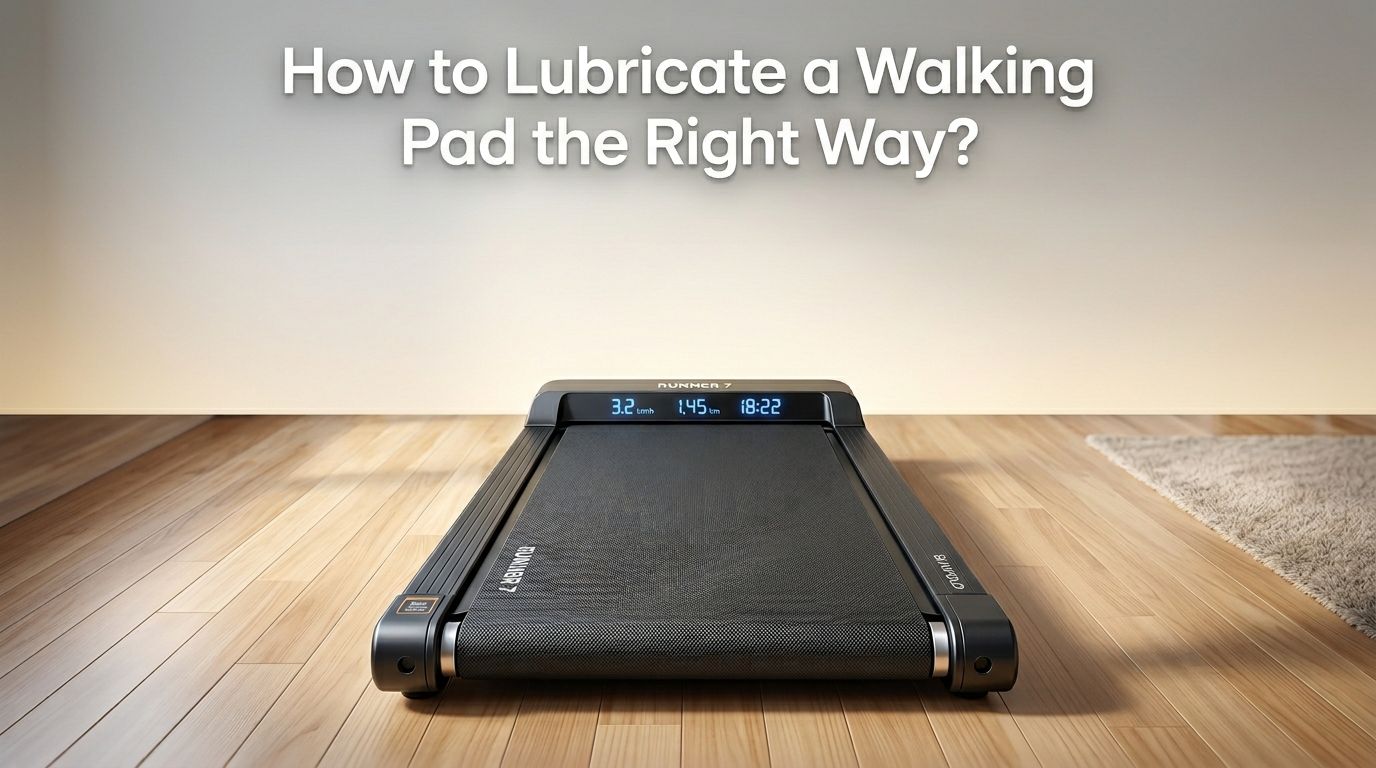
How to Lubricate a Walking Pad the Right Way?
Your walking pad started making a strange sound last week. Maybe the belt feels sticky, or the motor seems louder than before. You are not imagining things.
A dry walking pad belt causes friction, noise, and long term damage to the motor and deck. The good news? Lubrication fixes most of these problems in under ten minutes.
Millions of people use walking pads daily for home fitness and under desk exercise. Yet most owners skip lubrication entirely because they do not know how, when, or what to use.
Key Takeaways
- Use only 100% silicone treadmill lubricant on your walking pad. Household oils, WD-40, and petroleum based products damage the belt and deck materials. Silicone oil handles heat and friction without corroding plastic or rubber components.
- Lubricate every 3 to 6 months depending on how often you use your machine. Heavy users who walk more than 5 hours per week should lubricate every 2 to 3 months. Light users can wait up to 8 months between applications.
- The touch test is the fastest way to check. Turn off and unplug the machine, lift one side of the belt, and slide your hand underneath. If the deck feels dry, rough, or powdery, your walking pad needs lubrication. A slightly slick or waxy feel means it is still fine.
- A small amount of lubricant goes a long way. Apply about 5 to 10 ml total in a thin line or “S” pattern under the belt. Over lubricating causes the belt to slip, attracts dust, and can splatter onto your floor.
- Always unplug the machine before you start. Safety is the most important step. Never reach under a belt that could move. After applying lubricant, run the machine empty at low speed for 3 to 5 minutes to spread the oil evenly.
- Watch for warning signs like excess heat under the belt, jerky movement, squeaking, or a grinding sound. These signals mean friction is building up and your walking pad needs attention right away.
How to Tell If Your Walking Pad Needs Lubrication
Your walking pad will give you clear signals before a dry belt becomes a serious problem. The first and most reliable check is the touch test. Power off the machine, unplug it, and gently lift one edge of the walking belt near the center. Slide your fingers along the deck surface underneath.
If the surface feels dry, rough, or chalky, lubrication is overdue. A properly lubricated deck will feel slightly slick or waxy to the touch. This test takes about 30 seconds and gives you a direct answer.
Beyond the touch test, pay attention to performance changes. A belt that hesitates, sticks, or jerks during use is a strong sign of increased friction. Unusual heat buildup under the belt after a short walk is another red flag. Squeaking, scraping, or grinding noises that were not there before often mean the belt and deck are rubbing without protection.
Pros of regular checking: Catches problems early, prevents motor damage, costs nothing.
Cons of skipping checks: Leads to expensive repairs, belt replacement, or motor burnout.
How to Choose the Right Lubricant for Your Walking Pad
The type of lubricant you use matters more than you might think. The only safe choice is 100% silicone treadmill oil. This product is made to handle the heat and pressure between the belt and deck. It spreads evenly, lasts a long time, and does not break down rubber or plastic parts.
Never use WD-40, cooking oil, motor oil, or any petroleum based spray. WD-40 is a solvent, not a lubricant. It dries out belt materials and causes faster wear. Household oils attract dust and create a sticky residue that makes friction worse over time.
Silicone treadmill lubricant comes in squeeze bottles with applicator nozzles. Some brands also sell wax based lubricant sticks. Both silicone oil and wax lubricants work, but silicone oil is the most common recommendation from walking pad manufacturers.
Pros of silicone oil: Easy to apply, widely available, recommended by most manufacturers, affordable.
Cons of silicone oil: Can cause slipping if over applied. Requires careful measurement.
How to Prepare Your Walking Pad Before Lubrication
Preparation makes the process smooth and safe. Start by turning off your walking pad and unplugging it from the wall outlet. This is a non negotiable safety step. You will be placing your hands under the belt, and you do not want it to move unexpectedly.
Next, clean the belt surface with a dry or slightly damp lint free cloth. Remove any dust, dirt, or debris from the top and edges of the belt. A clean surface allows the new lubricant to spread and bond properly with the deck.
If your walking pad is a foldable model, fold it halfway up. This loosens the belt and creates space for you to reach underneath. For flat models, you will need to lift the belt edge manually. Check your owner’s manual for any model specific instructions before you start. Some pads have dedicated oil holes or access points that make the process even easier.
Pros of proper preparation: Prevents accidents, improves lubricant performance, protects your equipment.
Cons of skipping preparation: Risk of injury, uneven lubrication, trapped debris under the belt.
How to Apply Lubricant to Your Walking Pad Step by Step
This is the core process, and it takes about five minutes. Lift one side of the walking belt near the center of the machine. You only need to raise it a few inches to fit the lubricant nozzle underneath.
Insert the applicator tip under the belt and apply a thin, steady line of silicone oil along the deck. Use an “S” pattern from front to back to cover the full width of the deck surface. Apply about 5 to 10 ml total. Repeat on the other side of the belt for even coverage.
Do not pour lubricant directly onto the belt surface. The oil belongs between the belt and the deck, not on top where you walk. After applying, plug the machine back in and run it at the lowest speed setting (about 1 to 2 km/h) for 3 to 5 minutes with nobody standing on it. This spreads the lubricant evenly.
Finally, step on and walk at a comfortable pace for 2 minutes. This helps the oil settle into all contact points. Wipe away any excess lubricant that may have squeezed out from the belt edges.
How to Lubricate a Foldable Walking Pad Without Taking It Apart
Foldable walking pads are popular because they save space. They also happen to be easier to lubricate than flat models. When you fold the pad upward at the hinge, the walking belt loosens significantly. This creates generous space to reach underneath.
Fold the walking pad to about a 45 degree angle. The belt should hang loosely enough to slide the lubricant nozzle underneath from either side. Apply your silicone oil in the same “S” pattern described above. You do not need to remove any screws or panels.
Some foldable models even include a small oil hole on the side or bottom of the frame. Check your manual for this feature. If your pad has one, you can squeeze lubricant directly through the hole without lifting the belt at all.
Pros of foldable design for lubrication: Easy belt access, no tools required, faster process.
Cons: Belt may shift when folded, requiring you to hold it steady while applying oil.
How to Avoid Over Lubricating Your Walking Pad
More lubricant does not mean better performance. Over lubricating is one of the most common mistakes walking pad owners make, and it causes real problems. Excess oil makes the belt slippery, which creates a safety hazard during use. It also attracts dust and debris that build up under the belt.
Stick to 5 to 10 ml per application. That is roughly one to two teaspoons spread across the entire deck surface. If you see oil pooling on the deck or dripping from the belt edges, you have used too much.
To fix over lubrication, unplug the machine, lift the belt, and wipe the excess oil from the deck with a clean, dry cloth. You can also sprinkle a small amount of talcum powder on the deck to absorb extra oil. Then run the machine empty at low speed for several minutes to redistribute what remains.
Pros of using the right amount: Smooth operation, no slipping, longer time between applications.
Cons of over lubricating: Belt slippage, dust buildup, messy floor, potential safety risk.
How Often Should You Lubricate a Walking Pad Based on Usage
Lubrication frequency depends on how many hours and miles you put on your walking pad. There is no single schedule that fits every user. A person who walks 30 minutes a day needs lubrication far less often than someone who walks 2 hours daily.
For light use (less than 3 hours per week), lubricate every 5 to 8 months. For moderate use (3 to 5 hours per week), lubricate every 3 to 5 months. For heavy use (more than 5 hours per week), lubricate every 2 to 3 months. Some manufacturers suggest lubricating every 100 km of use, which is also a helpful benchmark.
Always check your owner’s manual first. Some models have self lubricating decks that need less frequent attention. Set a calendar reminder so you do not forget. Consistent lubrication prevents the friction buildup that leads to motor strain and belt damage.
How to Check Belt Tension and Alignment After Lubrication
After you lubricate, take a minute to check belt tension and alignment. A freshly lubricated belt can shift slightly, especially if it was lifted during the process. Proper tension and centering protect the belt, motor, and rollers from uneven wear.
To test tension, lift the belt at the center point. It should rise about 2 to 3 inches off the deck. If it lifts higher than that, the belt is too loose and may slip. If it barely lifts at all, the belt is too tight and will strain the motor.
Check alignment by running the machine at low speed with nobody on it. Watch the belt for 30 seconds. If it drifts to one side, use the adjustment bolts at the rear of the machine. Turn the bolt on the side the belt is drifting toward by a quarter turn clockwise. Run the machine again and repeat until the belt stays centered.
Pros of post lubrication checks: Prevents belt slipping, reduces uneven wear, extends belt life.
Cons of skipping this step: Misaligned belt can fray, slip, or damage frame edges.
How to Clean Your Walking Pad Before and After Lubrication
Cleaning is a critical part of the lubrication process that many owners overlook. Dirt trapped under the belt acts like sandpaper, grinding away at both the belt and the deck surface. Always clean before you apply fresh lubricant.
Before lubrication, wipe the top of the belt with a damp lint free cloth to remove dust, hair, and sweat residue. If possible, lift the belt and wipe the deck surface as well. Remove any old lubricant residue that has turned dark or gummy. Let everything dry completely before applying new oil.
After lubrication, wipe the belt edges and the surrounding frame to catch any lubricant that squeezed out. A quick wipe down after every walking session also helps. Vacuum around the base of the machine weekly to prevent dust from being pulled into the motor area. This simple cleaning habit keeps your walking pad running quietly and extends the life of every component.
How to Troubleshoot Common Problems After Lubricating a Walking Pad
Sometimes issues appear right after lubrication. Do not panic. Most post lubrication problems have simple fixes. If the belt slips while you walk, you likely applied too much lubricant. Wipe the excess from under the belt and adjust the tension slightly tighter.
If you hear a squeak or grinding noise after lubricating, the oil may not have reached all areas of the deck. Run the machine empty at low speed for a few more minutes. You can also manually slide the belt back and forth to help distribute the lubricant.
If the belt drifts to one side after lubrication, adjust the rear alignment bolts in small quarter turn increments. Always make adjustments with the machine unplugged, then test at low speed. If the motor still sounds strained or the belt continues to stick after proper lubrication and tension adjustment, the issue may be deeper. Contact the manufacturer or a qualified repair technician at that point.
How to Build a Simple Walking Pad Maintenance Routine
Lubrication is just one part of keeping your walking pad in great shape. A basic maintenance routine takes less than 5 minutes per week and can extend your machine’s life from 3 to 5 years up to 10 years or more.
After every use: Wipe down the belt, console, and frame with a dry cloth. This removes sweat and surface dust that cause gradual damage.
Every week: Vacuum around and under the machine. Check the power cord for any visible damage. Verify the belt is centered.
Every 3 to 6 months: Lubricate the belt using the steps in this guide. Perform the touch test. Check belt tension and tighten any loose bolts or screws on the frame.
Once a year: Do a deep clean of the entire machine. Inspect the belt for signs of wear, cracking, or fraying. Check that all safety features work properly. A written maintenance log or a simple phone reminder makes this routine effortless to follow. Consistency matters more than perfection. Even partial maintenance is far better than none at all.
Frequently Asked Questions
How Do You Know If Your Walking Pad Needs Lubricant?
Turn off and unplug the machine. Lift one side of the belt near the middle and slide your hand along the deck. If the surface feels dry, rough, or powdery, your walking pad needs lubrication. Other signs include unusual squeaking, increased belt heat after short use, and jerky or sticky belt movement. The touch test is the quickest and most reliable method.
Can You Use WD-40 on a Walking Pad Belt?
No. WD-40 is a solvent and water dispersant, not a proper lubricant for fitness equipment. It dries out rubber and plastic components, causing the belt and deck to deteriorate faster. Always use 100% silicone treadmill lubricant. This is the only product safe for the materials found in walking pad belts and decks.
How Much Lubricant Should You Put on a Walking Pad?
Apply 5 to 10 ml of silicone lubricant per session. That equals roughly one to two teaspoons spread evenly across the deck under the belt. Using too much causes the belt to slip, attracts dust, and creates a mess. A thin, even layer provides the best results and lasts longer between applications.
Do All Walking Pads Need Lubrication?
Almost all standard walking pads and under desk treadmills require periodic lubrication with silicone oil. A small number of premium models feature permanently lubricated decks that need no maintenance. Check your owner’s manual to confirm whether your specific model requires lubrication. If the manual does not mention it, contact the manufacturer directly.
Can You Over Lubricate a Walking Pad?
Yes. Over lubrication causes the belt to slip during use, which is a safety concern. It also attracts dust and debris that accumulate under the belt and increase wear over time. If you accidentally apply too much, wipe the excess from the deck with a dry cloth and run the machine at low speed for several minutes to redistribute the remaining oil evenly.

Hi, I’m Sarah Hill — the founder and voice behind Heavy Lift Vault. I’m passionate about fitness, strength training, and health technology. I spend my time researching, testing, and reviewing workout equipment and health devices so you don’t have to guess. My goal is to deliver honest, detailed, and trustworthy reviews that help you invest wisely in your fitness journey.