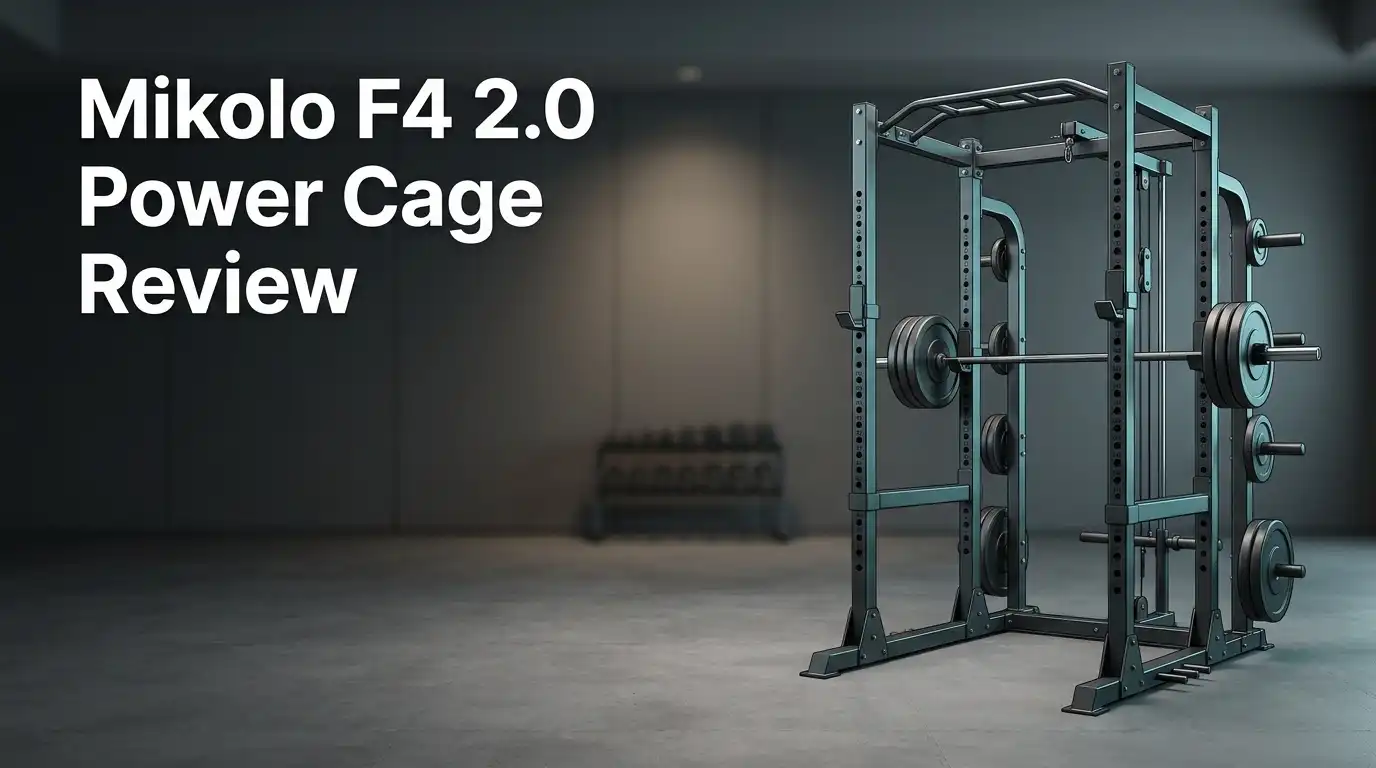
Mikolo F4 2.0 Power Cage Review 2026: Worth Buying?
Home gym shoppers keep asking the same question in 2026. Can a power rack under $500 really replace a gym membership? The Mikolo F4 2.0 Power Cage shows up in that conversation every single time.
It promises a 1,200 lb frame, a dual track pulley system, a leg hold down roller, and a pile of attachments in one box. That sounds too good for the price, and most people assume something must be cheap about it.
I spent weeks reading owner feedback, comparing spec sheets, and digging into long term reports from lifters who train on this rack four to five days a week. This review covers the unboxing, the assembly reality, the cable feel, the weak parts, and the honest limits.
In A Nutshell:
- The value is the main story. The F4 2.0 includes a lat pulldown, low row, dip handles, landmine, pull up bar, and weight storage pegs. Buying those separately usually costs $200 to $350 more.
- The frame holds up. Owners report zero flex on squats near 450 lbs and stable bench work at 315 lbs. Welds look clean, and the wide base resists rocking.
- The pulley system is good, not perfect. The dual track design stops cable tilt. Friction still becomes noticeable at the top of the stroke once you load past 180 lbs.
- The J cups are the weak link. The plastic liners groove after roughly three months of regular use. A $26 UHMW upgrade fixes this completely.
- Assembly takes real time. Mikolo claims 60 to 90 minutes. Most owners finish in two to four hours, and the cable routing step causes the most mistakes.
- Ceiling height matters. The listed height is 83 inches, so an 8 foot ceiling works, though tall lifters should measure pull up clearance first.
Mikolo F4 2.0 Power Cage


Last update on 2026-10-31 / Affiliate links / Images from Amazon Product Advertising API
The Mikolo F4 2.0 is a four post power cage built from 50mm x 50mm alloy steel tubing. Mikolo rates it at 1,200 lbs static capacity. The uprights use 1 inch holes on 2 inch centers, giving you 27 adjustable height positions for the J cups and safety bars.
What separates it from a plain cage is the integrated cable station. A dual track pulley runs a lat pulldown at the top and a low row at the bottom, loaded with standard weight plates. Mikolo also added a five level leg hold down roller, which anchors your thighs during heavy pulldowns.
The package ships with a lat bar, cable handles, a T bar, J cups, dip handles, a 360 degree landmine, and safety bars. You get a functioning gym on day one. Current pricing sits near $360 for the base rack, with bundle options climbing toward $500.
The Unboxing Experience
Expect freight, not a friendly doorstep drop. The rack arrives in two or three heavy boxes totaling around 178 lbs. The driver leaves them at the curb or garage entrance unless you pay for room of choice delivery. Have a second person ready. Dragging those boxes alone is the first workout.
Opening them feels organized. Steel tubes come wrapped in foam sleeves and plastic film, and the powder coat underneath looks even with no shipping scuffs on most units. Hardware arrives in labeled bags sorted by assembly step, which is a genuine plus at this price.
The parts spread out over a surprising amount of floor space. Clear a 10 by 10 foot area before you start. The printed manual uses line drawings only. They work, but the official assembly video answers more questions in less time.
Build Quality And Frame Steel
The F4 2.0 uses 2 inch by 2 inch square tubing. That places it in the entry level category next to most racks under $400. Thicker 11 gauge and 3 inch by 3 inch frames exist, and they cost two to three times more.
What saves the Mikolo is geometry. Four uprights tied together by multiple crossmembers spread load very effectively. The boxed cage shape does more for stability than wall thickness alone. Owners who loaded 455 lb squats reported no visible flex and no bar wobble.
The welds deserve credit. Reports consistently describe clean beads with no slag or burn through. Powder coat holds up well except where plates brush the uprights. One habit matters here: recheck your bolt torque at the three month mark. A couple of bolts usually back off a quarter turn, which is normal for this class.
Top 3 Alternative for Mikolo F4 2.0 Power Cage

Last update on 2026-10-31 / Affiliate links / Images from Amazon Product Advertising API
Sportsroyals Power Cage

Last update on 2026-10-31 / Affiliate links / Images from Amazon Product Advertising API
MAJOR FITNESS F22 Power Rack

Last update on 2026-10-31 / Affiliate links / Images from Amazon Product Advertising API
Fitness Reality 810XLT Super Max Power Cage
Dual Track Pulley System Performance
This is the feature people buy the rack for, so it deserves scrutiny. The cable runs from the lat bar over a top pulley, down an internal channel, and onto a plate loading pin. The dual track guide rods keep the loading pin from tilting, which is the exact problem that ruins cheap single post systems.
The pulleys themselves use nylon rollers on steel axles rather than sealed ball bearings. That choice saves money and adds friction. Below 180 lbs the pull feels smooth and consistent through the full range. Above that, you feel drag at the top of the stroke where the cable angle changes.
Mikolo lists the aircraft cable itself as rated to 500 lbs, though the practical working range for the system sits lower. Lubricate the cable with a dry lube on day one. The factory coating wears off fast, and a monthly reapplication keeps the glide clean.
Assembly Time And Instructions
Mikolo advertises 45 to 90 minutes. Real owners report a wider spread. Some finished solo in about two hours. Others needed close to four, especially when the cable routing tripped them up.
Here is the single most important tip. Route the cable before you bolt down the top crossmember. The cable feeds through an internal channel in one upright. Skip that order and you will partially disassemble the rack to fix it.
Second tip: finger tighten the whole frame first, then torque everything once the uprights sit plumb. Torquing as you go creates alignment fights at the final joints. Aim for roughly 25 to 30 ft lbs on the bolts, because the internal tube nuts can strip under heavy force.
You need a 9/16 inch socket wrench, a rubber mallet, and a tape measure. None of those come in the box.
J Cups, Safety Bars And Attachments
The J cups show the budget nature most clearly. They use steel bodies with a hard plastic liner that is not UHMW. The plastic scratches barbell knurling and develops grooves around month three or four of frequent use.
Order replacement UHMW J cups for 2 inch by 2 inch uprights before the rack arrives. They cost $26 to $35 and change how the whole rack feels. Softer plastic self heals from minor contact and lets the bar seat cleanly.
The safety bars tell a better story. Owners rate them as the strongest component in the package. The bolt through pin design is secure, the steel is appropriately heavy, and thick rubber coating protects both the bar and the arms.
Smaller accessories are a mixed bag. Several owners call the landmine, the T bar handle, and the pull up grips subpar compared to the rack itself.
Space Requirements And Ceiling Height
Mikolo lists the cage at roughly 83 inches tall, which clears a standard 8 foot ceiling with room for pull ups. Independent measurements of some units have come in closer to 86 or 89 inches, so measure your ceiling and compare it against your exact listing before ordering.
Footprint sits near 49 inches by 49 inches for the base model, though reviewers testing the full package measured closer to 54 by 55 inches. Either way, plan for at least a 7 foot by 7 foot zone including walking room.
A 7 foot basement ceiling is a hard no. A 9 or 10 foot garage ceiling is ideal. Tall lifters should test standing pull up clearance physically, not just on paper. The rack includes pre drilled floor anchor holes, and bolting it to concrete noticeably improves stability during aggressive pull ups.
Weight Capacity In Real Use
The 1,200 lb number is a static rating. It describes weight resting on the rack, not the force of a failed squat dropping onto the safeties. Dynamic loads can hit two or three times the bar weight.
Here is the practical reading. Squats up to roughly 500 lbs and bench press up to roughly 350 lbs sit comfortably inside the safety margin when the safety bars are set correctly. Pull ups with up to 100 lbs of added weight work fine.
Testing at 455 lb squats produced no flex and no safety bar deflection. A deliberate bar drop test at 315 lbs produced a loud clank and no structural movement.
If your squat already lives above 500 lbs, a thicker gauge rack is the smarter purchase regardless of what any budget spec sheet claims.
Leg Hold Down And Lat Pulldown Comfort
The five level adjustable leg roller is the feature Mikolo added for the 2.0 version, and it earns its place. Heavy lat pulldowns lift light and medium weight lifters right off the bench. The roller pins your thighs so you can pull hard without fighting your own bodyweight.
Adjustment is quick with a pop pin. The padding is firm rather than plush, which most owners prefer for stability, though very lean lifters may want a towel over the roller on long sets.
One honest note: the roller assembly adds another cluster of bolts to the build and sits in the way if you bench inside the cage. A few owners specifically complained that the pulley hardware interferes with bench press setup. If benching is your priority movement, think about that clearance carefully.
What The Mikolo F4 2.0 Does Not Do Well
Authentic reviews name the flaws, so here they are plainly.
The cable station has no mid height pulley adjustment. Cable crossovers, chest flies, and standing face pulls at chest height are not possible. This is a lat pulldown and row station, not a functional trainer.
The nylon pulleys add friction that becomes obvious at higher loads. Serious cable users will feel the difference against a commercial machine immediately.
The J cup liners wear out faster than they should. The landmine and T bar handle feel like afterthoughts. There is no first party Mikolo attachment ecosystem, so future upgrades come from the generic 2 inch by 2 inch aftermarket.
Finally, listing specs vary between the base rack and the bundle versions. Confirm the exact dimensions and inclusions of the variant you add to your cart, because they genuinely differ.
Pros And Cons
Pros
- Built in lat pulldown and low row save roughly $200 to $350 versus aftermarket attachments
- Strong 1,200 lb static rating with clean welds and no reported flex at 455 lb squats
- Dual track pulley design prevents the cable tilt common on single post budget racks
- 27 adjustable positions with 2 inch hole spacing give precise J cup and safety bar placement
- Leg hold down roller makes heavy lat pulldowns usable for lighter lifters
- Landmine, dip handles, T bar, pull up bar, and storage pegs all included
- Standard 2 inch by 2 inch upright pattern fits many third party attachments
- Safety bars are heavily built with thick protective rubber coating
- Excellent value, with owners repeatedly calling it the best cage for the money
Cons
- Plastic J cup liners groove within three to four months and need a UHMW upgrade
- Nylon pulleys create noticeable friction above 180 lbs of cable load
- No mid height cable position, so crossovers and flies are off the table
- Assembly takes longer than advertised, and cable routing must happen in the right order
- Pulley hardware can interfere with bench press setup inside the cage
- Landmine, T bar handle, and pull up grips feel lower in quality than the frame
- No first party attachment line for future expansion
- Listed dimensions vary between product variants, which causes confusion
Price And Value In 2026
Last update on 2026-10-31 / Affiliate links / Images from Amazon Product Advertising API
Pricing moves often. The base rack has recently sold near $360 after a 10 percent discount from a $399.99 list price. Bundle versions with a bench, barbell, and 230 lbs of plates push toward $500.
Run the math and the value becomes obvious. A plain budget cage costs $250 to $350. A quality third party lat pulldown attachment adds $200 to $350. The Mikolo delivers both for the price of one. That single fact explains why thirteen out of thirteen value focused reviewers on Amazon rated it positively.
Build a complete gym around it and you land near $1,000 total with a barbell set, an adjustable bench, and floor mats. That covers squats, bench, deadlifts, presses, rows, pulldowns, dips, and pull ups. Few packages at this price match that range of movement.
Who Should Buy The Mikolo F4 2.0
This rack fits a clear profile. Buy it if you are a beginner or intermediate lifter who wants cable work included in one purchase. If your squat sits under 450 lbs and your bench under 300 lbs, the frame has capacity to spare for years.
It also suits people building a first garage gym who do not want to make five separate equipment decisions. The included attachments cover more functions than any direct rival at this price.
Skip it if your ceiling is under 8 feet, because the rack physically will not fit. Skip it if you regularly move 500 lbs or more, since thicker steel is the correct tool. Skip it if you specifically need cable crossovers, because no amount of patience will add a mid height pulley to this design.
Maintenance Tips For Long Term Use
A little care keeps this rack feeling solid for years. Apply dry cable lubricant on day one and again every month or two. The glide difference is immediately noticeable.
Recheck bolt torque at three months, then twice a year after that. Vibration loosens a bolt or two on every rack in this class, and catching it early prevents frame rattle.
Wipe the uprights down after sweaty sessions. A light coat of paste wax on the upright faces protects the powder coat and lets J cups slide without scraping.
Store plates on the pegs rather than leaning them against the frame, since that is where most paint damage starts. Replace the stock J cups with UHMW versions early instead of waiting for grooves to appear. Bolt the rack to concrete if you have it.
Final Verdict
The Mikolo F4 2.0 Power Cage earns its reputation honestly. It solves the usual budget rack trap where you buy a cheap cage and then spend another $300 to $500 making it useful. Here the cable system, landmine, dip handles, and storage all arrive in the same box.
The frame is genuinely stable under real loads. The dual track pulley is a meaningful improvement over single post designs. The leg hold down is a thoughtful addition most competitors skip.
The flaws are real but fixable or livable. Swap the J cups. Accept the cable friction at heavy loads. Measure your ceiling twice. For home lifters who want a complete strength station under $500, this remains one of the strongest value picks available in 2026. It is not a commercial rack, and it never pretends to be.
Frequently Asked Questions
How tall is the Mikolo F4 2.0 and will it fit an 8 foot ceiling?
Mikolo lists the rack at approximately 83 inches, which clears a standard 8 foot ceiling with usable pull up space. Some independent measurements have reported taller figures on certain variants, so check the listing for your exact model and measure your ceiling before ordering. A 7 foot ceiling will not work.
How long does assembly actually take?
Plan for two to four hours. Solo builders commonly report around two hours for the base rack and closer to four when the cable system slows them down. Two people cut that time significantly. Read the cable routing instructions completely before you tighten the top crossmember.
Can I do deadlifts inside the cage?
Yes. The cage floor stays open with no bottom crossmember blocking your stance. Conventional and sumo setups both fit, and standard bumper plates clear the floor. You can also pull from the safety bars for rack pulls at various heights.
Is the Mikolo F4 2.0 compatible with Titan or Rogue attachments?
Partially. The uprights use 1 inch holes on 2 inch centers in a 2 inch by 2 inch profile, which matches many generic attachments and the Titan T 2 pattern. Rogue Monster, Rogue Infinity, and Titan T 3 attachments use larger 3 inch uprights and will not fit.
Does the rack need to be bolted to the floor?
It is not required. The wide base and stabilizers keep the cage steady for normal barbell work. Bolting to concrete takes about 20 minutes with anchor bolts and noticeably reduces rocking during aggressive pull ups or dips. Pre drilled anchor holes are already in the base frame.
What is the difference between the F4 and the F4 2.0?
The 2.0 version updated the cable hardware, improved pulley alignment, revised the J cup brackets, and added the five level leg hold down roller. Most of the cable friction complaints from early F4 units were addressed in this revision. New listings today ship the 2.0 version.
How much weight can the cable system handle?
Mikolo cites high strength aircraft cable rated to 500 lbs, but the practical smooth working range is lower. Expect clean performance up to roughly 180 lbs, with increasing friction above that point. Treat the pulley hardware, not the cable rating, as your real limit.

Hi, I’m Sarah Hill — the founder and voice behind Heavy Lift Vault. I’m passionate about fitness, strength training, and health technology. I spend my time researching, testing, and reviewing workout equipment and health devices so you don’t have to guess. My goal is to deliver honest, detailed, and trustworthy reviews that help you invest wisely in your fitness journey.