How to Fix Treadmill Belt Slipping to One Side?
Have you ever jumped on your treadmill for a morning run only to notice the belt creeping off to one side? This is one of the most common treadmill problems, and it can feel alarming.
A belt that drifts left or right creates an uneven running surface, puts extra stress on the motor, and can even damage the belt itself. The good news is that you do not need a technician to solve this problem.
With a simple Allen wrench and about 15 minutes, you can get your treadmill belt tracking straight again. This guide walks you through every cause, every fix, and every precaution so you can handle this issue with confidence. Keep reading to save yourself time, money, and frustration.
Key Takeaways
- A treadmill belt drifting to one side is usually caused by uneven tension in the rear roller bolts. One side may be tighter than the other, pulling the belt off center. This is the number one reason for belt drift and is easy to correct at home.
- You only need an Allen wrench or hex key to make adjustments. Most treadmills include this tool in the box. Adjustments should be made in small quarter turn increments to avoid overcorrection.
- Always unplug your treadmill before making any physical adjustments to the rear roller bolts. Safety comes first. You can plug it back in at low speed to test your changes.
- An unlevel floor can cause repeated belt drift even after adjustment. Place a bubble level on the treadmill frame and use floor shims or a treadmill mat to correct any unevenness before adjusting the belt.
- Lack of lubrication increases friction between the belt and deck, which can contribute to drifting and slipping. Apply silicone based treadmill lubricant every three to six months for smooth operation.
- If the belt keeps drifting after multiple adjustments, the issue might be a worn belt seam, cracked rear roller mounts, or a warped deck. These situations may require parts replacement or professional service.
Why Does a Treadmill Belt Slip to One Side
A treadmill belt slips to one side when the rear roller is not perfectly parallel to the front roller. Even a small difference in tension between the left and right adjustment bolts can cause the belt to track off center. The belt naturally moves toward the tighter side.
Other causes include an unlevel floor surface, worn roller bearings, or a belt seam that has started to separate. Your walking posture can also contribute. If you consistently run closer to one side of the belt, the repeated pressure can push the belt in that direction over time.
Understanding the root cause helps you pick the right fix. A quick tension adjustment solves most cases. But structural problems like cracked roller mounts need a different approach entirely.
Tools You Will Need for the Fix
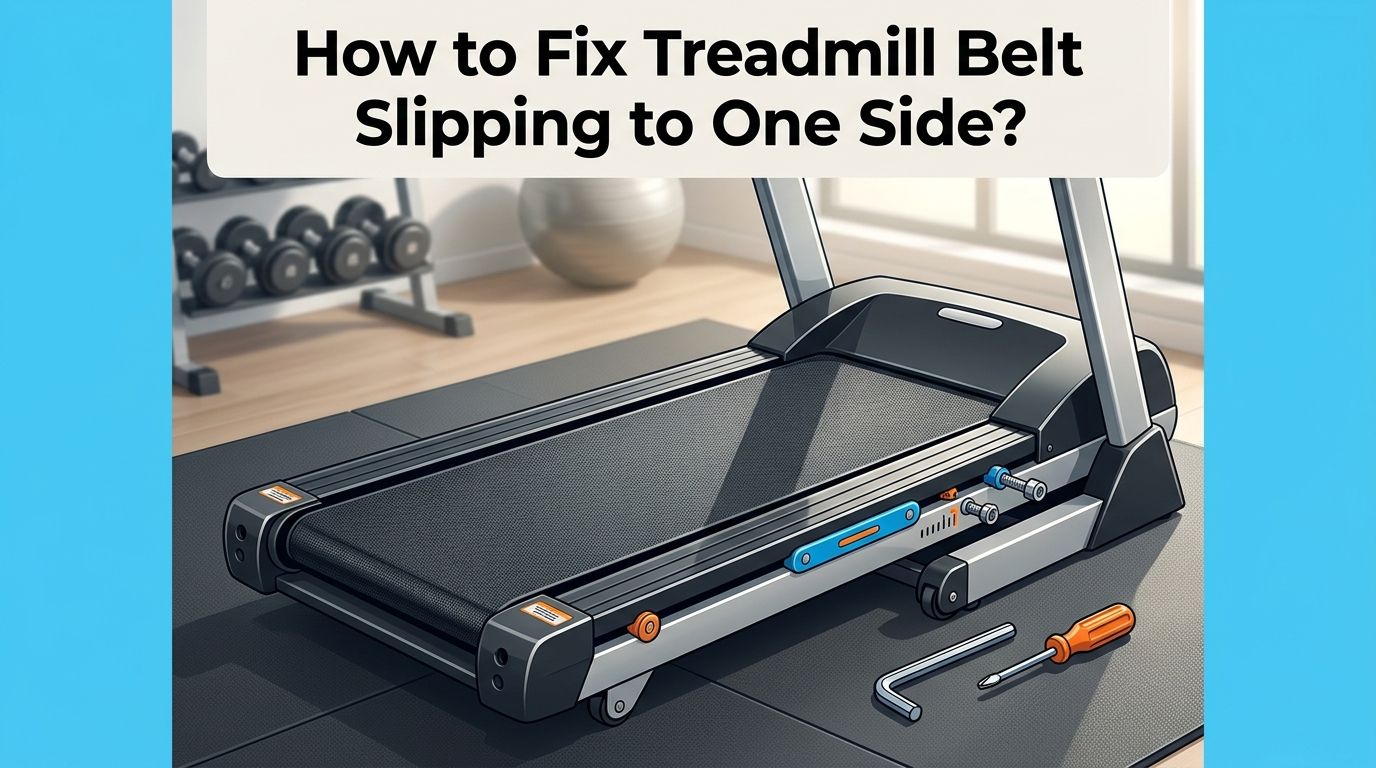
The good news is you do not need a full toolbox for this repair. Most treadmill models require just one Allen wrench or hex key. The correct size is typically 5mm or 6mm. Many manufacturers include this tool with the treadmill at purchase.
You will also want a bubble level to check if your treadmill sits on an even surface. A clean cloth is helpful for wiping down the belt and deck area. If you plan to lubricate the belt during this process, have a bottle of silicone based treadmill lubricant ready.
Keep your owner’s manual nearby. It will have the exact bolt locations and recommended belt tension for your specific treadmill model.
Check if Your Treadmill Is on a Level Surface
Before touching any bolts, check the floor. An unlevel surface is one of the most overlooked causes of belt drift. If the treadmill tilts slightly to one side, gravity pulls the belt in that direction regardless of how well you adjust the tension bolts.
Place a bubble level on the treadmill frame rails on both sides. Check from front to back as well. If the bubble is off center, you need to level the machine first. Use rubber shims, a treadmill mat, or adjust the treadmill’s built in leveling feet if your model has them.
Pros of this method: It solves the root cause without touching the belt or rollers. It also protects your machine from uneven wear.
Cons of this method: It requires buying a level if you do not own one. Floor issues in older homes can be difficult to correct completely.
Inspect the Belt for Visible Damage
Turn the treadmill off and unplug it. Run your hand along the underside of the belt to check for rough patches, tears, or fraying edges. Look at the belt seam closely. The seam runs across the width of the belt and is usually stitched at an angle.
If the seam is separating or the belt edges are frayed, tension adjustments will not fix the drift permanently. A damaged belt will keep shifting because the surface is no longer uniform. In this case, the belt needs full replacement.
Also check the belt for excessive stretching. A belt that has stretched beyond its usable life will not hold tension properly and will continue to drift no matter how many adjustments you make.
How to Adjust the Rear Roller Bolts
This is the primary fix for most belt drift issues. Locate the two adjustment bolts at the rear end of the treadmill. They sit on either side of the rear roller, usually recessed into the treadmill frame.
Follow these steps carefully:
Step 1. Unplug the treadmill from the power outlet.
Step 2. Identify which direction the belt has drifted. Stand behind the treadmill and look at the belt position.
Step 3. Insert the Allen wrench into the bolt on the same side the belt has drifted toward. Turn the bolt one quarter turn clockwise. This tightens that side and pushes the belt away from it.
Step 4. Plug the treadmill back in and run it at about 3 mph. Watch the belt for 60 to 90 seconds. If it still drifts, power down, unplug, and repeat with another quarter turn.
Pros of this method: It is the most effective and widely recommended fix. It works on almost every treadmill model.
Cons of this method: Overcorrection can push the belt too far the other way. Always use small quarter turn increments.
The One Side Only Adjustment Method
Some treadmill repair experts recommend using only the left side bolt for centering adjustments. This approach keeps the right bolt as a fixed reference point. You turn the left bolt clockwise to move the belt right and counterclockwise to move it left.
This method is popular among professional technicians because it reduces the chance of creating uneven tension across both sides. By keeping one bolt fixed, you have a consistent baseline for all future adjustments.
Pros of this method: It simplifies the adjustment process and reduces the risk of overcorrecting. It provides a reliable reference point.
Cons of this method: It may not work as well on treadmills that already have significant tension imbalance on both sides. Some user manuals recommend adjusting both sides.
How to Check Belt Tension After Adjustment
Once the belt is centered, verify the tension is correct. Lift the belt from the center of the running deck with your hand. The belt should lift approximately 3 to 4 inches off the deck surface.
If the belt lifts more than 4 inches, it is too loose. Tighten both rear roller bolts equally by one quarter turn clockwise each. If you cannot lift the belt at least 3 inches, it is too tight. Loosen both bolts by one quarter turn counterclockwise each.
Proper tension keeps the belt from slipping under your feet during a run. It also prevents the motor from overworking. A belt that is too tight puts unnecessary strain on the motor and the rollers, which shortens the life of these components.
Lubricate the Belt and Deck
Friction between the belt and deck surface is a hidden contributor to belt drift. When the underside of the belt runs dry, it creates drag that can pull the belt off center. Lubrication reduces this friction and helps the belt glide smoothly.
Lift the edge of the belt and apply silicone based treadmill lubricant along the center of the deck from front to back. Do this on both sides. Avoid using WD 40, cooking oil, or any petroleum based product. These substances damage the belt material and void most warranties.
Pros of lubrication: It extends belt and deck life. It reduces motor strain and often fixes minor drift issues without any bolt adjustments.
Cons of lubrication: Over lubrication can cause the belt to slip under your feet during use. Apply only the amount recommended in your user manual.
Aim to lubricate your treadmill every three to six months depending on how often you use it.
Check the Roller Mounts and Hardware
If your belt keeps drifting back to one side after repeated adjustments, the problem might be deeper. Many treadmill manufacturers use plastic roller mount brackets at the rear of the machine. Over time, these plastic parts crack or warp.
When a roller mount fails, the adjustment bolt can pull through or shift position. This makes it impossible to maintain proper belt alignment. Inspect the rear end caps where the bolts thread into the frame. Look for cracks, stripped threads, or loose fittings.
Pros of this inspection: It catches hidden structural damage that no amount of bolt adjustment will fix. Early detection prevents bigger repair costs.
Cons of this inspection: Replacing roller mounts often requires ordering specific parts for your treadmill model. It may also require some disassembly.
Your Walking Position Matters
Your foot placement and body alignment affect how the belt tracks during use. If you consistently favor one side of the belt, your weight distribution pushes the belt in that direction over time.
Try to walk or run in the center of the belt. Hold the handrails lightly or not at all if your balance allows. Pulling on one handrail harder than the other shifts your body weight unevenly and nudges the belt sideways.
This is especially important on narrower treadmill belts. A belt that is only 18 inches wide has much less room for error than a 22 inch belt. Be mindful of your stride and position every time you use the machine.
When to Replace the Treadmill Belt
Sometimes adjustments and lubrication are not enough. You should consider replacing the belt if it is visibly worn, stretched, or fraying along the edges. A shiny or glazed belt surface is another sign of excessive wear. This glazing reduces grip and increases slipping.
Most treadmill belts last between 3 and 5 years with regular use and proper maintenance. Heavy use and lack of lubrication shorten this lifespan. If your belt is beyond its useful life, no amount of tension adjustment will keep it centered.
Replacement belts are available from treadmill manufacturers and third party suppliers. Match the belt to your exact treadmill model number for a proper fit. Installation usually requires removing the motor hood and loosening the front and rear rollers.
Preventive Maintenance Schedule
Regular maintenance prevents belt drift from becoming a recurring problem. Follow this simple schedule to keep your treadmill running straight.
Every month, wipe down the belt surface and the exposed edges of the deck with a clean dry cloth. Remove dust and debris that can affect belt tracking.
Every three to six months, apply silicone based lubricant to the deck surface under the belt. Check the belt tension and alignment at the same time.
Every six months, inspect the rear roller bolts, end caps, and roller mounts for signs of wear or damage. Tighten any loose hardware.
Once a year, consider a deeper inspection of the drive belt, motor, and front roller. These components affect how the running belt behaves even if they are not directly related to drift.
A consistent maintenance routine keeps your treadmill safe, quiet, and reliable for years.
When to Call a Professional
Some situations go beyond a DIY fix. Call a treadmill service technician if you notice grinding or clicking sounds from the rollers or motor area. Unusual noises can indicate bearing failure or motor issues that affect belt tracking.
You should also seek professional help if the belt keeps drifting after multiple adjustments, the deck appears warped or heavily worn, or the treadmill displays error codes. Stripped adjustment bolts or cracked roller mounts are best handled by someone with the right replacement parts and tools.
Most treadmill warranties cover belt and roller issues for at least one to two years. Check your warranty terms before paying for a service call. You may be eligible for free repairs or replacement parts.
Frequently Asked Questions
Why does my treadmill belt keep moving to one side even after I adjust it?
This usually points to an underlying problem beyond simple tension imbalance. Check if the treadmill sits on a level surface first. An unlevel floor causes the belt to drift repeatedly. Also inspect the belt seam for separation and the rear roller mounts for cracks. If the plastic brackets holding the roller bolts have failed, the bolts cannot maintain proper tension.
How tight should a treadmill belt be?
You should be able to lift the belt 3 to 4 inches from the center of the deck. If it lifts more than that, the belt is too loose and may slip. If you cannot get your hand under the belt or it lifts less than 3 inches, it is too tight. Overtightening strains the motor and causes premature wear on both the belt and rollers.
Can I use WD 40 to lubricate my treadmill belt?
No. WD 40 is not a suitable treadmill lubricant. It is a solvent and degreaser that can damage the belt material and deck surface. Always use a 100% silicone based lubricant made for treadmill use. Using the wrong product can void your manufacturer warranty.
How often should I check my treadmill belt alignment?
Check your belt alignment every two to three months or sooner if you notice the belt drifting during a workout. Regular checks take less than a minute and prevent small drift issues from turning into bigger problems like belt fraying or uneven deck wear.
Does my running position on the treadmill affect belt alignment?
Yes. If you consistently run or walk closer to one side, your body weight pushes the belt in that direction over time. Try to stay centered on the belt and avoid pulling hard on one handrail. Even weight distribution helps the belt track straight and reduces the need for frequent adjustments.

Hi, I’m Sarah Hill — the founder and voice behind Heavy Lift Vault. I’m passionate about fitness, strength training, and health technology. I spend my time researching, testing, and reviewing workout equipment and health devices so you don’t have to guess. My goal is to deliver honest, detailed, and trustworthy reviews that help you invest wisely in your fitness journey.